The JALL Date+Black digital alarm clock is a candidate for someone who wants visible time and several alarm settings without reaching for a phone. Its wood-look styling is secondary to two practical questions: can you understand the alarm schedule, and is the display comfortable in your bedroom at night? This review concerns the linked Date+Black version, not every JALL clock with a similar appearance.
Review scope: This is a research-based assessment of the linked product, not a hands-on test. Listed specifications are distinguished from our practical buying analysis. Offers and selected variants can change.
Start with the schedule rather than the styling
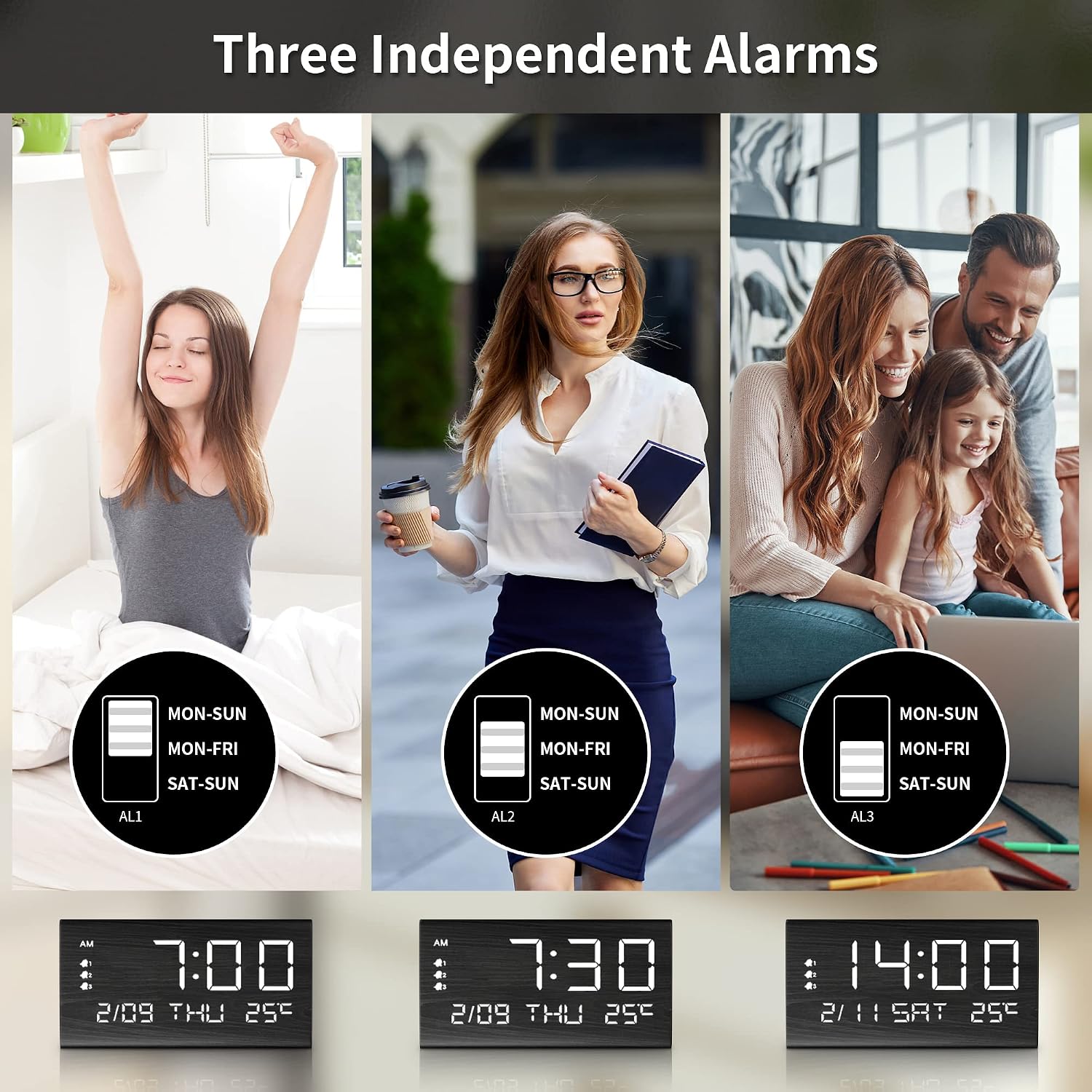
Three alarms are useful only if they correspond to real needs. One person may want different weekday and weekend wake times. Another may want a wake alarm and a later leave-the-house reminder. Decide what each setting will mean before programming the clock, so the extra capacity does not become three nearly identical alarms nobody understands.
If your routine uses one fixed wake time, a simpler clock may be enough. More settings are not automatically more convenient. The JALL’s case is strongest when a small number of recurring schedules can replace frequent manual changes, provided the chosen day groups match the way your week actually works.
Confirm the Date+Black variant
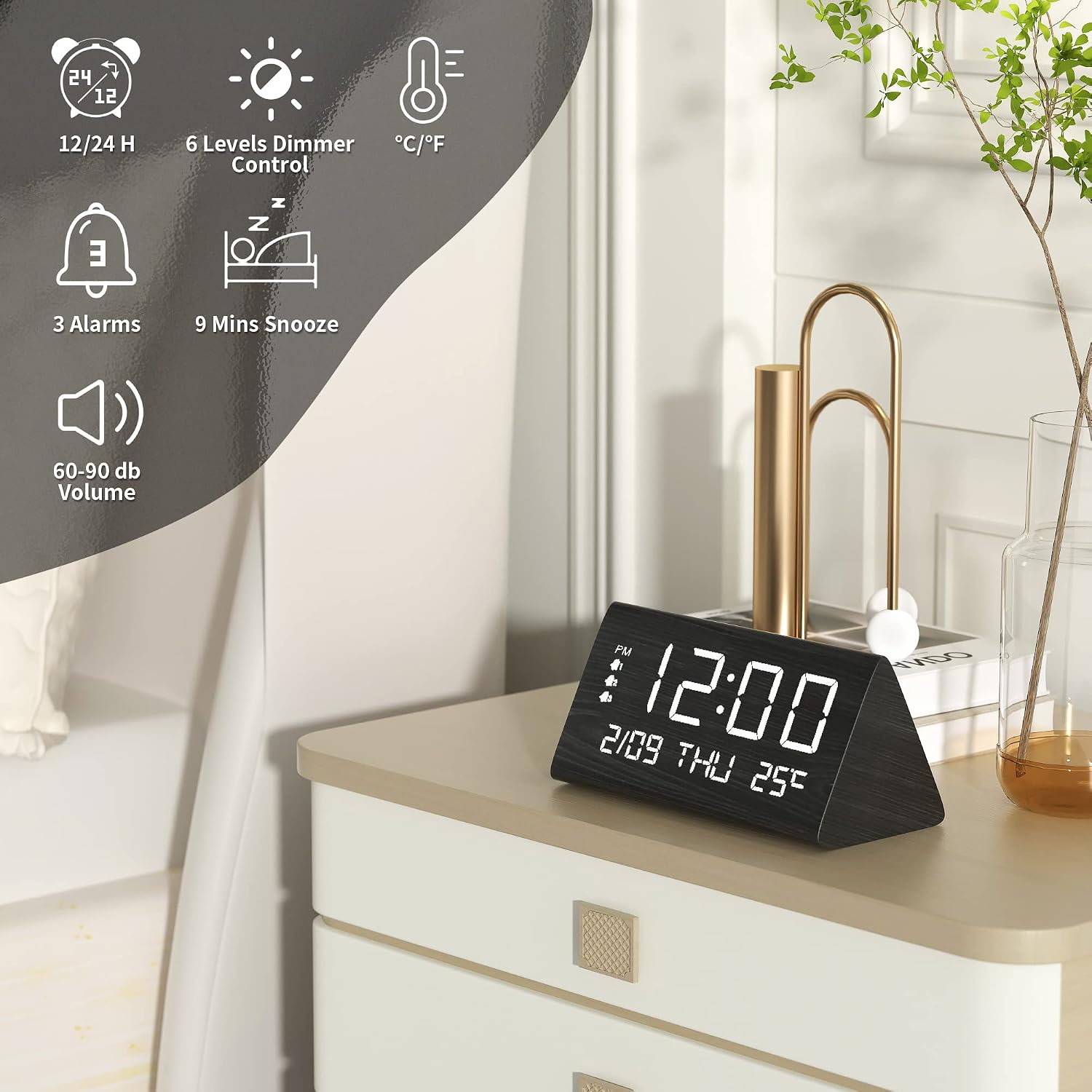
The linked listing describes three alarms, day-group options, adjustable brightness and volume, and a nine-minute snooze. Other JALL clocks can have different controls or display arrangements despite similar wood-look styling. Check the selected option and supplied manual instead of applying instructions from an unrelated model.
We describe the finish as wood-look rather than claiming a solid-wood construction. That avoids making a material assumption from appearance. For practical use, the more important details are the control layout, power requirements and what the display shows when an alarm is enabled.
Map the alarms on paper first
Write down the purpose and active days of each alarm. For example, a weekday wake time and a weekend wake time should be easy to distinguish. Then program one setting at a time and check the clock’s indicators. Follow the supplied instructions for how the day-group modes operate.
A rotating shift pattern may not fit broad weekday/weekend groups neatly. In that situation, separate schedules can still require manual changes, and a more flexible calendar-based arrangement may suit the task better. Do not assume that three alarms mean three independently programmable seven-day calendars unless the exact manual establishes that capability.
Judge brightness from your sleeping position
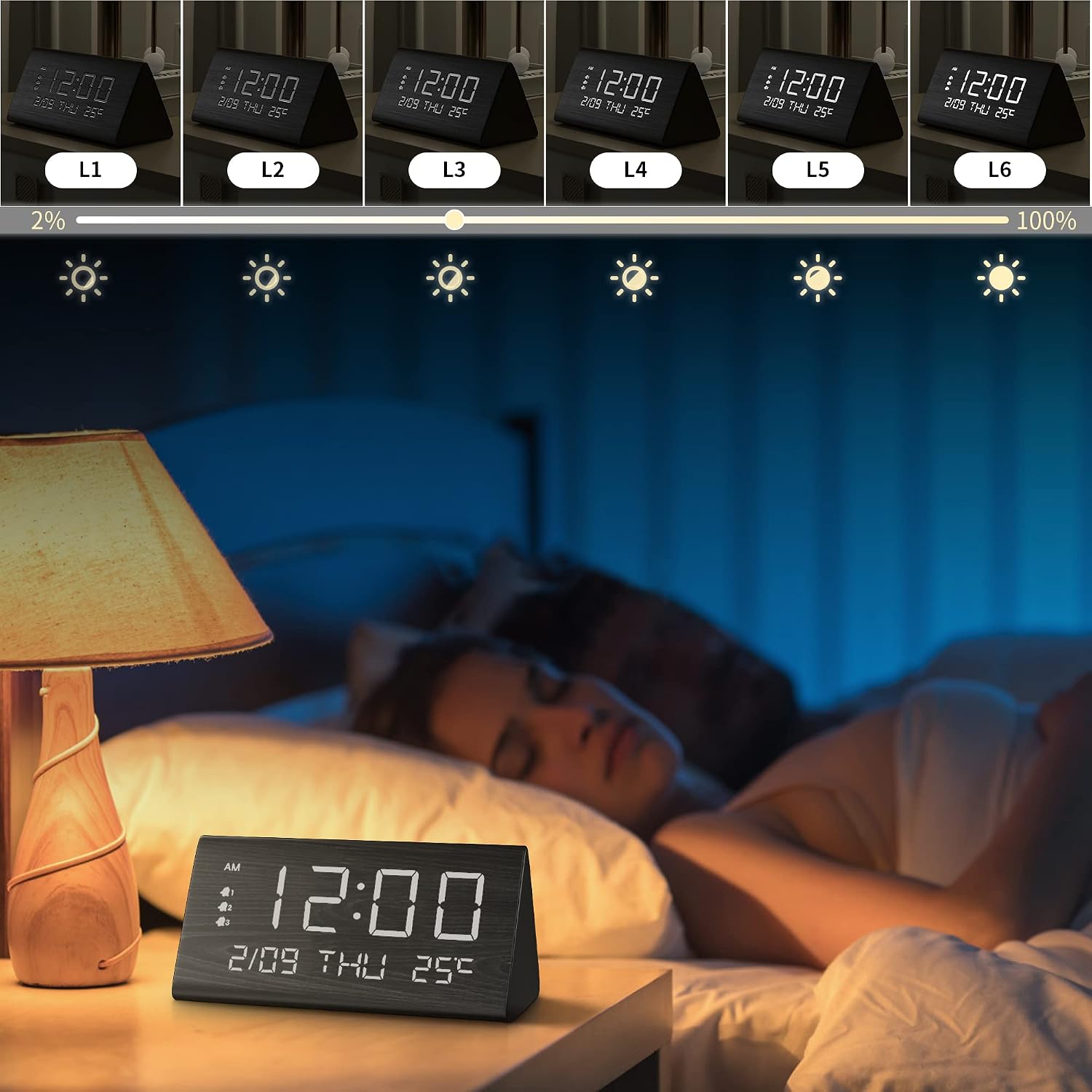
An adjustable display is useful, but the word “adjustable” does not tell us whether its lowest setting will suit a light-sensitive sleeper. Check the clock at night from the place your head rests, with the room arranged as it normally is. A display that looks restrained in daylight can feel prominent after the lights are off.
Try a sensible placement and the available settings before deciding. Avoid positioning it where the face shines directly toward a partner who does not want a visible clock. We have not measured luminance or tested sleep effects, so the review cannot promise darkness, better sleep or a universally comfortable minimum level.
The cord is part of the footprint
The listing identifies corded electric power. That means the bedside location needs a suitable power arrangement, not just enough room for the clock’s body. Consider where the cable travels and whether it will be pulled when you reach for a book or move the nightstand.
Confirm the supplied power accessories and exact instructions for the version you receive. This review does not establish battery-only operation or what happens to the time and alarms during a power interruption. If waking at a particular time is essential, use a backup arrangement appropriate to your needs until the clock’s behavior is understood.
Test the alarm while you are awake
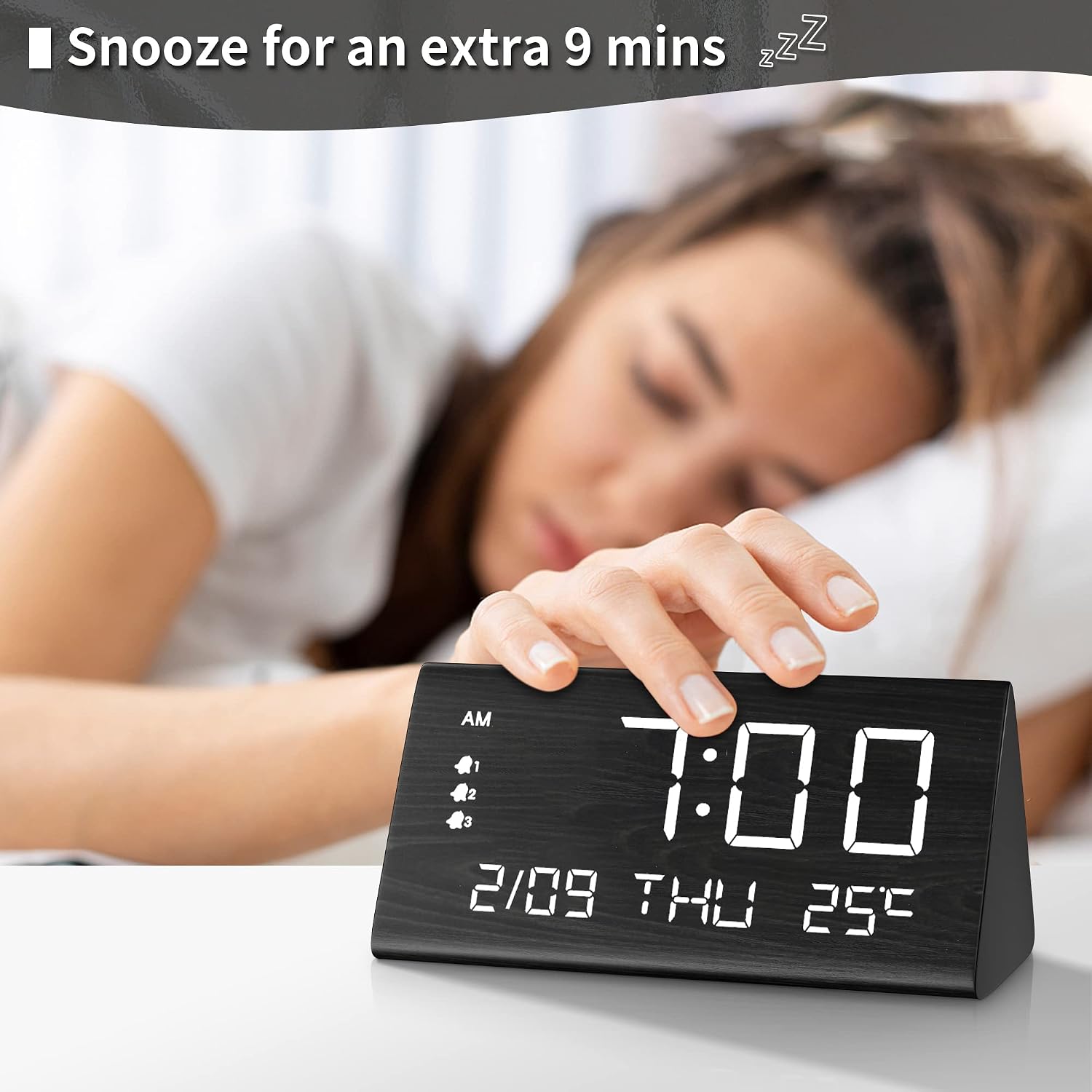
After setup, schedule a near-term test according to the manual. Check which alarm sounds, whether the volume is suitable and how stopping it differs from snoozing it. That simple practice is especially useful when controls sit on a side or rear surface that you cannot see easily from bed.
The listed nine-minute snooze is a feature, not a reason to assume the clock will wake every sleeper. Hearing, room conditions and individual waking needs vary. We have no measured sound-pressure comparison or user trial here, so claims such as “guaranteed for heavy sleepers” would not be supported.
Keep the extra display information in perspective
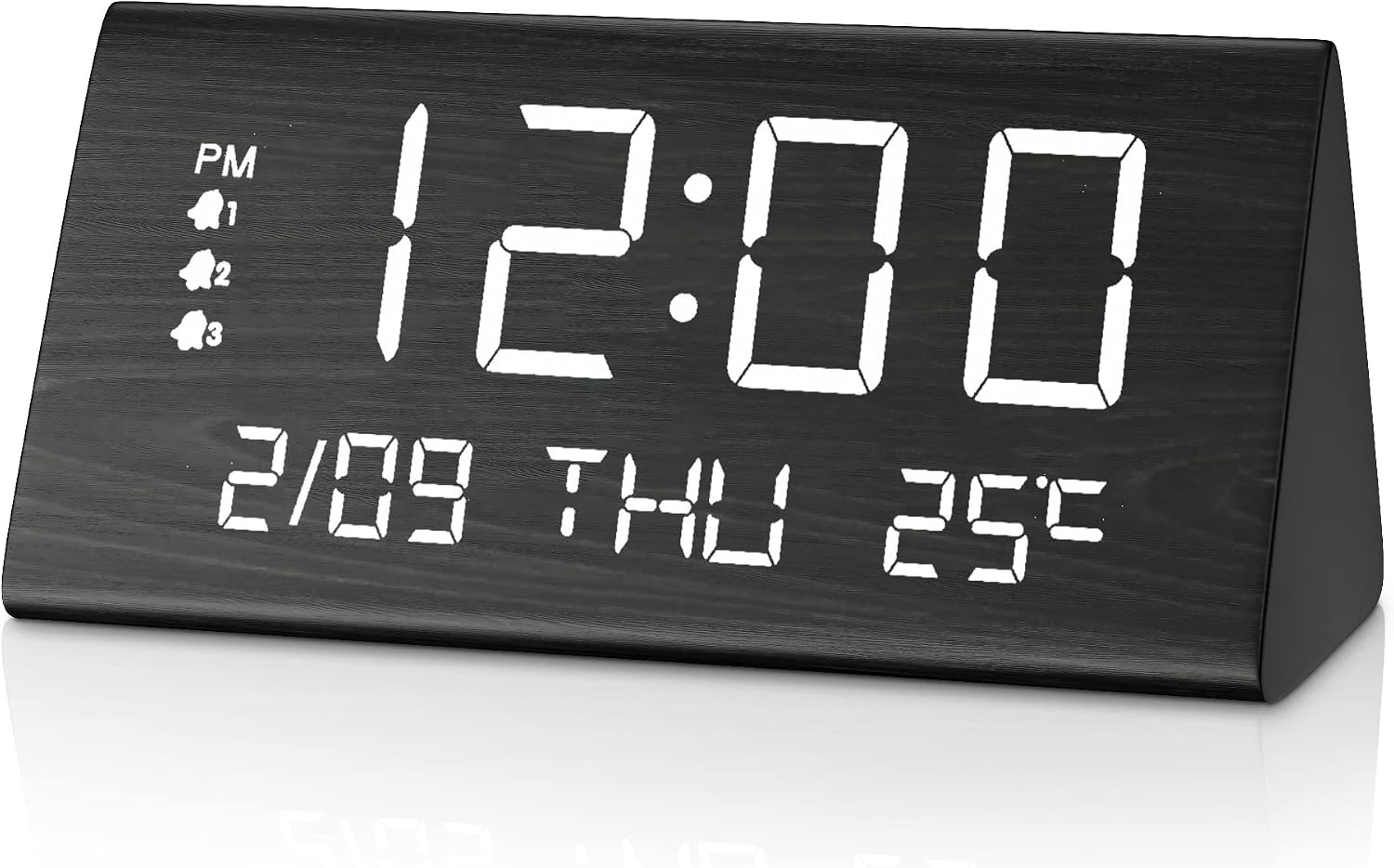
Date and day information can be convenient on a bedside display, especially when the clock is also used during the day. The temperature readout is another displayed feature, but this review has not verified its accuracy, response time or calibration. Treat it as a clock feature rather than a substitute for a suitable measurement instrument.
Do not choose the product solely because the front appears to show more information than a basic clock. If those details make the time harder for you to read at the preferred brightness, the simpler display may be the better daily experience. Readability matters more than filling the face with functions.
The keep-or-return decision
Keep the clock if the time is readable, the nighttime brightness is comfortable, the controls are understandable and the active-day settings behave as expected in your routine. Those are concrete reasons for a bedside clock to earn its place. The wood-look finish can then support the room’s appearance without carrying the buying decision.
Reconsider it if you need extensive schedule flexibility, verified operation during outages or a different wake-up method. This is not a sunrise lamp, a sleep-treatment device or a proven solution for missed alarms. A useful review should make those boundaries clear before you replace a familiar system.
Which option fits your routine?
| Situation | Starting point | Tradeoff |
|---|---|---|
| Different recurring weekday and weekend times | Consider the JALL settings | Verify day groups and enabled indicators |
| One fixed wake time | A simpler clock may be enough | Fewer controls to maintain |
| Need a different waking method or outage resilience | Compare specifically for that requirement | Do not infer it from multiple alarms |
Amazon product and current listing
Check JALL Digital Alarm Clock, Date+Black on Amazon. Confirm the selected model, seller, delivered price and return terms. This link identifies ASIN B0BZGS7S8M; it does not guarantee current stock.
Our buying decision
Consider this JALL for a visible bedside time display and separate alarm schedules. Confirm the exact power and alarm instructions, test each setting before relying on it and assess the lowest brightness from bed. We have not verified outage behavior or measured sound output.
Explore Bedroom ideas and Buying Guides. Related reading: How to Organize a Small Bedroom Nightstand Without Turning It Into a Catchall.
Sources and evidence limits
The linked Amazon listing supplies the product identity, photographs and listed features. Household scenarios and comparisons are editorial analysis. We have not measured durability, performance or user outcomes. We do not use star ratings as proof of quality.
Sources
- Amazon product listing — https://www.amazon.com/dp/B0BZGS7S8M