Disclosure: As an Amazon Associate, Small Home Rhythm may earn from qualifying purchases. Product availability and listing details can change.
A small bedroom makes appliance footprint visible, but size is only one part of the decision. A tiny purifier that must run hard may be less comfortable than a somewhat larger model at lower speed. You may also find Small space appliances worth buying useful for a closely related small-home problem.
The U.S. EPA recommends choosing a portable air cleaner with a CADR large enough for the room. We reviewed current product information and do not claim hands-on laboratory testing. For the broader setup, Best label maker for home organization is a useful next read.
Start with room sizing
Measure floor area and consider ceiling height. Compare smoke CADR and repeated-air-cleaning guidance, not only the largest “up to” area.
A huge area cleaned once per hour is not equivalent to several passes in a smaller room.

Quick comparison
| Model | Strength | Best fit | Tradeoff |
|---|---|---|---|
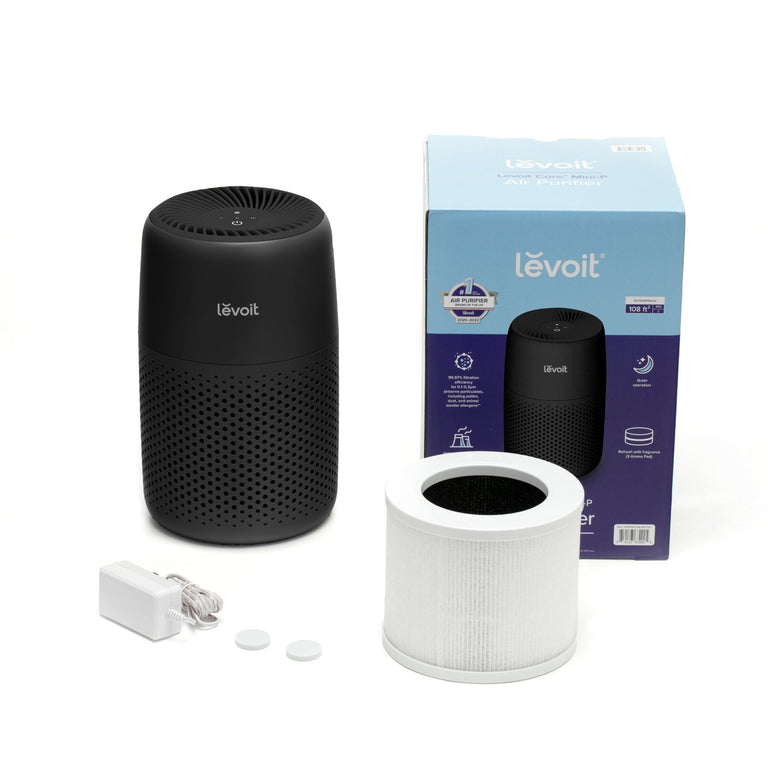
| Core Mini-P | Smallest body | Very tight spaces | Lower ceiling |
| Core 200S-P | Smart compact | Schedules | No sensor |
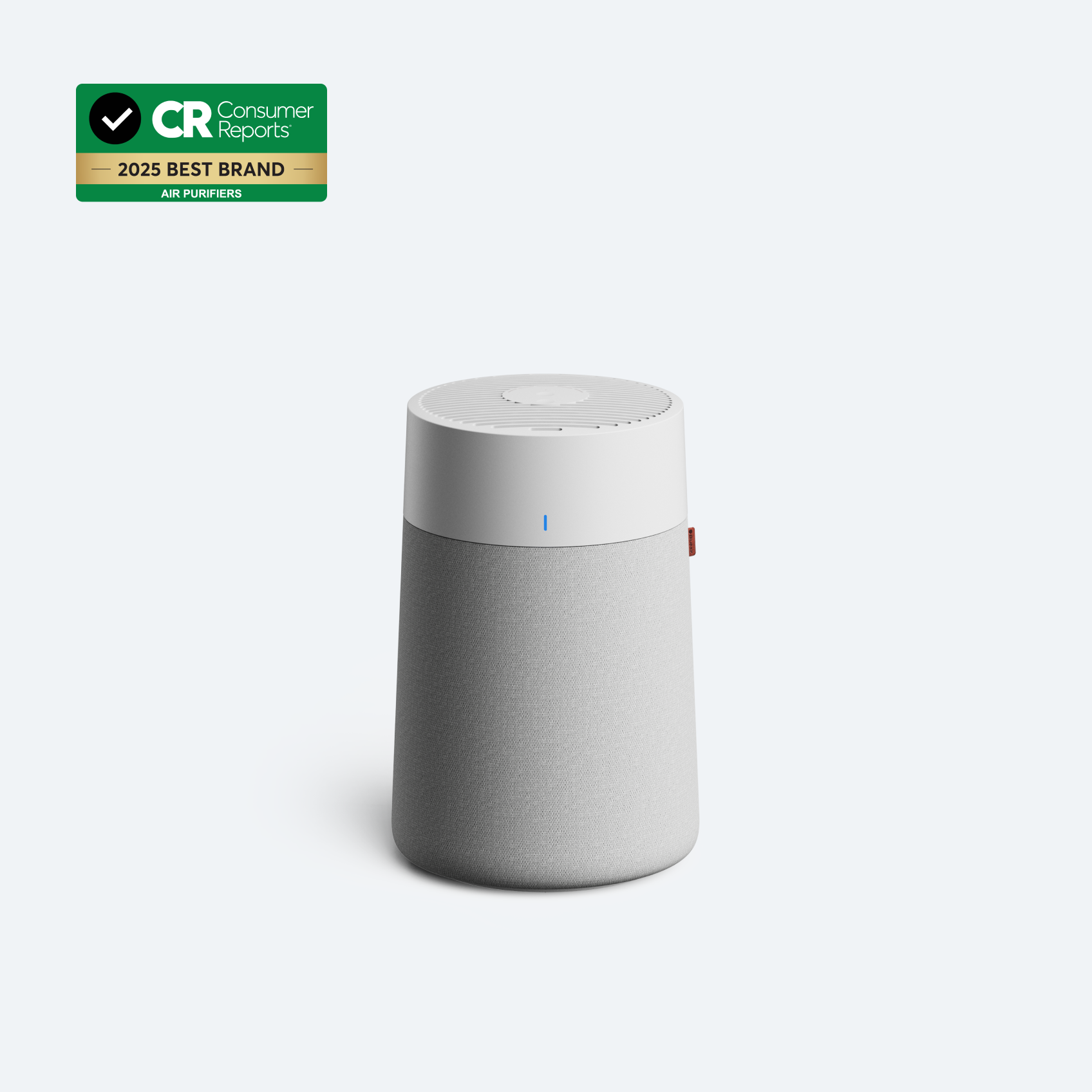
| Blueair 511i Max | Sensor + auto | Automatic use | Larger body |

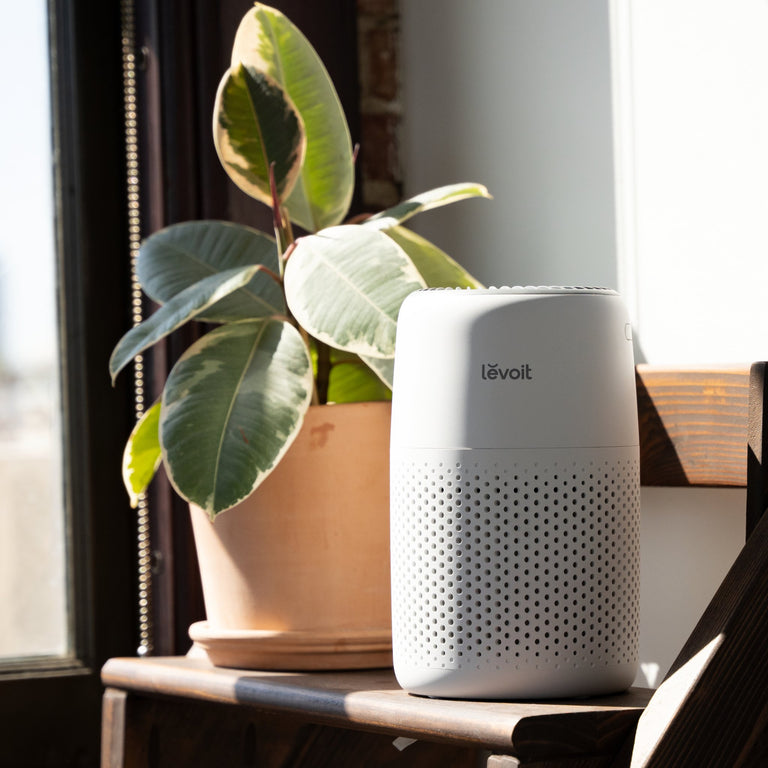
Core Mini-P: smallest footprint
Its cylindrical body is easier to place on limited furniture and simple controls reduce setup friction.
Do not choose the smallest shell first and ask about sizing later. Check the current Amazon listing.
Core 200S-P: compact smart balance
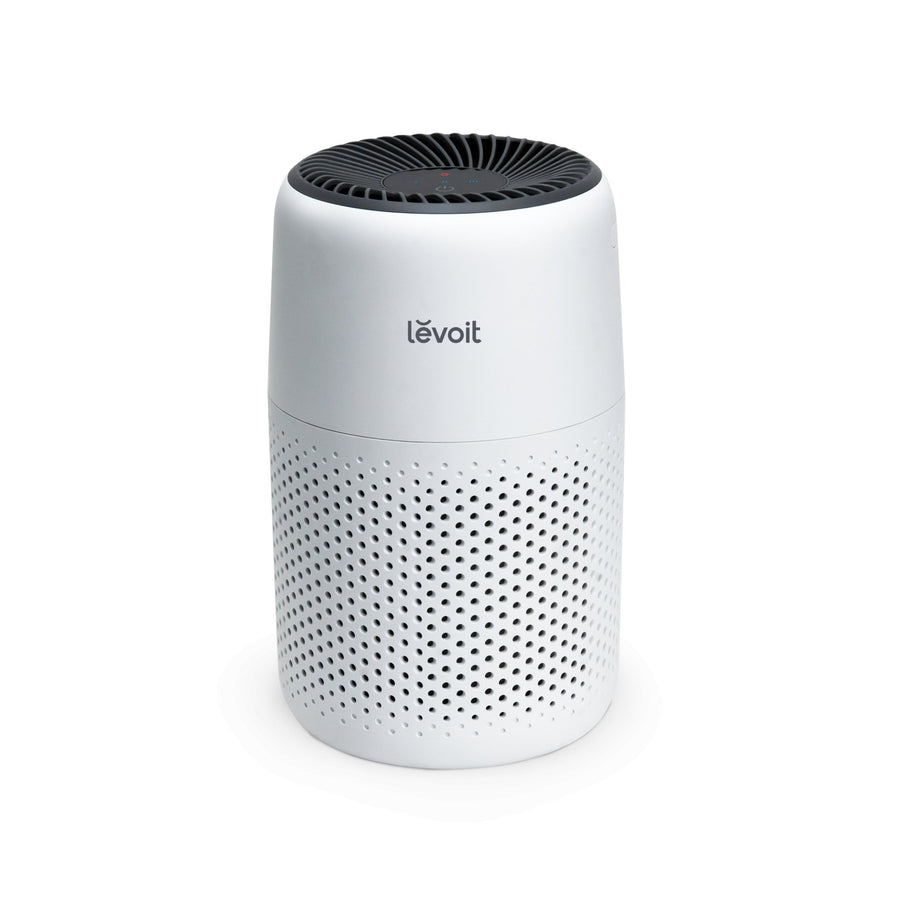
The listing gives about 8.1 by 8.1 by 12.6 inches with app, touch, and voice control. Scheduling can support consistent bedtime use.
It lacks an onboard air-quality sensor, so smart value is remote control rather than self-adjustment. Check the current Amazon listing.
Blue Pure 511i Max: compact auto mode
Blueair lists roughly 14.5 by 9.3 by 9.3 inches with sensing, Wi-Fi, night mode, and auto mode. It is larger than the Mini but more automatic.
Automation still requires open placement and replacement filters. Check the current Amazon listing.
Placement matters
Do not wedge the purifier behind curtains, under clothing, or between furniture. Follow clearance guidance and keep cords away from walking paths, children, and pets.
The top is not an extra shelf; intake and outlet must stay open.
Noise and speed are linked
Sleep modes reduce sound, but lower fan speed changes delivered airflow. Compare the speed you tolerate with the performance needed.
A somewhat larger unit may be quieter at a useful setting than a tiny model pushed to maximum.
Filters are recurring ownership
Check the exact replacement model, availability, schedule, and recurring cost. Do not wash media unless designed for it.
A low purchase price with unavailable filters is not a low-cost system. Pair it with a bedroom dust routine.
Know the limit
A correctly selected purifier can reduce airborne particles. It does not repair leaks, remove settled dust, replace source control, or substitute for safe ventilation. Address moisture and pollution sources directly.
Compare the machine at the speed you will actually use
Maximum-speed CADR may describe capability, but many sleepers run a purifier below maximum. If noise sensitivity is high, look for performance and sound information across settings rather than relying on the quietest sleep-mode number alone.
A purifier that is silent but delivers too little air for the room does not become appropriate simply because it is comfortable.
Plan the filter path before the purchase
Identify the exact genuine replacement filter, where it is sold, how it is installed, and how much clearance the machine needs for removal. A unit wedged under furniture may have to be moved and unplugged every time the filter is checked.
Keep purchase and replacement records so maintenance does not depend on memory. Replace according to condition and manufacturer guidance.
Choose a stable bedroom location
Protect intake and outlet clearance, cords, curtains, bedding, and walking routes. Avoid placing the purifier where a door will strike it or where clothing routinely lands on top. You may also find Over-the-Door Organizers in Small Apartments: Where They Work—and Where They Don’t useful for a closely related small-home problem.
For a child’s room, consider tamper controls, cord management, stability, and whether indicator lights can be dimmed without disabling necessary operation. You may also find How to Store Jewelry and Small Accessories in a Small Bedroom Without Losing Pieces useful for a closely related small-home problem.
Continue through the right silos
Browse Buying Guides and the verified Bedroom hub.
My conclusion
Choose Mini-P for minimum body size, 200S-P for compact scheduling, and 511i Max for sensing and auto mode—but only after confirming sizing, placement, noise tolerance, and filter availability.
Frequently asked questions
Is the smallest purifier best?
No. It must still deliver adequate CADR at a tolerable speed.
Can it sit on a nightstand?
Only on a stable surface with required clearance and safe cord routing.
Can it solve mold or a leak?
No. The moisture source and damaged materials require correction.
Sources
- EPA — https://www.epa.gov/indoor-air-quality-iaq/guide-air-cleaners-home
- Core Mini-P — https://www.amazon.com/dp/B09GTRVJQM
- Core 200S-P — https://www.amazon.com/dp/B08FJ678YK
- Blueair 511i Max — https://www.amazon.com/dp/B08KPJ76RR