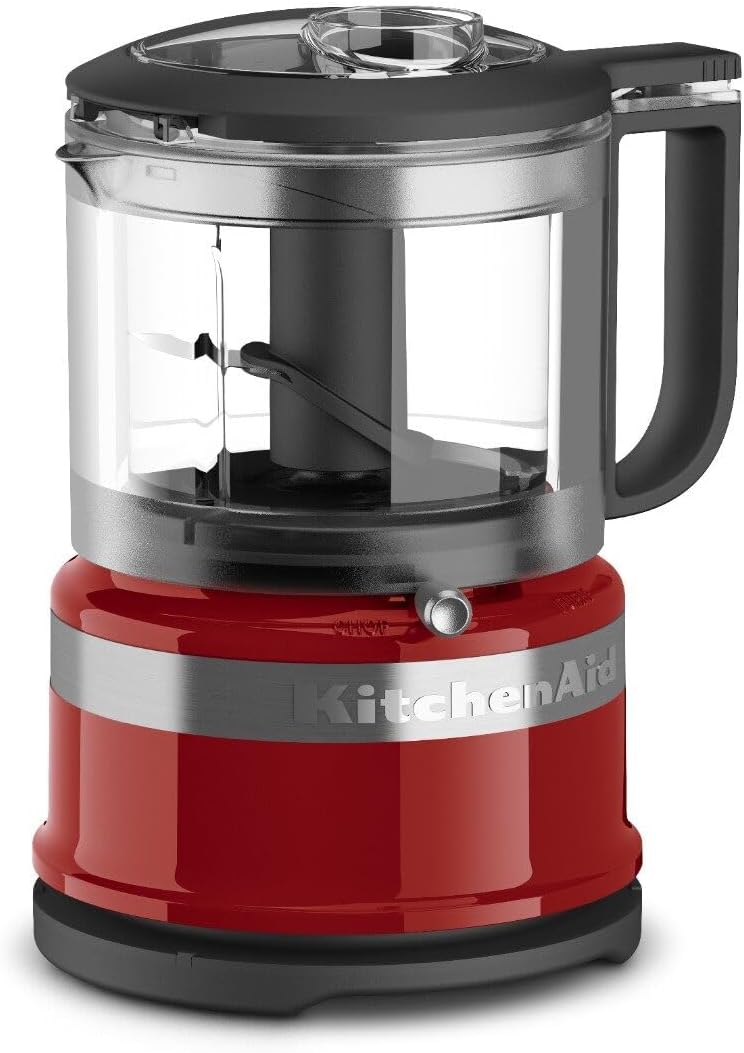
An immersion blender can remove one awkward transfer from soup making: moving the ingredients into a separate countertop blender. It can also become a long appliance with a cable, a beaker, and attachments that have no convenient storage. The Braun MultiQuick 5 MQ505 and KitchenAid KHBV53 are worth comparing through that complete kitchen routine, rather than assuming either automatically saves space. You may also find KitchenAid 3.5-Cup Food Chopper Review: Is It Worth a Small Kitchen Cabinet? useful for a closely related small-home problem.
The central difference is control and included equipment. The linked Braun uses two speed settings and includes a whisk and beaker. The linked KitchenAid uses a variable-speed trigger and includes a blending jar with lid and a removable pan guard. For frequent soup making, choose according to the control you prefer, the cookware you use, and whether the included accessories will actually be used and stored.
Research scope: We compared the exact Amazon variants and manufacturer descriptions. We have not blended soup with these units or measured texture, noise, splashing, grip comfort, or durability. Practical recommendations below are conditional buying analysis, not results from a hands-on test. Affiliate disclosure: As an Amazon Associate, we earn from qualifying purchases.
Make sure the listing matches the comparison
The Braun is MQ505, linked under ASIN B01EA5ZI2U. The KitchenAid is the corded KHBV53 in matte black, linked under ASIN B08F2QZZPQ. This article does not compare KitchenAid’s cordless KHBBV53 or Go models, Braun’s MultiQuick 7 or 9, or accessory bundles that happen to appear beside the linked items.
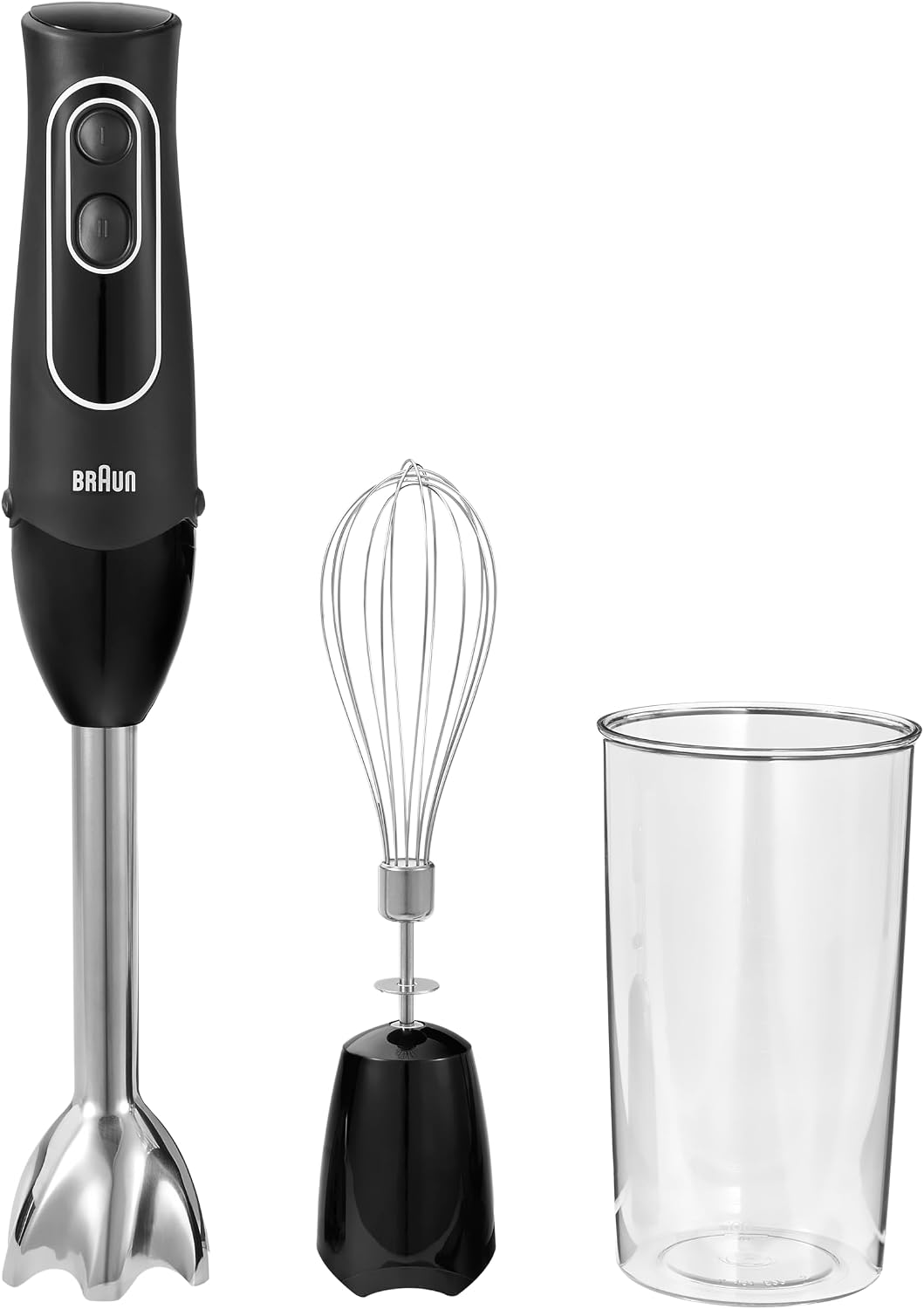
Check Braun MQ505 with beaker and whisk on Amazon.

Check the corded KitchenAid KHBV53 on Amazon.
Before checkout, confirm the model number, voltage and market suitability, included components, seller, and warranty arrangements for the offer you select. A product family name is not enough to establish those details. If a gallery shows several accessories, compare the written box contents rather than assuming every pictured attachment arrives with the basic kit.
Decide whether an immersion blender solves your actual problem
Think about the meals you prepare repeatedly. Soup, sauces, and appropriate mixtures in compatible containers may justify a stick blender. If your current countertop blender already handles your routine and the transfer is manageable, a second appliance may duplicate the job. A smaller silhouette does not make it a necessary purchase.
If you mainly want frozen drinks, dry grinding, or processing that a model does not support, read the manufacturer’s limitations before choosing. Neither the broad word blender nor a promotional food photograph establishes that every ingredient and batch is permitted. Purchase for the tasks the exact product supports, not for an imagined all-purpose kitchen assistant. For a related step-by-step approach, see AROMA ARC-743 Rice Cooker Review: Does a Small Kitchen Need a Dedicated Pot?.
Our guide to small-space appliances worth buying helps evaluate that first decision. A useful appliance reduces a recurring difficulty; an appealing appliance with no recurring job usually adds storage and cleaning work.
Two speeds versus a variable trigger
Braun’s two settings present a relatively simple choice. KitchenAid’s trigger offers variable speed control. The practical distinction is how you prefer to adjust the tool during use. Some cooks want a small set of clear settings; others want more control through trigger pressure as the mixture changes.
We cannot tell you which feels more comfortable without your handling experience. Consider the grip movement and control method, especially if you have a particular limitation or preference. Where possible, examine the exact unit before purchase or choose an offer with return terms you understand. A description of ergonomic design is a manufacturer claim, not a guarantee of comfort for your hand.
Avoid turning this difference into a prediction of superior soup texture. Speed selection is only one part of an outcome that also depends on recipe, batch size, container, technique, and the product’s operating limitations. We did not run a matched blending test, so we do not rank smoothness or assign performance scores.

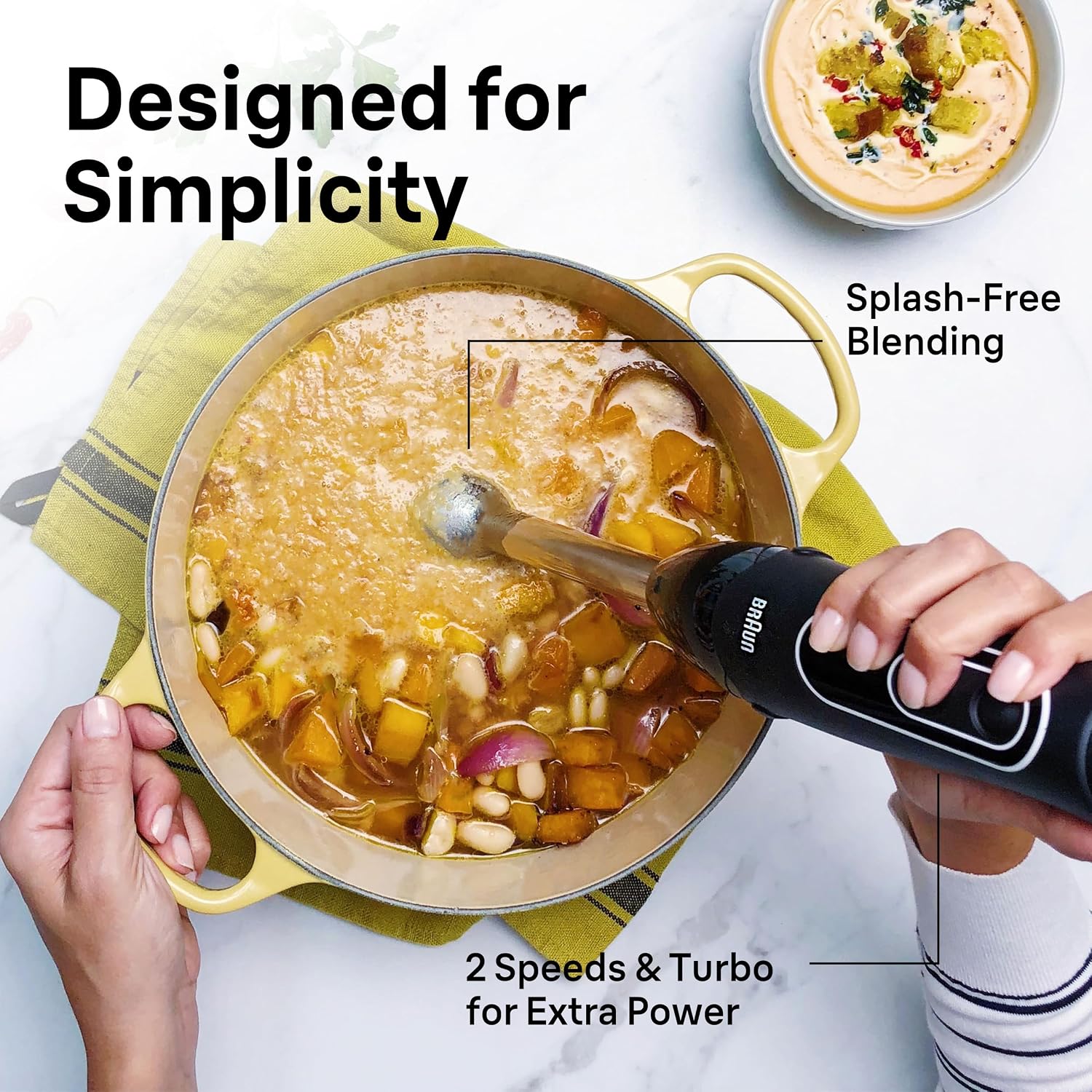
The Braun whisk earns its place only if you use it
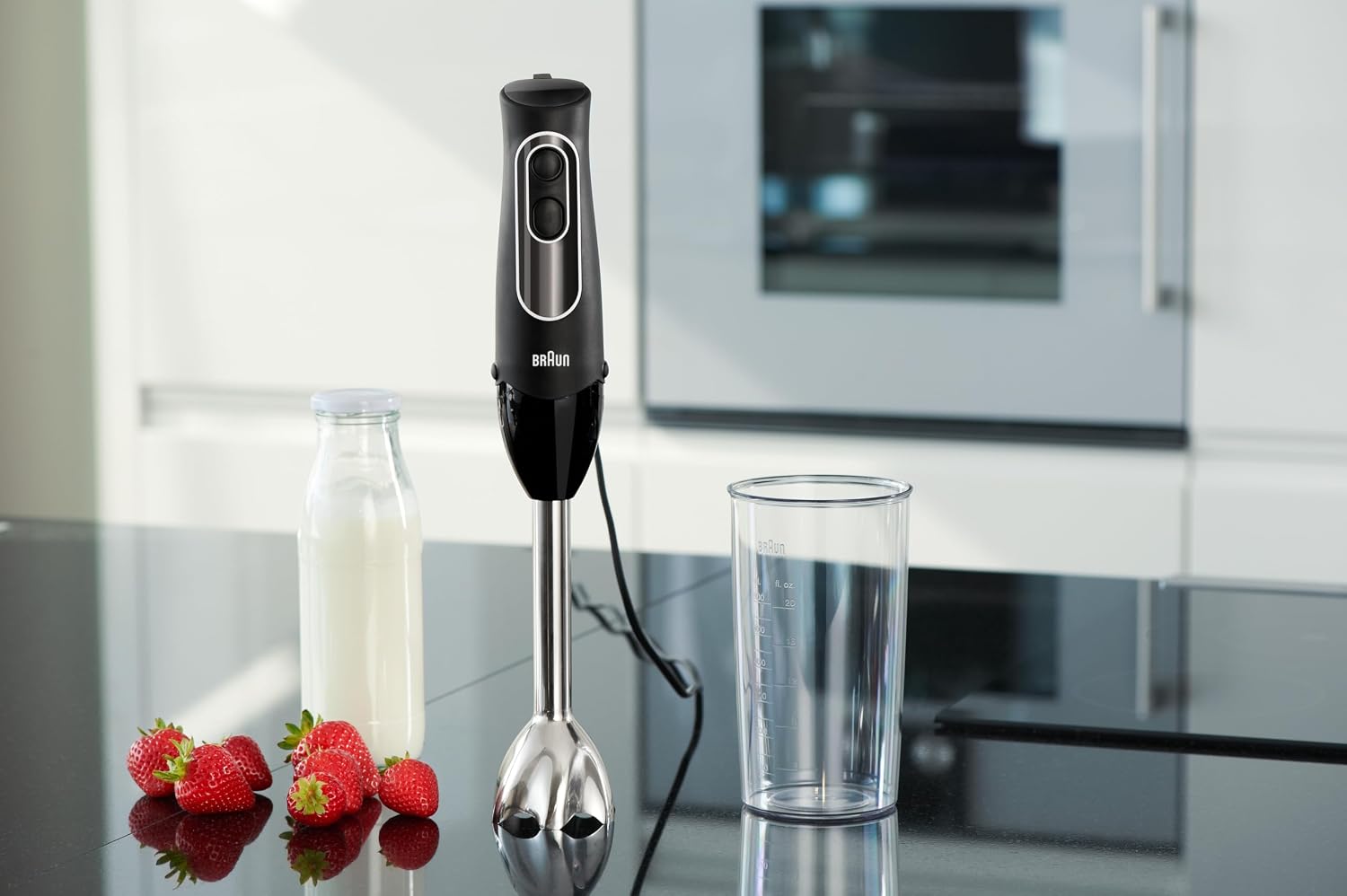
The linked MQ505 includes a whisk attachment and beaker alongside the blending unit. That can be useful for a household with appropriate whisking jobs, provided the accessory’s instructions support them. It can also create another oddly shaped piece in a drawer that is already full of manual utensils.
Write down the task the whisk would replace. If it replaces a tool you would otherwise buy or a recurring inconvenient handoff, its inclusion has practical value. If it duplicates a manual whisk that you enjoy using, the attachment may be an extra rather than a reason to select the kit.
Check storage for the whisk’s connector as well as its working end. A loose attachment squeezed behind heavy utensils can be difficult to retrieve and protect. Use a location that follows the product’s care instructions and keeps components identifiable, rather than separating them so thoroughly that nobody knows which motor they fit.
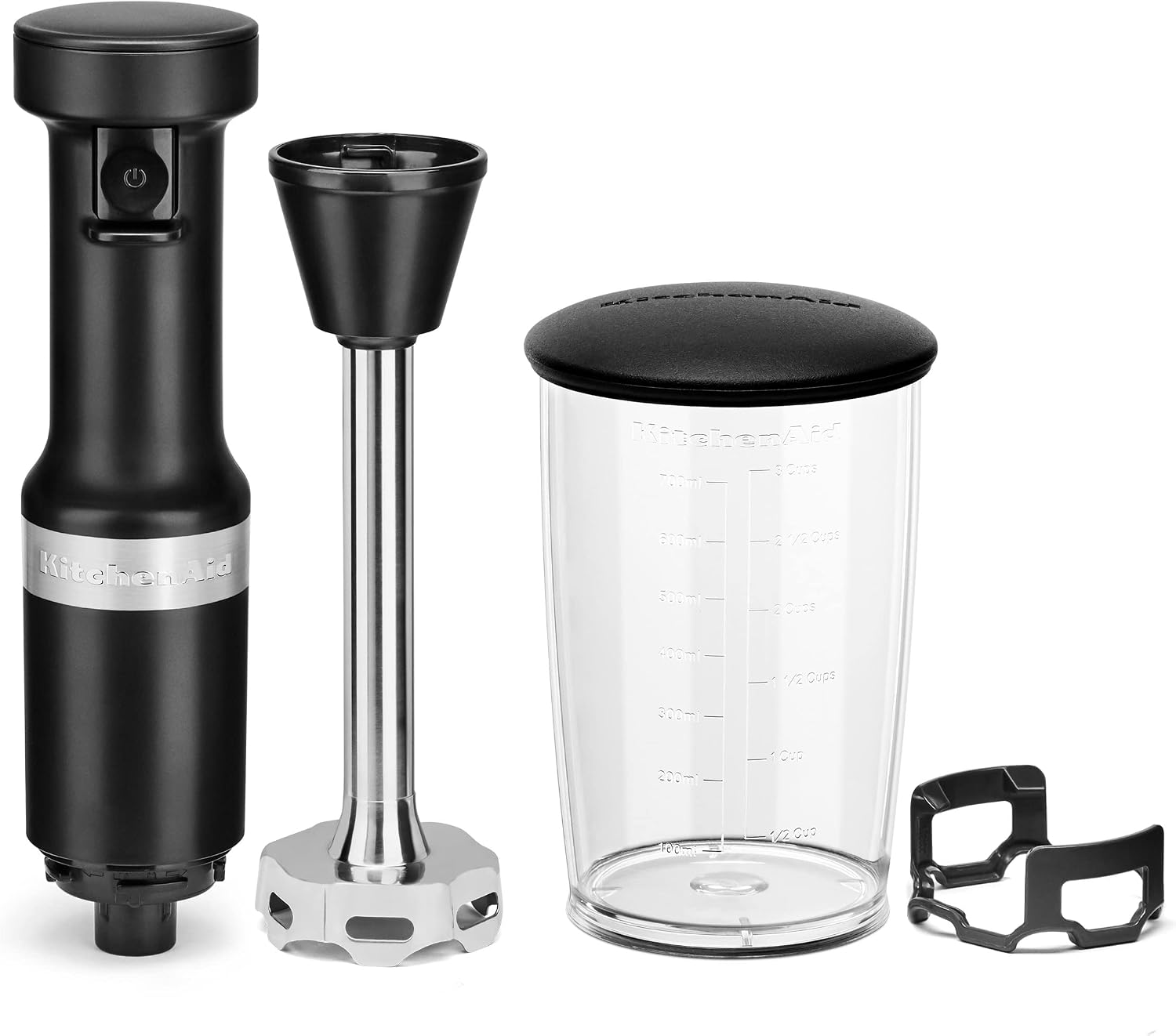
The KitchenAid pan guard is a feature to understand, not overtrust
KitchenAid describes a removable pan guard intended to help protect cookware. It is a meaningful design difference for cooks planning to blend in compatible pots. It is not a promise that every coating, container, or use technique becomes acceptable once the guard is attached.
Read the blender and cookware instructions together. Check whether your pot shape and contents are suitable and follow the guard’s installation and use guidance. If the cookware maker restricts the intended action, do not rely on a blender marketing statement to override that restriction.
The guard also becomes a part to clean, dry, inspect, and store. Include it in the workflow rather than treating it as a permanent invisible accessory. If it is repeatedly lost because it has no storage home, the feature you selected the blender for may not be available when you need it.
Check pot depth and container access before buying
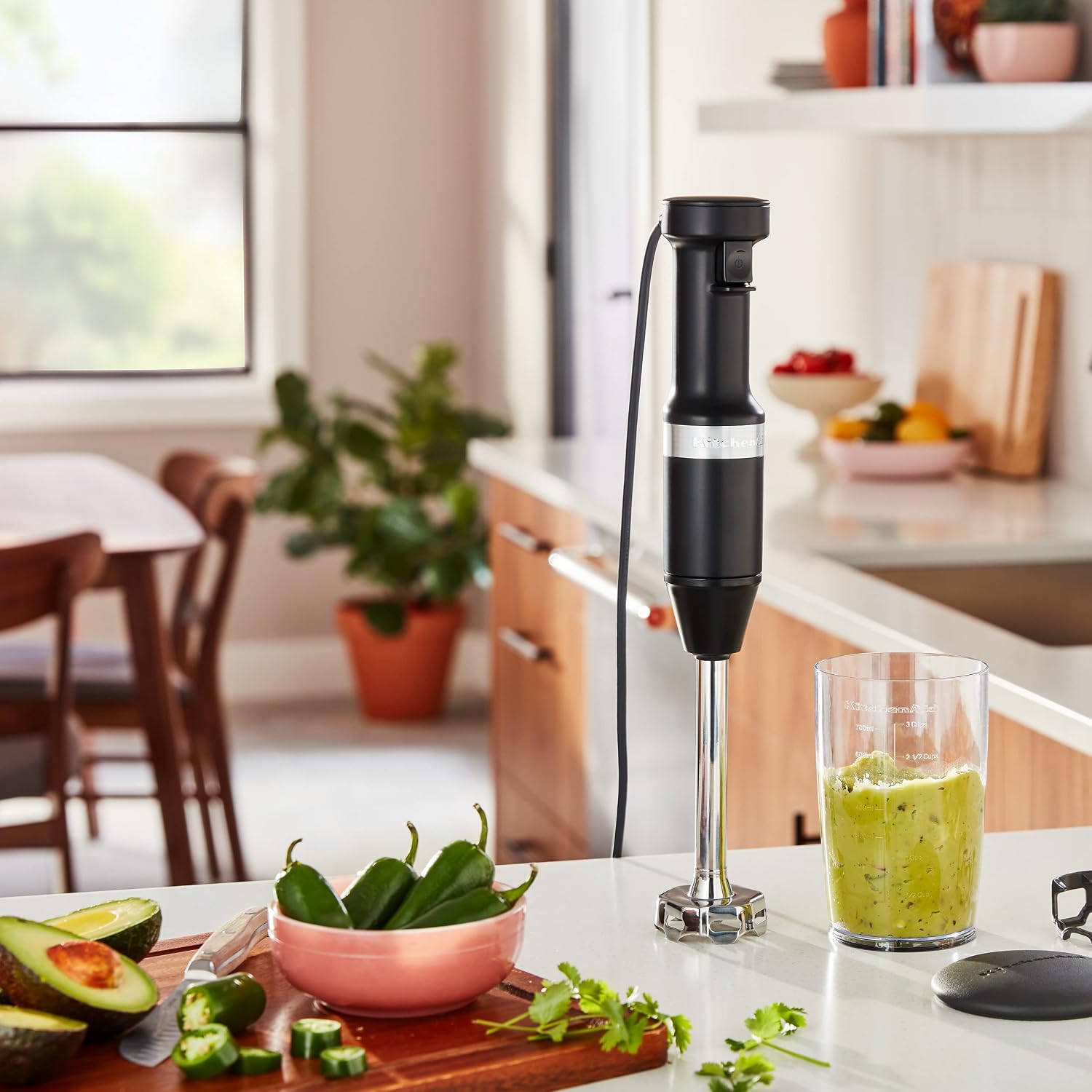
KitchenAid lists an eight-inch removable blending arm for the linked model. Use that specification with the actual operating guidance; arm length alone does not establish safe working depth or the amount of mixture you can process. Keep required limits and the motor unit’s permitted position in mind.
Compare the intended containers at home. A tall narrow vessel, a broad shallow pot, and a small saucepan create different access conditions. The tool must fit and operate as instructed without forcing the working end against an unsuitable surface. Do not buy on the assumption that any vessel containing soup is automatically appropriate.
Also consider where the container sits in relation to the cord and permitted electrical setup. Follow the appliance instructions for handling hot contents and keep the operating area suitable. This review does not recommend blending in an actively heating pot or supply a hot-liquid procedure that substitutes for the manuals.
Plan the counter handoff while the tool is dirty
The most inconvenient moment can occur immediately after blending. You have a finished mixture, a dirty working end, and nowhere suitable to place the appliance while you finish the meal. Before buying, decide how you will stop, disconnect, separate permitted components, and clean them under the manufacturer’s instructions.
Give the cleanup a destination rather than balancing the appliance on a crowded counter or returning dirty components to a drawer. The purpose is to manage the handoff safely and practically, not to leave a cable and motor unit beside a wet washing task.
For the surrounding meal routine, our guide to meal preparation in a small kitchen can help preserve the working surface. An immersion blender should reduce one transfer without consuming the entire counter for its own cleanup.

Compare cleaning at the component level
The linked KitchenAid package identifies a dishwasher-safe blender arm. That does not make the motor unit dishwasher safe. Check the instructions for the jar, lid, guard, and every other component independently. Apply the same component-by-component approach to the Braun rather than assuming the complete assembled appliance has one washing rule.
Avoid copying a cleaning shortcut from a different generation of the same brand. Similar-looking attachments may have different construction or care limits. Identify the part and follow the directions supplied for it, particularly where a connector or drive mechanism meets the working end.
Consider the drying stage as well as washing. A drawer full of damp parts is not an appropriate way to finish the job. If your kitchen lacks a convenient place for components to dry as directed, that limitation may matter more than the difference between the control systems.
Measure the storage arrangement, not just the motor
Gather the kinds of items the selected kit will require you to store: motor body, shaft, cord, beaker or jar, lid, and any whisk or guard. The pieces do not all need to remain assembled, but they need identifiable homes that preserve access. Check whether the longest piece fits your actual drawer or shelf.
An empty blending jar can occupy more cupboard space than expected. You may choose to use it for permitted additional tasks, but do not assume a lid makes every ingredient or storage condition suitable. Follow the jar’s intended use and avoid treating accessory capacity as a general food-storage endorsement.
If using the blender requires emptying half a cupboard, the storage system is working against the purchase. Our guide to managing countertop appliances explains how access frequency should influence location. A tool intended for several weekly uses needs a different home from an appliance brought out for an occasional event.

Three kitchen scenarios that change the recommendation
You make suitable soups often and want simple controls. Start with the Braun if two speed choices suit you and the whisk has an actual job. Confirm that your containers and storage support the complete kit. If the whisk will remain unused, compare the purchase against the alternatives rather than treating the accessory count as automatic value.
You want to adjust speed through a trigger and value the guard feature. Start with the KitchenAid if that control style appeals to you and the guard addresses a compatible cookware routine. Remember that it adds care and storage obligations and does not replace cookware restrictions.
You already own a reliable blender and make blended soup infrequently. Keep the existing arrangement unless the transfer creates a specific difficulty worth solving. A new stick blender may be convenient, but convenience needs to justify another motor, cable, and set of parts in the kitchen.
Do not let wattage choose for you
Braun lists a 350-watt motor for MQ505. That number identifies a specification; it does not establish better results than a different appliance using another motor design. We have not measured power use, torque, speed under load, or final texture.
Treat brand claims about smoother blending, reduced splashing, and comfort as claims to consider with the manuals and your requirements. Do not convert them into our test findings. A comparison is more useful when it acknowledges what the available evidence can answer and what it cannot.
Likewise, do not use star ratings as proof that the model is the right choice for a small home. Ratings can include different sellers, variants, and household tasks. Your exact kit, containers, control preference, and storage are more direct purchase filters.
The pre-purchase checklist
| Check | Why it matters |
|---|---|
| Exact model and included components | Prevents comparing a basic corded kit with a different bundle |
| Approved ingredients and operating limits | A promotional photograph does not replace instructions |
| Cookware and container suitability | Arm length and a pan guard do not guarantee compatibility |
| Accessible storage for all parts | The appliance should be easy to retrieve and complete |
| Component care and drying space | Cleaning continues after the mixture is finished |
| Seller, delivered price, warranty, and returns | The linked ASIN does not promise the current offer |
Our buying decision
Braun MQ505 is the conditional choice for a cook who wants two speed settings and can use the whisk. KitchenAid KHBV53 is the conditional choice for a cook who prefers variable trigger control and understands the pan guard’s role. We do not name an overall performance winner because we did not run comparative tests.
Before purchasing either, make sure the stick blender will replace a real inconvenience and that the complete kit can be cleaned, dried, and stored without displacing the kitchen’s normal work. That practical fit is more important than selecting the larger accessory bundle.
Sources and evidence limits
The linked Amazon listings, Braun’s MQ505 information, and KitchenAid’s KHBV53 page supply the identities, included components, and control descriptions. Listing imagery is not evidence of our own testing. Recipes and household situations in this article are decision examples, not tested performance claims.
Explore Kitchen ideas and Buying Guides for the surrounding setup. A hand blender earns its place when the whole sequence becomes easier, from taking it out to putting the dry parts away.