A salad spinner earns its place only if wet leaves are a recurring problem. The OXO Good Grips 6.22-quart model is a sensible candidate for a household that regularly washes whole heads of lettuce, but its broad bowl is a significant commitment in a small kitchen. Our buying decision turns on how often you wash greens and whether the spinner can live somewhere accessible. If you are working on the same space, OXO Pull-Out vs. Escali Primo: Which Kitchen Scale Belongs on a Small Counter? covers the next decision in more detail.
This is a research-based review of the linked product, not a hands-on test. Product photographs come from its Amazon listing. Price, seller, stock and selected options can change.
The short buying answer
The strongest reason to buy this spinner is not presentation. It is removing an annoying step between washing lettuce and eating it. If damp greens make your lunch bowl watery, or you spread towels across a crowded counter several times a week, a dedicated drying tool has a clear job. If you mostly buy ready-to-eat leaves and follow their package directions, the same tool may spend most of its life stored away.
Think in portions rather than the impressive bowl number. The outer bowl volume is not the volume of leaves you should pack tightly into the basket. Greens need room to move. A household preparing salads for several people may appreciate the larger body, while one person washing a handful of herbs could reasonably find it excessive.
What the linked OXO actually includes
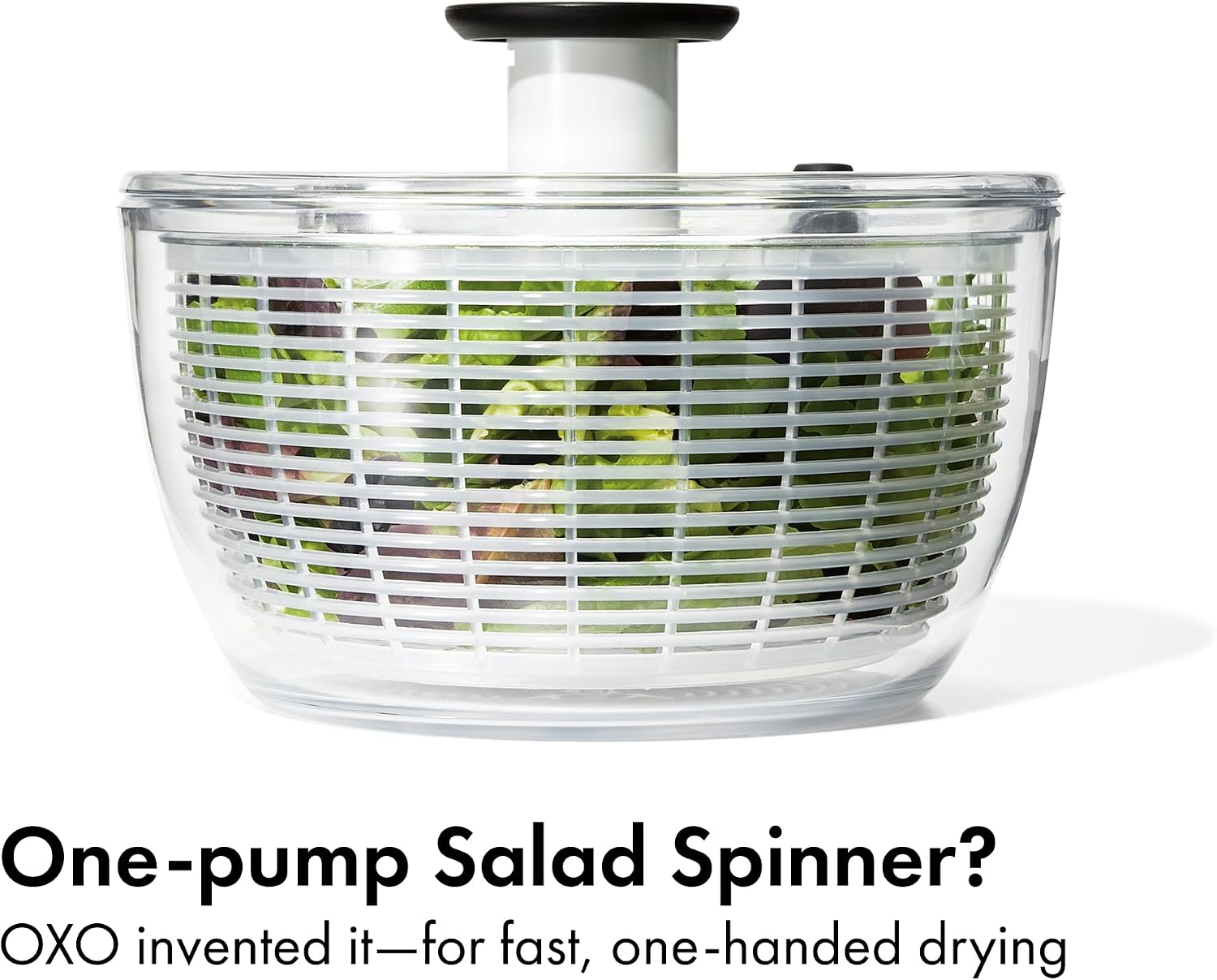
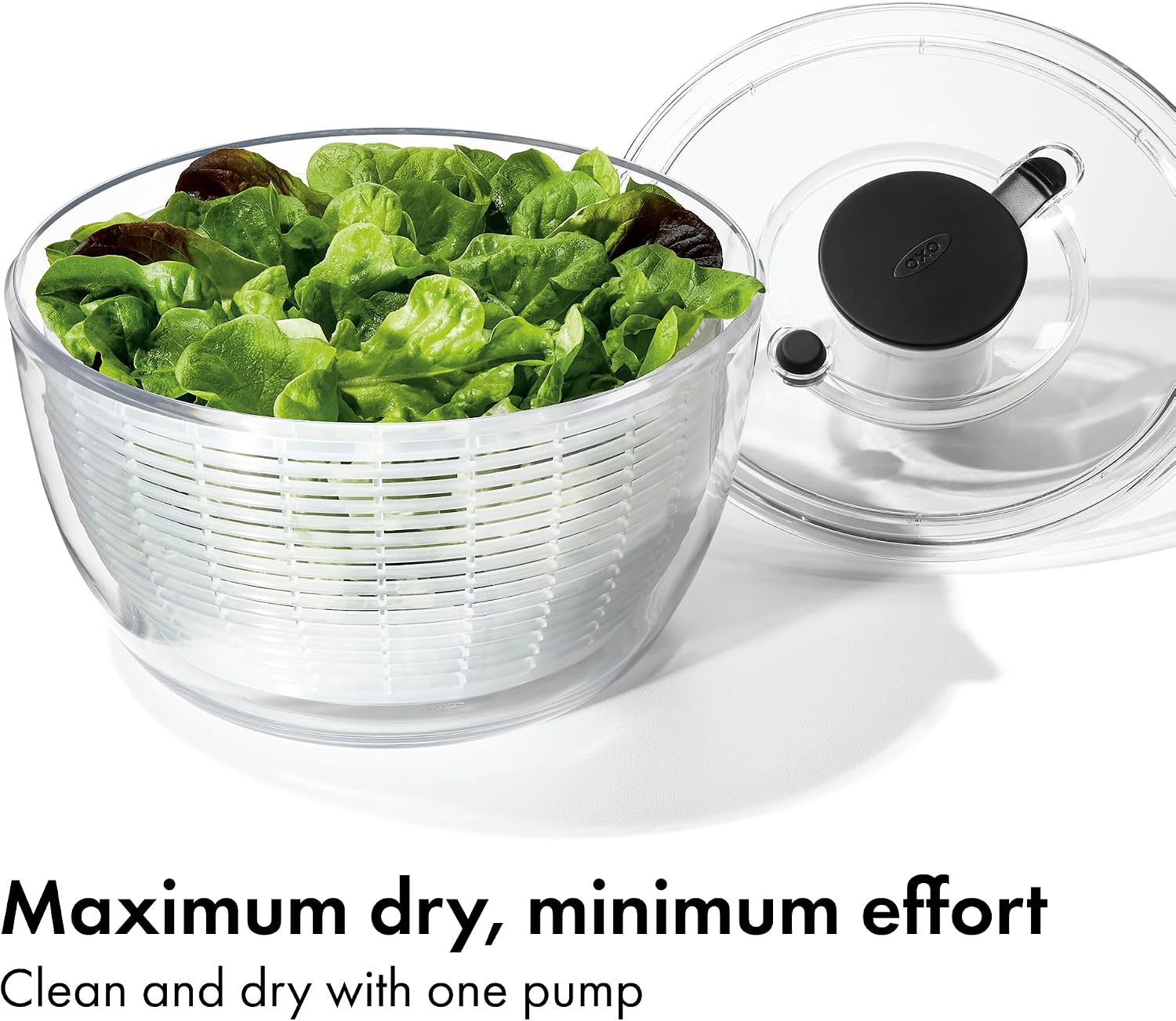
The Amazon listing identifies a manual pump spinner with a separate basket and bowl, a brake, a nonslip base and a pump that locks down for storage. It lists a 6.22-quart bowl and a 4.4-quart basket. Those are product specifications, not the quantity we have personally processed.
The distinction matters because this is not a compact folding strainer. Locking the pump reduces the height of one component; it does not shrink the bowl diameter. The basket can be used for draining and the outer bowl for serving, which can reduce the number of pieces you bring to the counter. That versatility only saves cupboard space if it genuinely replaces something you already own. For the broader setup, Small space appliances worth buying is a useful next read.
Where drying changes the meal
Consider a workday lunch assembled before leaving home. You rinse a head of lettuce, prepare toppings and add dressing later. The spinner addresses the water left on the leaves after rinsing. It does not chop the toppings, season the salad or create a storage plan. Its value is concentrated in one stage, so judge it on how troublesome that stage is in your kitchen.
For dinner, the benefit may be a tidier preparation sequence: wash, drain, spin and empty the collected water before moving on. If salad is a side dish only once a month, that sequence is unlikely to justify a large dedicated object. Frequent use is a stronger reason to buy than the number of different foods pictured in a listing.
A realistic wash-to-table workflow
Start with the washing method appropriate to your produce. A spinner is not a substitute for that step. Lift the basket clear of collected water before spinning, and avoid packing it so densely that leaves have nowhere to move. Empty the bowl as needed rather than treating a pool of water below the basket as finished work.
Inspect the leaves after a cycle and decide whether they are dry enough for the dish you are making. Tender herbs and delicate produce deserve a cautious approach; the fact that an item fits does not establish that vigorous spinning is the best treatment. There is no universal number of pumps that we can responsibly prescribe without testing the actual load.
Set aside time to clean the equipment after serving. An efficient preparation tool loses its advantage if its lid, basket and bowl become a pile of wet parts blocking the sink all evening.
Measure the storage problem before buying
Use the product dimensions shown for the selected listing to check the intended shelf, then consider the route into that shelf. A bowl can fit behind a cabinet door yet be awkward to retrieve because pans or a center divider obstruct it. Mock up the footprint with an existing mixing bowl of similar size before committing.
Also decide whether the spinner will live assembled. Nesting loose pieces among unrelated cookware may make the cabinet look efficient but adds a search step every time you use it. If it requires moving the blender and two stockpots, the practical cost is much higher than its purchase price suggests.
Refrigerator storage is a separate question. Check shelf height and depth if you intend to put the assembled container inside. Do not assume that a large capacity advertised for preparation automatically suits a narrow refrigerator shelf.
The pump and brake: useful design, unmeasured effort
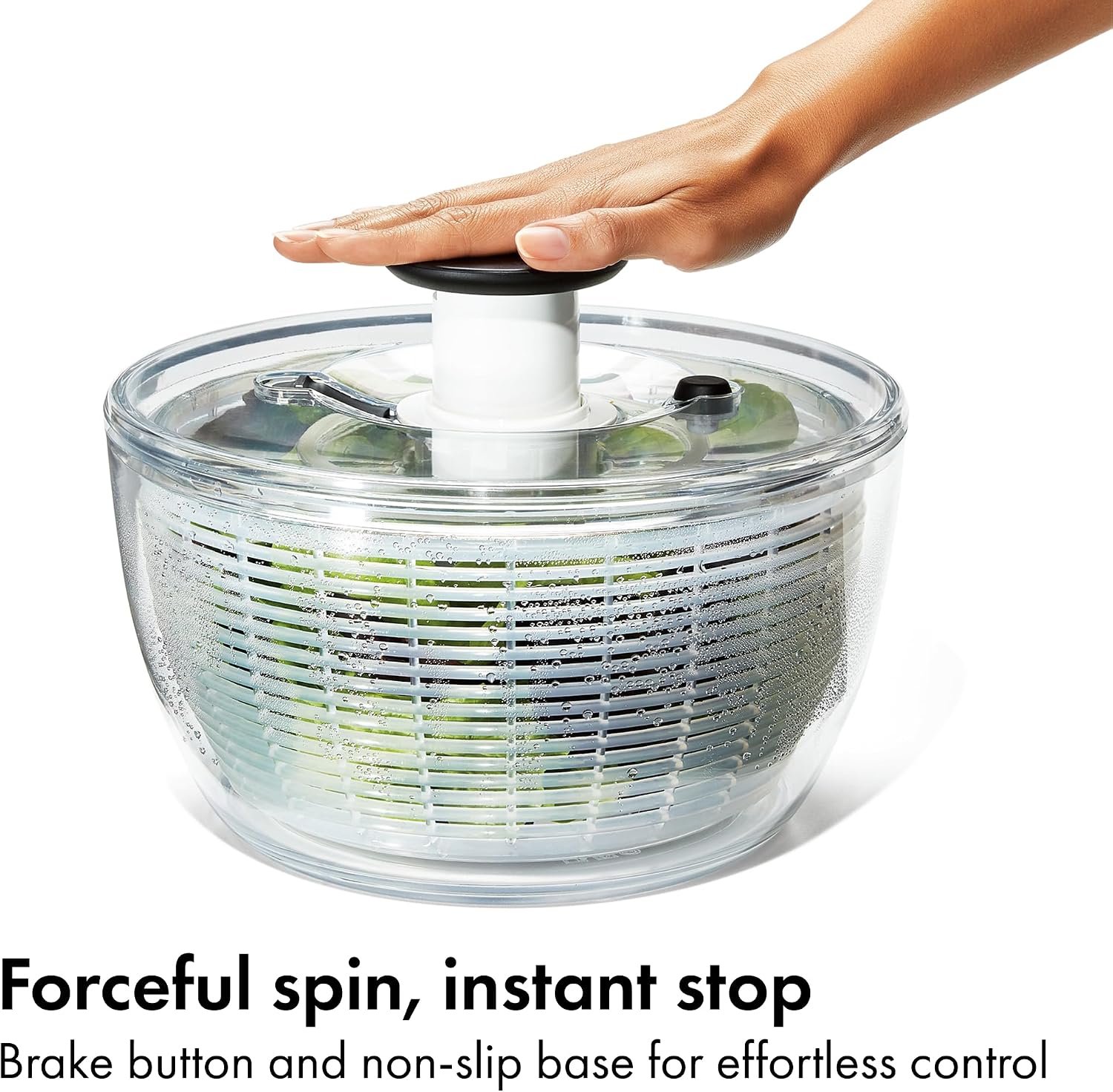
A downward pump can be more appealing than repeatedly turning a small handle. The brake also gives you a deliberate way to stop the basket before removing the lid. These are design differences that may influence preference; we have not measured hand force, stopping distance, stability or drying speed.
If grip comfort is your main reason for shopping, try a display model when possible or choose a seller with workable return terms. A one-handed description does not establish that every person can comfortably operate the product. Counter height and the surface beneath the bowl also affect the experience.
The mechanism introduces a long-term uncertainty that a plain colander does not have. We have not run repeated-use testing, so we cannot promise a particular service life or rank its durability against competing spinners.
Cleaning is part of the purchase decision
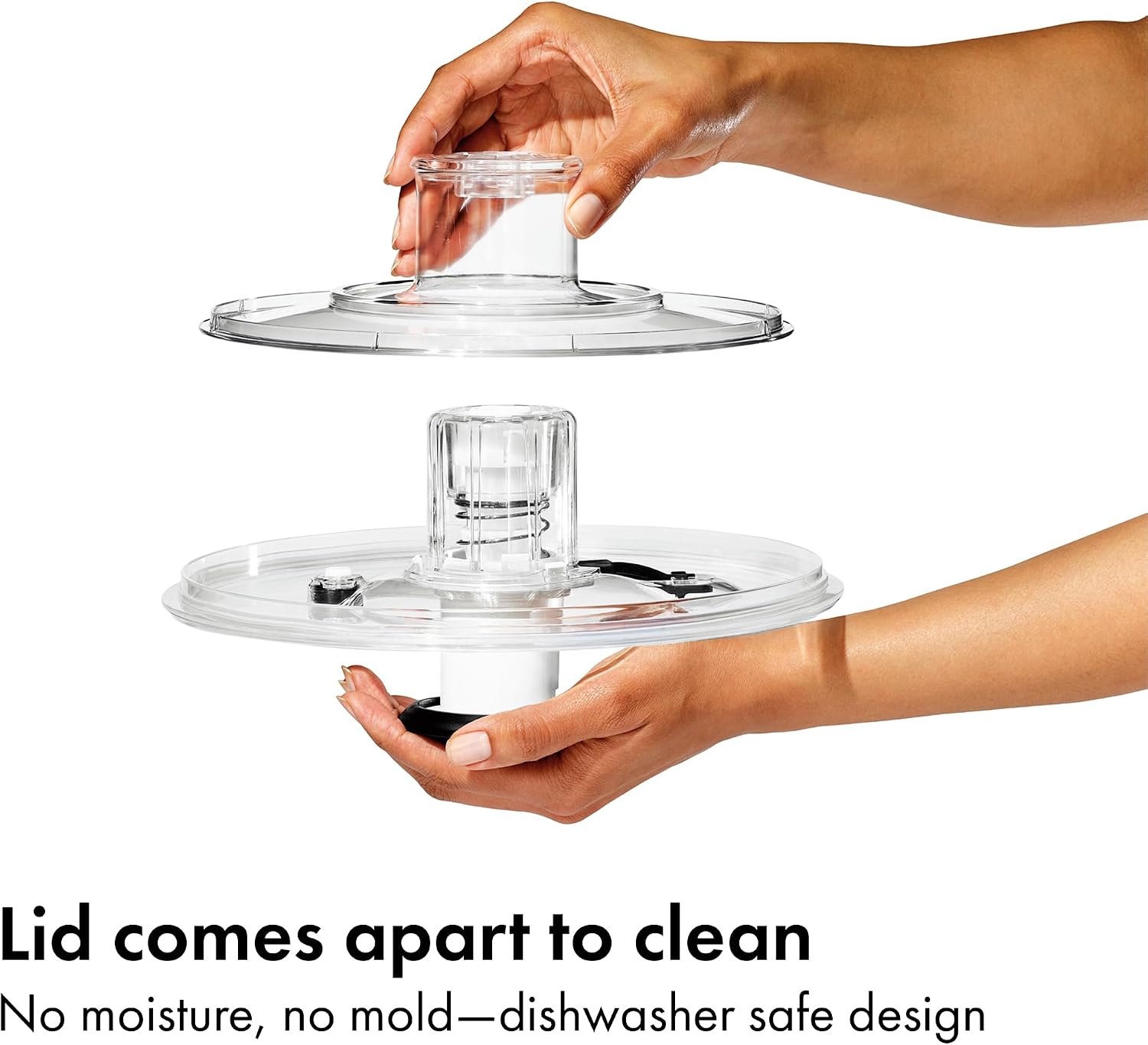
The listing says the lid separates for cleaning and recommends the top dishwasher rack for the dishwasher-safe parts. Follow the instructions supplied with your unit for disassembly. Do not force a component because it looks removable in a photograph.
Before buying, imagine a normal dishwasher load. Will the bowl and basket fit without displacing the items you wash every day? If not, plan for hand washing. Inspect openings and the lid area for trapped leaf fragments, and let components dry before closing everything up in the cupboard.
A buyer who dislikes cleaning multipart utensils may prefer a simpler draining method despite its slower preparation. The useful comparison is the whole cycle—retrieve, wash produce, dry produce, clean equipment and put it away—not just the satisfying moment when the basket spins.
When a smaller spinner or colander wins
A smaller spinner is worth considering for one-person portions and herbs, provided its usable basket suits your routine. Its drawback is batching when guests arrive. The large OXO reverses that tradeoff: more room for a family preparation session, more space occupied on ordinary days.
A colander is the better starting point when you mainly need to rinse and drain. It has no pump assembly and can serve many unrelated kitchen tasks. It will not perform the same spinning action, but you should not pay for that action if you do not need it.
Keeping your existing method is also a valid result. Try noting how often wet leaves genuinely interrupt meals over a week. A repeated inconvenience is evidence of a useful purchase; a vague intention to eat more salad is a weaker foundation.
Questions to settle before checkout
Will it make vegetables safe to eat? No claim in this review treats spinning as sanitizing. Use appropriate washing and food-handling practices. Will it keep lettuce fresh for a guaranteed number of days? We have not tested refrigerated storage and cannot make that promise. Freshness depends on the produce and how it is handled as well as the container.
Can it replace a serving bowl? Sometimes, if you like its appearance and the size fits the table. That is a household preference, not an automatic space saving. Can it replace a colander? It may cover some draining jobs, but consider the heat and use limits in the supplied instructions before putting it into a different cooking role.
The most useful final question is simple: where will it live next Tuesday after the dishes are done? A clear answer makes this a more credible purchase than any promotional capacity claim.
Choose by the job, not the product count
| Your situation | Better starting point | Reason |
|---|---|---|
| Frequent family salads | This large OXO spinner | Drying is a repeated preparation task |
| Small solo portions | A smaller spinner | Less storage commitment, with batching tradeoffs |
| Rinsing and draining only | Your current colander | Avoids an unnecessary mechanism |
Amazon product and current listing
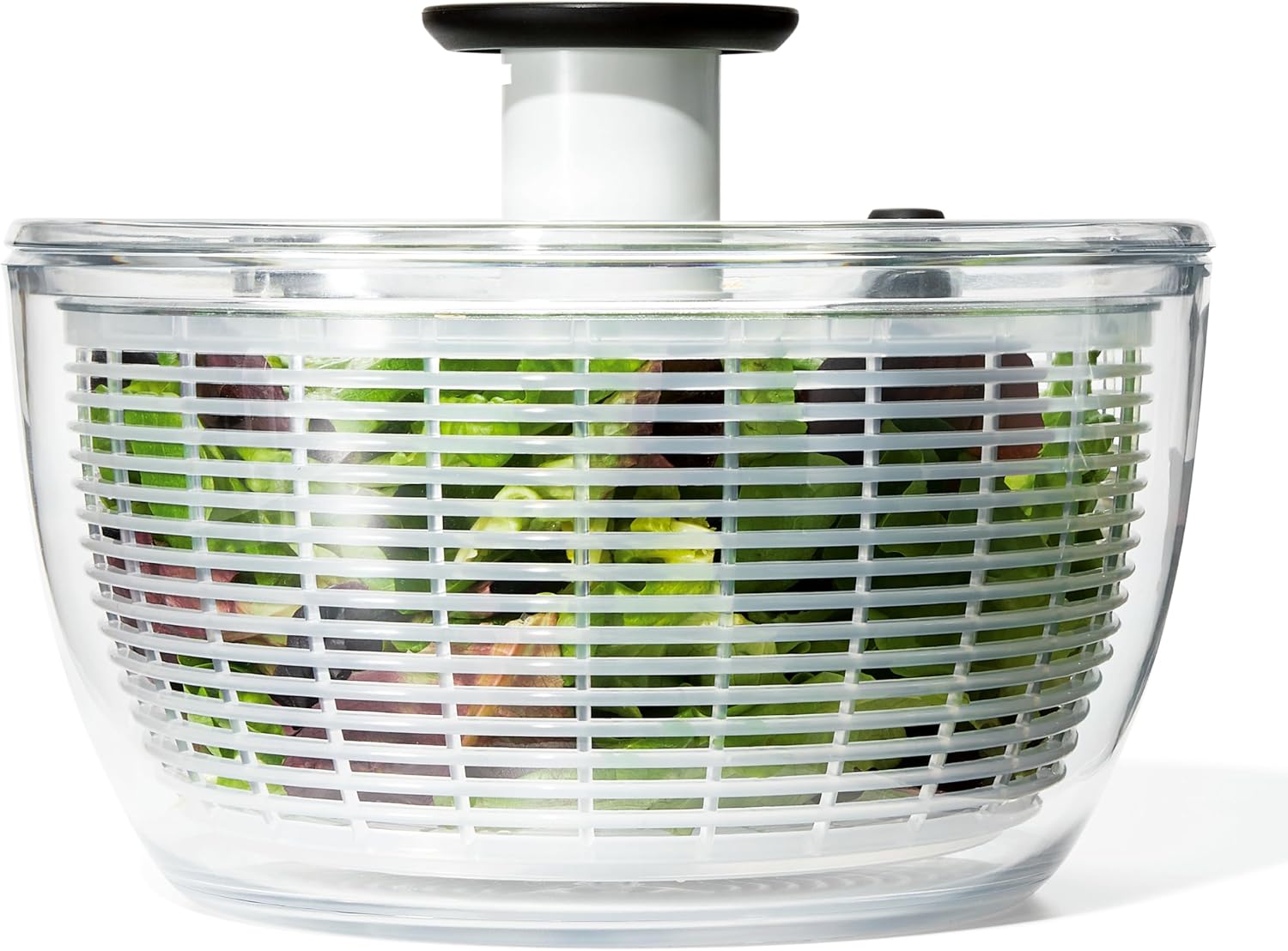
Check OXO Good Grips 6.22-Quart Salad Spinner on Amazon. Confirm the exact variant, seller, delivered price and return terms before ordering. This link identifies ASIN B00004OCKR; it does not guarantee an offer is currently available.
Our buying decision
Choose the OXO if washing and drying greens is part of your weekly routine and the assembled bowl fits your cabinet. Skip it if a colander already meets your needs or you would have to unpack a cupboard every time you want a salad.
Continue with Kitchen ideas and our Buying Guides. For the surrounding routine, read OXO Collapsible Colander Review: Does It Earn Cabinet Space in a Small Kitchen?.
Sources and review scope
We checked the specific Amazon listing for product identity and listed features. The room scenarios and purchase comparisons above are editorial analysis. We have not measured performance, lifespan or long-term durability.
Sources
- Amazon product listing — https://www.amazon.com/dp/B00004OCKR