Small-space appliances promise convenience, but every appliance also has a storage cost: counter area, cabinet volume, cords, attachments, cleaning, and the effort required to pull it out and put it away. If you are working on the same space, Best laundry hampers for small spaces covers the next decision in more detail.
The right question is not, “Is this appliance compact?” It is:
“Does this appliance earn the space it permanently or repeatedly occupies?”
Use the five-part appliance test
- How often will we use it?
- Does it replace another appliance or recurring task?
- Where will it live?
- How annoying is it to clean?
- Can another tool already do the same job well enough?
Usually worth considering: a compact coffee maker
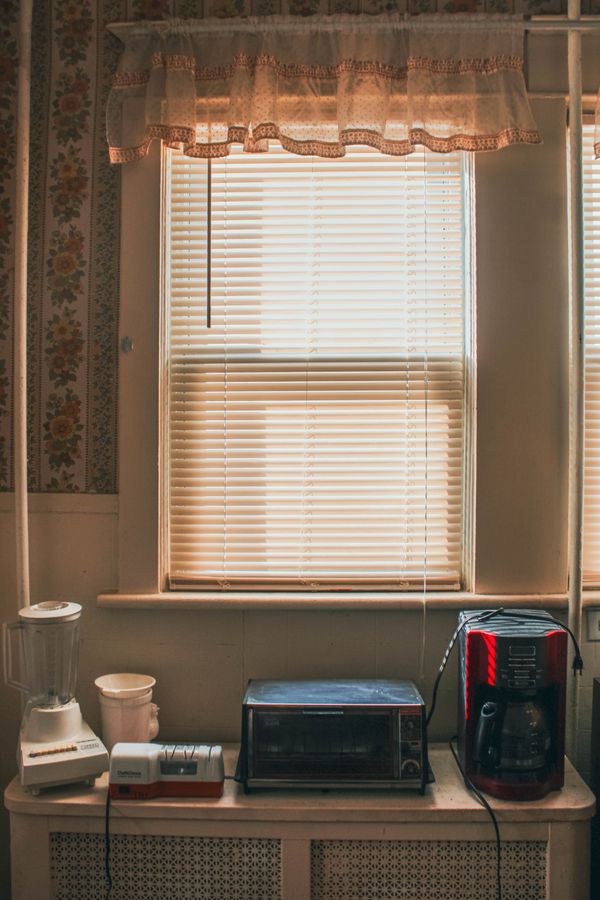
If coffee is a daily household routine, a compact machine can earn permanent counter space. Choose the smallest format that supports the actual number of drinks you make. If you are working on the same space, 12 Space-Saving Ideas That Actually Work in a Small Family Home covers the next decision in more detail.
If coffee is occasional, a manual method may consume less permanent space.
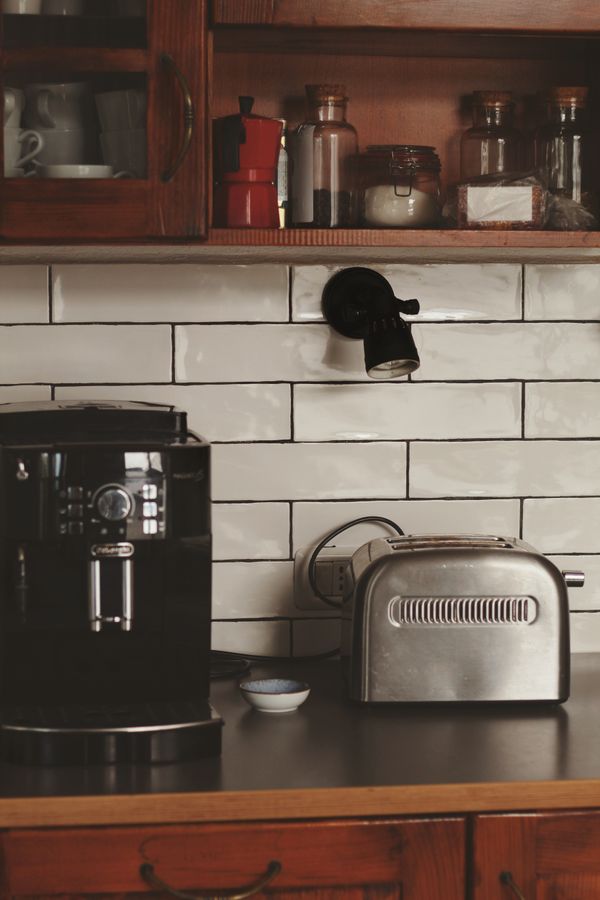
Usually worth considering: a toaster or toaster oven—pick one role
A toaster is compact and simple. A toaster oven takes more space but can handle more tasks. In a small kitchen, owning both only makes sense if both are used frequently. For the broader setup, The 15-Minute Nightly Kitchen Reset for Busy Families is a useful next read.
Blender: worth it when the routine is real
Smoothies, sauces, soups, or frequent meal prep can justify a blender. If you use it three times a year, a large base plus jar may not deserve prime storage.
Personal blenders can reduce footprint for single servings, but they also add cups, lids, and replacement parts.
Air fryer: useful for some kitchens, bulky for others
An air fryer may earn space in households that use it repeatedly for quick cooking or reheating. In a very small kitchen, the basket footprint and ventilation clearance matter.
Compare it with your oven or toaster oven before adding another large countertop device.
Electric kettle: high value for frequent hot-water use
Tea, pour-over coffee, oatmeal, and other hot-water routines can make a kettle a strong everyday appliance. If you rarely heat water, it may be redundant.
Rice cooker or multicooker: strong when it replaces supervision
These appliances can be valuable when they support staple meals or replace several stovetop tasks. The larger the cooker, the more important it is to identify a permanent storage spot first.
Hand mixer vs stand mixer
A hand mixer is easier to store and can cover many occasional baking jobs. A stand mixer may be worth the footprint for frequent bakers who genuinely use its capacity and attachments.
Do not buy the larger tool for a future baking identity that has not appeared yet.
Food processor: powerful but attachment-heavy
A processor can save time for frequent chopping, slicing, shredding, and dough tasks. In a small home, count the bowl, lid, blades, discs, and accessory storage—not just the motor base.
Single-purpose appliances that need extra scrutiny
Examples include egg cookers, sandwich presses, popcorn machines, mini donut makers, dedicated hot-dog devices, or novelty breakfast appliances.
Some households genuinely love them. The problem is not that they are single-purpose; it is that single-purpose tools need enough use to justify dedicated storage.
Counter-space rule: permanent residents should be frequent residents
Anything that lives on the counter full time should support a near-daily or highly valued routine.
For everything else, decide whether it has a realistic cabinet home before purchase.
Cabinet-space rule: attachments count too
An appliance is not compact if its accessories fill a whole drawer.
Before buying, list every piece you will need to store: lids, blades, paddles, baskets, cords, measuring cups, racks, trays.
The “replace two things” bonus
Multifunction appliances are most valuable when they truly allow you to remove another appliance. If you keep all the old appliances too, the multifunction claim does not save space. You may also find How to Keep a Small Kitchen Clean When You Cook Every Day useful for a closely related small-home problem.
What to do with appliances you already own
Use a 30-day audit. Put low-use appliances in an accessible holding area and mark every time you retrieve one. At the end, compare use with the space it consumes.
For crowded counters, also see How to Clean a Small Kitchen Without Moving Everything Off the Counters.
A small-kitchen appliance scorecard
| Question | Strong sign |
|---|---|
| Used how often? | Weekly or more |
| Replaces another task/tool? | Yes |
| Permanent storage spot? | Yes |
| Cleanup easy enough? | Yes |
| Accessories contained? | Yes |
Frequently asked questions
Should appliances stay on the counter?
Only the ones that support frequent routines and do not eliminate needed prep space.
Are multifunction appliances always better?
No. They save space only when you use the functions and can remove or avoid buying separate devices.
What should I declutter first?
Start with appliances that are unused, duplicated, broken, difficult to clean, or missing a realistic storage home.
Buy the appliance for the routine you already have
The best small-space appliance is not the smallest gadget. It is the appliance that reliably saves time, replaces another task, and has a clear home. If the routine is imaginary, the appliance usually becomes storage clutter.
Sources
- Keurig K-Mini Single Serve Coffee Maker — https://www.keurig.com/Home-Coffee-Makers/K-Mini-Single-Serve-Coffee-Maker/p/K-Mini-Coffee-Maker
- COSORI Electric Kettle — https://www.amazon.com/dp/B08PP48979
- Ninja Air Fryer Pro AF141 — https://www.amazon.com/dp/B0CSZ7WBYW