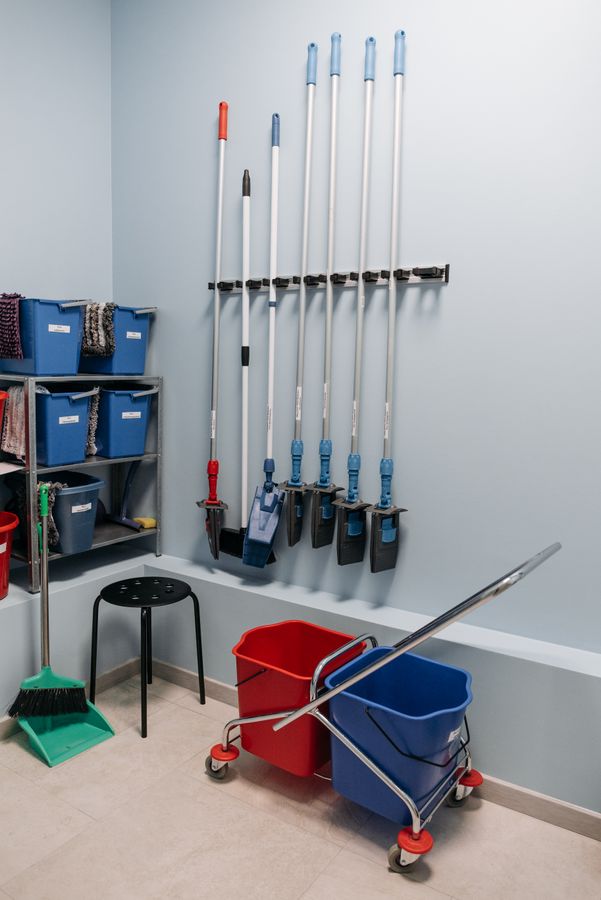
Small homes do not need a large cleaning arsenal. In fact, too many specialty tools can create a second problem: a utility closet full of equipment that is awkward to store, rarely used, and difficult to keep organized. For a related step-by-step approach, see A Realistic Deep-Cleaning Checklist for a Small Home.
The best setup is a small core cleaning kit that handles floors, dust, spills, bathrooms, kitchen surfaces, and occasional detail work.
The core kit
For most compact homes, start with:
- a vacuum suited to your floor types,
- a mop or spray mop for washable hard floors,
- microfiber or reusable cleaning cloths,
- a scrub brush,
- a small detail brush,
- a squeegee if you regularly clean glass or shower walls,
- a dustpan and brush or compact broom if useful for quick debris,
- one carry caddy or small storage bin.
1. Vacuum: the highest-impact purchase
If you have rugs, carpet, pets, or crumbs under a dining table, the vacuum is likely the tool you will use most.
Choose based on your home rather than marketing features:
- floor types,
- storage footprint,
- weight,
- cord vs battery preference,
- attachments you will actually use,
- how easy the bin or bag is to empty.
A large machine that cleans well but never leaves the closet is not a good fit for a small apartment.
2. Mop: simple beats specialized
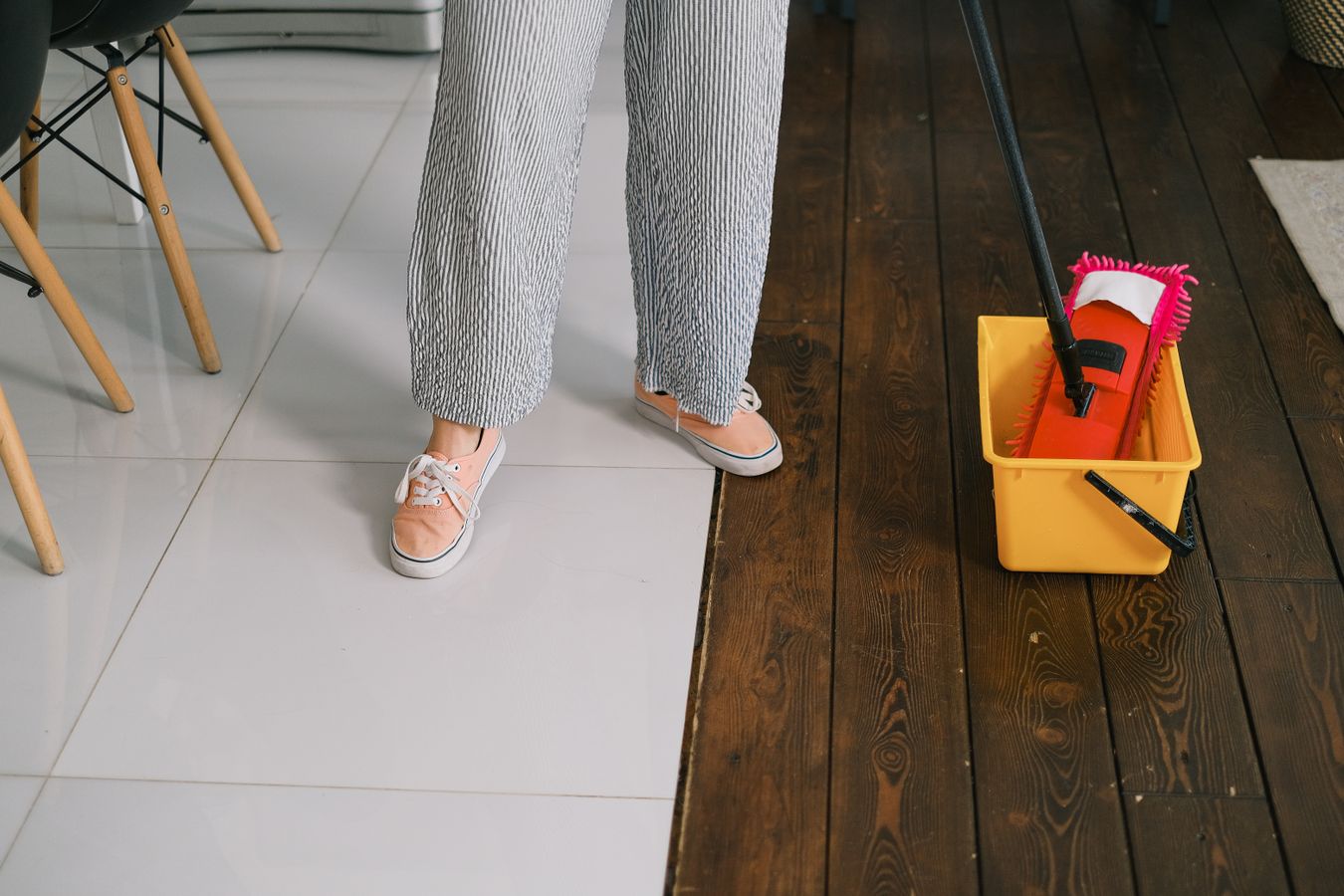
A compact flat mop or spray mop can work well where floor space is limited. Choose a head that fits under furniture and replacement pads that are easy to wash or replace. You may also find Small space appliances worth buying useful for a closely related small-home problem.
Always use a cleaning method appropriate for the flooring manufacturer’s guidance.
3. Microfiber or reusable cloths
A small set of washable cloths can handle counters, dust, bathroom surfaces, appliance exteriors, and spills.
Color coding is optional. If it helps you separate bathroom cloths from kitchen cloths, use it. If not, a simple laundry routine is enough. For a related step-by-step approach, see A Simple Weekly Home Reset for Busy Families.
4. One medium scrub brush
A general scrub brush is useful for tubs, tile, utility areas, and tougher washable surfaces. Choose a shape that stores easily and feels comfortable in hand.
5. One detail brush
A small brush helps around faucet bases, grout edges, window tracks, and narrow corners. You do not need a different brush for every tiny surface.
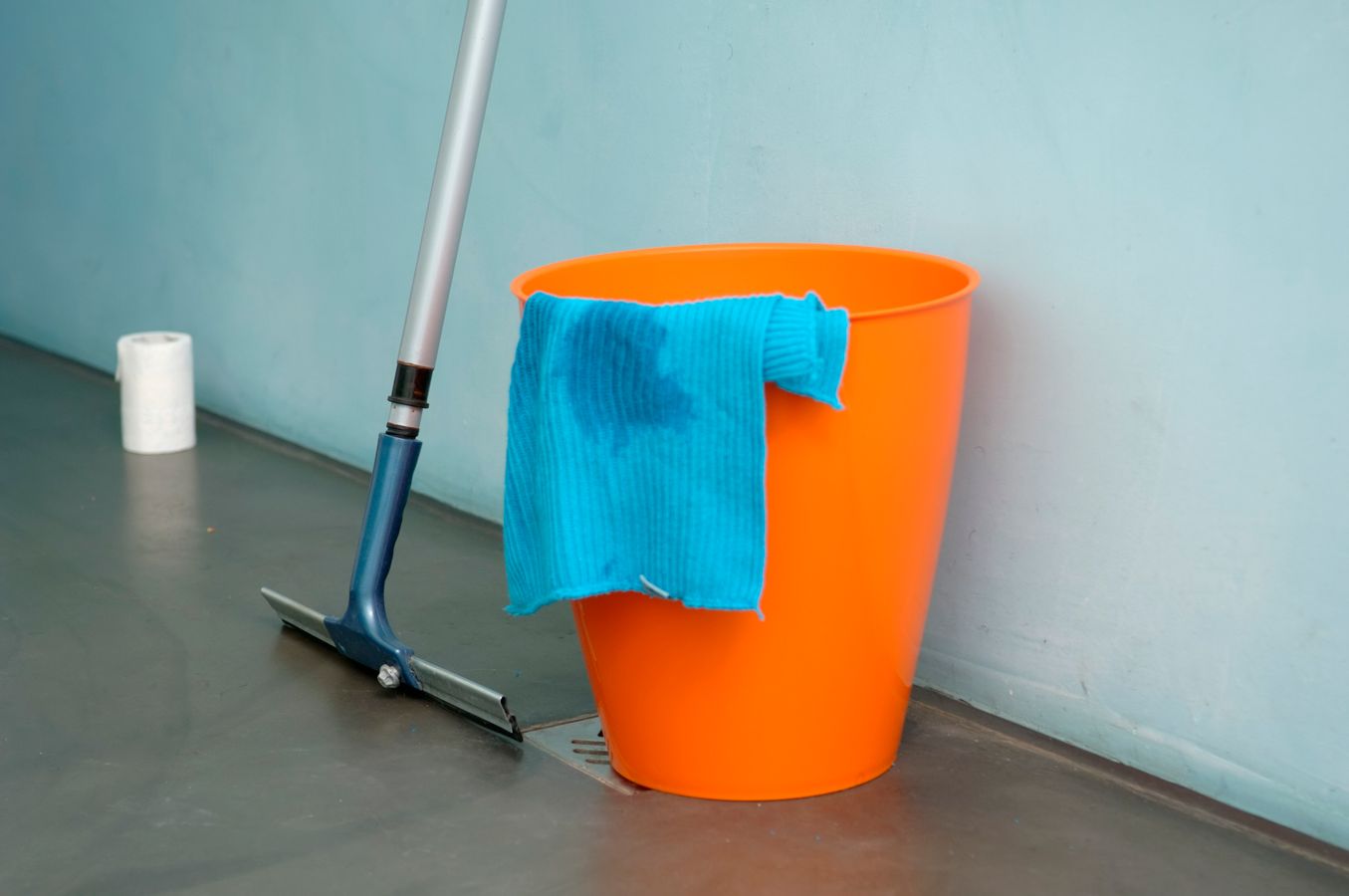
6. Squeegee: useful if the home has glass-heavy wet areas
If you have a glass shower or large bathroom mirror, a small squeegee can speed routine cleaning. If not, skip it.
7. Quick-debris tool
A compact broom and dustpan can be useful for kitchen crumbs, entryway dirt, or pet litter. Some homes can skip this if a cordless vacuum is always easy to reach.
What about steam cleaners?
Steam tools can be useful for specific compatible surfaces, but they are not automatically suitable for every floor, finish, or material. Check manufacturer instructions before using heat or moisture.
For many small homes, a steam cleaner is optional rather than core equipment.
What about robot vacuums?
They can reduce routine floor work in layouts with enough open clearance. They are less useful when cords, thresholds, floor toys, or tight furniture require constant preparation.
Think of a robot vacuum as a maintenance tool, not a replacement for all floor cleaning.
What about electric scrubbers?
They can help people who value powered scrubbing for bathrooms or detail cleaning, but they add charging, attachments, and storage. Buy one only if you already know what recurring job it will replace.
Tools that often become clutter
- single-purpose dusters for one surface,
- duplicate mops,
- large caddies full of rarely used attachments,
- oversized buckets in homes with little utility storage,
- novelty gadgets that solve a five-minute monthly task.
Build a one-caddy system
Keep the cloths, brush, detail brush, gloves if used, and a few routine products together. Store the vacuum and mop separately.
The caddy should be light enough to carry room to room and small enough to have a permanent home.
Match tools to the cleaning schedule
A tool earns space if it supports a frequent task. Use How Often Should You Clean Everything in a Small Home? to identify which tasks happen often enough to justify dedicated equipment.
A buying checklist
- Does it solve a recurring job?
- Can I store it without creating a new storage problem?
- Is it compatible with my surfaces?
- Can one tool replace two existing tools?
- Are replacement parts or pads easy to obtain?
Frequently asked questions
Do I need both a broom and a vacuum?
Not necessarily. If a lightweight vacuum handles quick debris easily, a broom may be redundant.
How many cleaning cloths do I need?
Enough to complete your normal cleaning cycle without reusing dirty cloths before laundering. The exact number depends on your routine. For the broader setup, How to Keep a Small Home Smelling Fresh Without Constantly Cleaning is a useful next read.
Should I buy a cleaning cart?
Usually not for a small home. A compact caddy is easier to store and move.
Buy fewer tools and use them more often
A small cleaning kit should be easy to grab, easy to put away, and flexible enough for most rooms. Start with the core jobs and add specialty tools only when a recurring task proves you need them.
Sources
- O-Cedar EasyWring Spin Mop & Bucket System — https://www.ocedar.com/p/mops/spin-mops/easywring-spin-mop-bucket-system/
- BLACK+DECKER dustbuster AdvancedClean CHV1410L — https://www.blackanddecker.com/products/chv1410l
- MR.SIGA Microfiber Cleaning Cloths — https://www.mrsiga.com/collections/all/microfiber-cleaning-cloth