The best storage product for a small home is not the one that holds the most. It is the one that makes a useful category easier to access, easier to return, or easier to fit without adding unnecessary furniture. For the broader setup, Small Apartment Storage Ideas That Don’t Require Drilling is a useful next read.
This guide compares storage solution types rather than chasing one perfect brand. The goal is to decide what is worth buying for your actual home. If you are working on the same space, Cleaning tools a small home really needs covers the next decision in more detail.
Buy storage only after three questions
- What exact category needs a home?
- Where is that category used?
- What problem does the current storage create?
If you cannot answer those questions, delay the purchase.
1. Shelf risers — worth it for wasted vertical cabinet space
Best for: dishes, pantry goods, bathroom supplies.
Worth buying when: one tall shelf forces short items into deep stacks.
Skip when: the problem is too many items rather than unused height.
2. Pull-out bins — worth it for deep shelves
Shallow or medium-depth bins can turn the back of a cabinet into a pull-forward zone.
Avoid huge bins that become too heavy to move when full.
3. Turntables — excellent for the right category
They work well for bottles, jars, condiments, and small bathroom products. They waste space when used for large rectangular items or categories that do not need rotation. For the broader setup, How to Build a Home Binder System That Actually Works in a Small Space is a useful next read.
4. Vertical dividers — high value for flat awkward items
Baking sheets, cutting boards, lids, trays, and some bags are often easier to store vertically than in piles.
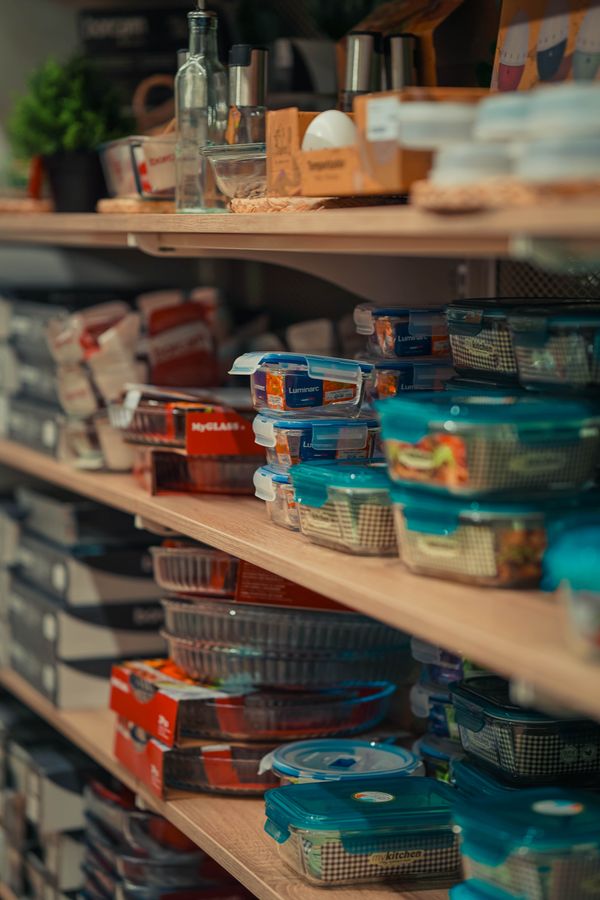
5. Clear stackable bins — useful in visible low-frequency storage
These can work well in closets, pantry backstock, and utility storage where seeing contents matters.
Do not stack so high that retrieving the bottom box requires unloading the whole tower.
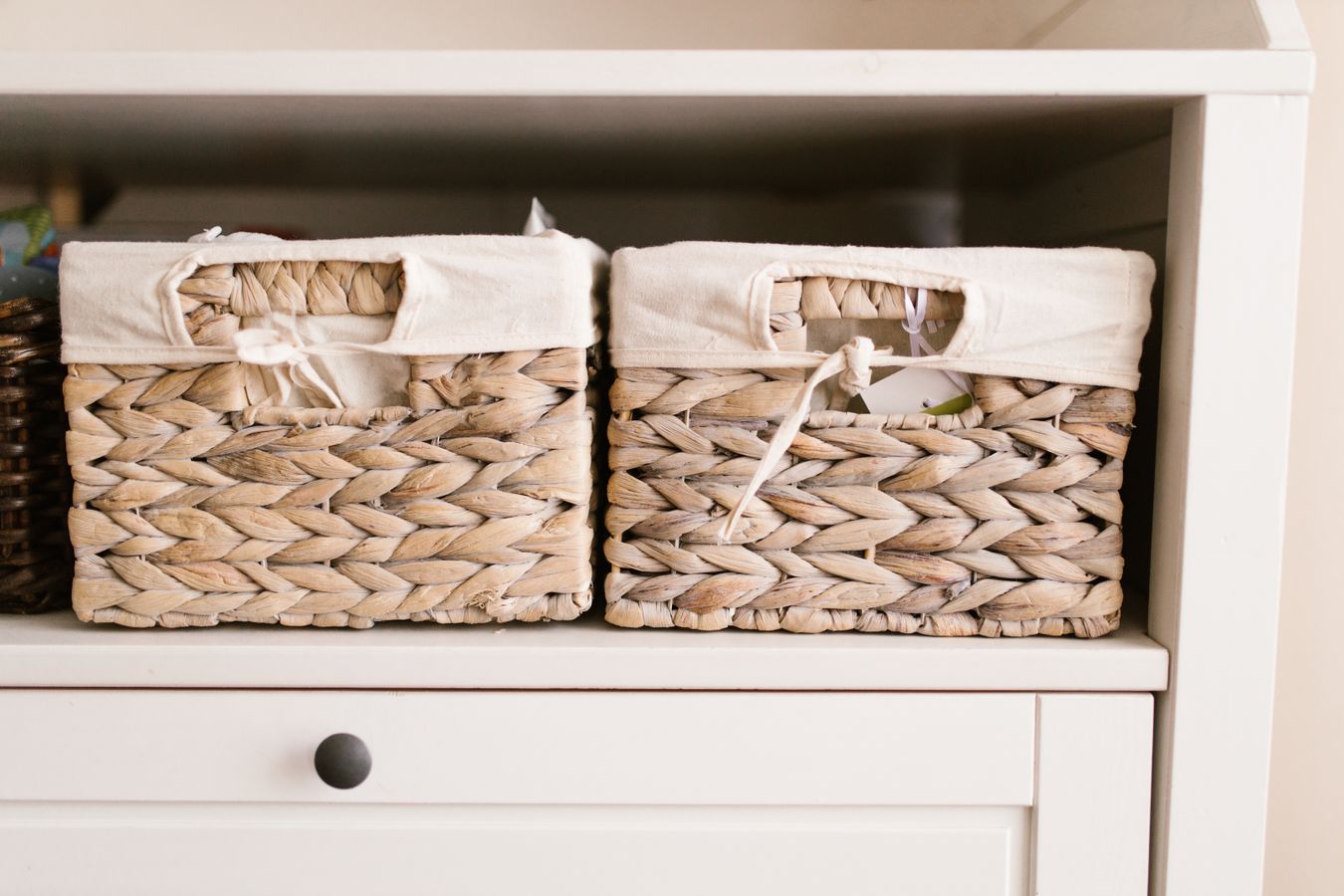
6. Woven or opaque baskets — worth it for visual calm
Use them for categories that do not need item-level visibility: blankets, toys, hats, accessories, towels.
Choose handles and dimensions based on how the basket will actually move.
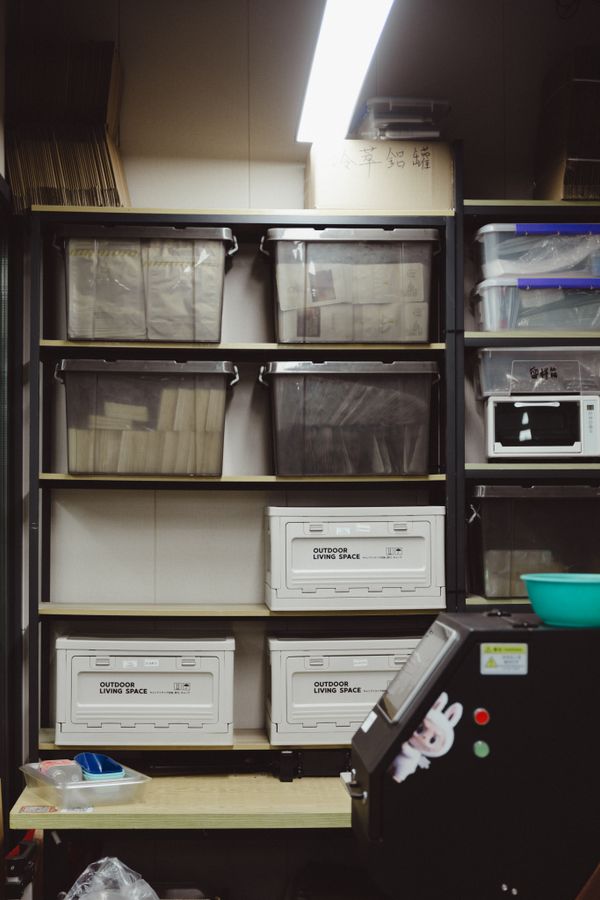
7. Under-bed containers — worth it for seasonal categories
Best for spare bedding, seasonal clothing, or travel gear. Less useful for daily items.
8. Over-door organizers — useful when door clearance allows
Good for lightweight categories. Check hardware, weight, door function, and rental rules before use.
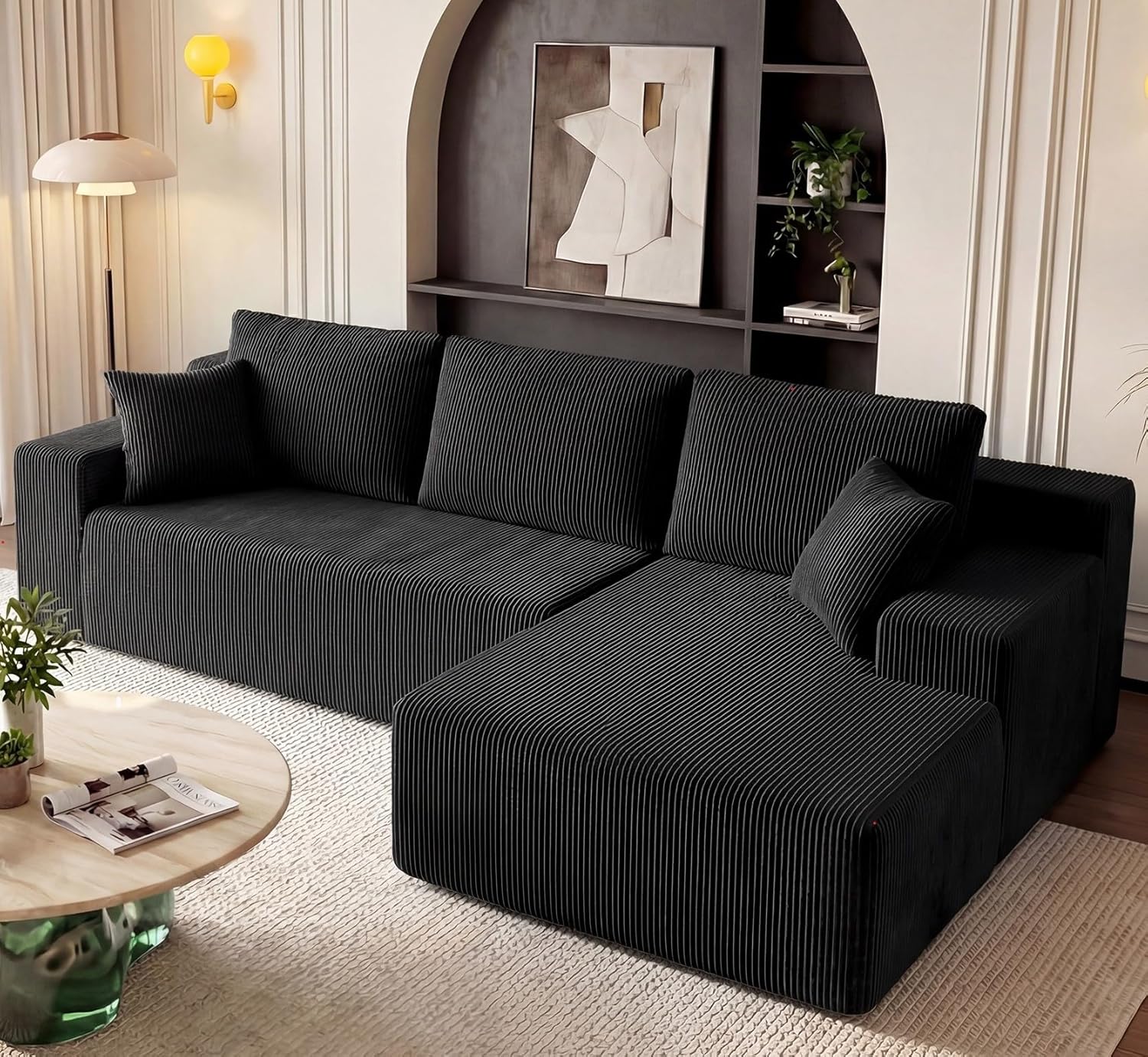
9. Storage ottomans — worth it only if you need the furniture anyway
A storage ottoman can replace a coffee table, footrest, or toy basket. If you do not need an ottoman, hidden storage alone is not enough reason to add one.
10. Rolling carts — excellent for mobile activity zones
Art supplies, pantry overflow, cleaning tools, or work equipment can move with the activity.
The cart should have a parking spot. Otherwise it becomes rolling clutter.
11. Drawer dividers — valuable for small repeated items
Best when they prevent one drawer from becoming a mixed pile. Avoid over-dividing categories that are already easy to find.
12. Vacuum bags — useful, but not everyday storage
They can compress bulky soft goods for seasonal storage. They are inconvenient for items you retrieve often.
Storage products that often disappoint
Tiny specialty organizers
They solve one narrow problem and create a new object to store when the category changes.
Bins bought before measuring
Half an inch of wasted space on both sides adds up quickly in small cabinets.
Furniture-sized storage added to solve clutter
A new cabinet can make a small room tighter while simply hiding excess possessions.
Complicated stacking systems
If one item requires removing three containers, the system is too dependent.
How to measure before buying
Measure width, depth, height, door swing, shelf lip, and the path needed to remove the organizer. Record the usable dimensions—not just the outside dimensions of the cabinet.
A simple value score
| Question | 1 point if yes |
|---|---|
| Does it solve a specific access problem? | +1 |
| Does it fit without wasting important space? | +1 |
| Can everyone who uses it maintain it? | +1 |
| Does it replace another container or piece? | +1 |
| Can the category grow slightly without breaking the system? | +1 |
The higher the score, the more likely the organizer is worth buying.
Where to spend first
If the budget is limited, start with the places that create repeated friction: entryway shoes, deep kitchen cabinets, shared closet, toy reset, laundry transport.
For deep cabinets, see How to Organize Deep Kitchen Cabinets So Nothing Gets Lost.
Frequently asked questions
Are clear bins better?
Only when visibility matters. Opaque baskets can be calmer for broad categories.
Should I buy matching containers?
Matching is optional. Dimensions, access, weight, and function matter more.
What is the best first storage product for a small home?
There is no universal first product. Buy the organizer that solves the most repeated access or reset problem in your home.
The best storage earns its footprint
A storage product is worth buying when it reduces friction, improves access, and survives ordinary use. If it only makes the shelf look prettier on organization day, it is decoration—not a system. For the broader setup, Small Apartment Paper Organization: A Simple System That Stays Tidy is a useful next read.
Sources
- Simple Houseware 2 Tier Sliding Cabinet Basket Organizer — https://www.amazon.com/dp/B093BM6JKB
- SPACEKEEPER Slim Rolling Storage Cart — https://www.amazon.com/dp/B07QRH2PZS
- SONGMICS Folding Storage Ottoman Bench — https://www.amazon.com/dp/B07VCNJNB6