The Simple Houseware four-pack gives small clothing items separate compartments instead of leaving them in a loose drawer pile. That can make selection easier, but it also assigns a fixed amount of room to each item. The set is most useful when your actual socks, underwear and other small garments suit those compartments—not simply when the bins fit inside the drawer. For the broader setup, Simple Houseware Slim Rolling Cart Review: When a 5.5-Inch Gap Becomes Storage is a useful next read.
Review scope: This is a research-based assessment of the linked product, not a hands-on test. Listed specifications are distinguished from our practical buying analysis. Offers and selected variants can change.
Start with the drawer you open every morning
Empty one drawer and identify the actual difficulty. Is it hard to find a matched pair, are categories mixed together, or is the drawer simply too full? Divided bins are a plausible answer to the first two problems. They do not remove excess clothing, and their walls take up some of the space already available. If you are working on the same space, Evelots Shelf Dividers Review: Straighter Clothing Stacks Without More Shelf Space covers the next decision in more detail.
Before buying, put aside items that belong elsewhere and group what remains. If a few clear rows solve the problem, you may not need compartments at all. The four-pack is more useful when those rows repeatedly collapse or small items migrate into neighboring categories during everyday use.
Measure inside, including the closing clearance
Use the drawer’s internal width, front-to-back depth and usable height. Furniture dimensions on a retailer’s page usually describe the outside of the unit. Drawer runners, sloping sides and the space above the closed drawer can reduce what is usable inside.
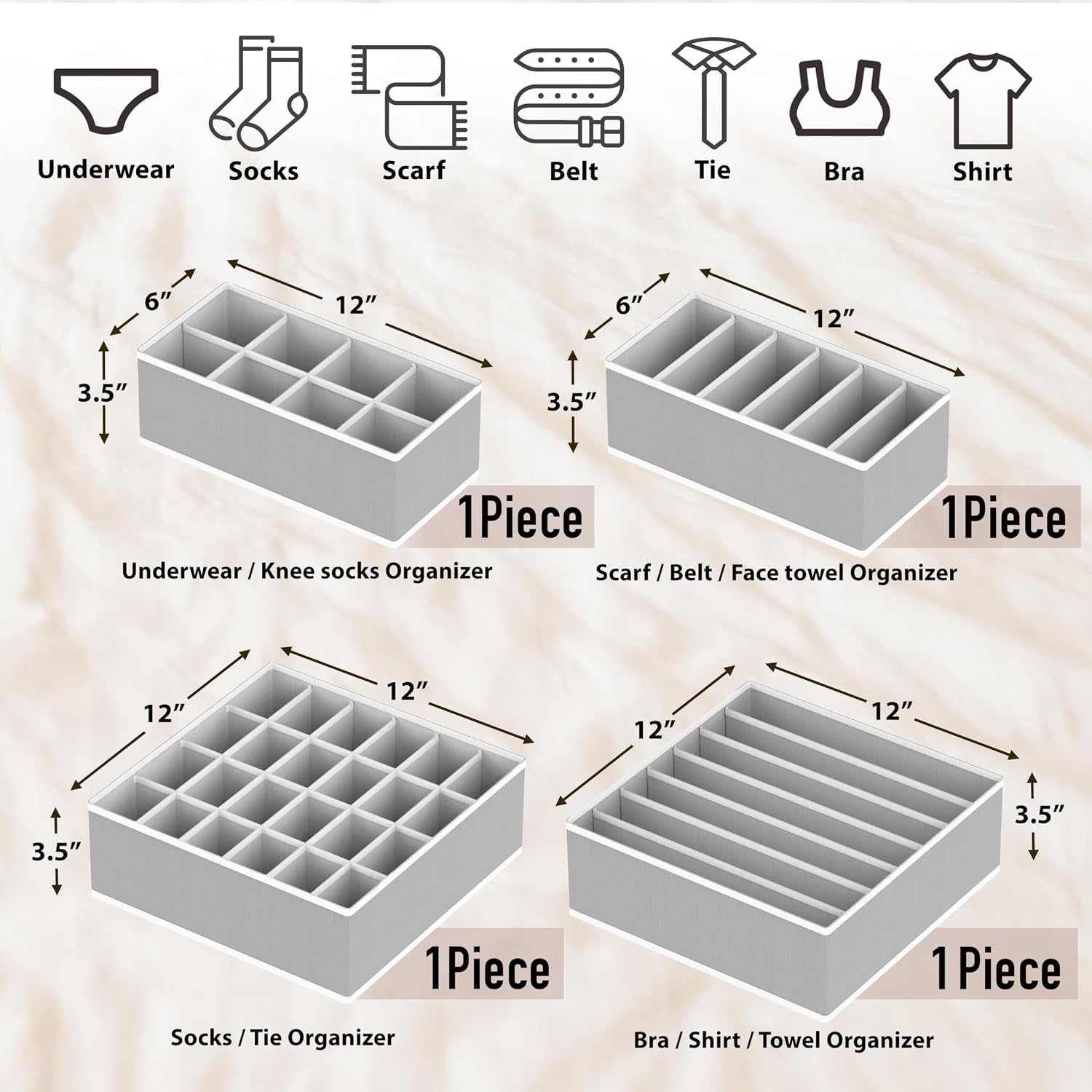
The listed bin height is 3.5 inches, but the clothing can rise above it. Leave enough clearance for the drawer to close without dragging across garments. A bin that fits empty is only the first stage of the fit check. Measure where it will actually sit, especially if the drawer has a narrower back or an internal obstruction.
Plan four bins as separate pieces
The two smaller bins are listed at 11.75 by 5.75 inches, while the two square bins are 12 by 12 inches. Two square bins placed side by side therefore require 24 inches before allowing any practical clearance. That arithmetic is a starting point, not a guarantee of a comfortable fit in a nominally 24-inch space.
Cut paper rectangles to the listed footprints and arrange them in the drawer. Try rotating the smaller pieces or splitting the set across two drawers. You do not have to use all four together. A useful arrangement leaves room to lift a bin out for cleaning rather than wedging every edge tightly against the furniture.
Cell count is not clothing capacity
A 24-cell layout offers many small divisions, but a thick pair of socks may take more room than a thin pair. Likewise, a compartment marketed for bras cannot establish compatibility with every cup shape, band size or garment construction. The number on the package is not a promise that your wardrobe will fit one item per cell.
Choose representative garments, including the bulkiest ones you use regularly. Compare their natural folded or stored shape with the proposed cell layout. Avoid compressing structured garments just to make a tidy photograph. If an item needs to be forced into a compartment, an open bin or a different storage method is the better fit.
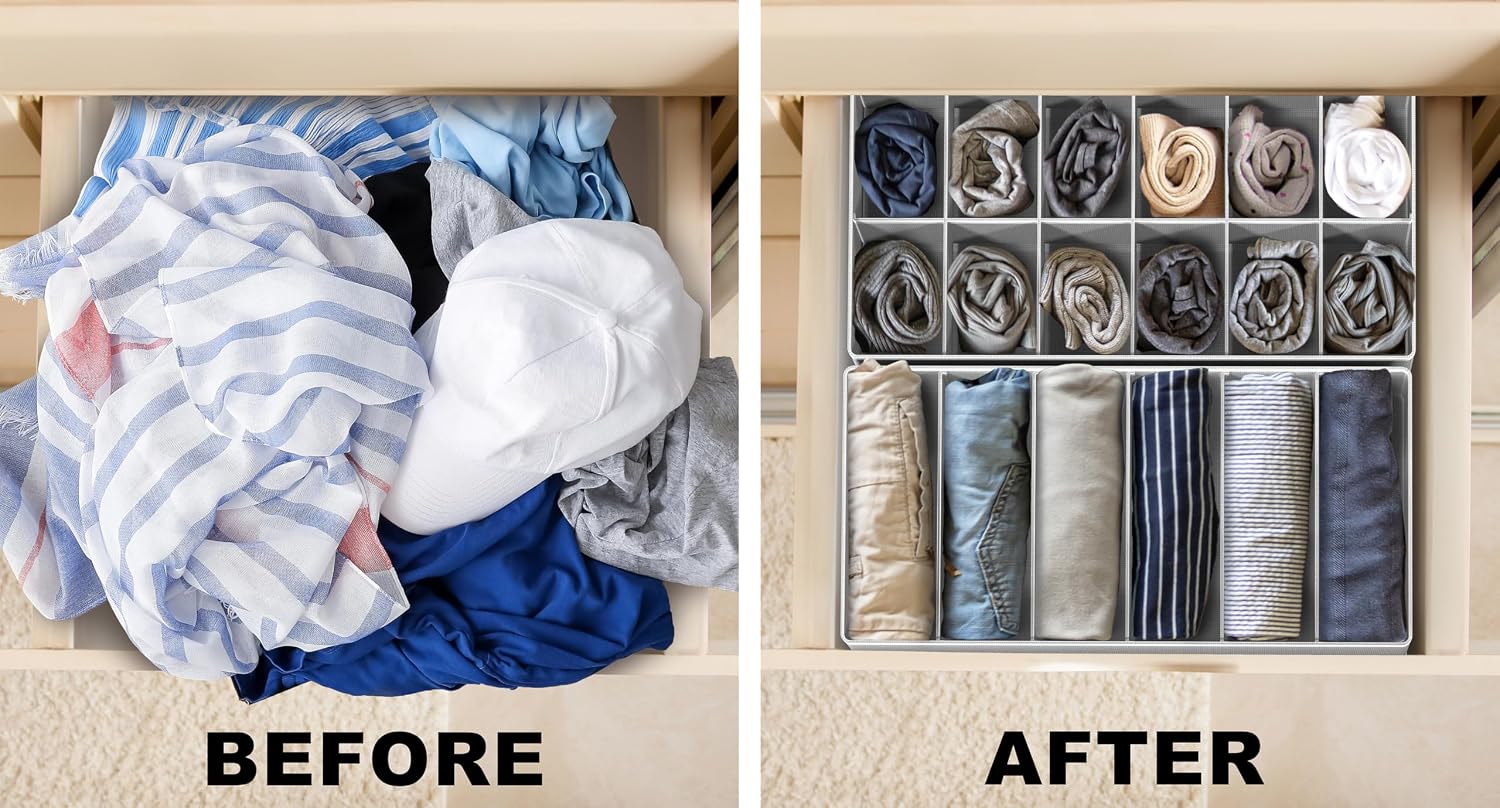
Decide between individual cells and open categories
Individual cells can make missing items and mixed pairs easier to notice, but they also make the system less flexible. A drawer with changing seasonal contents may work better with broader zones. The right amount of division is the amount that helps you retrieve and return things without a new sorting chore.
For example, a person with many similar thin socks may appreciate small repeated cells. A household storing a mixture of thick socks, scarves and irregular accessories may need larger open sections. This is a practical comparison of formats, not a claim that one layout will save a measured percentage of space.
The laundry reset is the real test
Imagine returning a full clean load, not just arranging a few favorite items. Can each garment go back easily? Do the categories remain understandable when one section is nearly empty? If maintaining the layout requires a special fold nobody wants to repeat, the organizer is unlikely to solve the daily problem.
Use simple groupings that match how you dress. There is no need to sort by every color or style unless that distinction helps selection. A small drawer system should reduce decisions in the morning, not create a detailed inventory process every time the laundry is put away.
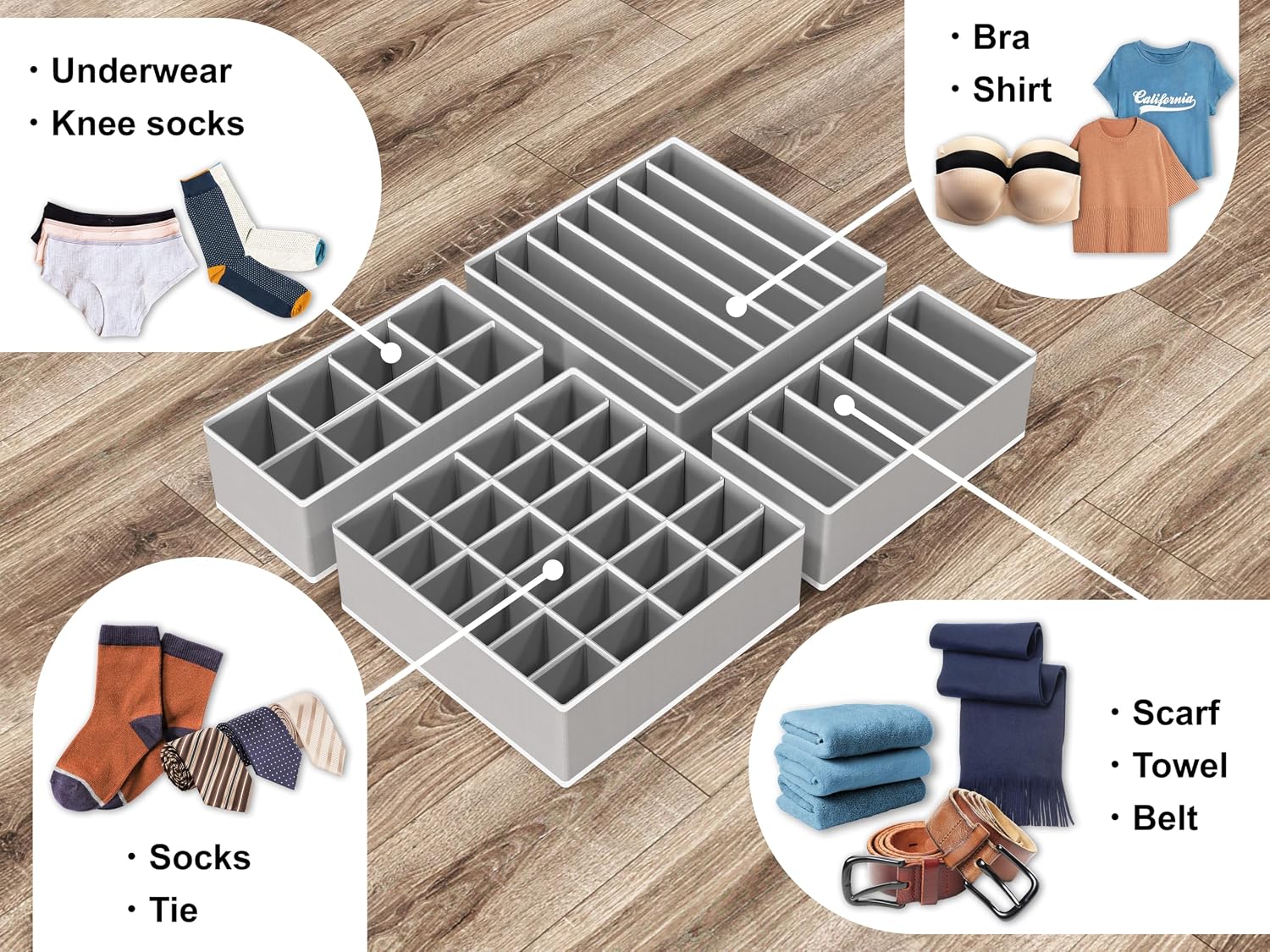
Care and handling of the nonwoven bins
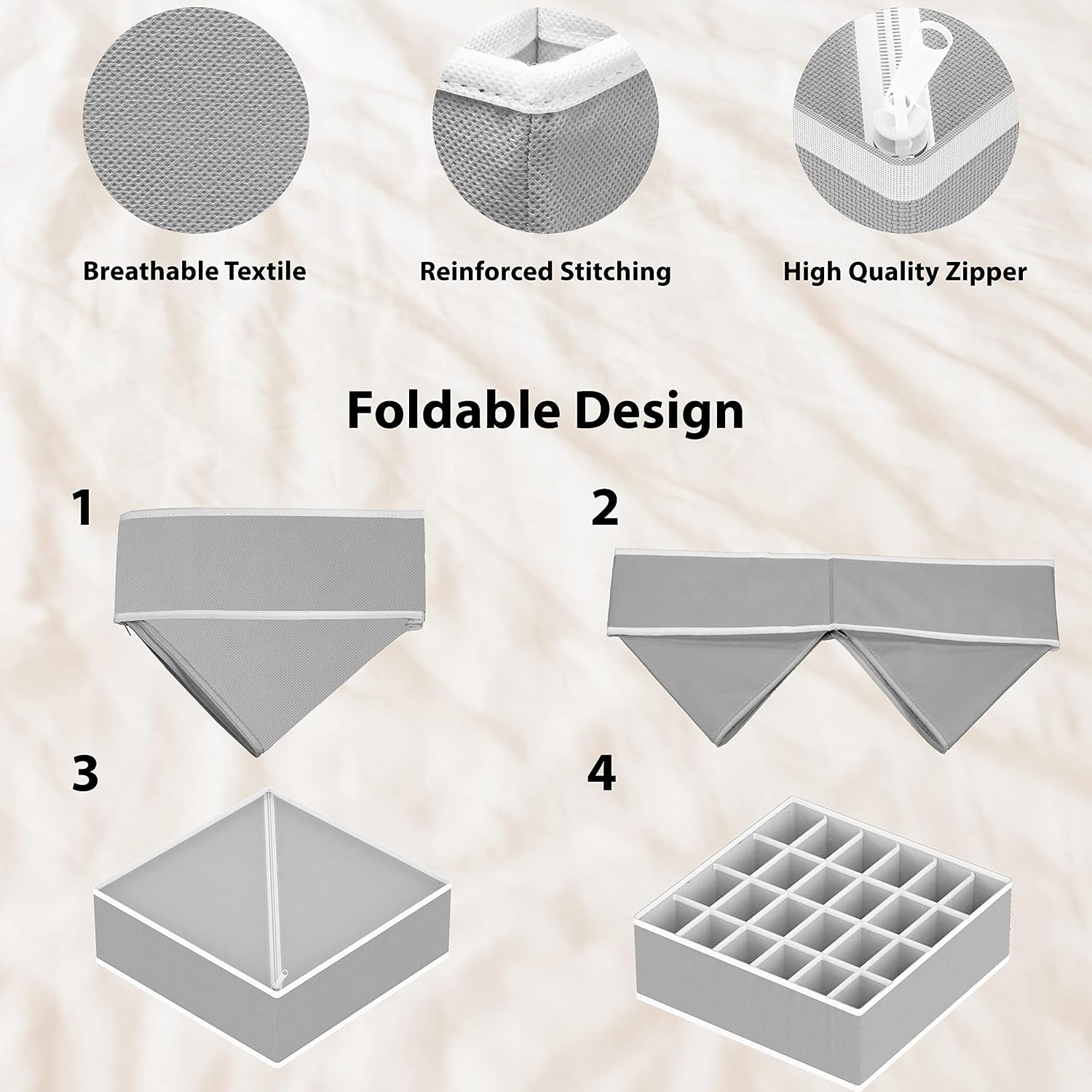
The listing describes a foldable nonwoven construction. That is different from a rigid plastic insert you can assume will tolerate the same washing method. Follow the product’s care directions, and do not infer machine washability from the fact that it stores washable clothing.
Lift a loaded bin with support rather than pulling it by a divider. Keep the drawer itself clean and dry before putting the bins back. We have not tested seam strength, repeated folding or long-term shape retention, so those questions remain outside the evidence supporting this review.
Keep, buy or skip?
Buy when the drawer dimensions and garment shapes both make sense, and when fixed separation addresses a recurring retrieval problem. Use only the pieces that improve the drawer; the rest can serve another suitable drawer rather than being forced into the original plan.
Skip when the drawer is overfilled, the garments are too bulky or the categories change constantly. In those cases, reducing the contents or using a few broader bins may be more practical. The set’s value is clarity, not magical extra volume. A drawer that is easy to use with fewer dividers is a successful result too.
Which option fits your routine?
| Situation | Starting point | Tradeoff |
|---|---|---|
| Many similar small items get mixed | Use individual compartments | Check each item’s natural stored size |
| Bulky or irregular garments | Use broader open zones | Less individual separation |
| Drawer is already overfilled | Reduce or relocate contents first | Dividers cannot create missing volume |
Amazon product and current listing
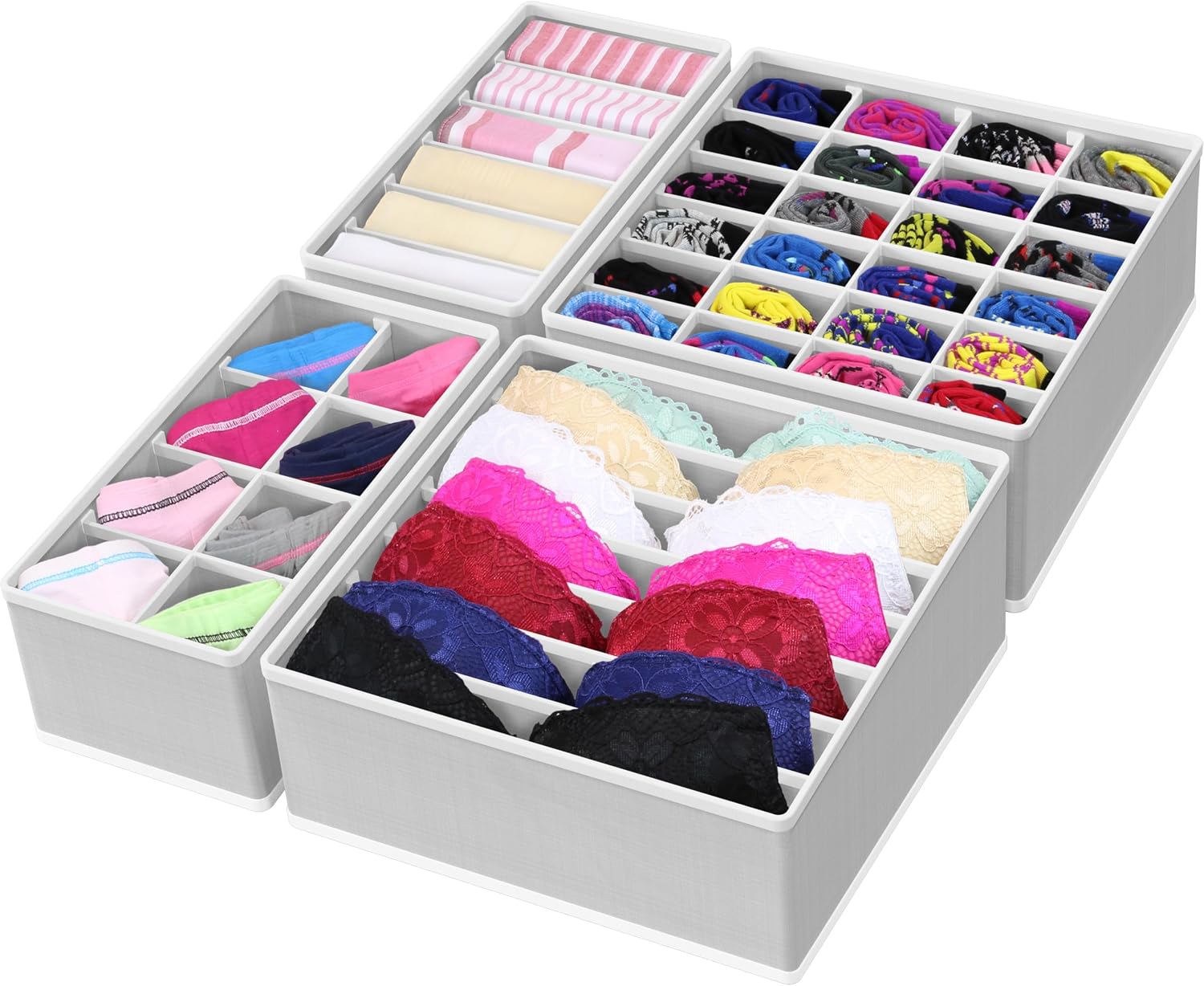
Check Simple Houseware 4-Pack Drawer Organizer, Gray on Amazon. Confirm the selected model, seller, delivered price and return terms. This link identifies ASIN B01DYXHI0E; it does not guarantee current stock.
Our buying decision
Measure the drawer interior and test the clothing shapes before committing to the full set. Choose it for separation and visibility, not a promise of increased capacity. Open zones are a better option when garment sizes vary widely.
Explore Closets Storage ideas and Buying Guides. Related reading: How to Organize Kids’ Clothes in a Small Bedroom Without Overstuffing Drawers.
Sources and evidence limits
The linked Amazon listing supplies the product identity, photographs and listed features. Household scenarios and comparisons are editorial analysis. We have not measured durability, performance or user outcomes. We do not use star ratings as proof of quality.
Sources
- Amazon product listing — https://www.amazon.com/dp/B01DYXHI0E