
Research note: This is a comparison of current product documentation and listings. We have not used either product or measured its performance in a lab or home. Product availability, bundles and prices can change, so check the selected variant at checkout.
The bag size changes how you retrieve things
Vacuum bags can reduce the bulk of suitable soft items, but a compressed bundle still has to fit through a closet opening and come back out. Retrieval is the deciding factor in this comparison. One giant bag is convenient only when its contents are needed together.
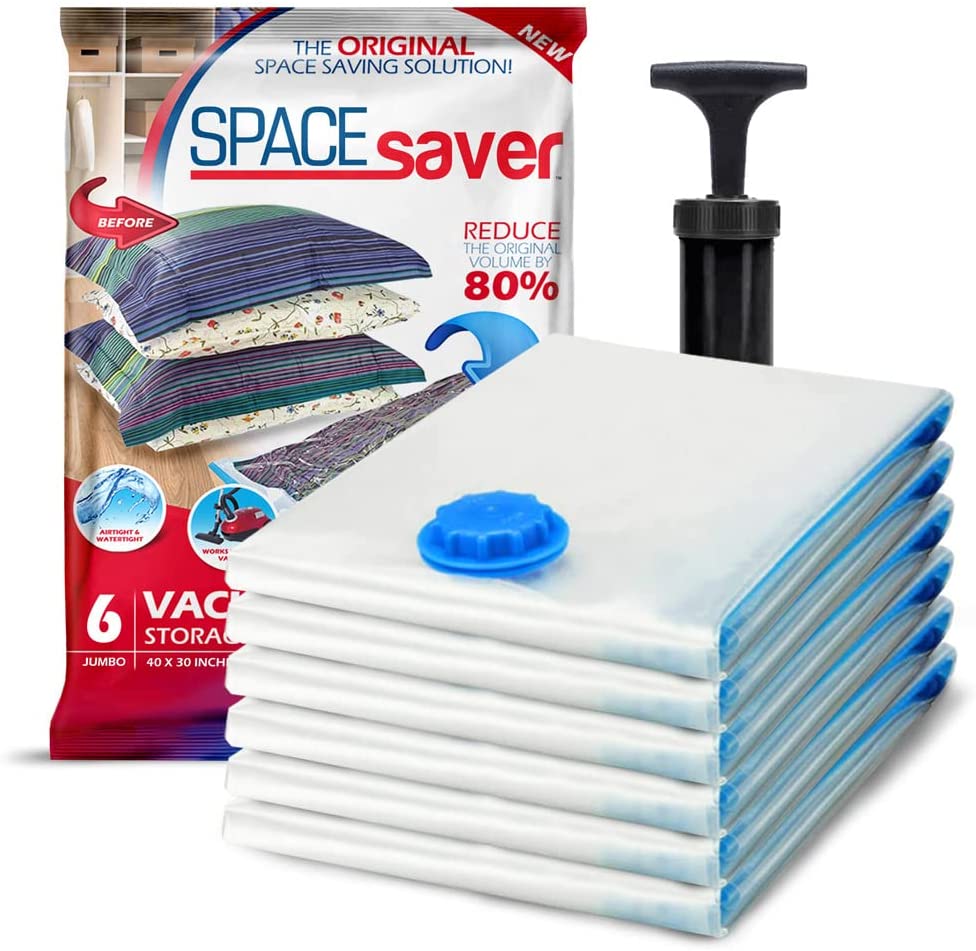
The linked Spacesaver pack contains six jumbo bags. The current US Amazon Basics listing identifies a 15-pack of mixed sizes, despite older regional listings for the same ASIN using different wording. Confirm the selected pack before checkout. This review compares those current listing configurations, not a permanent promise about every variant.

Spacesaver jumbo: useful for a clearly defined bulky group
The jumbo format is worth considering when a small number of large, suitable textiles are the storage problem. A large bag gives you room to load a bulky item without dividing it into unrelated bundles. The included hand pump offers an option when a compatible vacuum hose is unavailable.
The disadvantage appears at retrieval. A large compressed package can be awkward to lift from a high shelf, and reopening it releases the carefully reduced bundle. If you need one small item every week, packing it with seasonal bedding creates unnecessary work. My preference is to reserve jumbo bags for groups that leave storage together.
Amazon Basics mixed sizes: more choices, more inventory
A mixed pack can suit a closet holding different groups of suitable clothing and textiles. Smaller groups can be stored separately, so opening one bag does not require unpacking an entire season. The current linked listing also includes a hand pump.
The tradeoff is management. Fifteen bags are useful only if you have fifteen sensible storage groups or expect to use the extras later. Every filled bag adds a seal to inspect and a label to read. Do not fill all the bags merely because the set contains them. Unused bags can remain together until a real storage need exists.
Compression does not decide what should be kept
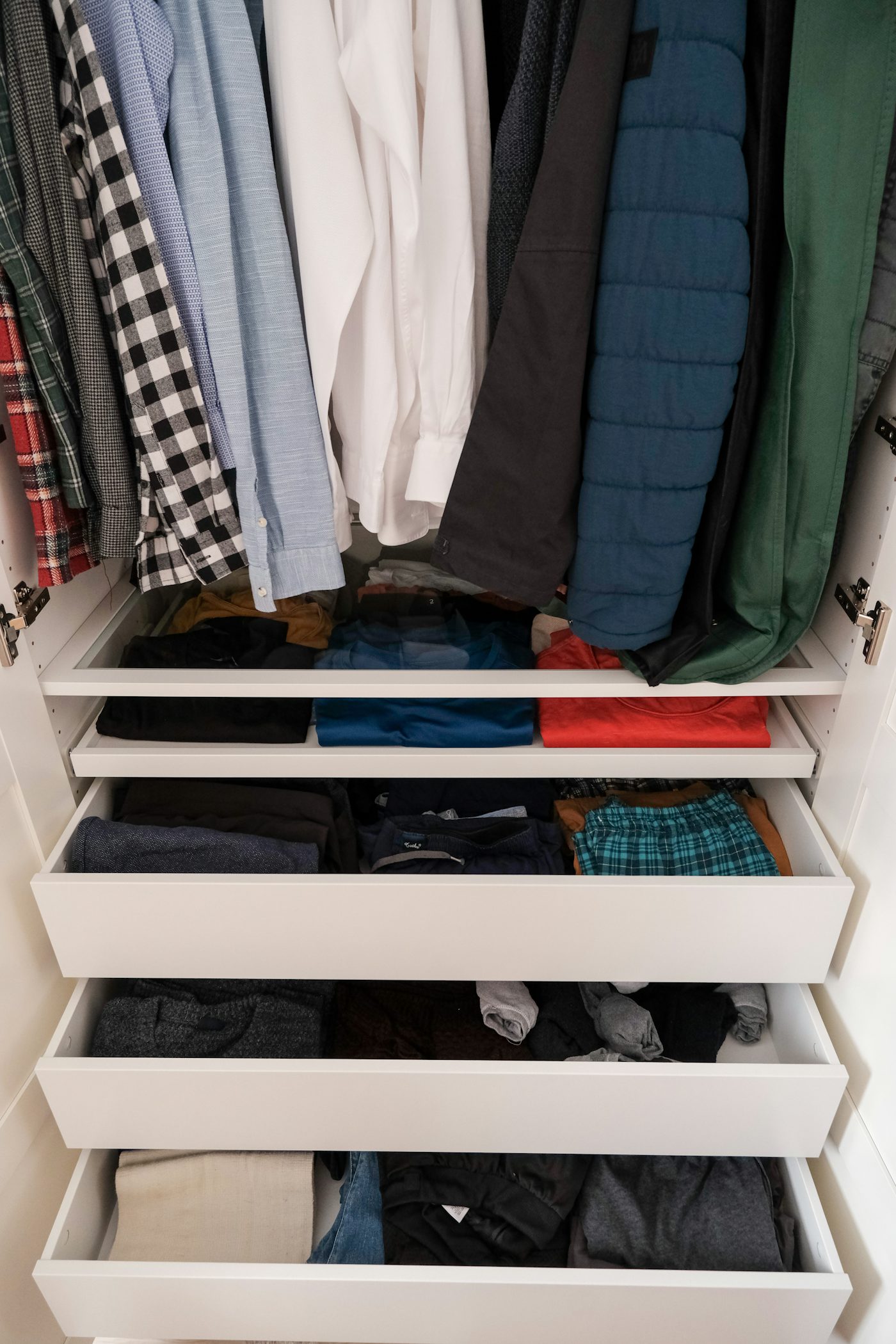
Before choosing a pack, remove items you no longer intend to use. Vacuum storage can make an overfilled closet look solved while leaving the same retrieval problem underneath. The purchase should protect a deliberate inventory, not postpone a decision about it.
For bedding, begin with the practical quantities and locations in How to Store Extra Bedding in a Small Home With No Linen Closet. Then measure the shelf and opening where the packed item will go. A bag’s flat dimensions do not guarantee the shape of the filled, compressed bundle. Leave room to handle the valve and zip closure without dragging them against rough edges.

Check textile suitability before comparing vacuum-bag packs
Start with the garment or bedding maker’s guidance for storage, folding and compression, then read the exact bag instructions. Do not transfer a rule from a different bag brand or assume that every filled textile can be compressed for the same period. A broad word such as wool or down does not settle construction-specific care.
Woolmark’s storage guidance notes that vacuum bags may need resealing, can trap moisture and are not ideal for delicate clothing. That supports a careful suitability check; it does not establish either reviewed pack’s performance or authorize compression of every wool item.
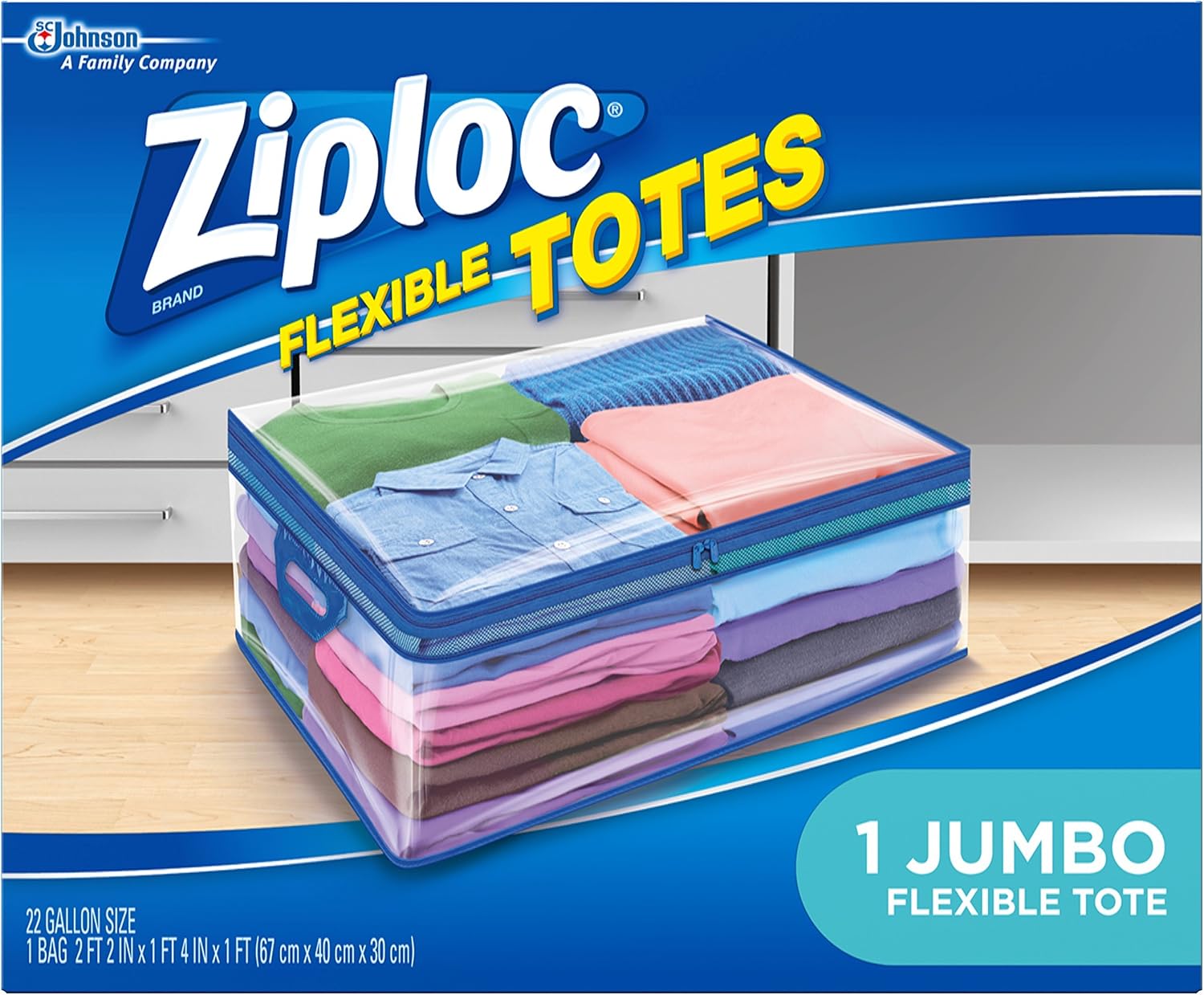
Pack only clean, fully dry permitted items and choose suitable storage conditions. If the textile guidance does not support the proposed method, compare an appropriate non-compression arrangement. The flexible-tote review discusses another format, while the guest and seasonal bedding plan addresses grouping and locations. Neither container solves a damp storage area.
The first seal is only the beginning
Follow the bag instructions for the fill line, zip closure, valve and pump connection. Keep fabric clear of the seal. After packing, check that the bag remains compressed before committing it to a hard-to-reach shelf. If it expands, investigate the closure or possible damage rather than repeatedly forcing out air.
Keep the pump with the spare bags, and write an exterior contents label that remains readable when compressed. Place the most frequently needed groups nearest the opening. The shelf arrangement in How to Organize a Small Linen Closet So Towels and Bedding Actually Fit can help make the compressed bags accessible instead of creating a dense stack that must be dismantled.

Compare cost per useful bag, not just pack count
The compared listings identify Spacesaver B00X8KSKF6 as six jumbo bags with a hand pump, and Amazon Basics B07RP7TJVT as a mixed-size 15-pack with a hand pump. Check the current selected dimensions and contents; pack identity is not a promise about every regional page or variation.
List each storage group and the bag size it needs. Divide the delivered set price by the bags with realistic jobs as a simple comparison. This does not measure durability or prove better lifetime value. Unused extras may be convenient reserves, but they should not be counted as an immediate storage benefit.
| Example need | What to compare |
|---|---|
| Several bulky groups always retrieved together | Whether jumbo dimensions and the filled bundles suit the storage opening |
| Different clothing groups retrieved separately | Whether the mixed pack has useful sizes for those groups |
| Only one or two small jobs | A smaller suitable purchase or an existing non-compression method |
| Frequent access | The work of reopening, unpacking and resealing against easier open storage |
Include handling space for the closure and valve, a suitable pump connection and a place for spare bags. Compression changes bulk; it does not make the contents lighter or guarantee an easy lift.

Choose the pack that matches the retrieval plan
Consider Spacesaver’s jumbo format for suitable bulky groups that leave storage together. Consider the Amazon Basics mixed pack when its actual sizes separate groups you need independently. Choose neither when the textile, storage conditions or repeated resealing make compression inappropriate.
We have not tested leakage, retained compression, lifespan or a percentage of space saved. Check the bag after packing and periodically as instructed; investigate expansion rather than forcing an increasingly large bundle into the original shelf gap. Keep the closure, valve and bag away from damaging edges.
Use the seasonal closet switch to decide what should be stored before buying the bags.
Compare the fit before buying
| Decision point | Spacesaver Jumbo Vacuum Storage Bags, 6-Pack | Amazon Basics Vacuum Storage Bags, Mixed-Size 15-Pack |
|---|---|---|
| Most useful when | For a few bulky soft items | For several separately stored groups |
| What helps | One large format for bulky contents | Mixed sizes support separate groups |
| What to plan for | Large compressed bundles may be awkward to lift | More bags create more seals to check |
How to use this comparison: Measure the spot where the item will be stored and used. Check the selected Amazon variant, package contents and current return terms on the listing before paying. The products solve adjacent jobs, so a feature you will use weekly matters more than a specification that looks impressive on paper.
Browse more choices in our Buying Guides. Editorial photographs illustrate context and are not pictures of our testing. Product photographs, where available, identify the named model or line.
Sources
- www.amazon.com
- www.amazon.com
- Amazon model B00X8KSKF6 — https://www.amazon.com/dp/B00X8KSKF6
- Amazon model B07RP7TJVT — https://www.amazon.com/dp/B07RP7TJVT