Disclosure: As an Amazon Associate, Small Home Rhythm may earn from qualifying purchases. Product price, variant, stock and seller can change.
A flexible tote can group spare bedding without vacuum packing, but the filled size, textile storage guidance and retrieval route still need checking. This research-based review examines the listed Ziploc Flexible Tote, jumbo, one count in a small-home routine. We have not used, timed or durability-tested the product. The measurements and trade-offs below are intended to make the buying decision specific to your own space.
Flexible does not mean dimensionless
An empty soft tote may fold into almost nothing, but a filled one takes the volume of its contents. Stack the blankets or spare duvet you intend to store and measure that pile before buying. A soft-sided bag can bulge around the corners and fail to slide under a bed that looked tall enough for an empty product photo. Include the bed frame rail, casters and carpet pile in clearance measurements. If the closet shelf is shallow, the tote might protrude and prevent the door from closing.
Compare it with vacuum bags honestly
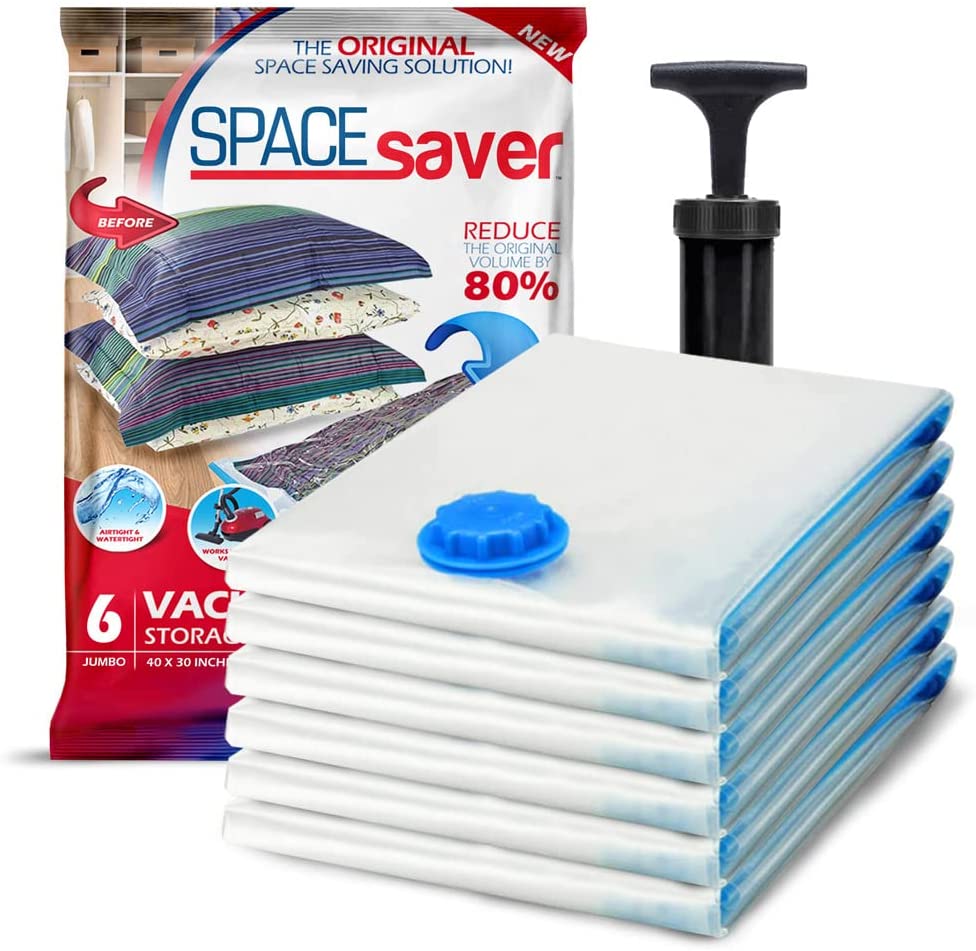
A flexible tote organizes and protects bedding from casual dust; it does not compress the contents like a sealed vacuum bag. That can be an advantage for items you retrieve often or fabrics you do not want compressed for months. It is a disadvantage when storage volume is the central problem. Decide whether your priority is a handle and zipper, easy visibility or maximum volume reduction. Avoid assuming any tote is moisture-proof or airtight unless the exact maker says so. A damp closet needs the moisture source addressed first.
Pack by complete bedding set
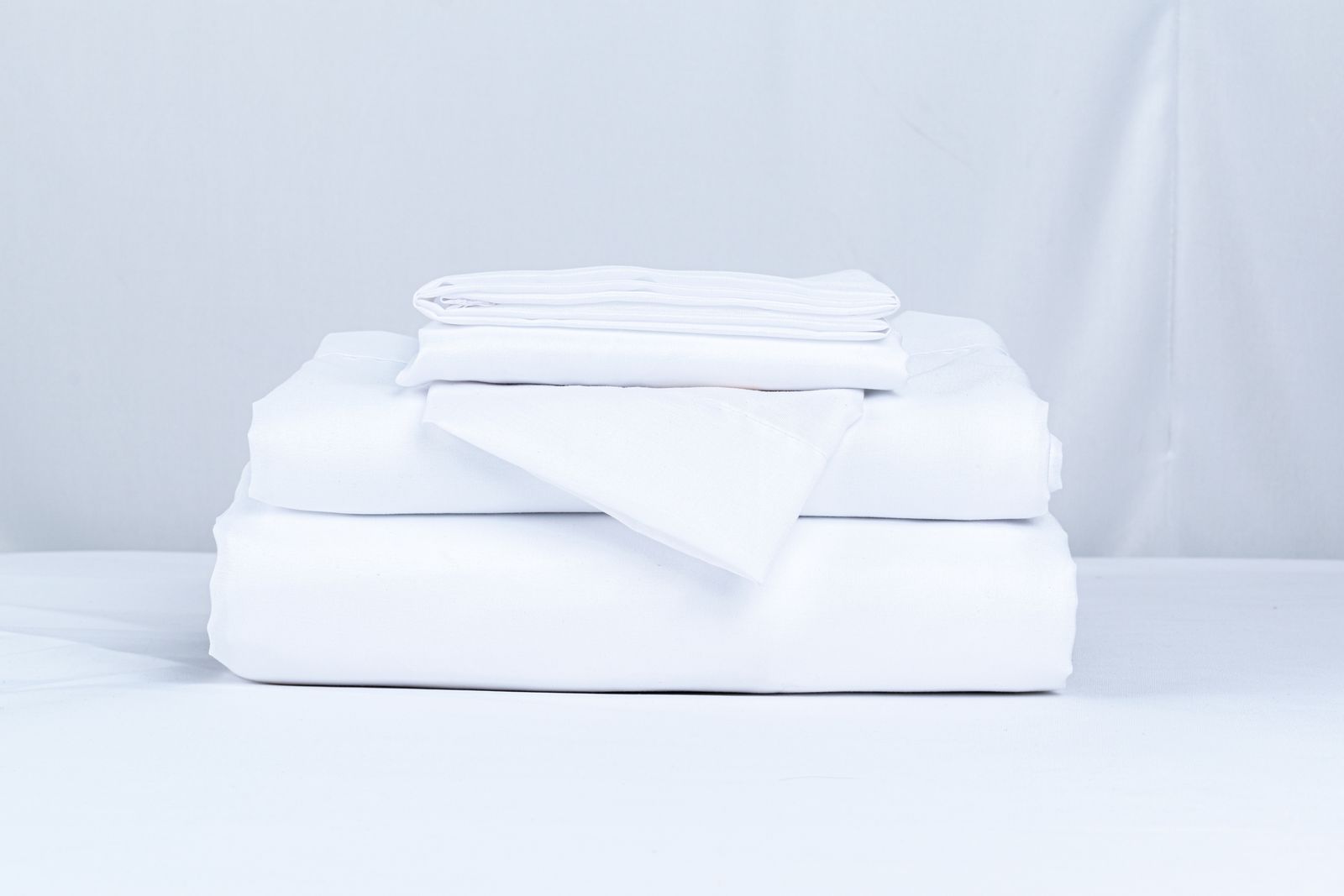
Place a fitted sheet, flat sheet and pillowcases together if they are used as a unit. For a guest blanket, add a small label to the outside rather than opening several bags to find the right size. Do not overstuff the zipper or press a sharp bed-frame corner through the fabric. Leave enough give for a hand to grasp a handle. A one-count jumbo tote may hold several sets, but a single crowded container can make the bottom set harder to retrieve than a neat open shelf.
Clean and dry before storage
Freshly laundered bedding needs to be completely dry before it is zipped up. If a blanket still feels cool and damp at the seam, leave it to air rather than trapping moisture. Follow textile care labels, especially for down, wool or delicate fillings. Put the tote in a dry, ventilated room and inspect stored contents periodically. A storage bag can reduce dust contact, but it will not fix condensation, pests or a leak. Do not place it directly on a damp floor.
The under-bed access test
Slide a cardboard box approximating the filled tote in and out of the actual bed space. Does it scrape the frame or catch on the rug? Can you reach the handle without moving a nightstand? If the bed is used daily and the tote contains only seasonal items, a slightly awkward location may be acceptable. If guests arrive often, the same friction may lead to bedding left loose elsewhere. Choose the location to match retrieval frequency instead of automatically using the biggest hidden gap.
One jumbo bag or several small ones
A large tote can be efficient for one bulky comforter but difficult to carry when full of multiple sheet sets. Smaller bags may use a shelf more neatly and let family members find what they need without lifting heavy bedding. Compare the total filled footprint, not only price per container. The chosen Amazon listing is for one jumbo tote, so check pack count and material before ordering. If you already own a labeled pillowcase or fabric bin, try that for a month.
A seasonal reset keeps it useful
When the season changes, remove everything, check for stale items, wash what needs washing and repack only what the household intends to use. Do not let the tote become permanent parking for mismatched sheets and outgrown blankets. An inventory card can show what is inside without opening it. A soft tote earns its footprint when it makes a specific bedding set easier to protect and retrieve, not when it lets a crowded closet absorb another anonymous bag.
The guest bed test
When guests arrive, can you pull the correct bedding set without removing every item above the tote? If not, rethink the shelf order or divide the contents. The heaviest comforter should not be balanced above shoulder height, even inside a bag with handles. A tote is particularly useful if the entire guest set travels from a closet to a sofa bed, but a single bulky jumbo container may be hard to carry through a narrow hallway. Stage that trip once using a laundry basket before making it the permanent plan.
The real enemy may be too many linens
Count how many complete sets fit the number of beds and realistic guest visits. A family can keep a reasonable backup without storing every mismatched old sheet. Donate or repurpose serviceable extras before buying a new container. Then measure the pile that remains. If it fits the existing shelf cleanly, a jumbo tote may add material without saving space. If dust protection and carrying a full set are the repeated problems, the bag has a clear job even though it does not compress the bedding.
Choose the tote, smaller bags or your existing shelf
| Your actual problem | Starting option | Tradeoff to check |
|---|---|---|
| One compatible bulky guest set needs grouping and carrying | Compare the jumbo tote | Filled weight, handle access and the opening it must pass through |
| Several sheet sets are retrieved separately | Smaller labeled bags or shelf sections | More separate units, but less unpacking to reach one set |
| Existing clean, dry shelf already works | Keep that arrangement | An extra bag may add a zipper without solving a problem |
| Volume reduction is essential | Check textile guidance before comparing compression products | A flexible tote does not provide vacuum compression |
Measure the filled load and the removal path
- Fold the bedding you actually intend to store, following its care and storage guidance.
- Measure that pile’s length, width and height without assuming the soft bag can make it smaller.
- Check the selected jumbo tote’s current usable dimensions and opening. We have not independently measured them.
- Compare the filled shape with the shelf or under-bed space, including rails, doors and handles.
- Rehearse bringing the whole load out and opening it without moving several unrelated items.
A flat outline checks only length and width. A filled box or the folded bedding itself is more informative for height and access, but it still cannot establish the unknown tote’s durability or fit. Keep a margin so the zipper closes freely instead of compressing contents to make the measurements work.
Check the listing and storage limits
The affiliate link identifies ASIN B003UEMD1M, described here as the jumbo one-count tote. Confirm that the selected offer still matches. A retailer’s dimensions may describe a package rather than an opened bag; resolve that distinction before buying if fit depends on it.
We have not verified airtightness, waterproofing, pest resistance, handle load or long-term textile protection. Do not infer these from a zipper or semi-transparent sides. Store only clean, fully dry items where both the textile and container instructions permit. A tote cannot correct condensation, a leak or damp flooring.
For inventory and locations, use the guest and seasonal bedding storage plan. For an existing cupboard, use the linen-closet shelf plan.
Amazon product and current listing
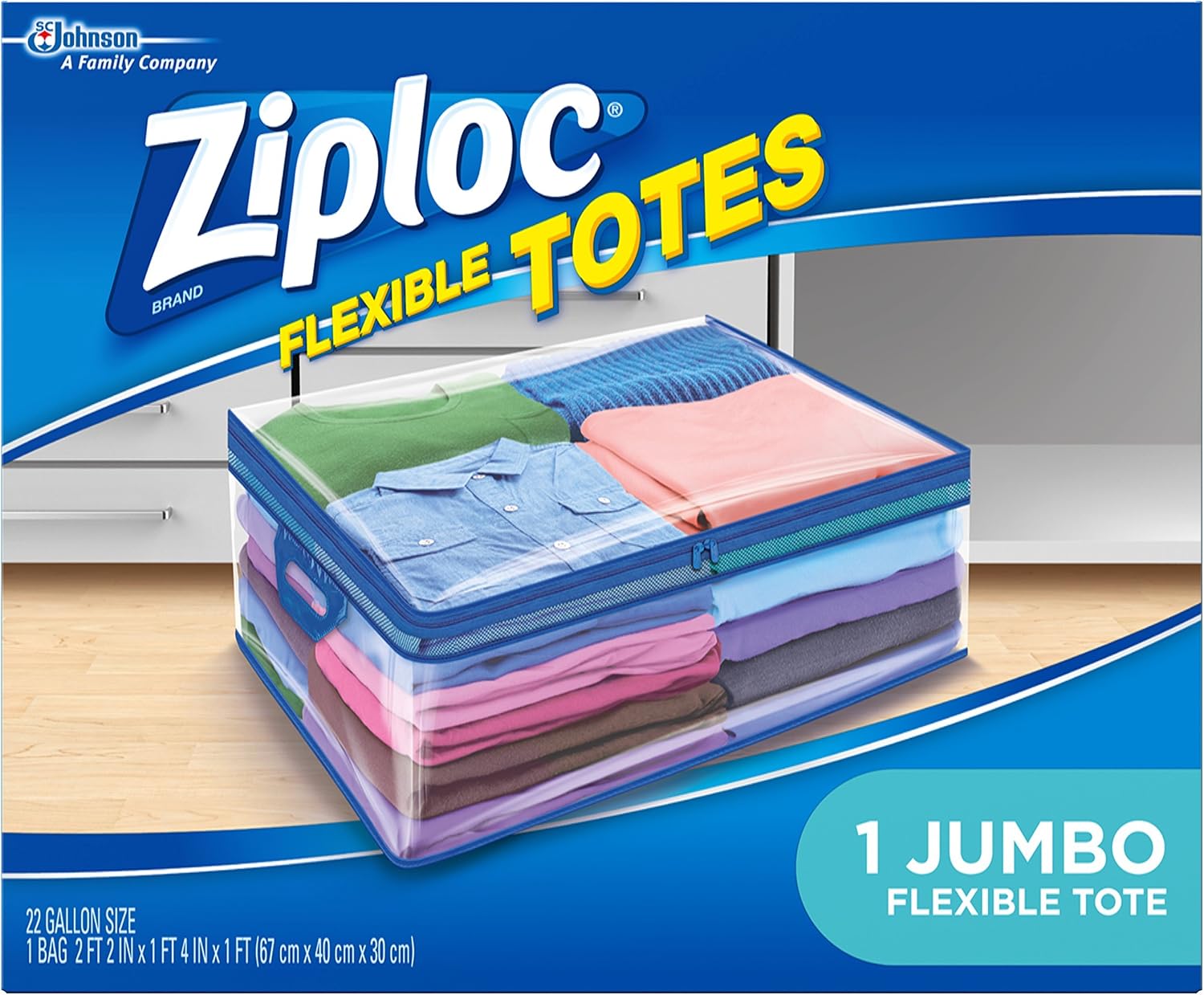
Ziploc Flexible Tote, jumbo, one count — Check this exact product on Amazon. Verify the selected variant and seller. The image illustrates the listing and does not imply that this site has physically tested it.
Before paying, compare the model code and current Amazon description with the constraints you wrote in the fit check. Read the applicable care and safety directions. Reviews may point to recurring questions, but a reviewer’s room, usage and expectations may differ from yours. Check the retailer’s return conditions if any deciding detail remains uncertain.
The small-home verdict
Consider the Ziploc jumbo tote when one specific compatible bedding group needs containment and a reachable home. Pass if the filled load will not fit, you need actual compression, or the storage location is damp. An existing bag or shelf may solve the task without a new purchase. This is a research-based assessment; we have not tested the tote’s dimensions, handles, zipper or protective performance.
Explore the Buying Guides hub for other storage decisions.
Sources
- Amazon product listing — https://www.amazon.com/dp/B003UEMD1M
- Manufacturer/source information — https://www.amazon.com/dp/B003UEMD1M