The best product for a small family home does not simply save space. It removes a repeated annoyance: shoes in the walkway, backpacks on chairs, toys underfoot, laundry with nowhere to go, or supplies that migrate between rooms. You may also find 12 Space-Saving Ideas That Actually Work in a Small Family Home useful for a closely related small-home problem.
This guide focuses on product types that support household systems, not decorative gadgets or brand-specific recommendations. For the broader setup, How to Build a Home Binder System That Actually Works in a Small Space is a useful next read.
1. A narrow storage bench for the entryway
A bench can combine sitting, shoe parking, and contained storage in one footprint. It is most useful when it replaces separate pieces rather than joining them. If you are working on the same space, Cleaning tools a small home really needs covers the next decision in more detail.
2. Reachable wall or freestanding hooks
Hooks simplify bags, coats, headphones, towels, and frequently used gear. The strongest setups assign hooks to real routines rather than covering every wall.
3. One rolling cart for a mobile category
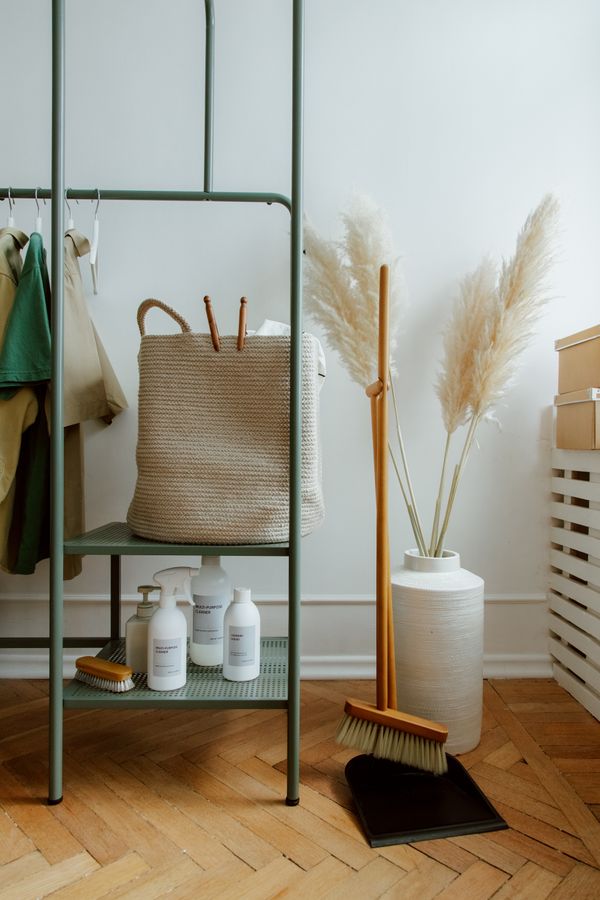
Art supplies, homework, pantry overflow, or cleaning tools can move with the activity and return to one parking spot.
Do not buy a cart without deciding exactly where it parks.
4. Storage ottoman or bench
Useful for blankets, toys, or games when the furniture is already needed for seating or a footrest.
Hidden storage is a bonus, not a reason to add oversized furniture.
5. Open child-height bins
For toys, shoes, books, or everyday gear, an open bin can be easier for children to reset than a lidded container.
6. Drawer dividers in high-friction drawers
Use dividers where small items repeatedly become a mixed pile: utensils, socks, hair accessories, desk supplies.
Skip them in drawers that already work.
7. Shelf risers
These can unlock wasted vertical cabinet space without adding furniture to the room.
8. A family paper inbox
One small tray or vertical file for action papers prevents mail and school documents from spreading across counters.
It should empty into a real filing or action system regularly.
9. Slim laundry hampers
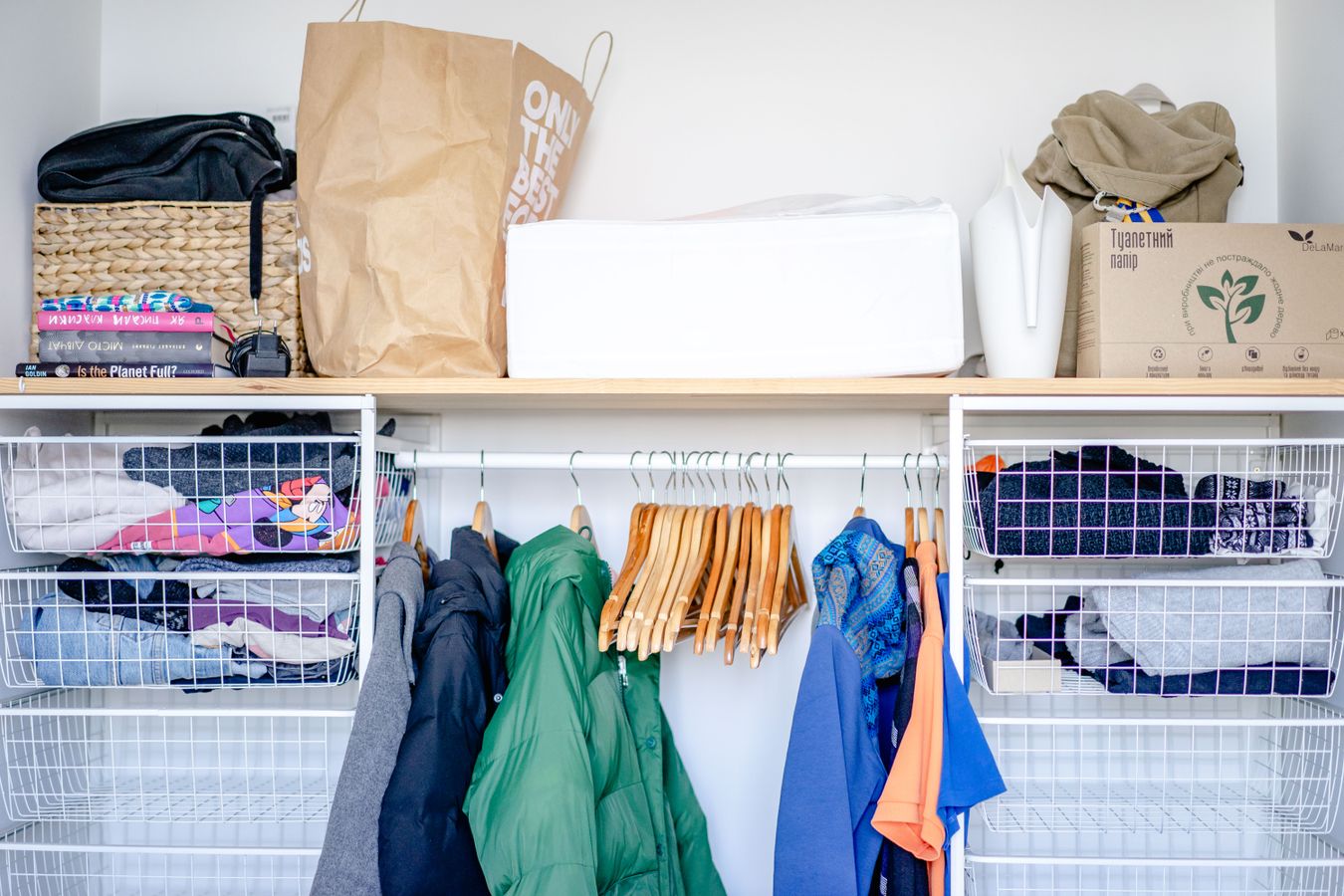
A well-sized hamper prevents clothes from becoming floor clutter and supports the wash routine. Choose capacity based on wash frequency. For a related step-by-step approach, see How to Keep a Small Bedroom Clean When Clothes Keep Piling Up.
10. Under-bed containers for seasonal items
These work best for low-frequency soft goods, not daily essentials.
11. Foldable drying rack
Useful where indoor drying is part of the routine. It only saves space if the rack has a real folded storage position.
12. A simple shoe tray
A tray creates a visual footprint and protects the entry from shoes spreading into the walkway.
13. Portable caddies
One for cleaning, one for art, or one for homework can make shared surfaces switch functions quickly.
14. Nesting or stackable occasional seating
Extra seating can make sense if it stores compactly between visits and does not occupy the room every day.
15. A compact label maker—optional, not essential
Labels can improve shared systems, but the storage should make sense without them. Do not use labels to compensate for overcomplicated categories.
Products that often create more work
- tiny single-purpose organizers,
- furniture bought only because it has hidden storage,
- bins without assigned categories,
- foldable items that never get folded,
- complex child storage adults have to maintain,
- bulk sets where half the pieces have no job.
Use the friction test before buying
Ask: What repeated problem will this product remove?
If the answer is vague—“maybe it will make us more organized”—wait.
Use the exit test too
If this product stops being useful, where will it go? Small homes benefit from products with flexible future uses rather than highly specialized organizers.
Where these products matter most
Entryway products solve arrival friction. Toy storage solves reset friction. Laundry products solve transport and overflow. Kitchen organizers solve access friction. Flexible furniture solves floor-space friction.
For a broader storage-buying framework, see Best Storage Solutions for Small Homes: What Is Actually Worth Buying?.
Frequently asked questions
What should I buy first for a small family home?
Buy for the most repeated daily bottleneck: entryway, laundry, toys, kitchen access, or paper.
Should storage products match?
No. Matching can look calm, but size, access, and household usability matter more.
Are multipurpose products always better?
Only when the extra function replaces something else and remains convenient to use.
Buy products that remove steps
The most useful small-home products make daily behavior easier: one hook instead of a chair pile, one hamper instead of floor laundry, one cart instead of migrating supplies, one bench instead of separate shoe and seating furniture.
If a product adds more sorting, more moving, or more storage decisions, it probably is not making family life easier.
Sources
- VASAGLE Shelf Storage Bench with Metal Mesh Shelves and Seat — https://www.songmics.com/products/vasagle-3-tiers-shoe-bench-ulbs73
- SPACEKEEPER Slim Rolling Storage Cart — https://www.amazon.com/dp/B07QRH2PZS
- SONGMICS Folding Storage Ottoman Bench — https://www.amazon.com/dp/B07VCNJNB6