A binder system is helpful—but only if it stays small
Binders are appealing because they make paper feel visible and contained. For a small home or apartment, that can be a real advantage: one labeled binder on a shelf is easier to grab than a deep file drawer, a scattered kitchen pile, or a mystery box in the closet.
The mistake is trying to turn every paper in the house into a binder page. A home binder system works best for information your family needs to find quickly: school contacts, medical notes, current insurance details, routines, meal plans, travel numbers, and checklists. Long-term records, tax backup, and sensitive originals usually need a different storage plan. For the broader setup, A Small Entryway System for Backpacks, Shoes, Coats, and School Papers is a useful next read.
Think of binders as your family’s working reference library, not your only archive.
Start with three paper zones
Before buying supplies, sort your paperwork into three broad zones. This keeps the system from growing too big for your space.
- Daily or weekly use: school schedules, meal plans, chore charts, sports calendars, babysitter notes, current coupons, and household routines.
- Occasional but important: insurance summaries, medical histories, pet records, travel information, warranty notes, and home maintenance references.
- Archive or sensitive storage: birth certificates, passports, Social Security cards, tax records, legal documents, mortgage or lease papers, and older financial files.
The first two zones are good candidates for binders. The third zone should be treated more carefully. FEMA’s emergency financial guidance recommends gathering important household, financial, legal, and identification information so it can be accessed after a disaster, but that does not mean every original document belongs in a frequently handled kitchen binder.
The best beginner setup: one household command binder
If your home already has paper clutter, start with one binder instead of ten. A single household command binder is easier to maintain and less likely to become a new organizing project that stalls halfway through.
For many families, a 1-inch or 1.5-inch binder is enough for a starter system. Oversized binders get heavy, take up more shelf depth, and become annoying to open on a small counter. If a binder becomes packed, that is usually a sign to split one category out—not to keep stuffing it. If you are working on the same space, A Home Filing System for Families With No Home Office covers the next decision in more detail.
Good sections for a family command binder
- Emergency contacts: caregivers, neighbors, pediatrician, dentist, school, poison control, utilities, landlord or property manager, and insurance contacts.
- Family basics: household schedule, school pickup details, child care notes, pet care instructions, and recurring routines.
- Medical snapshot: allergies, current medications, preferred pharmacies, provider names, insurance numbers, and notes for each family member.
- School and activities: class schedules, sports rosters, camp forms, music lesson details, and transportation notes.
- Home reference: appliance model numbers, filter sizes, maintenance dates, lease contacts, and service providers.
- Meal planning: rotating meal list, grocery staples, lunch ideas, and favorite recipes used often.
Use dividers with clear tab names. If you share the binder with another adult, a grandparent, or a sitter, avoid clever labels. “Medical,” “School,” and “Emergency” are better than categories only you understand.
What not to keep in an everyday binder
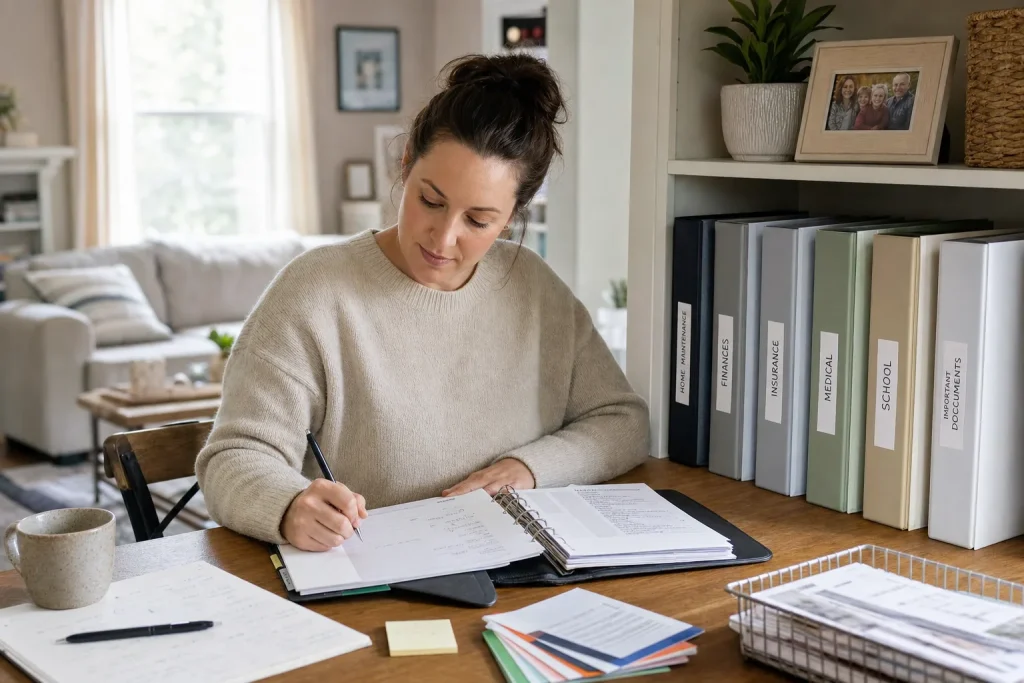
A binder that sits near the entryway, kitchen, or homework station should not become a high-risk container. It may be easy to grab, but it is also easy for guests, contractors, children, or babysitters to open.
For sensitive originals, use a safer location such as a fire- and water-resistant document box, a locked file box, or a safe deposit box when appropriate. The Consumer Financial Protection Bureau advises families to make important documents easy to locate after a disaster and to store digital copies safely. FEMA’s emergency financial materials also emphasize protecting paper and electronic copies from fire, water, and loss. For the broader setup, Where to Store Important Documents in a Small Apartment is a useful next read.
For an everyday binder, use reference pages instead of originals. For example, write down the issuing office for a birth certificate, the passport expiration month, or the location of a safe deposit box, rather than storing the original document in a plastic sleeve.
Build an emergency documents section carefully
An emergency binder can be useful, especially for families with young children, medical needs, frequent travel, or older relatives nearby. Keep it focused on information someone would need fast.
- Emergency contacts and out-of-area family contacts
- Health insurance and provider information
- Medication lists and allergy information
- Copies of insurance cards, if you are comfortable storing them there
- Pet vaccination and microchip information
- Utility shutoff notes or landlord emergency contact details
- A short list of where originals are stored
For vital documents, USAGov points people to the proper agencies for replacing birth certificates, Social Security cards, passports, state IDs, and similar records. That is a useful reminder that a binder should help you know what exists and where to go next; it does not have to hold every original. For a related step-by-step approach, see Best storage solutions for small homes.
Use a medical section for clarity, not clutter
Medical paperwork can overwhelm a small home quickly. Keep the binder section limited to current, useful information: medications, allergies, diagnoses, specialists, recent test dates, immunization notes, and questions for upcoming visits.
HealthIT.gov notes that patients generally have a right to access their health information and that online portals may allow people to view, download, and share records. For a family binder, that means you may not need to print every lab result. A one-page summary plus portal login guidance stored securely may be more practical than a thick stack of outdated paperwork. You may also find How to Organize a Small Closet When Two People Share It useful for a closely related small-home problem.
If a child has a chronic condition, disability, severe allergy, or emergency care plan, keep the most current action plan easy to find and remove old versions promptly so no one grabs the wrong page.
How to organize each binder so it stays usable
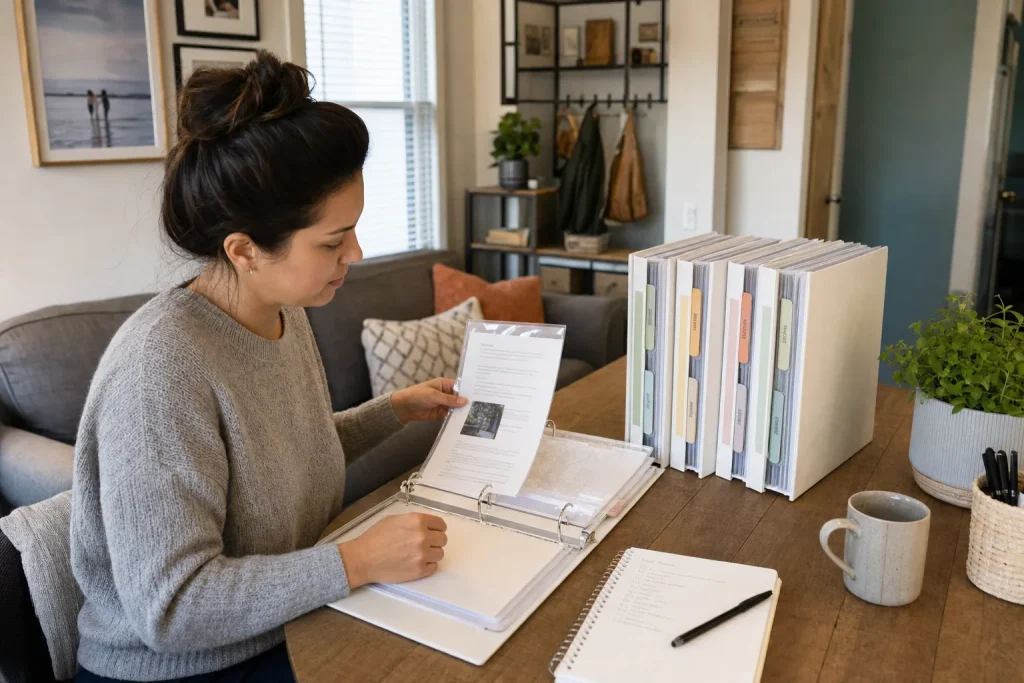
Use the same layout in every binder. Consistency matters more than pretty covers.
- Front pocket: temporary papers that need action this week.
- First page: a simple index with section names.
- Tabbed sections: broad categories, not tiny micro-categories.
- Sheet protectors: only for pages you handle often or cannot hole-punch.
- Back pocket or envelope: small papers such as receipts, cards, or appointment slips.
Avoid putting every page in a sheet protector. It adds bulk and makes updating slower. Use them for frequently referenced pages, checklists you reuse with a dry-erase marker, or papers that tear easily.
D-ring or O-ring binders?
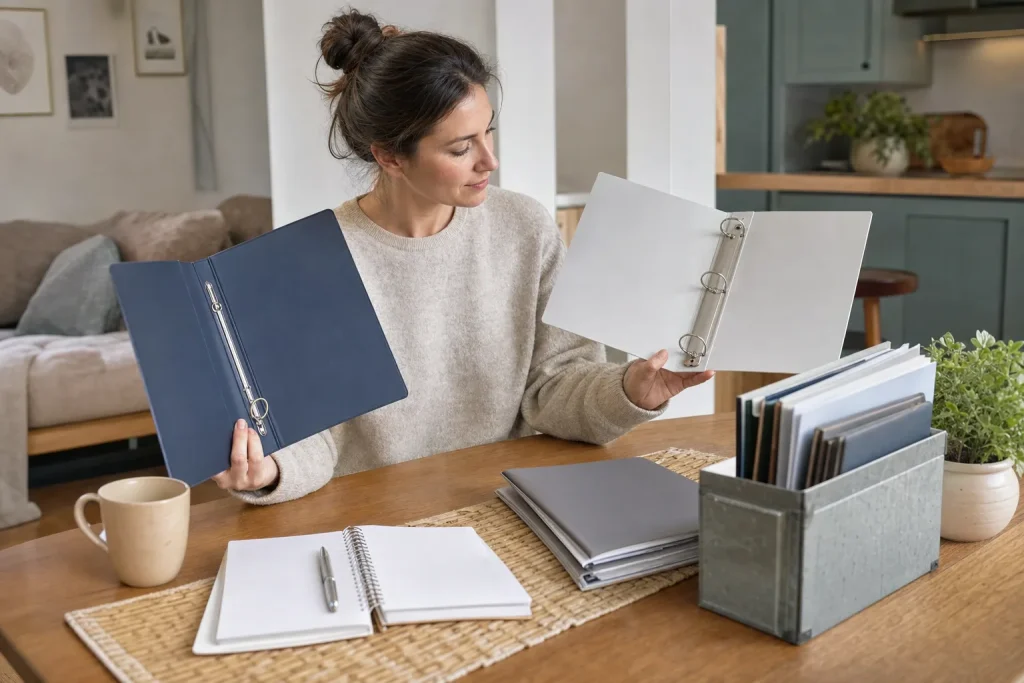
For a binder you open often, a D-ring binder is usually the more comfortable choice because pages tend to sit flatter and turn more cleanly. For rarely opened reference binders, a basic round-ring binder may be enough and often costs less.
In a small home, the bigger question is depth. Measure your shelf before buying several binders. Standard binders can crowd a shallow bookcase, and a row of wide binders may need more space than a small lidded file box. If you only have one shelf, prioritize your most-used binders and store archived papers elsewhere.
Binder ideas that make sense for small-family homes
Once the command binder is working, add only the binders that solve a real problem.
- School binder: helpful when you have multiple children, rotating activity schedules, IEP or 504 paperwork, or frequent forms.
- Health binder: useful for complex care, pregnancy, elder care, therapy notes, or managing several providers.
- Meal binder: good for families trying to reduce grocery decisions and repeat easy meals.
- Travel binder: helpful for occasional travelers who need passports, reward numbers, packing lists, pet-sitter notes, and itinerary details in one place.
- Holiday binder: useful if gift lists, recipes, travel plans, and hosting notes otherwise scatter across notebooks and apps.
- Home maintenance binder: practical for renters and owners who track appliance manuals, filter sizes, paint colors, repairs, and service contacts.
If a binder has not been opened in a year, reconsider it. Some categories are better as a single folder, a digital note, or a labeled envelope.
Where to store binders in a small home
Choose storage based on how often you use the binder.
- Daily binder: store near the kitchen, entryway, homework zone, or family command center.
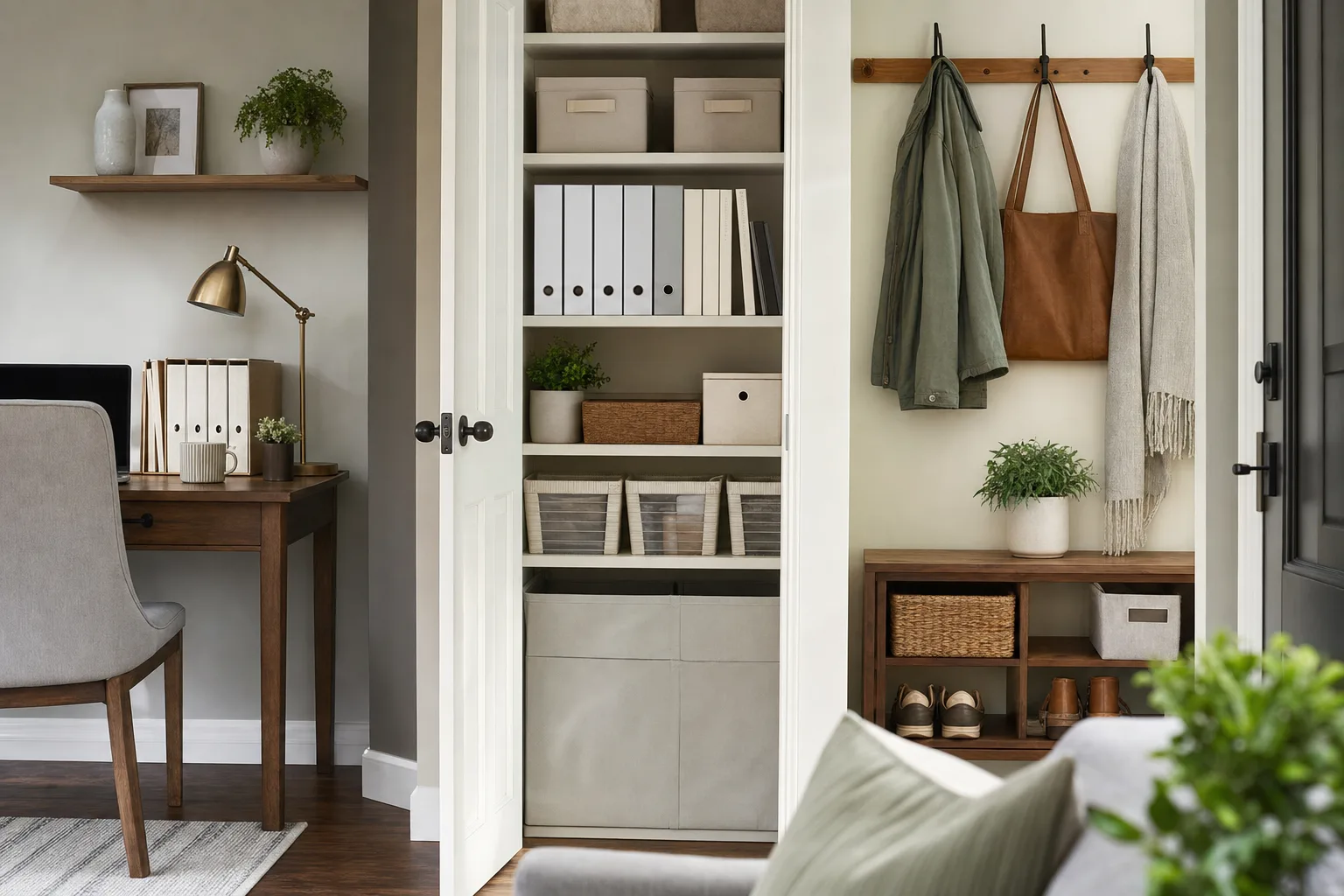
- Weekly reference binder: store on a bookshelf, in a cabinet, or in a lidded bin near the desk.
- Emergency reference: store where adults can access it quickly, but not where every visitor can browse it.
- Archive papers: store separately in a file box, document safe, or another protected location.
Keep the binder hub small: one shelf, one basket, or one cabinet space. Add a three-hole punch, a pen, sticky notes, and a small shred pile nearby if you have room. The FTC advises protecting personal information and shredding documents with personal details before throwing them away, so it helps to make disposal part of the system.
A simple maintenance routine
A binder system only works if old paper leaves. Try this rhythm:
- Weekly: empty the front pocket and act on school forms, bills, appointment slips, and receipts.
- Monthly: remove expired coupons, outdated calendars, duplicate notices, and old meal plans.
- Seasonally: update emergency contacts, medical information, child care notes, school schedules, and insurance pages.
- Yearly: review tax, financial, and household records against current retention guidance before shredding or archiving.
The IRS explains that tax record retention depends on the document and the situation, with three years being common for many federal tax records but longer periods applying in some cases. When in doubt, check current IRS guidance or ask a tax professional before discarding financial records.
The bottom line
A binder organization system can be a calm, space-saving tool for family life when it is selective. Use binders for active information, not as a dumping ground for every paper. Keep sensitive originals protected, make emergency details easy for adults to find, and review the system often enough that it stays current. For a related step-by-step approach, see 12 Space-Saving Ideas That Actually Work in a Small Family Home.
For small homes, the best binder setup is not the biggest or prettiest one. It is the one your family can actually open, update, and trust on a busy Tuesday morning.
Frequently Asked Questions
How many binders should a household start with?
Most families should start with one household command binder. Add separate binders only when a category, such as school, medical care, or home maintenance, becomes too bulky or important to share space.
Should original birth certificates and passports go in a home binder?
Usually no. Sensitive originals are better kept in protected storage, such as a fire- and water-resistant document box or another secure location. A binder can include a note showing where the originals are stored.
What size binder is best for small homes?
A 1-inch or 1.5-inch binder is often the most manageable starting size. Larger binders can become heavy, bulky, and harder to store on shallow shelves.
Are sheet protectors necessary?
Use sheet protectors selectively for pages that are handled often, cannot be hole-punched, or need protection from spills. Putting every page in a protector adds bulk and makes updates slower.
How often should a family binder be updated?
Review active papers weekly, clear outdated pages monthly, and update emergency contacts, school details, medical summaries, and insurance information at least seasonally. For the broader setup, How to Organize School Papers Without Keeping Everything is a useful next read.
Is a binder better than a filing cabinet?
A binder is better for papers you need to grab and read quickly. A file box or filing cabinet is usually better for archives, older records, and documents you rarely access.