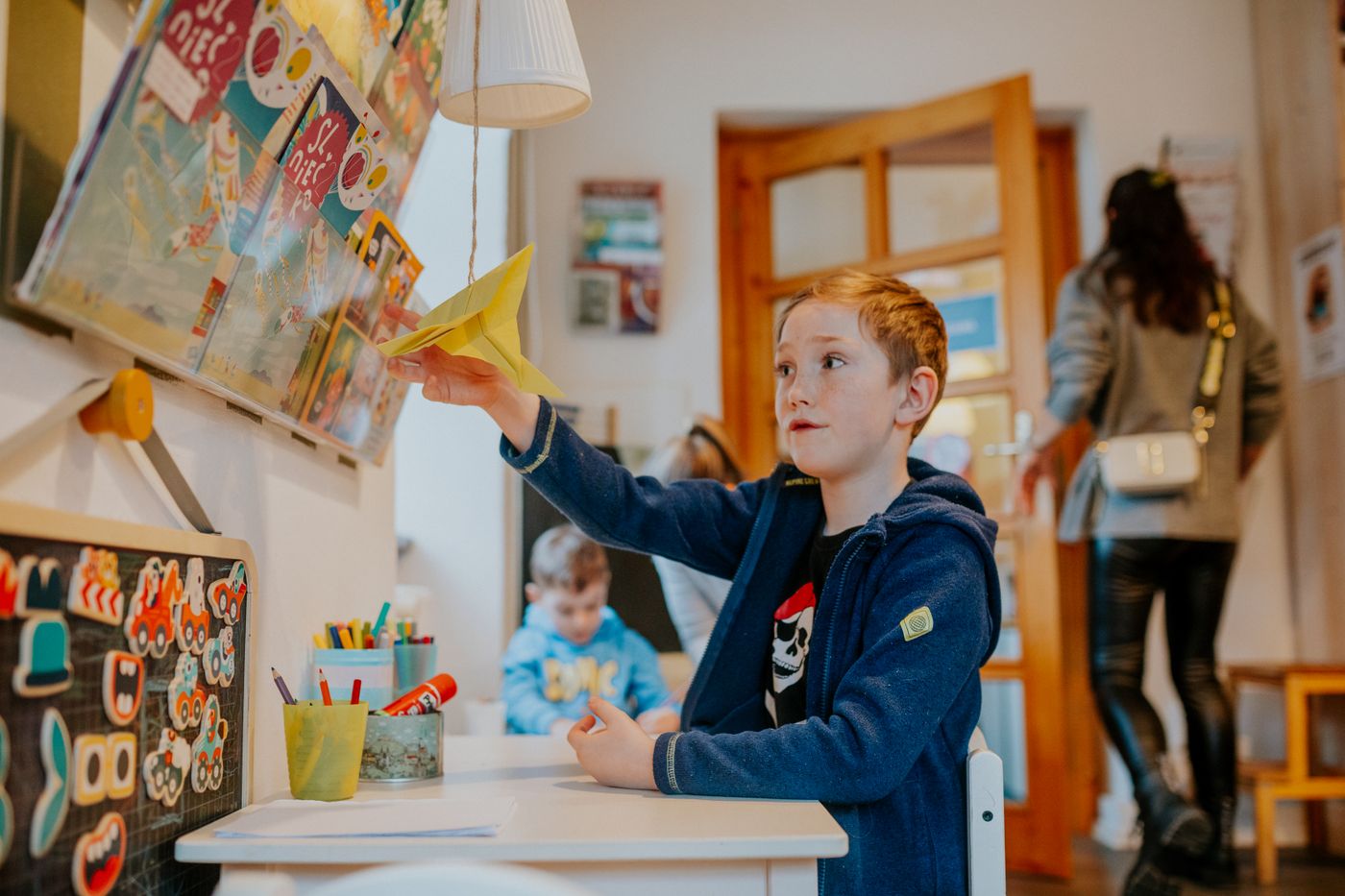
A family paper-airplane session becomes easier to follow when everyone launches from the same place and knows what is being compared. Without those small agreements, one person throws from beside the door, another starts halfway across the room, and the discussion becomes about who stood where rather than what the planes did.
Choose one suitable paper design, a clear flight area, and a small number of attempts. Record observations without turning them into claims about the best child, the best thrower, or a scientifically proven winning plane. The goal is a shared comparison people can understand and finish.
Give the session one answerable question
Begin with a question such as, “Where does this same design land when each of us tries it from this line?” That is a manageable family activity. It is narrower than finding the fastest airplane, the perfect fold, and the longest flight all at once.
Etsy’s fall and winter 2026 report includes interest in personal, creative traditions. A repeatable paper-flight afternoon is our application of that context, not evidence that this particular game is currently a top search. Use paper and room arrangements already appropriate to your household.
Choose participation together. Someone may want to fold, launch, retrieve, measure, or simply watch. The same person does not have to do every job, and declining to throw should not mean being excluded from the conversation.
If the appeal is learning a fold rather than comparing flights, our one-fold family origami session is the better starting point. For this activity, keep folding simple enough that the flight comparison can actually happen before everyone loses interest.
Select a clear flight area before folding
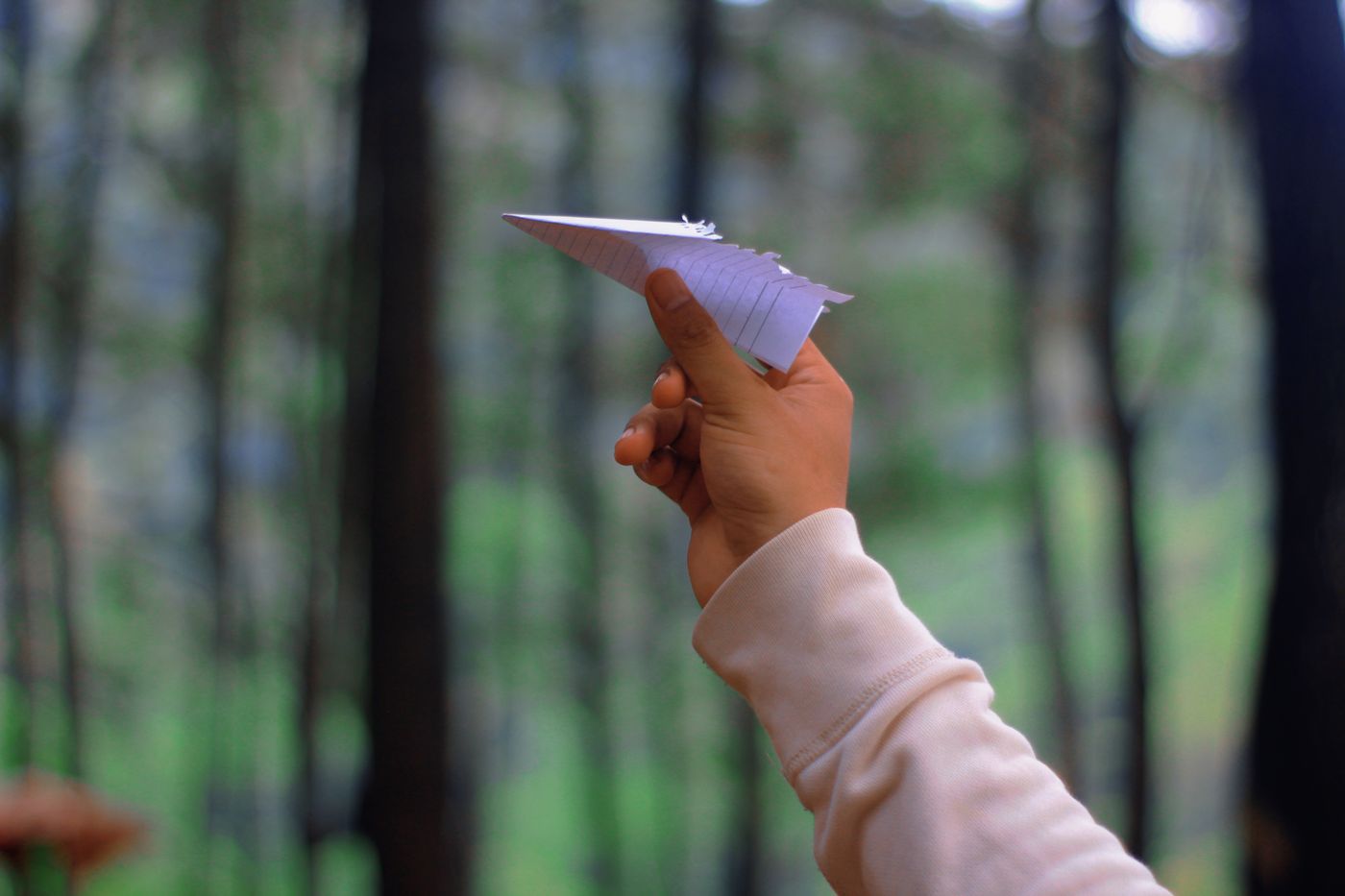
Choose an area suited to the participants and the intended gentle launches. Keep people, pets, breakable objects, hot items, and other obstacles out of the flight path. A bedroom with a narrow clear strip may not provide a suitable flight area simply because the planes were made there.
If the flight portion needs to happen in another room or outside in suitable conditions, make that a clear part of the plan. Do not make children launch toward a doorway in the hope that nobody will walk through it. Set a shared rule that retrieval happens only after the launcher has finished and everyone agrees the route is clear.
The starting position can be a recognizable floor boundary or a removable marker appropriate for the surface. It must not create a trip hazard, damage the floor, or need someone to stand in the flight path to hold it. A joint reference point is enough; you do not need a permanent runway.
Outside, notice conditions without pretending to control them. A breeze or gust can change what happens. If conditions vary too much for the question you chose, call it a casual flying session or try another time. Keeping an honest description is more useful than preserving an imaginary experiment.
Use one folding reference and suitable plain paper
Choose an uncomplicated design whose instructions you can follow. The Basic model from Fold 'N Fly is one reference option; its page describes a simple design suited to a gentle toss. Follow the actual instructions if you select it rather than combining parts of several models from memory.
Use appropriate paper and tools for the participants. Do not add hard weights, pointed attachments, or improvised propulsion to make the comparison more dramatic. An ordinary folded paper plane is enough for the question in this guide.
If you want to compare different copies of the same design, begin with paper of the same type and size. That keeps one obvious difference out of the discussion, but it does not make the copies identical. Fold accuracy, handling, and launch still vary, and those differences should remain visible in the record.
Let each participant make their contribution without silently rebuilding their plane to match an adult’s standard. If someone requests help, agree which step needs assistance. If a plane is too damaged or unsuitable to use as intended, say so plainly and decide together whether to make another.
Identify the planes without changing their purpose
Give each plane a simple identifier that the group can recognize. A light mark made with an appropriate writing tool before or after folding can work if it does not interfere with the design. Do not use heavy decorations or attachments and then describe the result as the same unmodified plane.
Keep names optional. “Blue mark” or “Plane A” may be enough. A child who does not want their name on a public photograph should not have to use it to participate. The activity does not require any online sharing.
Decide whether the comparison is between individual planes or attempts with a single shared plane. These answer different questions. If everyone uses the same plane, the order and accumulated wear matter; if each person has a separate plane, construction differs too.
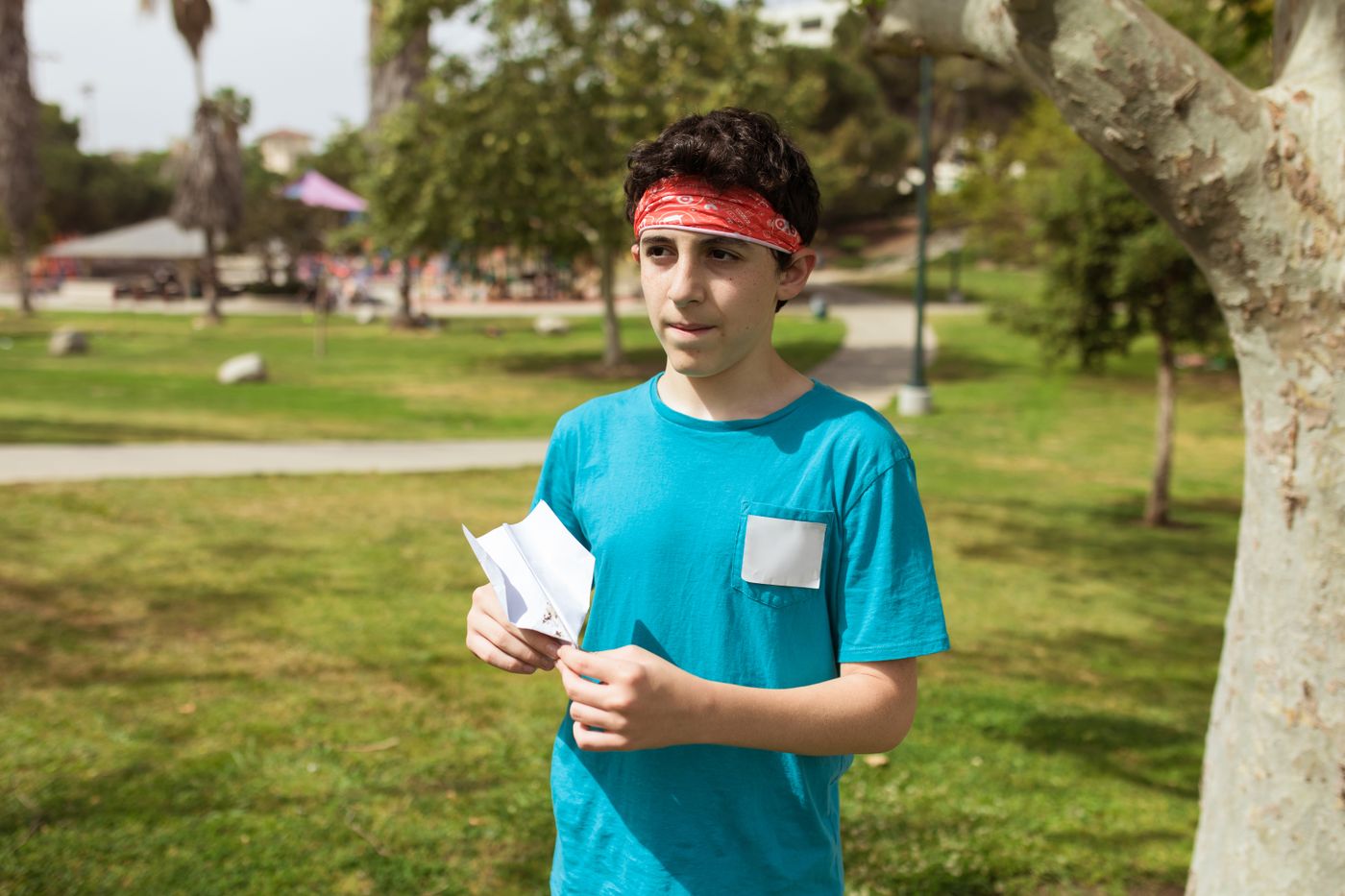
Write down that choice in ordinary language. For example, “Three paper copies of the same design, each launched by its maker” is clearer than calling the setup controlled when several factors differ. The point is to understand the session you actually ran.
Agree on what counts as a landing
Choose a consistent observation before the first launch. You might note the place where the plane first touches the floor, rather than where it eventually slides to rest. Either can be a family game rule, but switching between them halfway through makes the comparison confusing.
For a simple distance comparison, agree how you will measure from the starting reference. Marking a landing and measuring afterward keeps people out of the flight path. Use a suitable measuring tool with appropriate adult help, and do not stretch it across a route while someone launches.
A flight can also be described without numbers: landed near the chair, turned left, reached the open rug area. Qualitative observations are valid for a family activity if that was the intended question. Avoid attaching precise-looking distances to rough guesses.
Use the same rule for an unusual landing. If the plane hits an obstacle or someone steps into the route, pause. Decide whether to repeat the attempt and record why. There is no need to keep an unsafe or clearly interrupted flight merely to maintain a fixed count.
Take a few turns without changing everything
Choose a small number of attempts the group can comfortably finish. Three attempts per plane is an example, not a required standard. A shorter round completed with attention can be more useful than ten launches people no longer want to discuss.
Keep the agreed starting position and intended launch style consistent within that round. Do not instruct someone to throw harder to match another person’s result. Different people have different comfortable ways of participating, and the activity should not become a test of physical ability.
Write down the actual observations, including an awkward flight. Avoid reporting only the longest attempt as though it represents the whole session. A small family record is useful precisely because it shows variation rather than concealing it.
The turn-taking approach in our learn-one-game evening guide can help if several people are waiting. State whose turn comes next and let observers contribute a description instead of crowding the launch position.
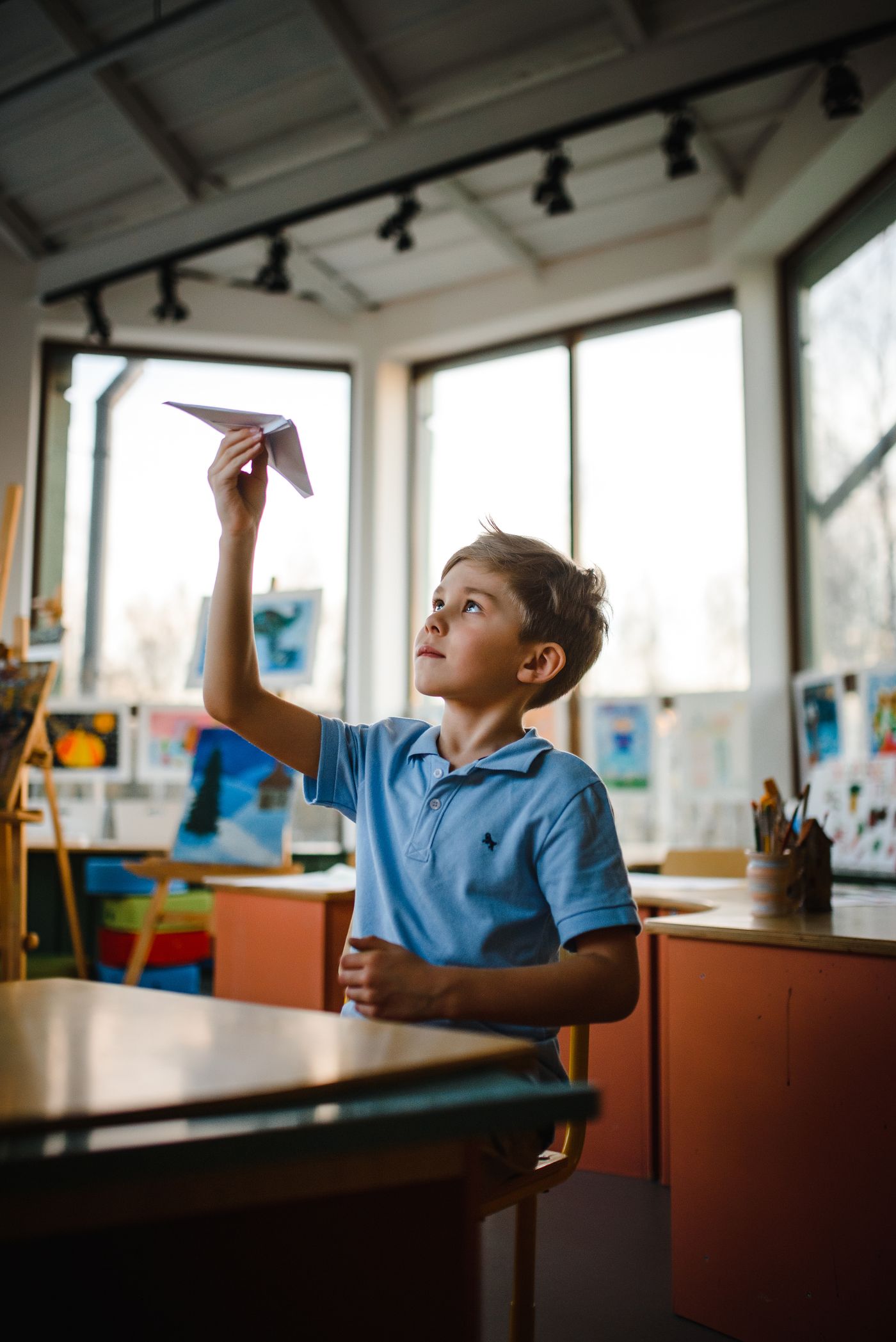
Change one feature only if there is time
After the first round, ask whether anyone wants another question. You could compare the same plane before and after one permitted folding adjustment, while keeping the other agreed parts of the routine similar. Follow the design guidance rather than inventing a risky modification.
Label the second round separately. Do not overwrite the first result or claim that one improved landing proves the modification works in general. The launcher, air movement, wear, and chance can still affect the outcome.
If two features change at once, describe both. For example, a new paper type and a different wing fold do not isolate either feature. That can still be an enjoyable session, but its results do not answer which single change made the difference.
A child may prefer to draw a new design instead of running another comparison. That is a valid stopping point for the first question. The family does not need to keep testing because an adult wants a more convincing result.
Talk about flights rather than ranking people
Use observations people can point to: one plane curved, another landed earlier, or the same plane behaved differently across attempts. Ask what someone noticed before offering an explanation. Separate a guess about why from the thing actually observed.
Do not treat a short flight as evidence that someone folded badly, tried less, or needs correction. The session contains many uncontrolled differences. A comparison can be interesting without being a competition between the participants.
If the family enjoys combining separate contributions, our shared drawing made from individual panels offers a different activity with that structure. There is no need to attach every creative session to a winner or a performance score.
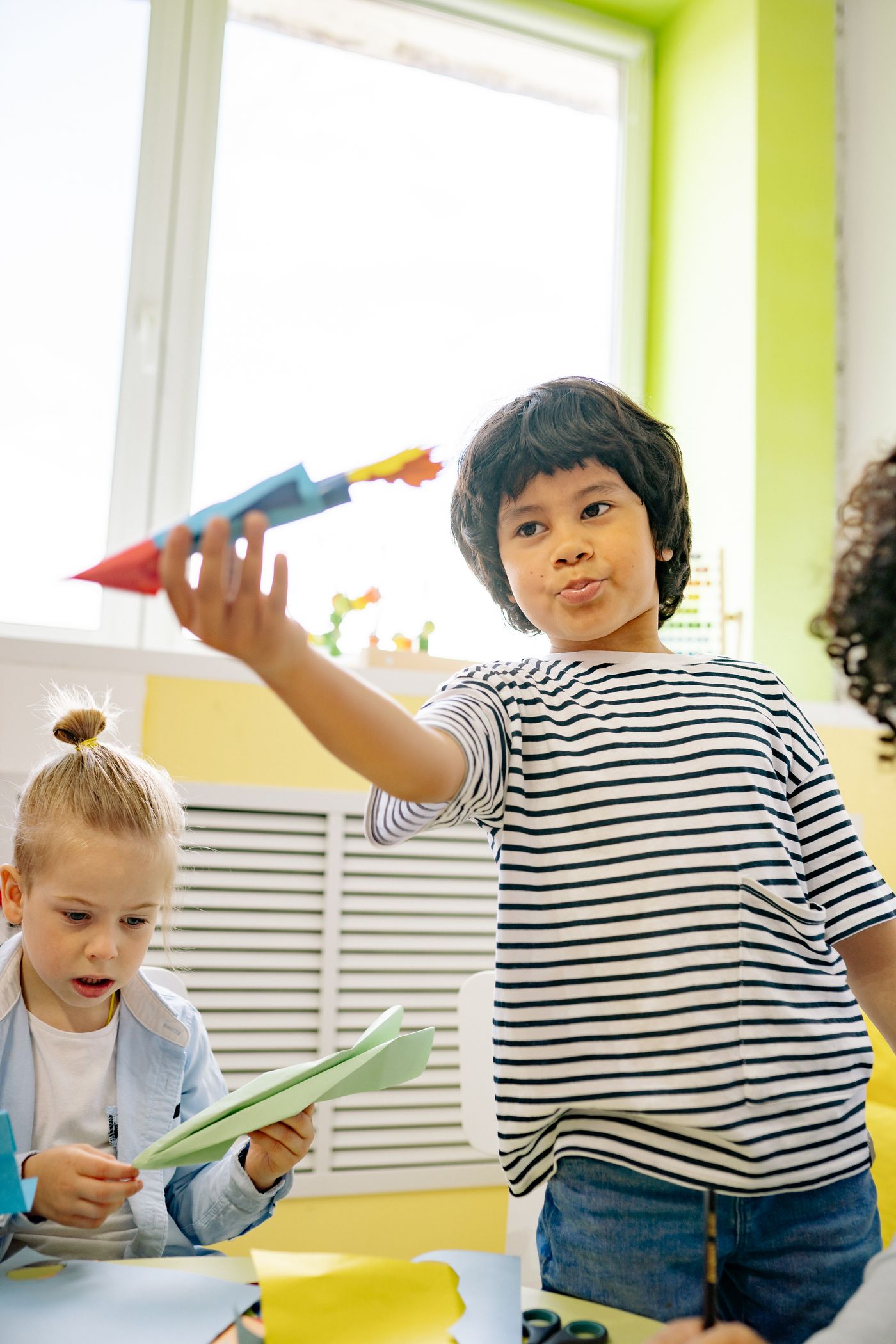
Finish with a small, honest record
Keep the plane identifier, the chosen question, the number of attempts, and a few observations. A folded sheet can be enough. If you take photographs, show the actual activity without implying that a staged picture documents a measured flight.
Decide which planes to keep and which paper can be recycled appropriately. Store any retained plane where it will not be crushed or become unidentified clutter. The object-matching hunt guide offers another example of planning an activity’s return step before enthusiasm runs out.
The useful outcome is a family able to explain what it tried and what happened. A shared starting line and a consistent question make that conversation easier, even when the flights are short, surprising, or impossible to repeat exactly.
Explore related decisions in our Family Home hub.
Sources and editorial scope
Editorial research checked October 24, 2026. Published trend reports are context for these editorial applications, not verified live keyword rankings. Practical household guidance; photographs do not document a tested household or authenticate pictured materials.