
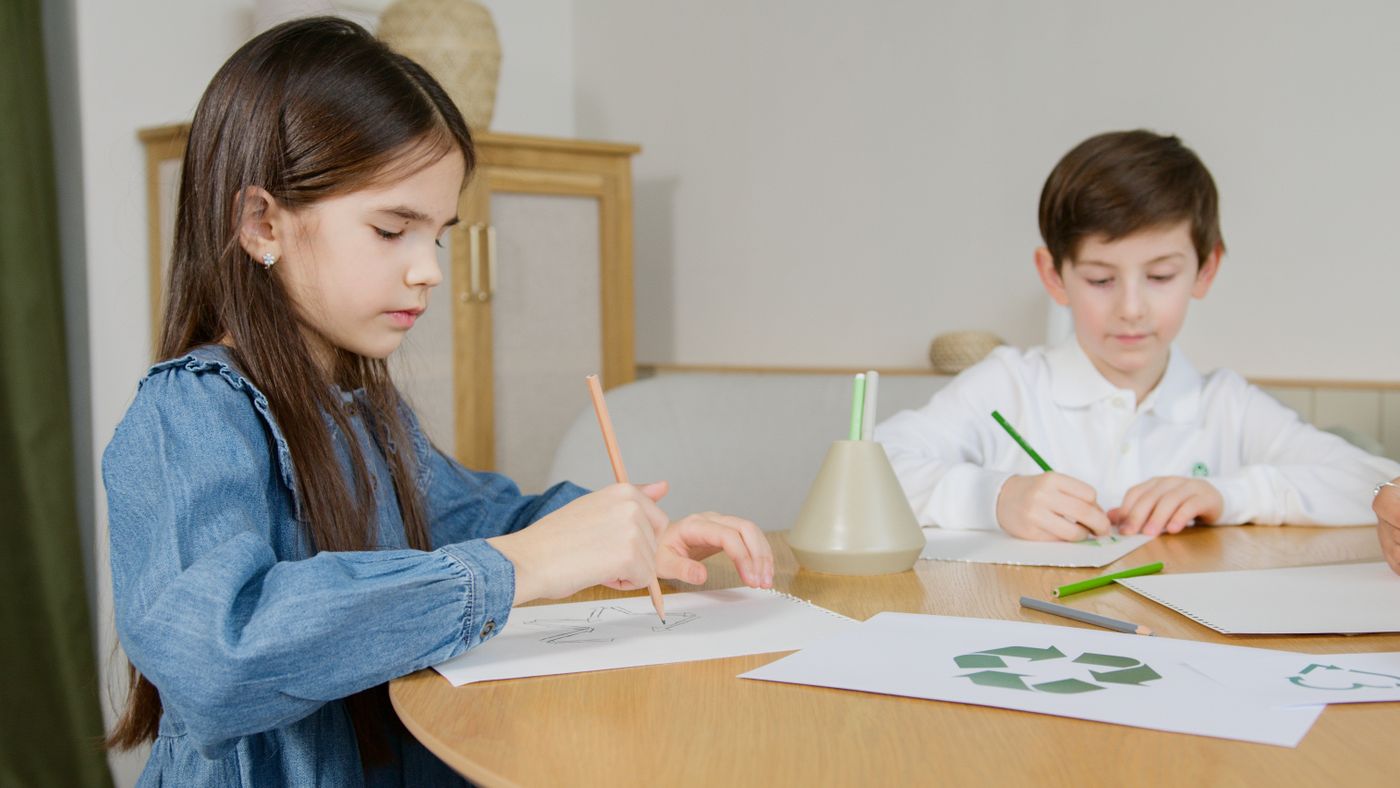
A family drawing can stop feeling shared when one person takes the pencil and improves everyone else’s work. Separate panels offer a different arrangement: each participant makes an independent part of a scene, then the group decides how the pieces belong together. Nobody has to draw at the same speed or accept another person’s corrections.
Pinterest’s Fall 2026 creator themes include casual crafting and screen-free hobbies. A panel drawing is one way to turn that interest into a manageable family activity. It does not require a complete art kit or a permanent craft table. Use age-appropriate materials and supervision, adapting the process to the actual participants rather than treating one set of instructions as suitable for every child.
Agree on the scene before distributing the paper
Choose a subject broad enough to allow different interpretations. A make-believe neighborhood, a garden from another planet, or a train with individual carriages can work because each person has a meaningful area to invent. Avoid a subject that requires one participant to imitate another person’s drawing accurately.
Ask whether the finished panels will connect into a single scene or sit together as related pictures. A continuous landscape needs a few shared decisions, such as where a road crosses the panel edges. Related pictures can remain more independent. Decide which arrangement the group actually wants rather than promising a perfect seamless mural.
Keep participation optional. Someone may prefer to watch, suggest a title, or make a separate picture. A family activity should not require every person to produce a matching contribution. Making room for quiet reading in a shared area illustrates why another low-key option can coexist with a group activity.
Give each participant a real boundary
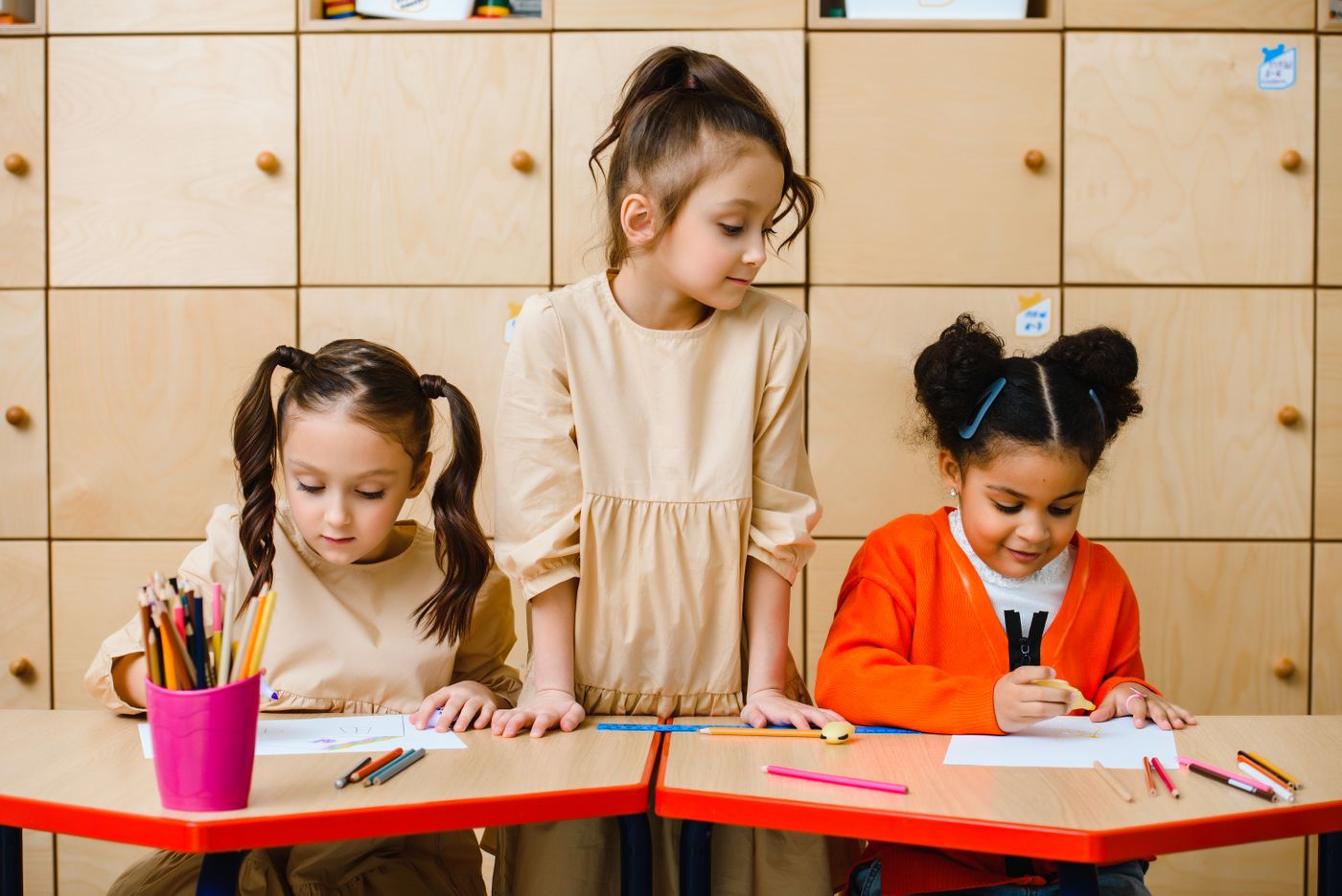
Use individual sheets or suitable panels that fit the available working surface. Write names on separate place markers or, with permission, on the back of each panel. Explain that each person controls their own drawing area. Another participant can offer an idea, but adding marks requires the owner’s agreement.
If the scene needs matching edges, put two ordinary panels next to each other and agree on a small shared reference, such as the level of a path. Each person can then take their own panel away to work. Do not insist that a child spend the whole activity aligning details instead of drawing what interests them.
For people who find a blank sheet intimidating, offer a choice between two broad starting ideas. Avoid completing the outline for them unless they ask for that assistance. The goal is shared authorship, not a set of adult templates filled in by younger participants.
Set out a limited common palette
Begin with materials appropriate to the participants and the surface. Pencils or suitable crayons may be enough. Keep any sharpener, scissors, adhesive, or other tool under the supervision and use conditions it requires. A pencil-only first session avoids adding drying and wet-cleanup stages to a project whose main challenge is cooperation.
Put shared supplies where people can reach them without leaning across someone else’s artwork. If the group needs the same color at once, agree on turns or use an available alternative; an exact color match is usually less important than keeping the activity comfortable. Do not make one participant the permanent supply manager unless they want that role.
The family art-supply organization guide can help with the return destination. Bring out only what this drawing needs, rather than emptying every art container because the table happens to be clear. Keep food and drinks separate from materials and drawings where that suits the participants and their tools.
Work in parallel without an improvement patrol
Let each participant begin with their own part of the agreed scene. Adults can draw alongside children instead of circulating to correct proportions or color choices. Ask before commenting, and focus on curiosity: “What is happening in this part?” leaves more room than “That tree needs to be taller.”
If someone requests help, clarify what they want. Holding the paper steady, finding a color, or explaining how to make a fold is different from redrawing the object. Give the smallest useful assistance and return control. A more experienced participant should not become responsible for making every panel visually consistent.
Notice when a shared reference becomes restrictive. If one person changes a path into a river, the group can invent a bridge, leave a gap, or display the panels separately. Solving the mismatch together can become part of the activity. Requiring the original panel to be erased is only one option, and it should not be the default.
Assemble only with everyone’s agreement
When participants are ready, place the panels beside one another on a clean surface. Try different orders without attaching anything yet. Ask each owner whether their panel may be moved, turned, overlapped, or trimmed. Some of those changes may be unacceptable even when an adult thinks the overall composition would improve.
Use an appropriate reversible arrangement where possible, or choose a suitable mounting method after the group decides what may happen to the originals. Keep adhesive and cutting tasks with the person able to use them safely. A temporary tabletop arrangement and a photograph may meet the family’s goal without creating a large permanent object.
For work that needs to leave the table, storing oversized children’s projects offers useful options to consider alongside the actual panel dimensions. Agree before starting whether the assembled work needs to leave the table that day, rather than discovering the conflict when somebody begins preparing dinner.
Give the finished picture a shared description
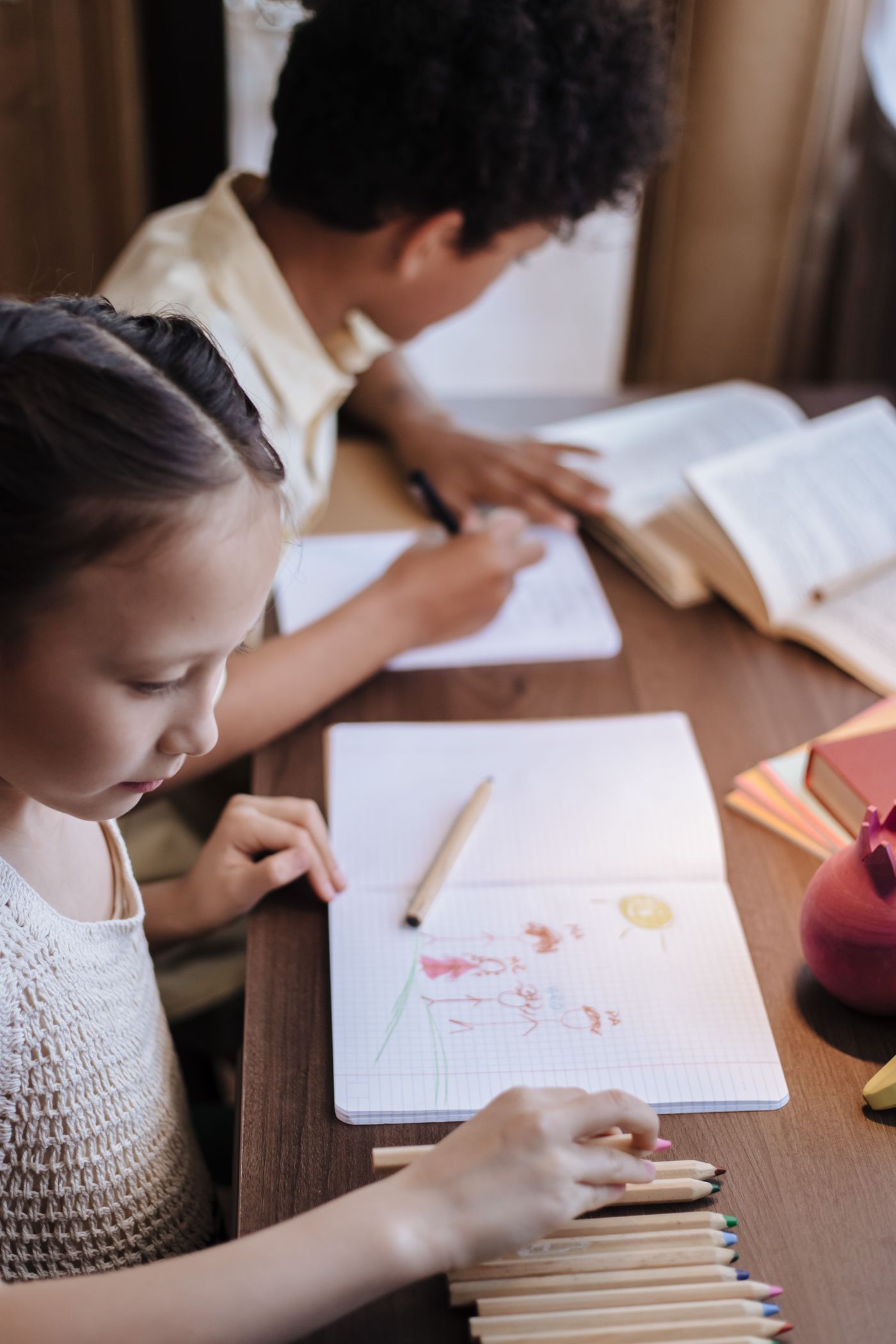
Invite each participant to describe their panel in their own words. Someone can record a brief caption or title with permission. Preserve different interpretations instead of rewriting them into a single adult explanation. “A garden at night” and “a space station disguised as a garden” can coexist in one family scene.
Decide whether names belong on a public display or only in the private family record. Ask before sharing pictures online, especially when the scene includes personal information or recognizable people. Keep a participant’s wish not to share separate from whether everyone else likes their drawing.
If you photograph the arrangement, make sure the individual panels and their order are understandable. An optional group image does not require a child to appear in it. Record the approximate date and participants privately if those details matter to the family, then let the drawing remain an activity rather than a compulsory documentation exercise.
Plan a finish that allows uneven progress
Some participants will finish early; others may want another session. A finished person can help return shared supplies, choose a title, or move to another activity without being required to alter a slower person’s work. Set a clear pause when the room needs to change use.
Put unfinished panels in an appropriate flat, identified place. Keep them separate from paper intended for recycling and from supplies awaiting cleanup. A simple note can show which side should face up and whether anyone may move the panel. The age-appropriate household chore discussion can help divide the return tasks without turning cleanup into a penalty for drawing slowly.
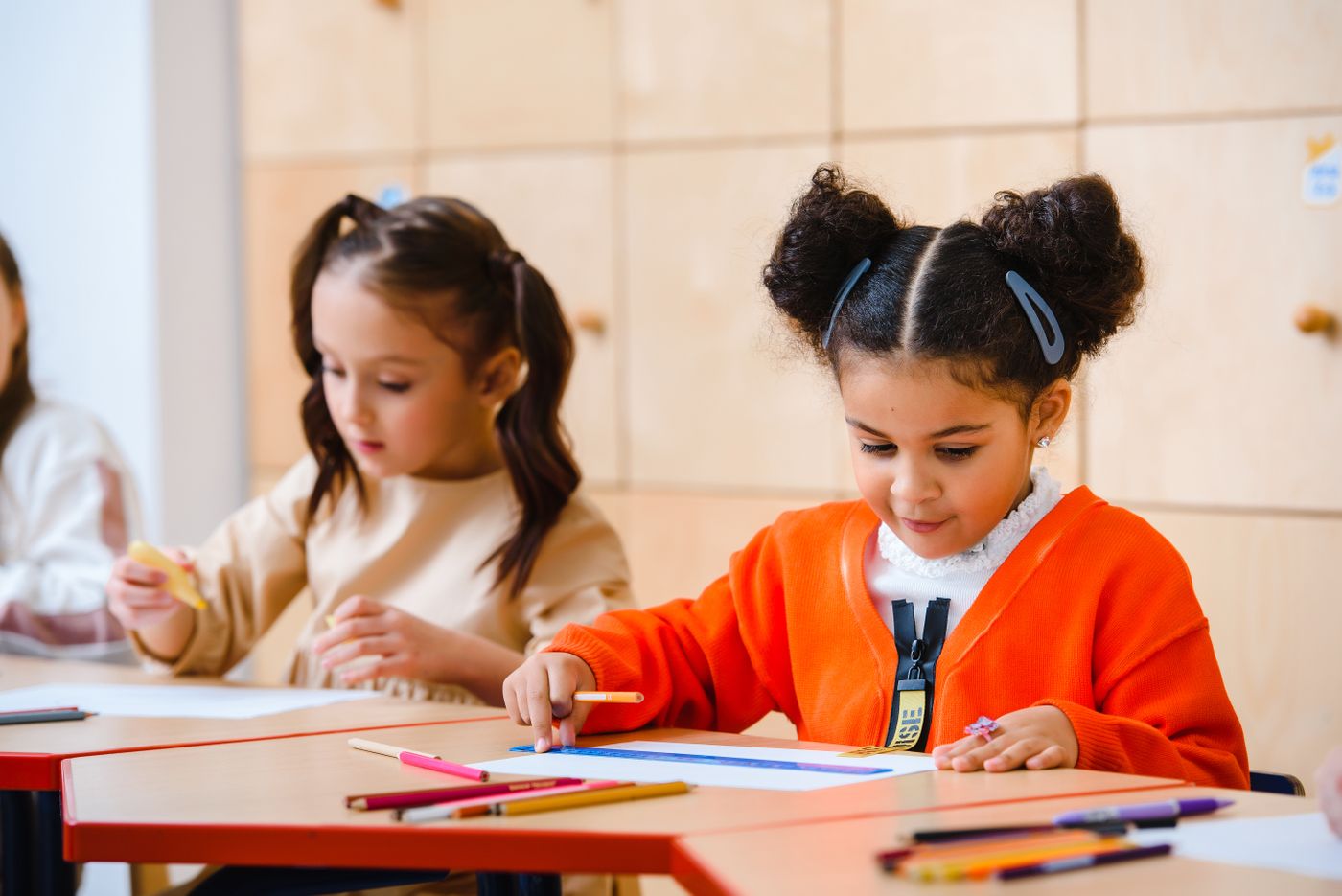
Display the result without starting an unlimited gallery
Choose a suitable temporary display or an accessible storage method for the pieces the family wants to retain. Do not attach drawings to a surface without checking permission and material suitability. A rental wall or delicate cabinet finish should not become a mounting experiment.
At the next activity, decide what happens to the previous scene with its participants. Some panels may be kept, some photographed, and some released. A rotation approach to children’s possessions offers a useful broader principle: selection can keep favorite work visible without requiring every past project to remain on display.
The project has worked when people recognize their own contributions in the finished result and can leave the table without losing ownership of them. A slightly mismatched scene can tell a more interesting family story than a polished picture that only one person was allowed to finish.
Explore related household decisions in our Family Home hub.
Sources and editorial scope
Editorial research checked October 17, 2026. Trend-report dates and limitations are stated in the article; these are editorial applications of published signals, not verified October keyword rankings. Practical household guidance; illustrations do not document a tested household or authenticate a pictured material.
