Two watercolor paints can make a surprisingly varied collection of marks when a family gives each person room to experiment. Small mixing cards keep the activity focused: try the chosen colors, notice what changes, and keep the combinations someone actually wants to use again. There is no need to finish a recognizable painting during the same session.
Etsy’s fall and winter 2026 report provides context for shared making and visible handmade details. These cards are a household activity within that context, not a measured claim about current demand for a particular art material. Choose age-appropriate products and follow their instructions for use and cleanup.
Pick a small material set
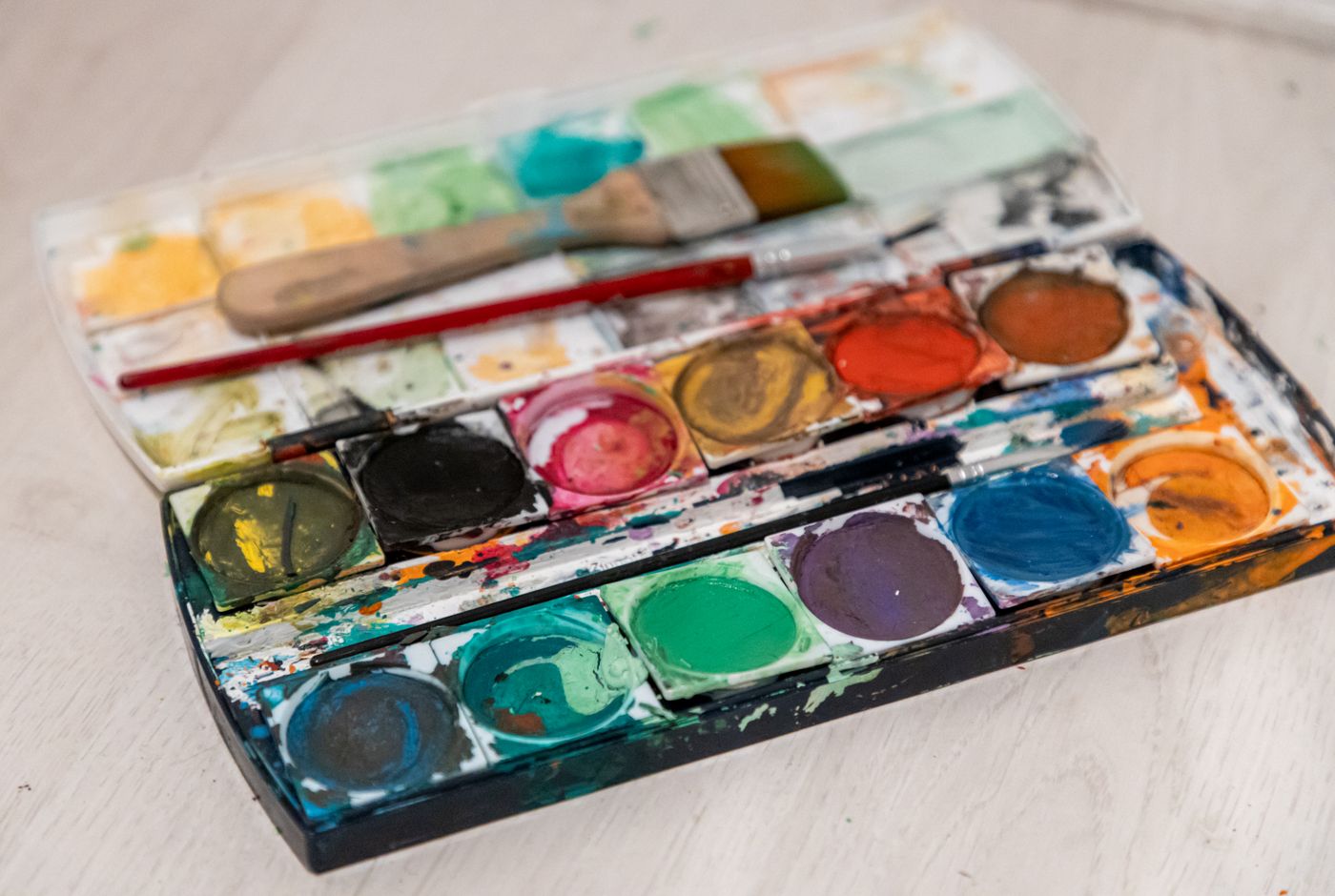
Choose two clearly identified watercolor paints suitable for the actual participants. Read the maker’s age guidance and handling instructions before setting up. Keep the product and color names available if people want to record a combination. Paints with similar everyday names can behave differently, so avoid promising that any red and blue will produce the same result.
Use appropriate paper, brushes, mixing surfaces, and water containers already available where possible. Keep art materials separate from food and drinks during the session. An adult should choose and supervise the materials for the group. Do not substitute another craft paint simply because its container has a similar bright color; follow the intended method for the actual product selected.
Set up individual working spaces
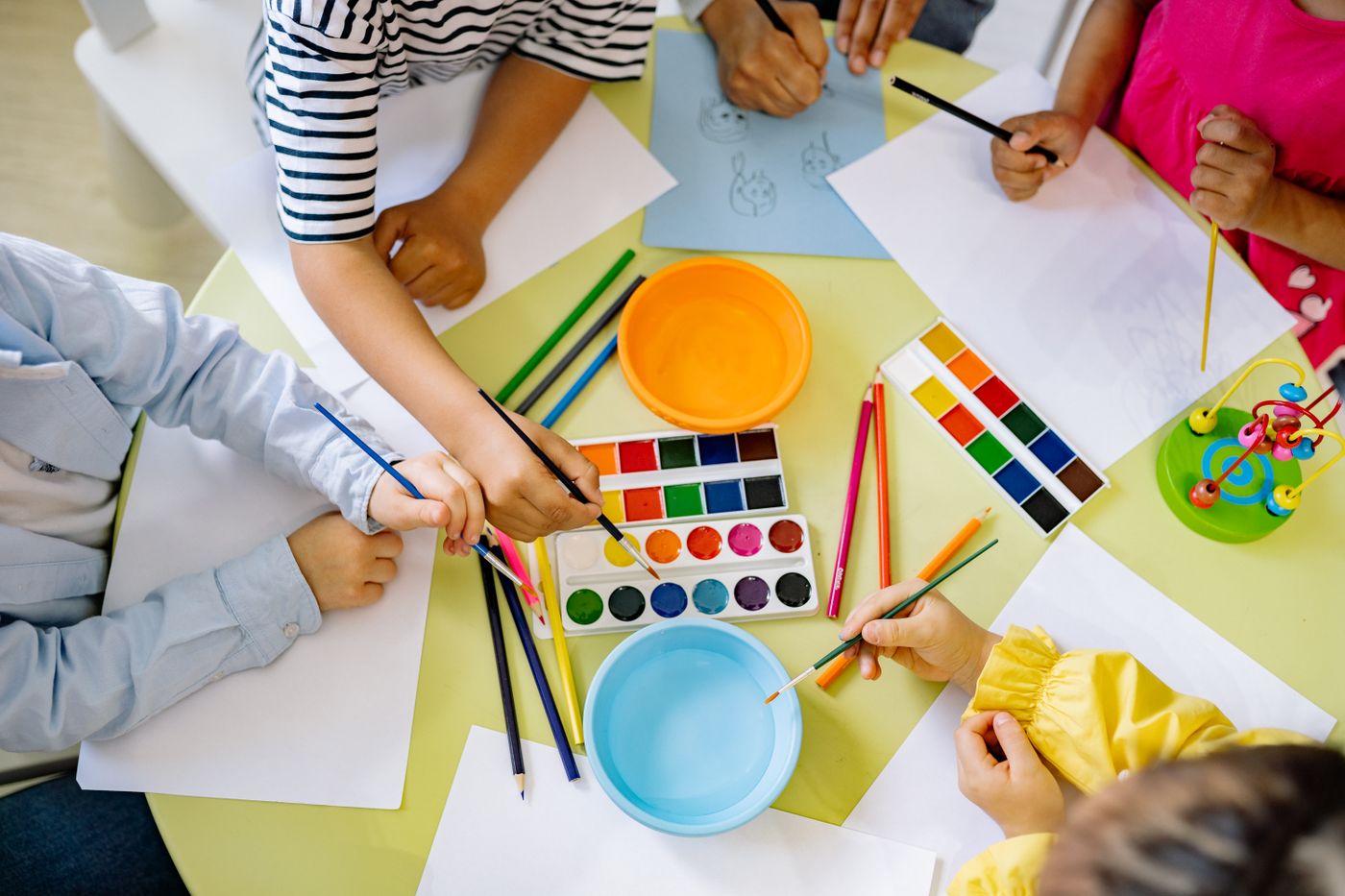
Give everyone a separate page or a few small cards and access to the chosen materials. Choose a stable work surface and appropriate protection for it. Place water containers where ordinary arm movements are less likely to catch them. Use a different layout if a participant needs more space or another suitable tool to take part.
Test the arrangement before filling every container. Can each person reach the paints and return a brush without stretching across another person’s work? Shared supplies can remain shared without giving one person control over everybody’s page. For a group with very different ages, an adult can manage access to the materials while leaving each artist’s marks their own.
Make a simple reference from each original color
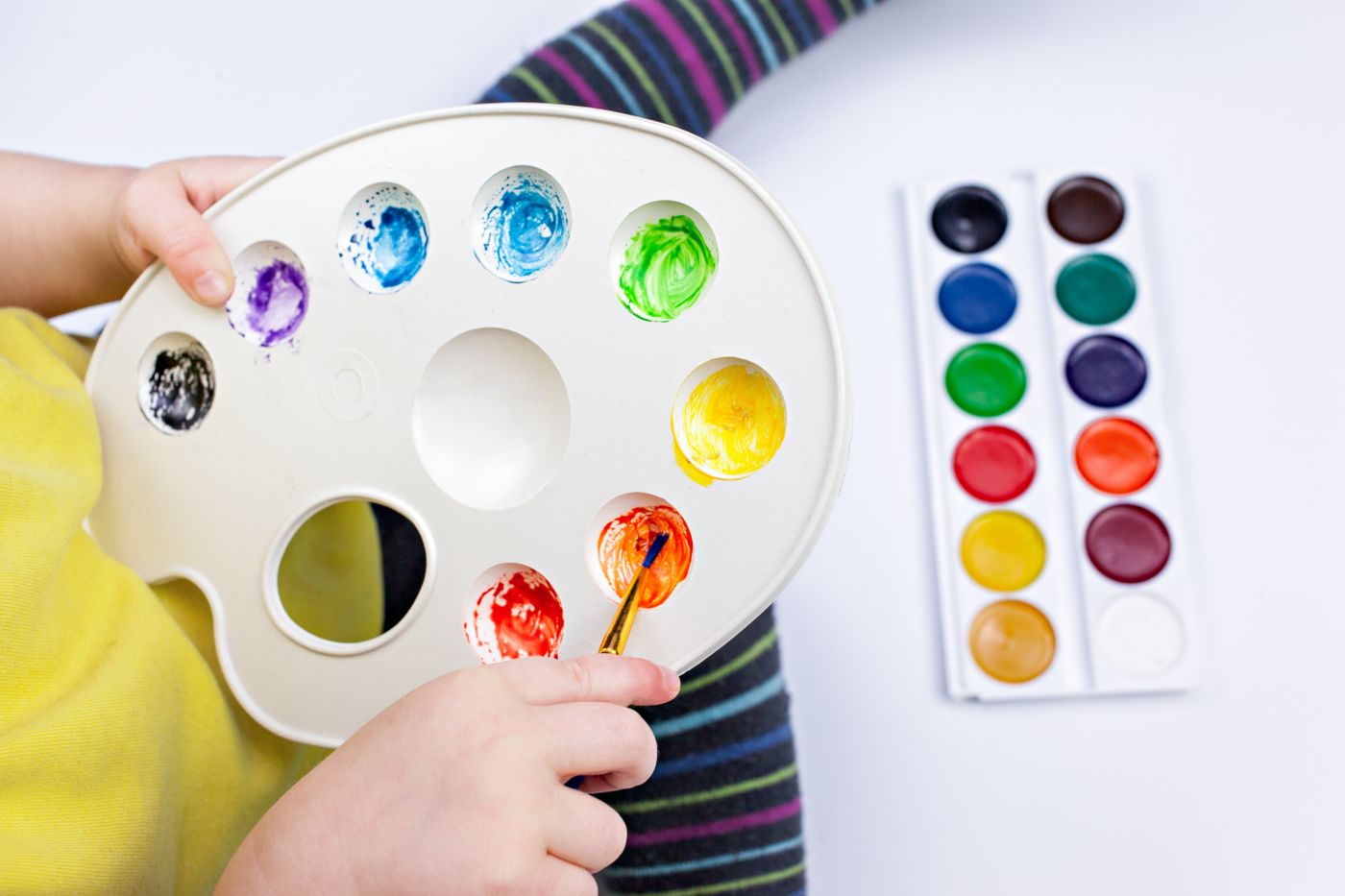
Begin with a small patch of each chosen paint used according to its instructions. Leave room between them for later combinations. A participant can make broad shapes, small lines, or another manageable mark. Keep the activity about observing the paint rather than producing identical rectangles around the table.
If you label these patches, use the exact maker’s color names where known. A familiar word such as blue can supplement that identification, but it should not replace it in a card intended for later reuse. The reference gives the family a starting point for comparison without claiming that the printed name fully predicts the appearance on every paper.
Mix a little, then observe before adding more
Demonstrate a small combination on your own mixing surface, following the material’s instructions. Add a modest amount of the second chosen paint and place a mark beside the original patches. Invite participants to notice what they see before changing anything else. A useful observation can be as ordinary as looks darker or looks greener from this seat.
Let each person choose how to continue. Someone might add more of the first paint; another might begin a fresh combination. Avoid dictating a target color that every child must achieve. Two products may give a different mixture from a familiar school diagram, and this session does not need that difference to be treated as a mistake.
Change one useful thing at a time
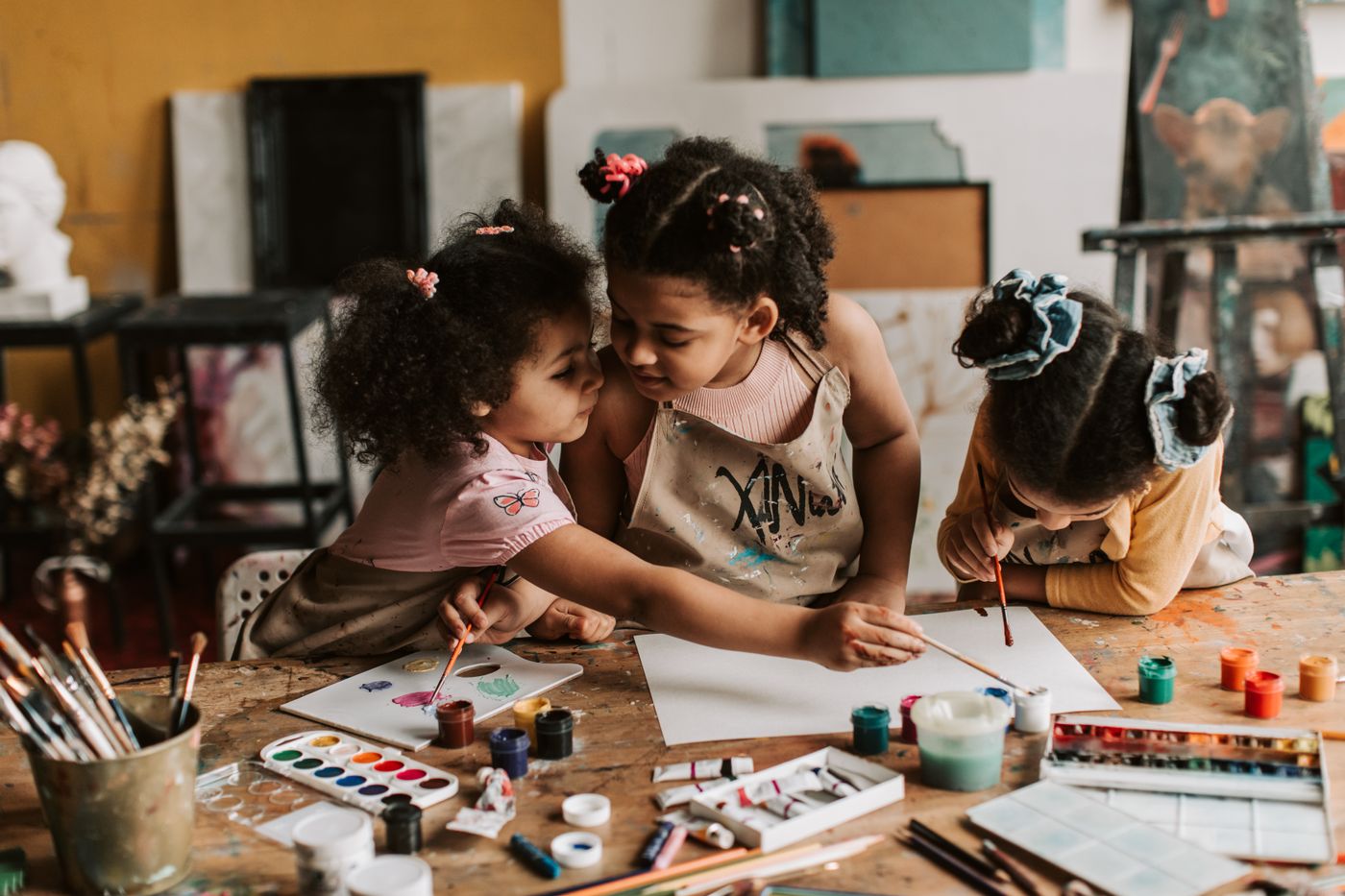
Offer a small question for the next mark: what changes if you use more of one chosen paint, or use the product’s permitted method to make a lighter-looking mark? Keep the comparison manageable and allow people to stop after a few experiments. There is no requirement to fill every card or test every possible variation.
When someone wants to compare two mixtures, put their marks on the same suitable page with space between them. That can make observation easier than comparing a wet mark in a mixing well with a different mark across the room. Use descriptions of the actual appearance rather than declaring one combination correct or professionally balanced.
Keep the brush routine understandable
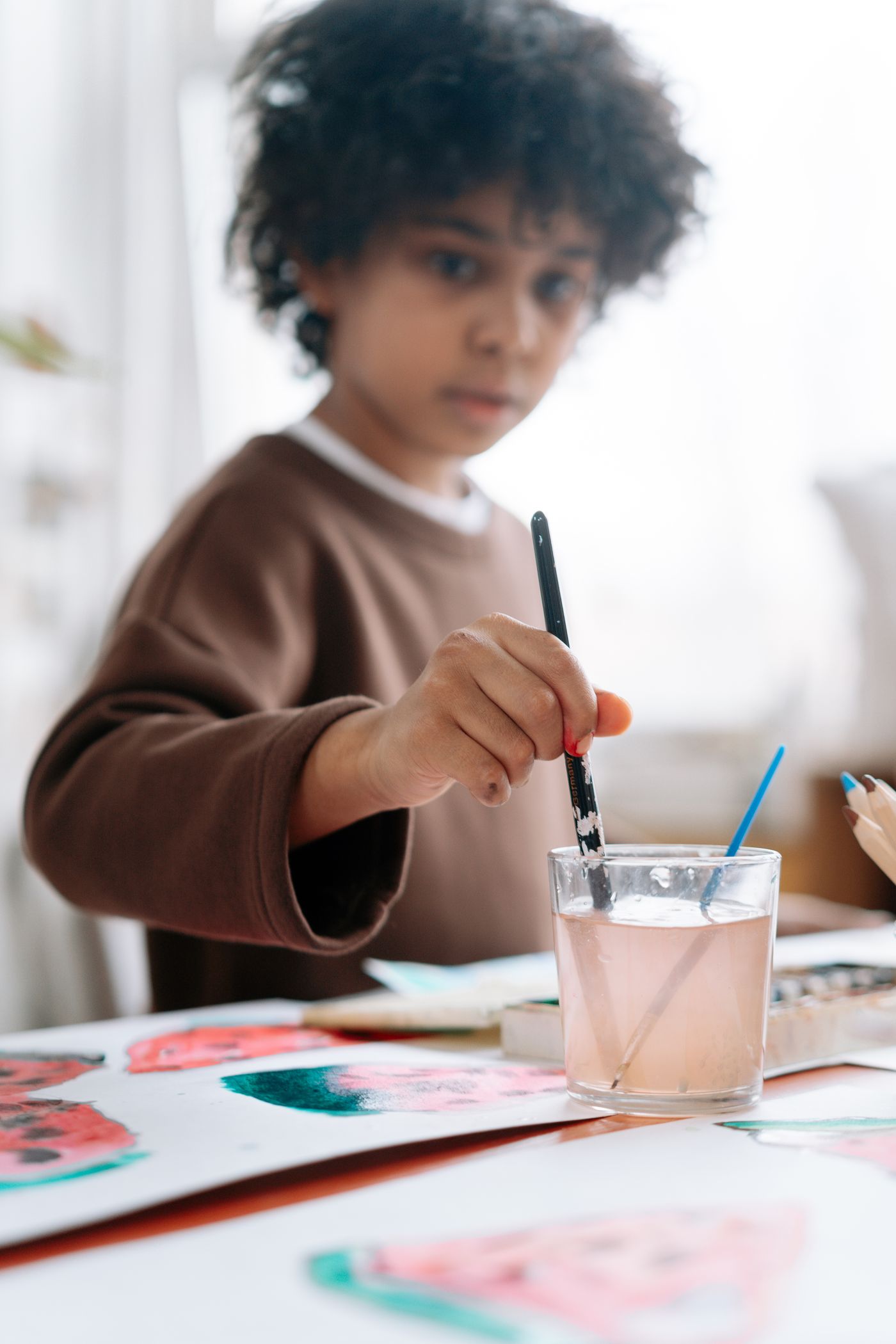
Follow the materials’ instructions for rinsing and handling brushes between colors. Show the sequence on your own tools when that helps. A child can ask an adult to manage water replacement or another step that exceeds their ability. Keep the task comfortable rather than turning every brush movement into a performance test.
The acrylic-paintbrush care guide discusses another paint type and should not be treated as the cleaning directions for these watercolors. Use the actual watercolor and brush makers’ care information here. Keeping paint identities distinct helps the household avoid carrying one material’s cleanup assumptions into the next activity.
Record a combination only when it is useful
If a participant likes a mixture, offer a short note about the two actual paints and the order or rough relationship used. Make clear when the note is approximate. A family experiment with small brushfuls does not establish a precise recipe that will always reproduce the same color on a different paper or under different conditions.
An adult can write a dictated observation without changing the participant’s work. For example, someone might call a patch rainy-window gray or favorite tree green. Those personal names can sit beside the actual paint identities. Keep the distinction visible between a creative description and information someone needs to repeat the experiment.
Allow the cards to finish their required drying
Choose a suitable resting place where the work can remain according to the materials’ instructions. Keep the cards identifiable without stacking or moving them prematurely. If the table must be cleared, plan an appropriate transfer surface before starting. Do not ask everyone to complete a painting while also competing for the only available drying area.
The paper-collage session guide offers a different shared activity when the household needs another material or finish. The one-fold origami session is another option for people who enjoy a more prescribed sequence. These mixing cards can remain exploratory; they do not need to produce a recognizable object to count as finished work.
Share one observation from each participant
When the materials are ready to handle appropriately, invite each person to choose a mark or describe something they noticed. They can pass if they prefer. Compare the observations without ranking the cards by neatness or realism. Someone’s broad patch may reveal a change just as clearly as another person’s carefully labeled row.
Keep each person’s selected card under their control. Ask before displaying, photographing for public sharing, or altering it. The session’s shared element is the pair of starting paints and the conversation around them. The finished pages can look very different while still reflecting the same small family experiment.
Keep a limited collection and restore the room
Ask which cards people want to keep and whether any have a specific next use. A few may become references for a later drawing; others may simply record an enjoyable session. The rotating handmade-display guide can help give a small selection a temporary place without promising that every future experiment will remain on a shelf.
Complete the product-specific cleanup and return the tools to their own storage. Keep anything still awaiting drying clearly separate. The useful result is a manageable set of observations, a few chosen cards, and a room ready for its next ordinary activity. Two familiar paints and enough time to notice them can provide plenty to explore.
Explore related decisions in our Family Home hub.
Sources and editorial scope
Editorial research checked October 24, 2026. Published trend reports are context for these editorial applications, not verified live keyword rankings. Practical household guidance; photographs do not document a tested household or authenticate pictured materials.