Sharing a small closet is not just an organization problem. It is a space-allocation problem between two people with different wardrobes, routines, heights, laundry habits, and ideas about what “organized” means. If you are working on the same space, A Room-by-Room Organization Plan for a Small Home covers the next decision in more detail.
The closet works best when both people know which space is theirs, which space is shared, and what happens when a section becomes full. If you are working on the same space, How to Build a Home Binder System That Actually Works in a Small Space covers the next decision in more detail.
This guide uses a simple model: allocate → edit → zone → equalize effort → reset.
Do not split the closet 50/50 automatically
Equal space is not always fair space. One person may wear uniforms, dresses, or hanging work clothes while the other mainly stores folded basics in drawers.
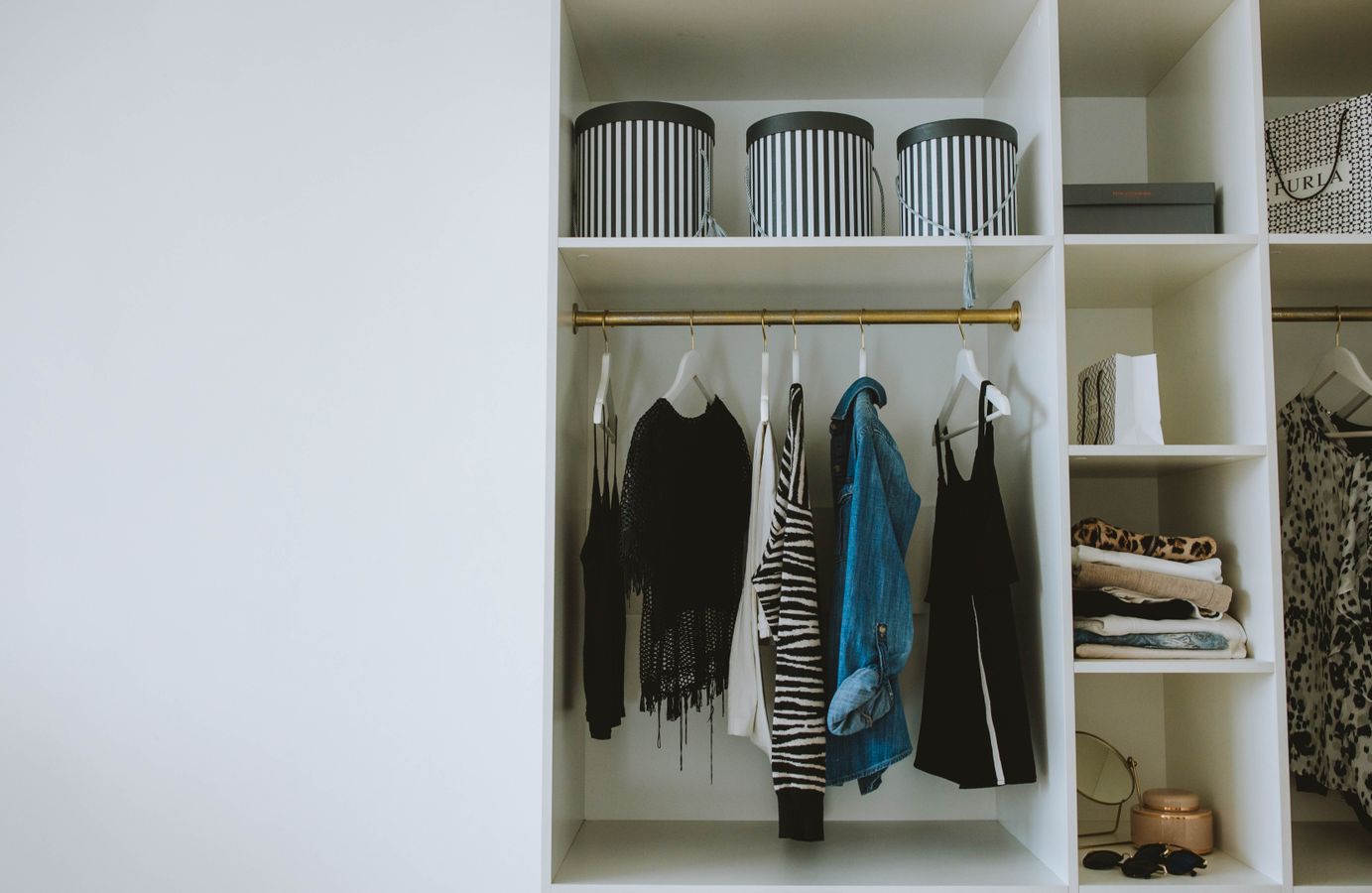
Instead of splitting the rod exactly in half, divide the closet by storage need.
| Storage type | Person A | Person B | Shared |
|---|---|---|---|
| Hanging rod | 60% | 40% | — |
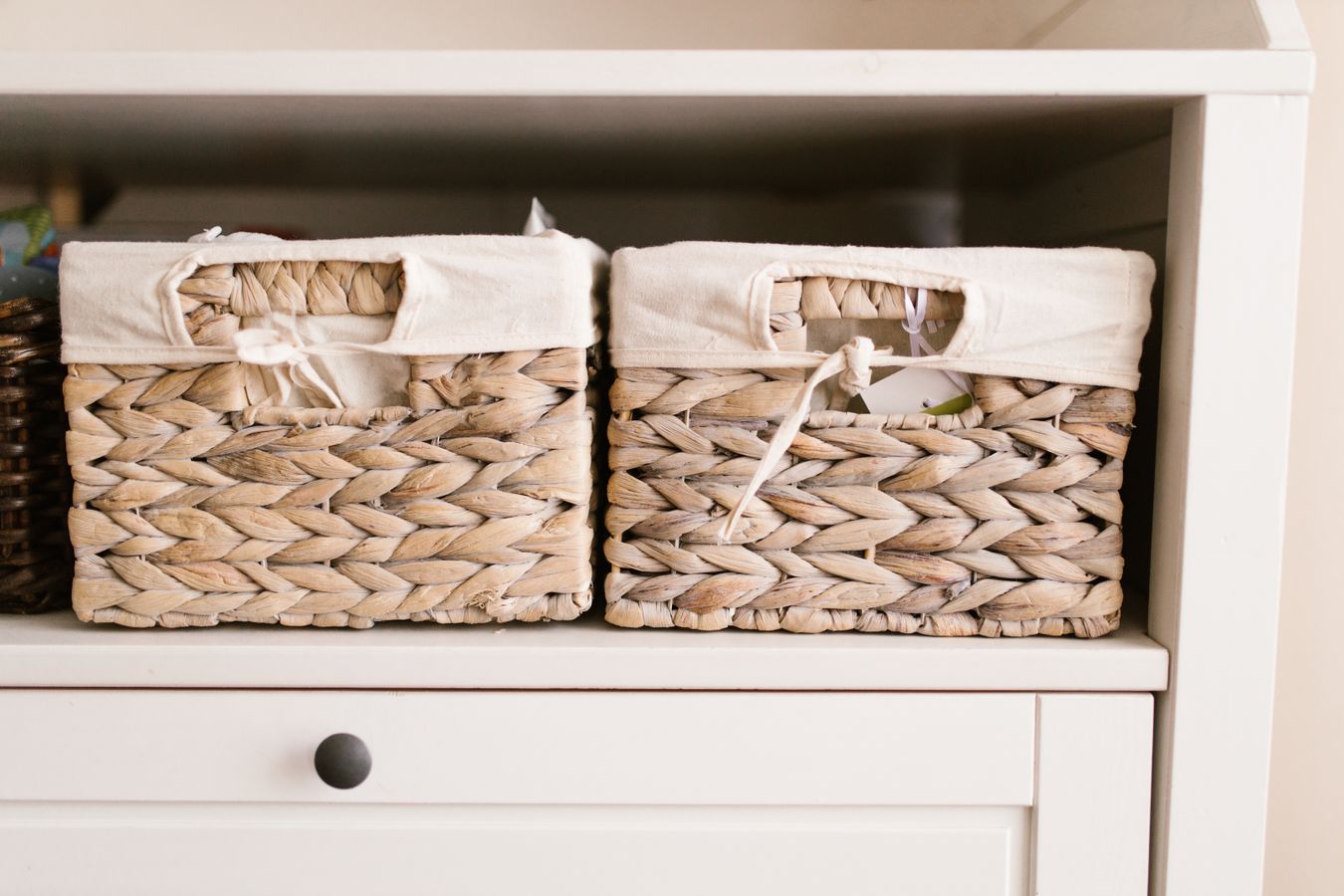
| Top shelf | 1 bin | 1 bin | seasonal bedding |
| Shoe floor | left half | right half | — |
| Door hooks | 2 | 2 | 1 shared laundry bag |
The exact percentages do not matter. The important part is that the arrangement is explicit.

Step 1: measure the real closet capacity
Before decluttering, measure:
- rod length,
- shelf width and depth,
- floor area,
- door clearance,
- vertical space above and below hanging clothes.
Then decide how much of each storage type the closet can support without becoming hard to use.
Step 2: edit separately before combining
Each person should make decisions about their own belongings. Do not begin by arguing over shared space while both wardrobes are still at maximum volume.
Start with easy exits: damaged clothing, wrong sizes, uncomfortable items, duplicates, and pieces that have not fit the current lifestyle for a long time. For a related step-by-step approach, see A Toy Rotation System for Small Homes That Parents Can Actually Maintain.
If the whole home feels too full, use What to Get Rid of First When Your Small Home Feels Too Full first.
Step 3: assign prime reach zones
The easiest reach should hold the clothes worn most often.
Eye-to-waist height
Daily hanging clothes, frequently used folded items, current shoes.
High shelf
Seasonal accessories, formal items, travel bags, or labeled bins.
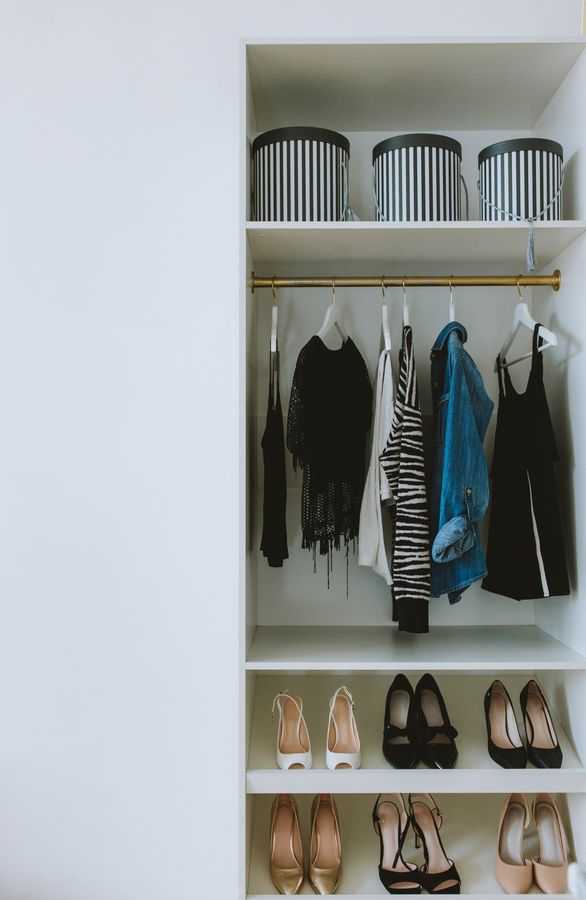
Low floor zone
Shoes, laundry basket, or sturdy bins that do not block hanging clothes.
Use one visual boundary per person
Boundaries prevent slow migration. Use a shelf divider, separate bin, hanging divider, or simply a consistent left/right allocation.
A boundary is more useful than a label because it shows when a person’s section is full.
Do not share every category
Some categories are easier when each person has their own: socks, underwear, daily shoes, bags, work clothes.
Shared categories make sense when the items truly belong to the household: luggage, spare bedding, garment care tools, or a shared laundry bag.
Handle different hanger lengths
Long dresses and coats can block floor storage, while shirts leave useful space underneath.
Group long-hanging items together. Use the shorter-hanging zone for a low drawer unit, shoe shelf, or baskets if clearance allows.
Build a one-in-one-out rule only where overflow is chronic
You do not need a strict rule for the whole wardrobe. Use it for categories that repeatedly exceed their boundary, such as shoes, bags, coats, or folded sweaters.
When that section is full, a new item triggers a review of the category.
Use separate laundry responsibility
A shared closet can look overcrowded because clean laundry is waiting outside it.
Each person should know who returns which clothes to the closet. If one person does all the folding and the other does not put items away, the closet system will fail no matter how well it is organized.
The shared top shelf
Top shelves often become no-person’s-land. Give every container a job:
- Person A seasonal bin,
- Person B seasonal bin,
- shared travel or bedding bin.
If the shelf still has loose piles after that, the categories need another home.
Shoes need a hard capacity limit
Shoes spread because the floor has no obvious end. Use a rack, shelf, mat, or assigned footprint. The footprint is the limit.
Store off-season or occasion shoes elsewhere if the daily closet cannot support them.
A 15-minute weekly reset for two people
- Return clean clothes.
- Put stray hangers together.
- Move off-season items back to their bins.
- Return shoes to each side.
- Remove empty bags and packaging.
- Check one overflowing category.
Five minutes from each person is often more effective than one person doing a full reorganization every month.
If one person owns much more clothing
Do not solve the imbalance by silently taking over shared space. Decide together whether:
- that person receives more closet rod but less drawer space,
- seasonal items move to another storage zone,
- another category needs editing,
- a freestanding solution is worth the floor space.
The closet should reflect actual needs while still protecting both people’s access.
If one person is much taller
Height can shape allocation. The taller person may use the highest shelf more comfortably, while the shorter person gets lower prime storage. Fairness can mean giving each person the zones they can use easily, not identical shelves. You may also find How to Organize Deep Kitchen Cabinets So Nothing Gets Lost useful for a closely related small-home problem.
What not to store in a shared closet
Be cautious about letting the closet become general household storage. Paperwork, random electronics, cleaning supplies, gift wrap, and unrelated boxes compete with clothing without helping either person dress.
Frequently asked questions
Should we use matching hangers?
Matching hangers can make the closet look calmer, but consistent hanger width and function matter more than color.
How do we divide a tiny closet fairly?
Divide by storage type and actual need, then give each person visible boundaries. Fair does not have to mean exactly half of every shelf.
What if one person refuses to declutter?
Work only on your own items and shared categories you both agree on. Do not remove another person’s belongings without permission.
A shared closet needs agreements, not just organizers
The strongest system is one both people understand: who gets which zone, how overflow is handled, where seasonal items go, and how clean laundry returns.
Once the boundaries are clear, a small closet can feel surprisingly calm—even when two people use it every day.