“Should I fold this or hang it?” sounds like a garment-care question, but in a small closet it is also a space-planning question. Hanging converts wall width into storage. Folding converts drawer or shelf volume into storage. Neither method is automatically more efficient. For the broader setup, How to Store Gift Wrap, Gift Bags, and Party Supplies in a Small Home is a useful next read.
The right choice depends on the shape of the garment, how often it is worn, whether wrinkles matter, and what kind of storage your room already has.
Start with the constraint you actually have
If your closet rod is packed but dresser drawers are half empty, folding more can release hanging width. If drawers are overfilled while half the rod is unused, hanging some categories may improve access. For a related step-by-step approach, see How to Organize a Small Linen Closet So Towels and Bedding Actually Fit.
This sounds obvious, but many wardrobes are organized by habit rather than available geometry.

Hanging: what it does well
Hanging gives excellent visibility. Shirts, dresses, jackets, and trousers can be scanned quickly without opening drawers. It also reduces folding labor and helps some wrinkle-prone garments keep their shape.
The cost is width. Bulky garments can consume several inches of rod each, and hanger thickness matters more than people expect.
Best candidates for hanging
- structured jackets,
- dresses,
- wrinkle-sensitive shirts,
- trousers that crease badly,
- frequently worn work clothing.

Folding: what it does well
Folding can store a surprising amount of dense clothing in drawers: T-shirts, underwear, socks, pajamas, athletic wear, leggings, and many casual basics.
For knitwear, folding is often preferable because heavy sweaters can stretch when hung for long periods.
The weakness is visibility. Deep stacks create forgotten lower layers. Vertical or file-style folding can improve visibility when the drawer dimensions support it, but it should not be treated as a universal religion.

Do not force a folding method that fights the drawer
Some drawers are too shallow for vertical folding. Others are too deep for short stacks. The method should match the furniture rather than asking the user to refold every garment into a social-media-perfect shape. If you are working on the same space, How to Store Grocery Backstock in a Small Home Without Turning Every Closet Into a Pantry covers the next decision in more detail.
The existing guide to organizing a small bedroom dresser is useful when drawer overflow rather than closet width is the main problem.
Sweaters and knitwear: folding usually wins
Thick sweaters consume hanging width and may distort on hangers. Folding them on a shelf or in a drawer often uses space more efficiently.
But a tall stack is not ideal. If more than a few sweaters sit on one stack, the bottom becomes inconvenient. Divide by frequency or season instead.
T-shirts: the answer depends on visibility
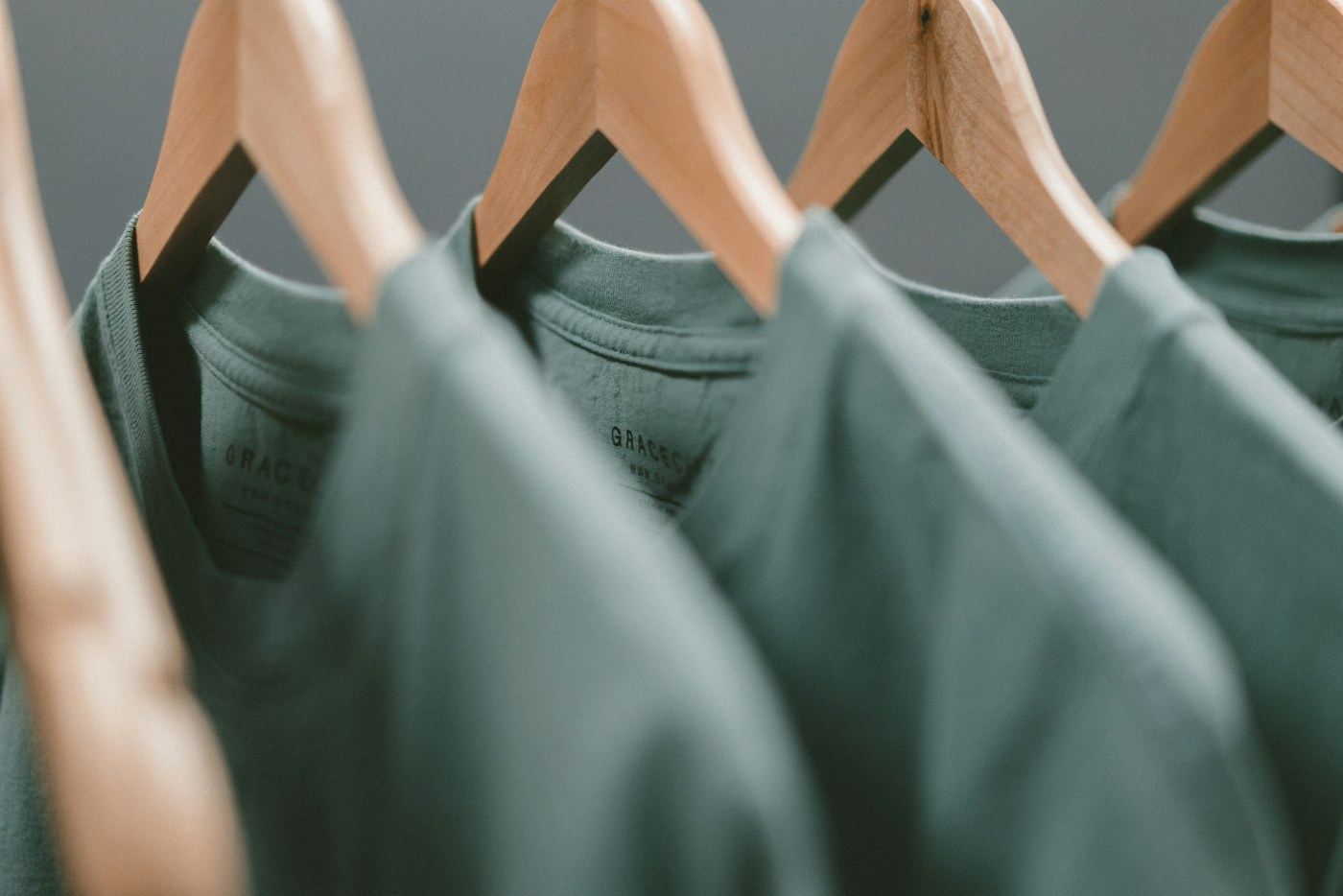
T-shirts can go either way. Hanging makes them easy to scan but expensive in rod width. Folding is denser but requires a drawer or shelf that supports visibility.
If you own twenty nearly identical shirts, folding generally makes more sense. If five work shirts are worn in rotation, hanging may reduce morning decisions.
Jeans and trousers
Jeans are dense and tolerant of folding. Dress trousers may benefit from hanging. Again, the garment and routine should decide.
The shared-closet problem
Two people often divide closet space exactly in half even when their clothing mixes are completely different. One person may own dresses and jackets; the other mostly T-shirts and jeans.
A better approach is to allocate by storage type. Give hanging width to the person who needs it and drawer or shelf volume to the person whose wardrobe folds efficiently.
This complements the broader guide to organizing a small closet for two people.

Daily clothing deserves the easiest method
Do not store a garment in the theoretically densest way if the method makes the morning routine annoying. Daily basics should be fast to retrieve and return.
Daily clothing should stay in the easiest positions to use. When the seasons change, the small-home closet-switch guide can move low-frequency garments out of prime space.
Seasonal clothing changes the equation
Off-season garments can move to upper shelves, under-bed storage, or secondary closet zones. Once seasonal volume leaves the prime wardrobe, the fold-versus-hang decision becomes easier.
The site’s guide to a seasonal closet switch explains how to move categories without creating a temporary bedroom disaster.

The hanger-density trap
Buying thinner hangers can create useful width, but it can also encourage keeping more clothing. Treat the gained space as breathing room, not an invitation to refill every inch.
A closet that slides easily is more functional than one with maximum hanger density.
The drawer-density trap
The same warning applies to folding. Compressing clothing into perfect rows can make a drawer look efficient while creating too much inventory to maintain. If the drawer requires force to close, the system has passed useful density. For the broader setup, Labeling Systems for Small Homes: Text, Pictures, Color Codes—or No Labels at All? is a useful next read.
A practical garment decision table
Hang first: structured, wrinkle-sensitive, long garments, and frequently worn workwear.
Fold first: knitwear, T-shirts, activewear, underwear, sleepwear, jeans, and dense casual basics.
Decide by space: casual shirts, trousers, skirts, children’s clothing.
When a second rod helps
In a closet dominated by short garments, a second hanging rail can use lower vertical space well. It is less useful if the wardrobe contains dresses, coats, or long items that need full length.
Measure the actual clothing before installing a second rail.
When drawers beat closet organizers
If the room already has a dresser with unused capacity, use it before buying hanging shelves or extra closet furniture. The most sustainable storage tool is often the one already in the room.
Explore this topic
Browse more practical guidance in the Home Organization hub. Room focus: Closets & Storage.
Expert conclusion
Folding saves space when clothing is dense, casual, and well suited to drawers. Hanging saves time and visibility when garments wrinkle, need structure, or are worn frequently.
The strongest small closet is usually hybrid. Use rod width for the garments that truly benefit from hanging, and let drawers or shelves absorb the categories that fold efficiently.
Do not ask which method is universally better. Ask which method wastes less of the storage geometry you actually have.