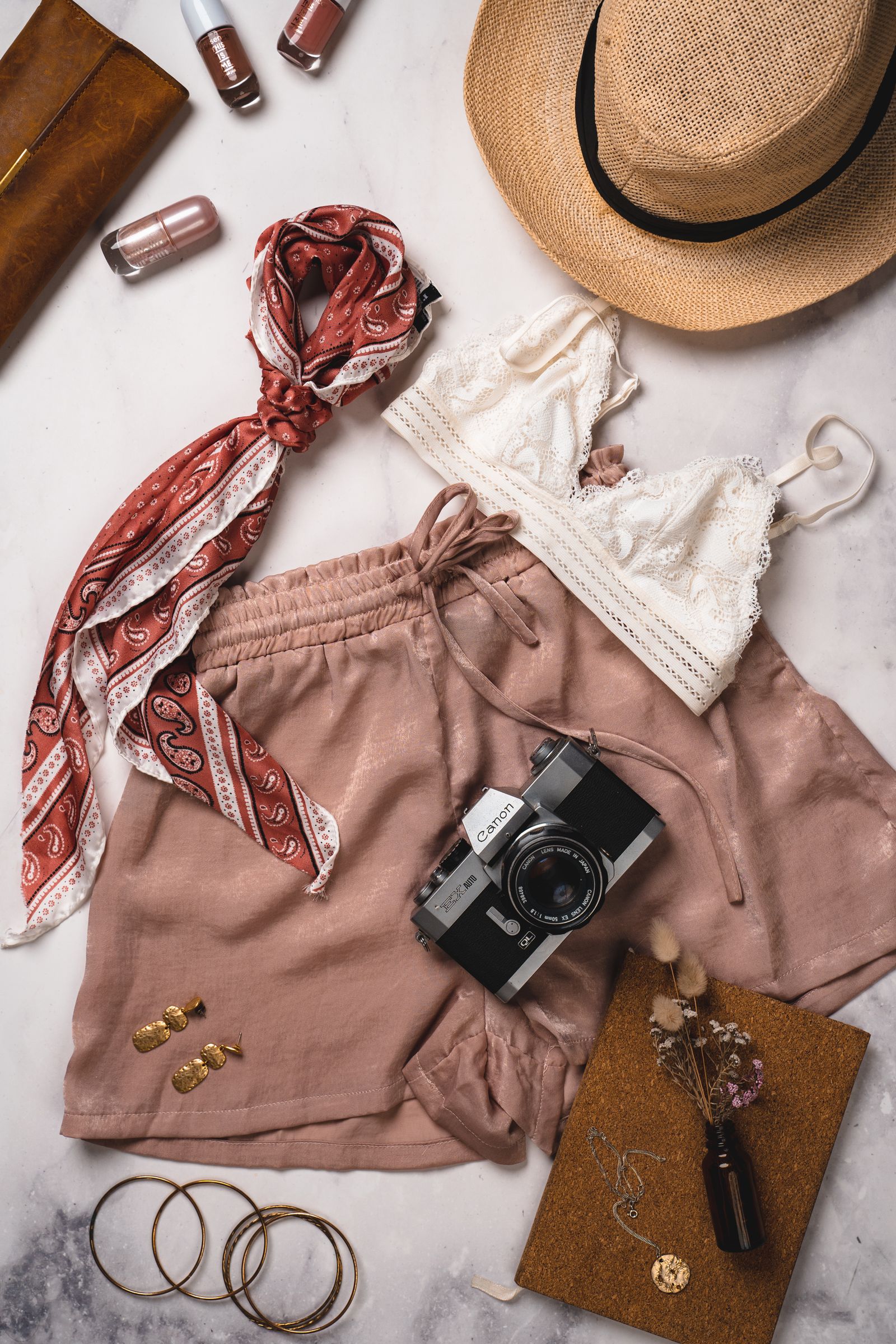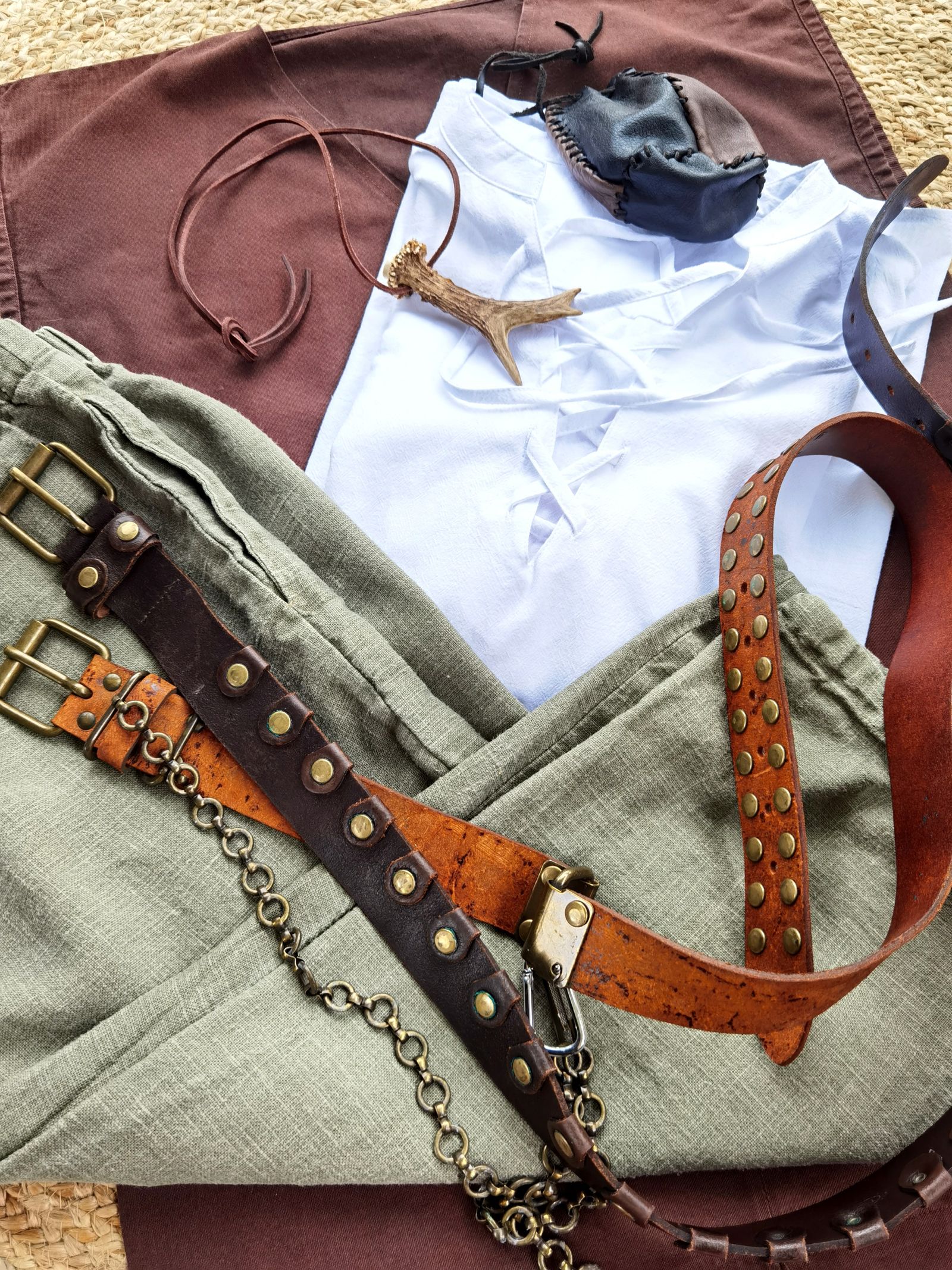
A scarf can disappear in a drawer that is technically organized. A belt can be visible yet difficult to remove because three others are looped over it. In a small closet, accessory storage succeeds when you can recognize an item, take it out without disturbing the rest, and return it after wearing it. For the broader setup, How to Store Grocery Backstock in a Small Home Without Turning Every Closet Into a Pantry is a useful next read.
Start with the belts and scarves you actually dress with. Give those pieces accessible places that respect their shape and care needs. Then move occasional accessories into a separate, identifiable reserve. You do not need to convert the entire wardrobe into an accessory display.
Find the moment when access breaks down
For a few mornings, notice what happens between choosing clothes and leaving the bedroom. Do you remember a scarf only after getting dressed? Are the belt buckles tangled? Does a hanger have to leave the rail before you can retrieve one item? These are different problems, and one organizer will not necessarily solve all of them.
Choose the most frequent obstacle first. If recognition is the problem, expose a useful part of each item: a buckle, a color, a pattern. If removal is the problem, reduce stacking or overlapping. If returning is the problem, simplify the motion. A beautifully folded scarf is not a practical solution when nobody wants to recreate its fold at night.
For the clothing around the accessories, the fold-versus-hang guide for a small closet can help you keep the main wardrobe usable while changing only this smaller section.

Sort by material, use, and owner before choosing a container
Bring one accessory group onto a clean surface. Keep belts and scarves separate initially. Read available care information, note fragile trims or finishes, and avoid treating every material as if it tolerates the same bend, hook, or pressure. A soft fabric belt, structured leather belt, knitted scarf, and delicate silk square may need different support.
Next, make three working groups: pieces used in current outfits, pieces reserved for a specific occasion or season, and pieces needing a decision. The third group might contain an item with a damaged fastening or a scarf you never feel comfortable wearing. Give it a short decision note rather than repeatedly putting it back into the active section.
In a shared closet, sort by owner before sorting by color. Two black belts can look interchangeable until one person is late and the wrong size is already threaded through trousers. An owner-specific section can be a divider, separate hanger, or distinct part of a shelf. It does not have to be an elaborate labeling project.
Give everyday belts an individual removal route
Inspect how each belt rests in its existing storage. If its maker permits hanging, use support that suits its fastening and does not force a new hole or deform a delicate buckle. Check the complete hanging length: a belt should not trail into shoes or become trapped when a drawer or door closes.
If a belt is better kept supported on a shelf or in a drawer, arrange it gently in the form permitted by its care guidance. Avoid forcing a tight coil merely to fit a tiny compartment. A broad compartment that preserves its shape is more useful than several narrow cells that bend it awkwardly.
Leave the buckle visible when that helps identification, but do not place heavy metal fittings where they press against or snag neighboring pieces. Separate contrasting finishes when rubbing is a concern. The goal is a clear retrieval route, not the highest possible number of belts in one drawer.
Test the system with your most frequently worn belt. Take it out while another person stands nearby, then return it. If you must lift the whole collection or unthread several buckles, reduce the number in that position. Keep a less-used belt elsewhere rather than making every morning a small untangling task.

Let scarves show enough of themselves to be recognized
A stack of scarves hides everything below the top piece. For everyday choices, a shallow arrangement with visible edges may work better. Fold or support each scarf according to its material and care needs, then expose a recognizable part of its pattern. You should be able to select one without unfolding every other scarf.
Some people prefer scarves hanging beside the clothes they wear with them. Check that the support is smooth, that embellishments do not catch, and that the scarves do not block garment access. Avoid crowding many scarves onto a ring if the inner ones become impossible to retrieve independently.
A drawer can suit scarves that are easier to handle when supported. Use existing dividers or small clean containers only if their edges and dimensions suit the textiles. Leave enough room for a straightforward return. If an accessory requires protective storage specified by its maker, that requirement takes priority over a visually pleasing open arrangement.
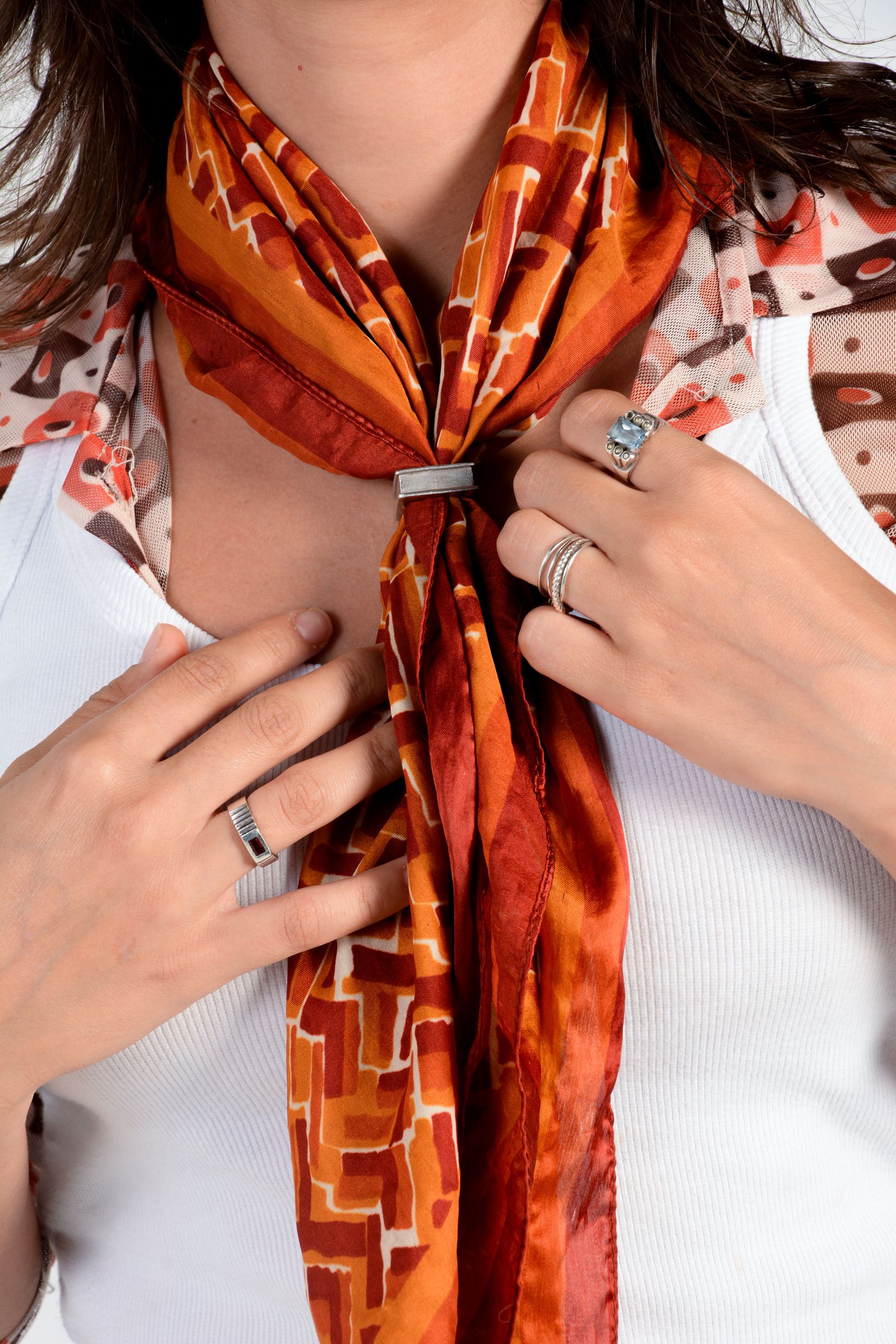
Do not copy the fold in a photograph without considering your own fabric. Images in this guide illustrate accessory use and selection; they do not establish a universal care method for every scarf.
Connect accessories to outfits without storing everything together
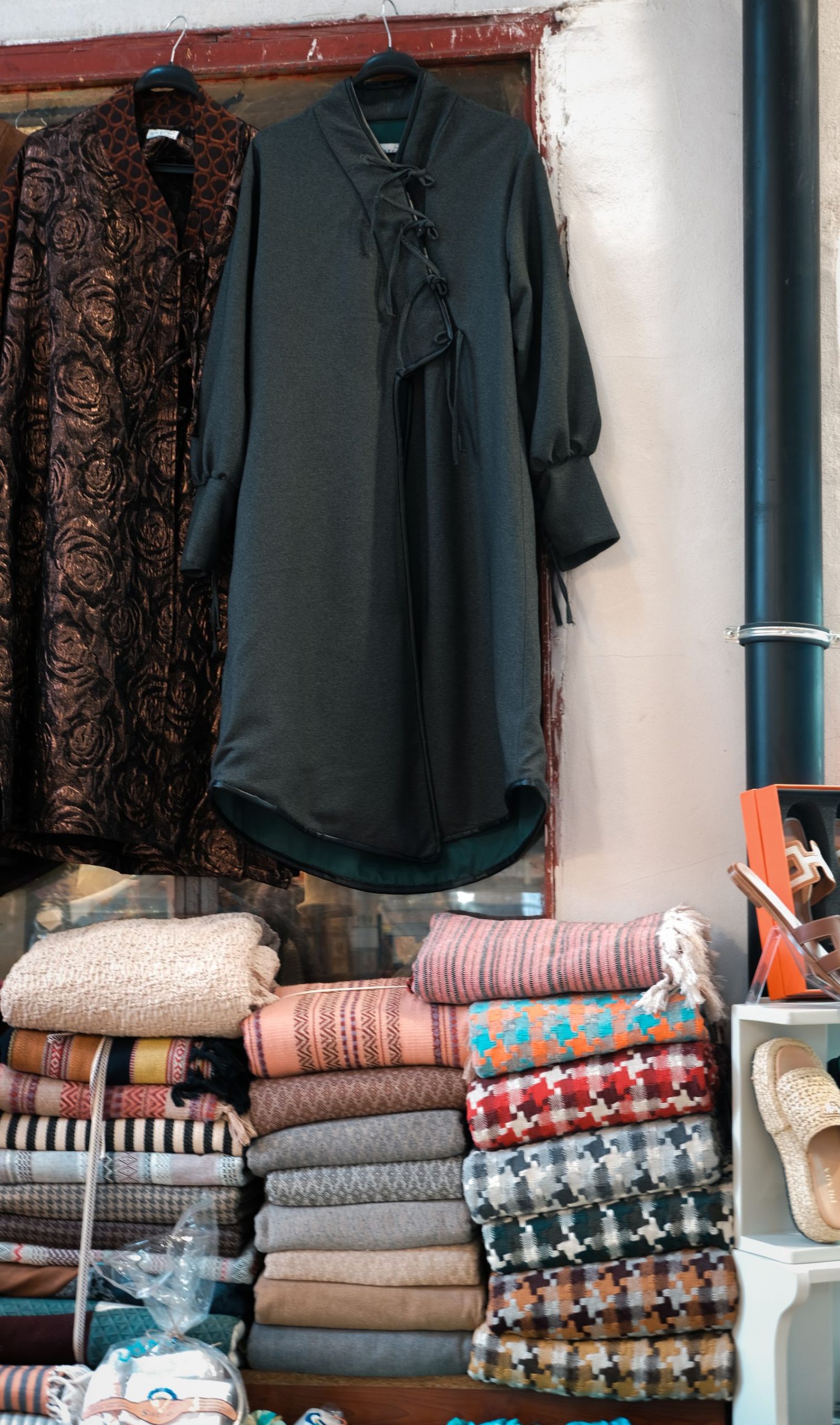
Outfit access improves when the accessory location is near the point where you make a decision. A scarf drawer beside hanging shirts can be useful even if the scarves are not attached to the shirts. A belt compartment beside trousers can remind you to finish the outfit without putting buckles against garment fabric. You may also find Rubbermaid RMA-2 vs. COSCO Two-Step Stool: Access Without a Permanent Ladder useful for a closely related small-home problem.
If you routinely forget an occasional accessory, keep a short outfit note where you choose clothes: �striped scarf with the navy jacket.� That preserves the association without turning each hanger into a bundle. Update the note when an outfit changes; otherwise it becomes another item you stop noticing.
For two people sharing a rail, agree on whose accessories occupy which position and who can move a reserve box. The broader approach in organizing a small closet for two people helps prevent one person’s expanded accessory section from silently consuming the other person’s dressing space.
Make the return easier than the temporary pile
Think about the evening, not just the morning. Where do you remove the belt? Where does the scarf land? If the answer is a chair, place the permanent storage close enough that returning the piece does not require a second trip through the room.
Separate �ready to put away� from �needs care.� A damp scarf or an item awaiting cleaning should not be folded into the ready collection simply to clear a surface. Follow its care directions and complete the necessary drying or maintenance before returning it. Keep the temporary care location modest and visible so it does not become a second wardrobe.
When you return an item, leave its identifying feature facing the same way each time. That small consistency often removes the need for labels. Where labels genuinely help, the site’s guide to text, picture, and color labels explains how to choose a method that the actual users can understand.
Reserve storage should still answer a clear question
Occasional accessories can sit farther from everyday dressing, but their location should answer �Where is the scarf for cold weather?� or �Where are formal belts?� A box labeled only �miscellaneous� does not help when an event is tomorrow.
Use the smallest sensible number of reserve groups. Consider season, occasion, and ownership; do not subdivide simply because a set of matching boxes has many compartments. Record what is inside if the container conceals the contents, and keep the note accurate whenever an item moves.
Review reserves when clothing needs change. The seasonal closet switch guide provides a natural opportunity to bring relevant accessories forward without emptying every drawer during ordinary weeks.
Use one week of dressing as the final fit check
Try the arrangement through ordinary outfits, a rushed departure, and the evening return. Notice whether a scarf slips behind the drawer, whether a buckle catches another piece, and whether the storage remains usable with the closet door open. These observations are more useful than a perfect photograph of the first setup.
If the same item keeps landing elsewhere, adjust its return position or reconsider whether it belongs in the active group. If the location works but is crowded, remove reserve pieces before buying another accessory organizer. The Organization collection offers related approaches to keeping small storage areas connected to daily use.
Your finished arrangement should allow a simple sequence: identify the accessory, remove it independently, wear it, complete any required care, and return it without rebuilding the display. That is enough structure for a small closet to support real outfits. For a related step-by-step approach, see How to Store Extra Bedding in a Small Home With No Linen Closet.