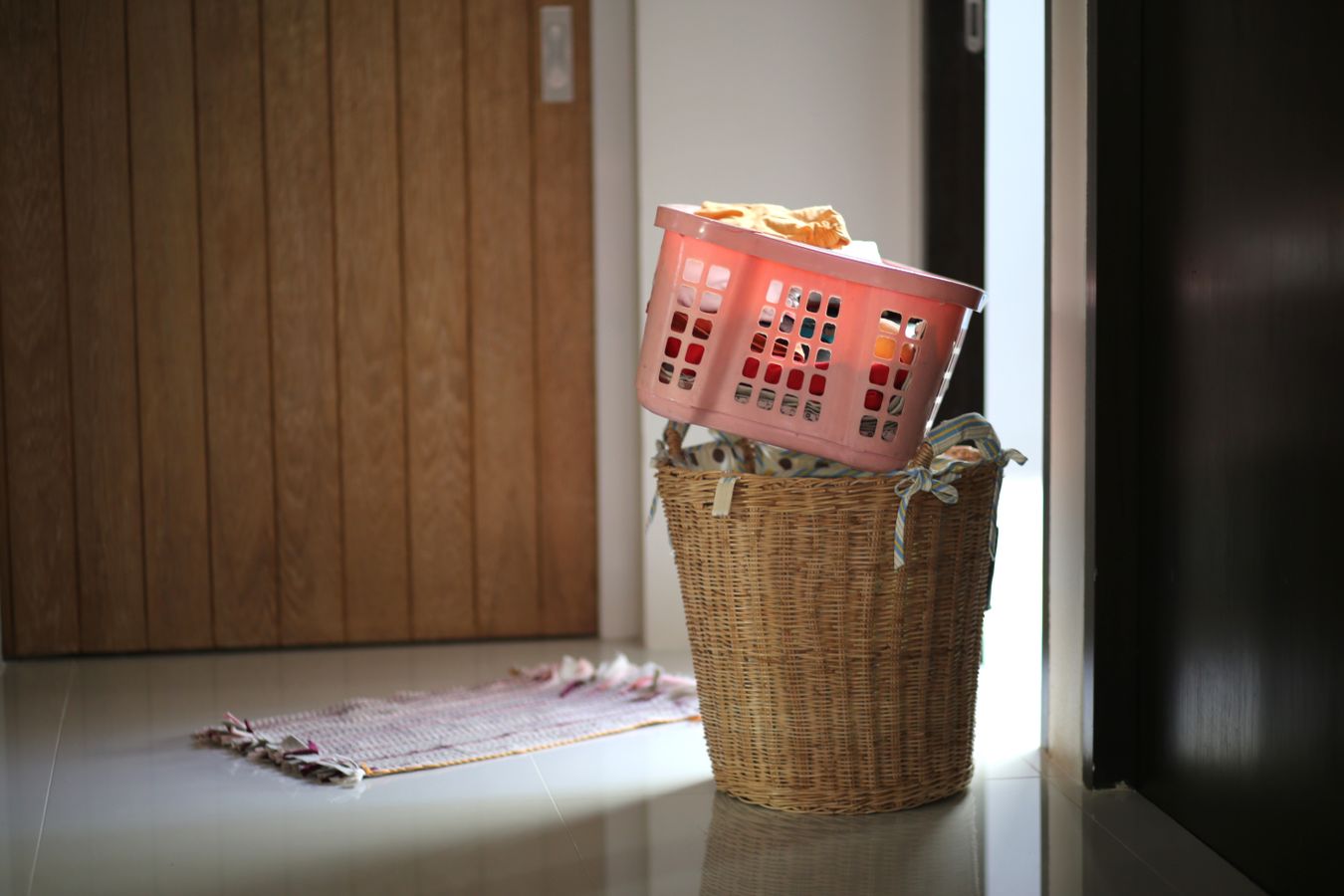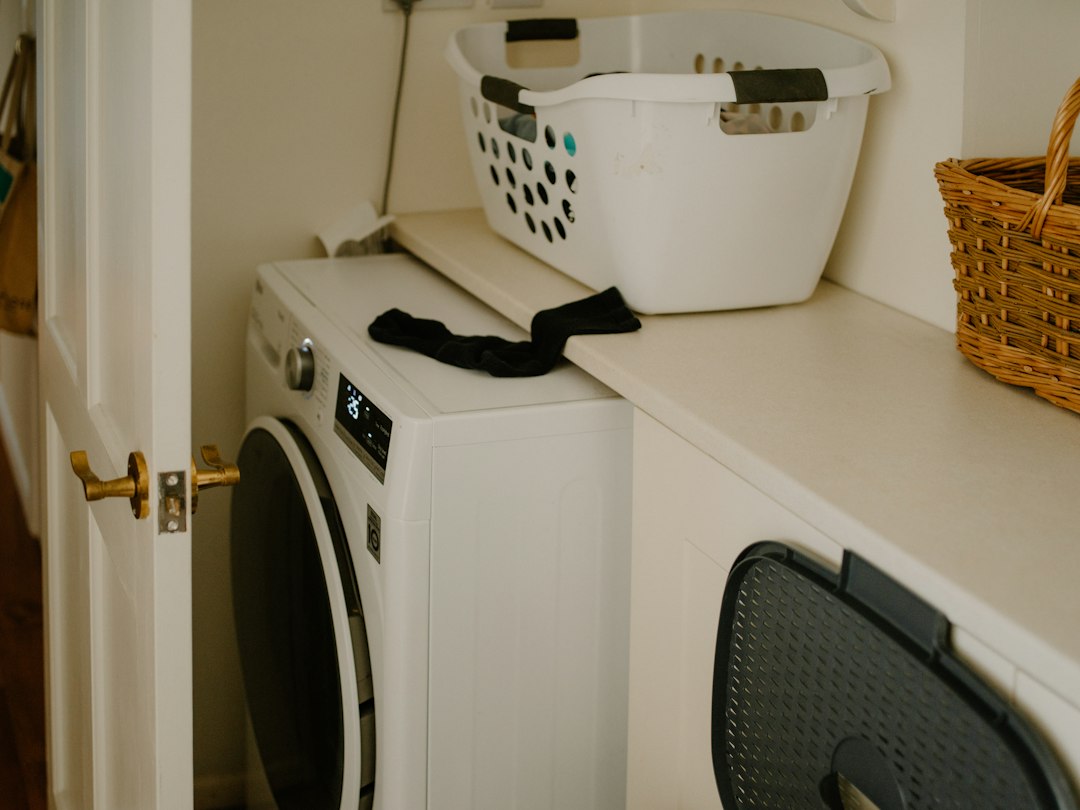
In a small home, laundry rarely stays in the laundry area. It migrates. Dirty clothes gather in bedrooms. A clean load waits in the dryer. Towels sit in a basket beside the sofa. Socks appear on the stairs. A pile of folded clothes lives on the bed until bedtime, when it gets moved to a chair.
That is why a useful family laundry routine is not mainly about how to operate a washing machine. It is about creating a simple path that clothes can move through without getting stuck in the middle. For the broader setup, Best laundry hampers for small spaces is a useful next read.
The most reliable system is a closed loop:
Collect → sort → wash → dry → fold → put away.
If one stage regularly stalls, the whole house starts to feel like a laundry room. This guide builds a small-home laundry system around that reality. It works whether you have a dedicated laundry room, a stacked washer in a closet, machines in the kitchen, or a shared laundry room elsewhere in the building.
The goal is not “laundry day”—it is steady laundry flow
Many households treat laundry as one giant weekly project. That can work, but it creates a large wave of work: several hampers become several washer loads, which become several dryer loads, which become one enormous folding pile.
In a small home, the pile itself becomes a space problem. You may not have a utility room where six baskets can wait out of sight.
A better goal is steady laundry flow: enough washing happens throughout the week that no stage becomes physically overwhelming.
Think about the system as six stations:
- Collection: where dirty clothes and linens wait.
- Sorting: how items become ready-to-wash loads.
- Washing: when loads actually enter the machine.
- Drying: dryer, rack, line, or a combination.
- Folding: where clean items are made ready for storage.
- Put-away: the final trip back to closets, drawers, hooks, and shelves.
Your routine only works if every station has a next step.
Step 1: decide how much laundry your home can comfortably hold
The first design decision is not which detergent to buy. It is how much dirty laundry you are willing to store before the system forces a wash.
A hamper is not just a container. It is a capacity limit.
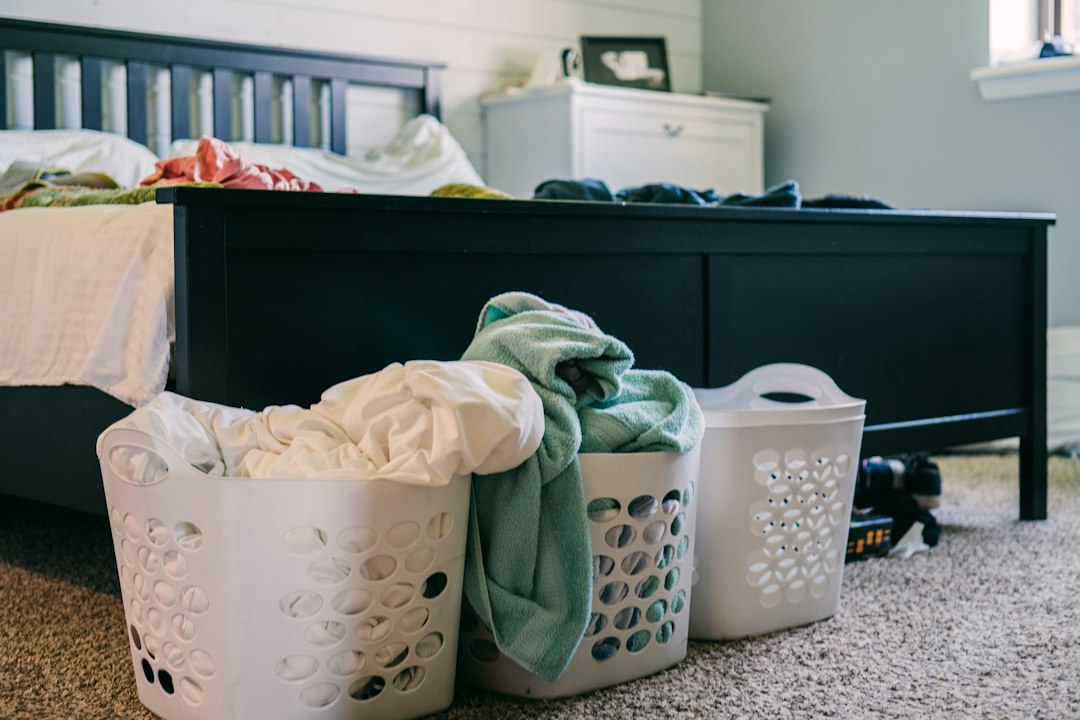
If a bedroom hamper comfortably holds one washer load, a full hamper becomes an obvious signal: it is time to wash. If it holds three loads, you can ignore it for days and then discover a weekend-sized job.
For most small homes, smaller collection points are easier to manage than one huge family hamper. You might use:
- one hamper in the adult bedroom,
- one in the kids’ room or hallway,
- one small basket for towels,
- a separate bag or basket only for special-care items.
You do not need a complex color-coded sorting system unless your household benefits from one. The best hamper system is the one people actually use without dropping clothes beside it.
Use the “one obvious home” rule
Every frequently generated type of laundry needs an obvious waiting place.
If wet towels have no designated place, they end up on doors. If kitchen towels have no collection point, they sit beside the sink. If delicate clothes need special treatment but share a hamper with everything else, you have to rediscover them before every wash.
Give each recurring category one obvious home before worrying about decorative storage.
Step 2: sort enough to protect clothes—but not so much that loads never fill
The American Cleaning Institute recommends sorting according to factors such as color, fabric type, soil level, and care instructions. The important principle is that items washed together should be compatible with the selected cycle, water temperature, detergent, and drying method. If you are working on the same space, A Realistic Deep-Cleaning Checklist for a Small Home covers the next decision in more detail.
In a small household, over-sorting can create five half-empty piles that never become a load. Instead, build a few practical laundry lanes. If you are working on the same space, How to Keep Laundry From Taking Over a Small Home covers the next decision in more detail.
A simple three-lane starting point
- Everyday clothes: compatible casual clothing that can use a similar cycle.
- Towels and sturdy household linens: bath towels, kitchen towels, and similar durable items when their care labels allow.
- Special-care items: delicates, items that need air drying, new dark items, stain-treatment items, or anything with specific care instructions.
Your household may need a separate bedding load, sports-gear load, baby-clothes load, or work-uniform load. Add a lane only when it solves a recurring problem.
Always check garment care labels. The purpose of a system is to reduce mental work—not to wash incompatible fabrics together just to simplify the calendar.
Step 3: choose a weekly rhythm that matches your household
There is no universal best day to do laundry. The useful question is: How often does your household generate one manageable load?
A couple in a small apartment may wash two or three times a week. A family with young children may need a load most days. Sports, school uniforms, bedding, pets, and work clothing can all change the rhythm.
Start with a schedule that prevents overflow rather than a schedule that looks ideal on paper.
| Day | Suggested load | Purpose |
|---|---|---|
| Monday | Everyday clothes | Recover from the weekend before baskets overflow. |
| Tuesday | No planned load | Use as catch-up only if a basket is full. |
| Wednesday | Towels | Reset bathroom and kitchen linens midweek. |
| Thursday | Everyday clothes | Reduce the end-of-week pile. |
| Friday | Special-care or kids’ items | Handle items that should not disappear into a mixed load. |
| Saturday | Bedding | Use a day when there is time for a larger load and full drying. |
| Sunday | No planned load | Keep one buffer day instead of scheduling every day. |
This is only a template. Your weekly laundry routine might be three load-days instead of five. What matters is having a default so laundry is not repeatedly postponed until every hamper is full at once.
Step 4: adopt the one-load-at-a-time completion rule
One of the biggest reasons laundry takes over a small home is starting more loads than the household can finish.
It feels productive to get three loads washed quickly. But if two clean baskets remain unfolded for three days, the work has only changed form.
Use this rule:
Do not start the next optional load until the current load has a realistic path to being dried, folded, and put away.
This does not mean you can never overlap loads. If one load is drying while the next is washing and you know you have time to finish both, that is efficient. The rule is meant to prevent a laundry traffic jam.
Measure success by completed loads, not washing-machine starts.
Step 5: make the washer-to-dryer handoff part of the routine
A wash cycle finishing is not a natural end point. It is a handoff.
If wet clothes regularly sit in the washer because everyone forgets them, attach the handoff to something that already happens:
- move the load after breakfast,
- switch it before school pickup,
- set a phone timer when the washer starts,
- move it before beginning dinner,
- move it during a scheduled work break.
The exact cue matters less than making the next step predictable.
When selecting wash settings, follow the care labels and machine instructions. ENERGY STAR recommends full loads when possible and notes that cold water works well for many everyday loads while reducing the energy used for water heating. “Full” does not mean cramming the drum tightly; clothes still need room to move according to your machine’s instructions.
Step 6: treat drying as a space decision, not just an appliance decision
In a small home, drying can consume more space than washing. A rack in the living room, shirts hanging from door frames, and damp towels draped over chairs can make the entire home feel unfinished.
Create a specific small-space drying plan.
If you use a dryer
Decide where the clean load goes the moment the cycle ends. Ideally, it should go directly to the folding location—not into a “clean laundry” basket that becomes permanent furniture. For the broader setup, How Often Should You Clean Everything in a Small Home? is a useful next read.
Clean the lint filter as recommended by your dryer manufacturer, and choose settings that match the garment care labels.
If you air dry
Choose one approved drying zone. A foldable rack works best when it has a storage location for the hours it is not being used.
Good options may include:
- a rack near a window where appropriate,
- a bathroom drying bar if ventilation is suitable,
- a wall-mounted or over-door solution designed for the load,
- a balcony or outdoor line where allowed and practical.
ENERGY STAR specifically suggests using a drying rack or outdoor line where possible as an energy-saving option.
Step 7: choose one folding station and stop moving clean laundry around
Clean clothes often become clutter because folding has no home.
A basket comes out of the dryer. It lands on the sofa. Someone needs the sofa, so it moves to the bed. At bedtime, it moves to a chair. The clothes may be clean, but the task is still occupying the house.
Choose one folding station:
- the bed, if the load will be put away before bedtime,
- the dining table, if meals will not interrupt the process,
- a clear section of sofa,
- the top of the washer or dryer if there is enough safe workspace,
- a fold-down shelf in a compact laundry area.
The best folding station has one feature: you cannot comfortably leave laundry there forever.

Fold by destination, not by clothing type
If several people share a load, make piles based on where the items are going:
- adult bedroom,
- child one,
- child two,
- bathroom,
- kitchen,
- linen storage.
This makes the put-away stage faster because every pile already has a route.
Step 8: make “put away” part of the load—not tomorrow’s job
The most important distinction in a complete laundry cycle is this:
A load is not finished when it is clean. It is finished when the storage containers are empty again.
If the clean basket is still full, the household has lost one basket and gained a new decision every time someone gets dressed.
Reduce put-away friction:
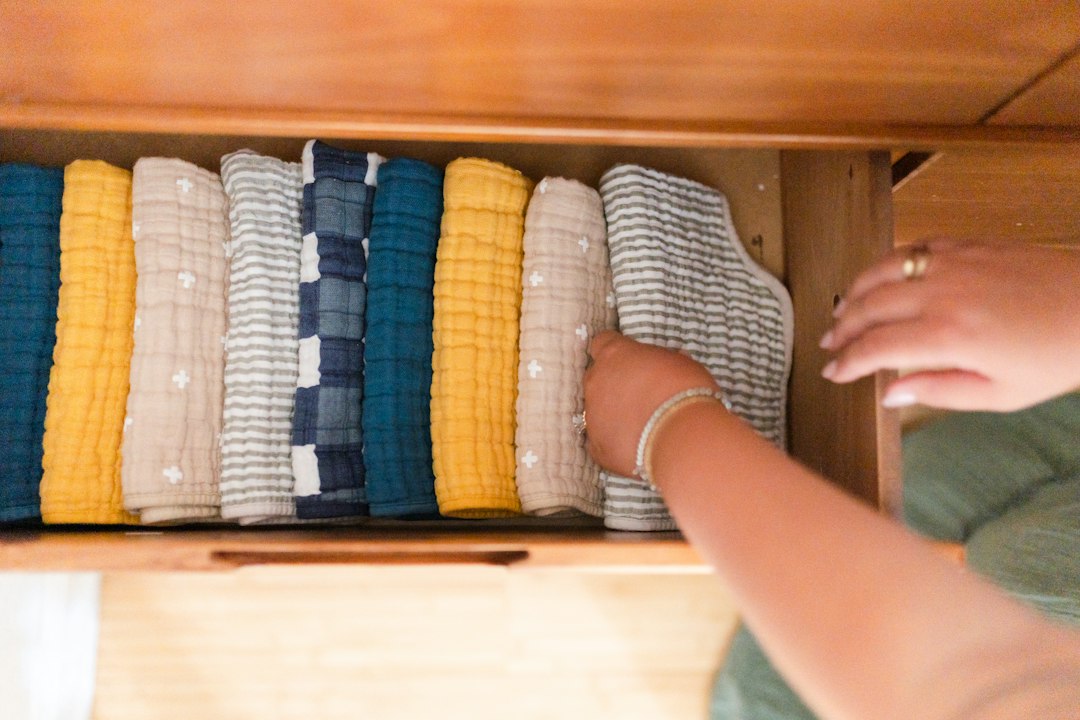
- Keep drawers easy to open and not packed beyond capacity.
- Use fewer complicated folding methods for everyday items.
- Hang items directly from the dryer when possible.
- Store children’s daily clothes where they can reach them if age-appropriate.
- Do not keep more towels, socks, or sleepwear than storage can comfortably hold.
Use destination baskets only if they actually get emptied
For multi-person households, small destination baskets can be useful. Each person gets a basket of folded clothes that goes to their room.
But this works only with a rule: baskets are transport containers, not storage furniture.
If the basket sits full for a week, it has become an open drawer on the floor.
Try one of these approaches:
- everyone empties their basket before bedtime,
- children put away their basket after school,
- the person who folds delivers and empties baskets immediately,
- skip individual baskets and put away directly during folding.
Choose the least complicated version that closes the loop.
Build family ownership into the system
A family laundry system should not depend on one person noticing every full hamper, reading every label, finding every missing sock, and putting away everyone else’s clothes.
Children can participate according to age and ability. The goal is not perfect folding. It is shared ownership of the process.
Possible jobs include:
- bringing a bedroom hamper to the laundry area,
- checking pockets,
- matching socks,
- folding towels,
- sorting clean clothes by person,
- putting away pajamas or underwear,
- returning an empty hamper to the bedroom.
Adults can also divide ownership by stage. One person may run machines while another handles folding and put-away. A routine is easier to repeat when everyone knows what “finished” means.
Keep laundry products small and deliberate
A tiny laundry area can become crowded with detergents, stain removers, scent products, bleach, dryer products, mesh bags, clothespins, spare hangers, and cleaning supplies.
You usually do not need every category within arm’s reach.
Keep only your regular-use products in the prime zone, and store occasional supplies somewhere safe and appropriate.
Follow product directions rather than estimating more detergent for a larger or dirtier load. The American Cleaning Institute notes that using more detergent is not necessarily better and recommends following detergent and garment-care instructions.
If your household uses single-dose laundry packets and includes young children, store the packets safely out of reach or in locked storage as appropriate; laundry packets are concentrated products and should be handled according to the manufacturer’s safety directions.
A realistic weekly operating system for a family of four
Here is one example of how the full routine might work without creating an all-day laundry marathon.
Monday: everyday clothes
After breakfast, the fullest clothing hamper becomes the day’s load. Start it before work or the school run only if you know when you can move it. Dry it later in the day, then fold and put it away before evening.
Wednesday: towels and kitchen linens
Collect bath towels, hand towels, washcloths, and kitchen linens that are ready to be washed according to their care labels. Finish the load completely so the linen basket is empty again.
Thursday: second everyday-clothes load
This keeps Friday and the weekend from starting with every bedroom hamper overflowing.
Saturday: bedding or special items
Use the day with the most available time for sheets, duvet covers, mattress protectors, or other larger items according to their care instructions. If bedding needs longer drying time, begin earlier rather than late in the evening.
Buffer loads
If a child has an accident, sports clothes need immediate attention, or a work uniform is needed, run the necessary load and skip a less important planned load. The schedule is a default—not a rule that overrides real life.
What if you prefer one laundry day?
You can still use this system. The difference is that you need to manage throughput intentionally.
Do not create five open loops at once. Instead:
- Start load one.
- When load one moves to drying, start load two.
- When load one finishes drying, fold it before load two creates another clean pile.
- Put away load one while load two finishes.
- Repeat.
The machine can stay busy without the house filling with clean-but-unfinished baskets.
How to recover when laundry is already out of control
If you are starting with overflowing hampers, piles of clean clothes, damp towels, and sheets waiting for a turn, do not attempt to “catch up” by washing everything first.
Use a laundry backlog reset.
1. Separate clean from dirty
Do not rewash clothes just because you are unsure which pile is which. Confirm what is clean, fold it, and put it away.
2. Finish the oldest open load
If something is in the dryer, finish that before starting three new washer loads.
3. Prioritize essential categories
Wash what the household actually needs next: school clothes, work clothes, underwear, towels, or bedding. Decorative throws can wait.
4. Limit yourself to a few completed loads
Three completely finished loads are more useful than six washed loads spread across the home.
5. Stop when the system has breathing room
You do not have to reach zero dirty laundry. You only need hampers below overflow level, machines empty, and clean clothes stored.
If you use a shared laundry room or laundromat
The same closed-loop idea still works, but preparation matters more because you cannot casually walk back to the washer every few minutes.
Before leaving your home:
- sort loads,
- check care labels,
- pretreat stains as appropriate,
- empty pockets,
- bring the correct laundry products,
- bring enough bags or baskets to keep clean items separate from dirty ones.
If you can fold at the laundry room, you may arrive home with finished stacks ready to put away. If not, make the first task after returning home fold and put away—not dropping the clean bags beside the bedroom door.
If your washer is inside the kitchen, bathroom, or closet
Small homes often place laundry machines inside another functional room. In that case, your routine must protect the surrounding space.
Use these rules:
- Keep the top of the machine clear enough to operate it safely.
- Do not let dirty laundry permanently block a hallway or cabinet.
- Store detergent in one compact, safe location.
- Use a collapsible basket if rigid baskets consume needed floor space.
- Fold elsewhere if the laundry closet has no working surface.
Your laundry zone does not need to be a room. It needs to support the next step without taking over the room it shares.
The low-energy version for exhausting weeks
Every home routine needs a minimum version. When work is intense, kids are sick, or life is simply overloaded, use this:
- Wash only essential clothes and towels.
- Skip complicated sorting beyond what care and color safety require.
- Dry using the simplest appropriate method.
- Fold only items that benefit from folding.
- Put clean clothes directly into their normal storage before starting another optional load.
You can postpone bedding rotation or special-care loads for a few days. What protects the household is keeping the laundry flow moving—not following a perfect schedule.
Small changes that remove the biggest bottlenecks
If dirty laundry piles beside the hamper
The hamper may be too small, too far away, or annoying to open. Fix the collection point before blaming the people using it.
If wet loads are forgotten
Add a timer or attach the washer handoff to a repeated daily event.
If clean laundry lives in baskets
The problem is probably folding or storage, not washing. Reduce clothing volume, simplify drawers, or move the folding station closer to where clothes are stored.
If laundry only happens when someone runs out of clothes
Add two fixed load days to the week. A small amount of structure prevents emergency washing.
If every weekend becomes laundry weekend
Move one or two predictable loads into weekdays. Towels on Wednesday and everyday clothes on Thursday can dramatically reduce the Saturday pile.
A simple checklist to use each time you start a load
- Is this a real, compatible load according to care instructions?
- Have stains been treated if needed?
- Have pockets been checked?
- Do I know when I will move the load after washing?
- Is there space for it to dry?
- Is the folding station available?
- Can this load realistically be put away today?
If the answer to the final three questions is no, it may be better to wait than to create another open laundry loop.
Frequently asked questions
Is it better to do one load of laundry every day?
Only if your household generates enough laundry and you can finish the load. Daily washing is useful for some families, while smaller households may find three scheduled load days easier. The right frequency is the one that prevents overflow without creating half-empty or unfinished loads.
Should I sort laundry into lots of separate hampers?
Not necessarily. Sort enough to follow care labels, avoid color transfer, handle different soil levels appropriately, and choose suitable cycles. Too many permanent sorting categories can waste space in a small home.
Is cold water okay for family laundry?
Cold water works well for many everyday loads, and ENERGY STAR recommends it as an energy-saving default when appropriate. Always follow garment-care labels, detergent instructions, and any special sanitation needs for the situation.
How do I stop clean laundry from piling up?
Treat folding and put-away as part of the load. Do not define “done” as the moment the dryer stops. Choose a folding station, group clothes by destination, and empty transport baskets the same day.
How many laundry baskets does a family need?
There is no ideal number. You need enough to collect and transport laundry without encouraging permanent clean-clothes storage. In small homes, fewer baskets with clear jobs often work better than many large baskets.
What is the best laundry schedule for a small apartment?
A schedule with a few predictable load windows and at least one buffer day usually works better than saving everything for one giant session. Shared laundry facilities may require batching, while in-unit machines make smaller midweek loads easier.
A simple laundry routine should make the house feel less like a laundry room
The strongest small-home laundry routine is not the one with the prettiest labels or the most detailed calendar. It is the one that keeps laundry moving all the way back into storage.
Use hampers as load limits. Sort only as much as care requires. Give the week a default rhythm. Start loads you can actually finish. Plan where clothes will dry. Fold in one place. Put away by destination. Give family members ownership of repeatable steps.
Most importantly, stop measuring progress by how many loads you washed.
Measure completed laundry cycles: clothes collected, washed, dried, folded, and back where they belong. In a small home, closing the loop is what gives you your space back.
Sources
- Laundry Basics — American Cleaning Institute — https://www.cleaninginstitute.org/cleaning-tips/clothes/laundry-basics
- Clothes Washers: Best Practices — ENERGY STAR — https://www.energystar.gov/products/clothes_washers
- Clean Clothes and Laundry Safety — American Cleaning Institute — https://www.cleaninginstitute.org/clothes