Laundry takes over a small home in a very particular way. It does not arrive as one dramatic mess. It spreads through the house in stages.
A hamper fills in the bedroom. A wet load waits in the washer. Clean clothes sit in a basket because no one has time to fold them. The folded clothes move to the bed. At bedtime, the pile moves to a chair. Towels dry over doors. A laundry rack occupies half the living room. Soon the clothes are clean, but the home still feels unfinished.
If that sounds familiar, the problem is probably not that your household “does too much laundry.” The problem is that too many loads are open at the same time.
The solution is a laundry containment system: identify where laundry gets stuck, limit how much can exist at each stage, and make the next step easier than leaving the pile where it is.
This guide is different from a weekly laundry schedule. If you need a complete routine for when to wash, dry, fold, and put away, start with our simple laundry routine for families in small homes. Here, we are focusing specifically on keeping laundry from taking over your living space.
First, diagnose where your laundry actually gets stuck
Before buying new hampers or reorganizing a closet, look at the stage where laundry repeatedly stops moving.
| What you see | Likely bottleneck | What to fix first |
|---|---|---|
| Dirty clothes on floors beside hampers | Collection | Make the hamper easier to reach, open, or use. |
| Several full hampers waiting for laundry day | Wash frequency | Run smaller, predictable loads before all hampers fill. |
| Wet clothes forgotten in the washer | Handoff | Add a timer or attach the transfer to a daily cue. |
| Dry clothes living in baskets | Folding or put-away | Reduce folding friction and storage friction. |
| Folded piles on beds and chairs | Destination | Sort by room or person and put away immediately. |
| Drying rack always open | Drying capacity | Limit air-dry loads and give the rack a storage home. |
| Closets are full even when laundry is finished | Clothing capacity | Reduce volume or increase usable storage efficiency. |
| Ironing pile never disappears | Optional finishing step | Reduce what requires ironing or schedule a small batch. |
You do not need to repair the entire laundry system at once. Fix the bottleneck that produces the most visible overflow.
Bottleneck 1: too much dirty laundry is waiting in the house
Dirty laundry is usually the least complicated stage, but it can still overwhelm a small home when collection capacity is too large.
A giant hamper looks efficient because it hides more clothes. In practice, it may allow three or four loads to accumulate before anyone feels urgency.
Instead, use hamper capacity as a trigger. When a hamper holds approximately one appropriate washer load, “full” becomes a useful signal instead of a storage achievement.
Choose smaller limits, not more hiding places
If your home has laundry in four rooms, adding four enormous hampers may increase the amount of clothing that can wait unfinished.
A better setup may be:
- one bedroom hamper for adults,
- one shared kids’ hamper,
- one compact towel basket,
- one small special-care bag.
The goal is not to hide every dirty item. It is to make the volume visible early enough that one load solves the problem.
Bottleneck 2: you are starting more loads than you can finish
One of the easiest ways to create laundry overflow is to measure progress by how many times the washing machine runs.
Three loads washed sounds productive. But if all three become baskets of clean clothes sitting in the bedroom, the house has not regained any space.
Use a stricter definition:
A load counts only when it reaches its storage destination.
This changes the decision to start a load. Before pressing Start, ask:
- Can I transfer this load when the washer finishes?
- Is there drying capacity available?
- Will I have a folding surface later?
- Is there room in the drawers or closet?
- Can this load realistically be put away today?
If the answer is no, starting another optional load may simply convert one type of clutter into another.
Bottleneck 3: clean clothes are becoming a second wardrobe
Clean laundry is especially dangerous in a small home because it feels harmless. It is clean, so leaving it in a basket does not feel urgent.
But a basket of clean clothes is effectively an open dresser drawer taking up floor space.
When several baskets accumulate, family members start dressing directly from them. Then drawers contain only some clothes, baskets contain others, and no one knows what is actually available.
This is clean clothes clutter.
Make clean baskets temporary by design
Do not give clean laundry an indefinite parking place. If you use a basket for transport, assign it a deadline:
- empty before bedtime,
- empty before another clean load enters the basket,
- empty immediately after folding,
- empty before the next morning routine.
If a household repeatedly ignores the deadline, remove one basket from circulation. Fewer baskets can create useful pressure to finish the cycle.
Bottleneck 4: folding has become too elaborate
Folding should prepare clothes for storage. It does not need to be a performance.
If you dread folding because every T-shirt must be perfectly squared, every child’s pajama set must be matched, and every sock must be paired before anything can be put away, your system may be too demanding for the volume of laundry you have.
Use low-friction folding:
- fold items only as neatly as their storage requires,
- hang items directly when hanging is faster,
- use bins for categories that do not benefit from precise folding,
- let children fold simple items imperfectly,
- skip folding for cleaning cloths or pajamas if a contained bin works better.
The best folding method is the one that allows the load to leave the living room.
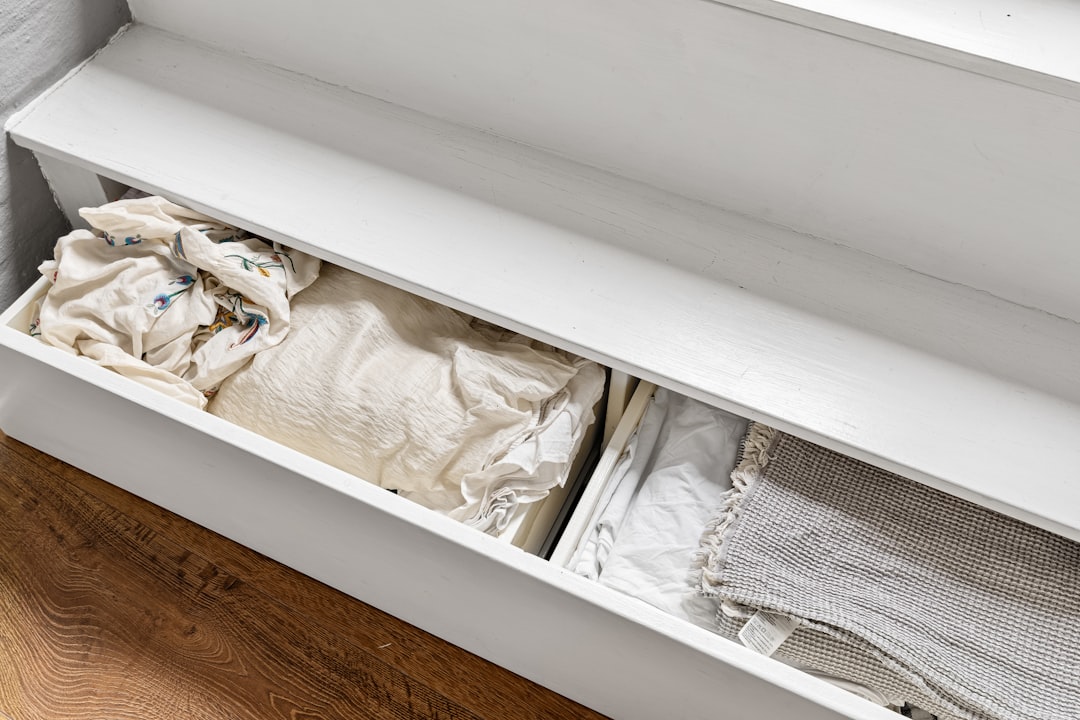
Bottleneck 5: drawers and closets are already at capacity
Sometimes laundry piles up because there is nowhere easy to put it.
If every drawer must be compressed shut, every hanger is touching the next one, and shelves are stacked to their full height, put-away becomes a frustrating puzzle.
That is a clothing capacity problem, not a laundry problem.
Use the storage test
After all laundry is clean and put away, ask:
- Do drawers open and close without force?
- Can you see enough of the contents to choose clothes quickly?
- Can children put their own clothes away without rearranging the drawer?
- Can a full normal load be returned to storage without overflow?
If not, your clothing volume may exceed your current storage capacity.
Do not solve every capacity problem with another organizer
Extra bins can help, but they can also squeeze more clothing into the same small room.
Before buying storage, remove:
- outgrown children’s clothes,
- items waiting for repairs that are unlikely to happen,
- duplicate basics beyond what your laundry rhythm requires,
- uncomfortable clothes no one chooses,
- seasonal items that can be stored elsewhere if appropriate.
A small wardrobe with breathing room often reduces put-away friction more effectively than a complicated drawer-divider system.
Bottleneck 6: laundry is occupying your best household surfaces
In a small home, the bed, dining table, sofa, and kitchen counter are valuable multifunctional surfaces. Laundry can quietly monopolize them.
A folding pile on the dining table changes dinner. A basket on the sofa changes where the family sits. Clothes on the bed create a second chore at bedtime.
Protect these surfaces with a simple rule:
Laundry may use the surface only while someone is actively working on it.
If folding stops, either finish the pile or put the load back into one designated container. Do not let the task spread across the room.
Create one active-laundry footprint
At any moment, unfinished laundry should occupy no more than one controlled footprint per stage:
- dirty laundry stays inside assigned hampers,
- one active load is in the machines,
- air-dry items stay on one drying rack,
- one basket holds the load waiting to be folded,
- folded items stay on one surface only until put away.
This does not eliminate laundry. It stops laundry from claiming multiple rooms simultaneously.
Bottleneck 7: the drying rack never gets folded away
Air drying is practical and can reduce dryer energy use, but in a small home, the drying rack itself becomes part of the room.
The problem is often not that the rack is too large. It is that it never has an off-duty state.
Create a drying-rack shutdown rule:
- Remove dry items as soon as practical.
- Put those items away before adding another batch when possible.
- Fold the rack.
- Return it to a specific storage location.
If the rack cannot be stored anywhere when empty, consider whether a wall-mounted, over-door, retractable, or smaller folding option would better fit your space.
ENERGY STAR recommends air drying where practical as an energy-saving option. The small-home challenge is simply to keep the drying solution from becoming permanent visual clutter. For the broader setup, How to Keep a Small Home Smelling Fresh Without Constantly Cleaning is a useful next read.
Bottleneck 8: “special treatment” clothes create permanent side piles
Delicates, hand-wash items, stain-treatment items, clothes that need mending, and garments waiting to be ironed often escape the normal laundry flow.
Because they cannot go directly into the next regular load, they form side piles.
Give exceptions a very small container
Use one small bag, bin, or hook for special-care items. When that container fills, the household must process it before adding more.
A small container prevents “special care” from becoming a hidden second wardrobe.
Question whether the extra step is still worth it
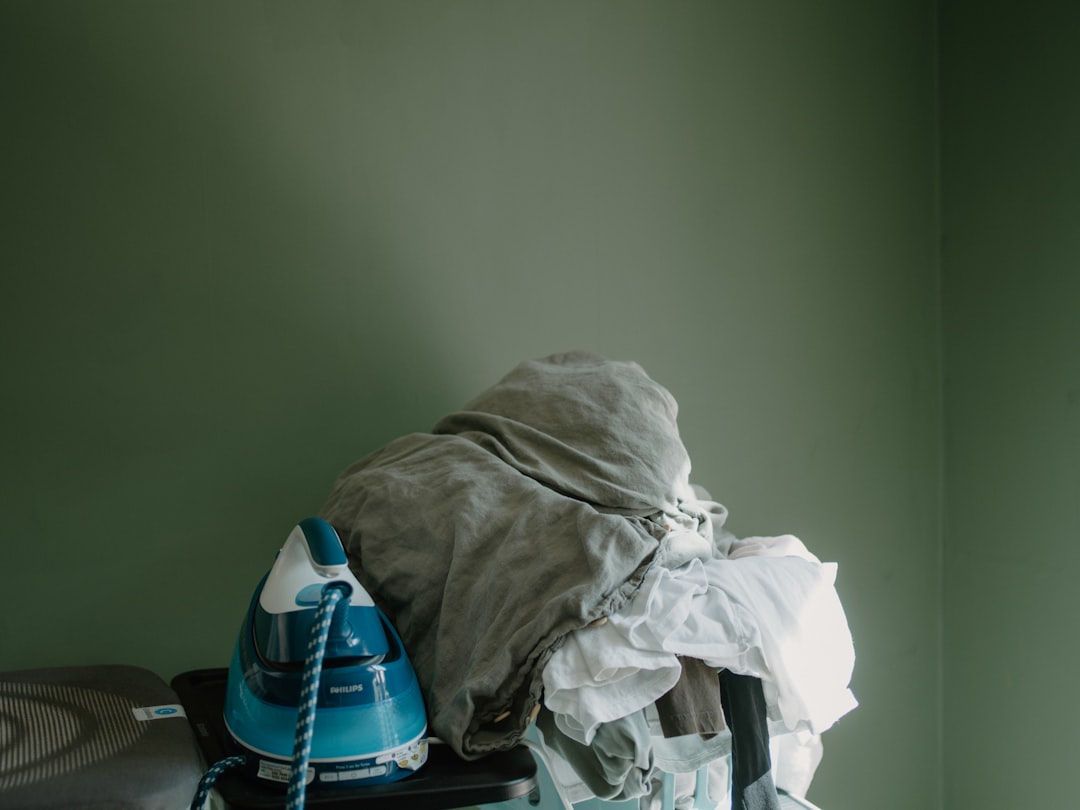
If your ironing basket is always full, ask whether every item truly needs ironing. Some garments may be wearable after prompt removal from the dryer, careful hanging, steaming, or simply accepting a more relaxed finish when the care label allows.
Bottleneck 9: family members do not know whether a pile is clean or dirty
Ambiguous laundry creates rework.
A shirt lands on a chair after being worn for an hour. A child does not know whether it is clean, so it goes into the hamper. A basket of clean clothes sits beside a hamper of dirty clothes. Someone mixes them accidentally.
Remove ambiguity with clear states:
- Dirty: inside a hamper.
- Wear again: on one designated hook or rail.
- Clean, unfolded: one specific basket.
- Clean, folded: moving to storage now.
Do not create a fifth category called “clothes on the chair.”
Bottleneck 10: you have more laundry categories than your home can support
It is easy to create a sophisticated laundry system with separate baskets for whites, darks, colors, delicates, towels, sheets, sports clothes, baby clothes, and cleaning cloths. For a related step-by-step approach, see A Realistic Deep-Cleaning Checklist for a Small Home.
That can be useful in a large laundry room. In a small home, every category requires physical holding space.
Follow garment care labels and separate items as needed for color, fabric, soil level, and washing requirements, but avoid keeping every possible category physically separated all week unless your household genuinely needs it.
You can sort some loads at wash time instead of storing them in ten permanent containers.
The two-basket rule for clean laundry
If clean laundry is your biggest problem, try this temporary reset:
Allow no more than two clean-laundry baskets in the entire home.
One can hold the load currently waiting to be folded. The second can be used for transport or a load that just finished drying.
When both are occupied, no new optional load begins until at least one basket is empty.
This creates a physical ceiling on clean-laundry backlog.
The number two is not magic. A large family may need three; a couple may need one. The principle is what matters: clean-laundry containers should be scarce enough that they cannot become permanent storage. You may also find How Often Should You Clean Everything in a Small Home? useful for a closely related small-home problem.
The “nothing lives on the floor” rule
Floor piles expand because floors have no visible capacity limit.
Instead, require every stage of laundry to have a container or designated surface:
- dirty clothes go in hampers,
- clean loads go in baskets,
- air-dry items go on the rack,
- wear-again clothes go on hooks,
- special-care items go in their small container.
If the container is full, the answer is not a floor pile. The answer is to process the container.
The “one room at a time” put-away method
When a family load contains clothes for several people, putting it away can feel like a dozen tiny errands.
Reduce the number of decisions by sorting folded items into destinations:
- adult bedroom,
- kids’ bedroom,
- bathroom linen storage,
- kitchen linens,
- entryway or sports storage.
Then finish one destination completely before moving to the next.
This prevents the familiar pattern where five neat piles sit on the bed because sorting felt like the end of the job.
When you need to reduce clothes, start with laundry frequency
If you suspect your household owns too many clothes for the available space, do not immediately declutter by arbitrary numbers.
Look at what the laundry teaches you.
Notice what returns to the drawer every week
Frequently washed items are usually doing real work in the household.
Notice what stays in the closet while laundry baskets overflow
Those items may be taking up storage capacity without reducing laundry pressure.
Notice duplicates created by delayed laundry
Sometimes families buy more socks, uniforms, towels, or basics because laundry is not being completed often enough. Fixing the routine may reduce the perceived need for more inventory.
A 15-minute laundry containment reset
If laundry is already spread through the house, do not begin by washing more. Do this first:
Minutes 0–3: collect dirty clothes
Return all clearly dirty items to the appropriate hampers.
Minutes 3–6: identify clean laundry
Bring clean baskets and piles to one folding point.
Minutes 6–10: put away the easiest categories
Start with towels, underwear, pajamas, and simple items. Fast wins release basket capacity.
Minutes 10–13: reset special-care piles
Put delicates, repairs, and ironing into their one small designated container.
Minutes 13–15: choose the next actual load
Pick one appropriate load based on what the household needs next. Do not start multiple loads simply because everything is now collected.
This reset changes the house before the washer even starts.
A 24-hour rule for visible clean laundry
If your household needs a stronger boundary, use a simple policy:
Clean laundry should not remain visible in shared living space for more than 24 hours.
This is not about being strict. It is about preventing yesterday’s completed cleaning task from occupying today’s living space.
If a clean load repeatedly cannot be put away within a day, investigate the reason:
- Is folding too time-consuming?
- Are drawers too full?
- Are the clothes going to too many rooms?
- Does one person carry the whole task?
- Are you running too many loads at once?
The delay is useful information.
Make the system easier for children to use
A laundry system that only adults can operate creates extra work.
For children who are developmentally ready, lower the friction:
- use open or easy-to-open hampers,
- put everyday drawers within reach,
- use broad categories instead of intricate folding,
- label drawers with words or simple pictures if helpful,
- let children carry their own small basket,
- make “basket empty” the goal rather than perfect folding.
When children can complete even one part of the system independently, fewer piles wait for an adult.
Do not let laundry storage consume the rooms you are trying to save
Storage solutions can become part of the problem.
A four-section rolling sorter, large drying rack, extra garment rail, three decorative baskets, ironing board, laundry cart, and supply shelf may organize laundry beautifully while taking up more square footage than the laundry itself.
Before adding a storage product, ask:
Will this reduce the amount of laundry visible in the home—or just give unfinished laundry a nicer place to stay?
Prefer tools that support movement:
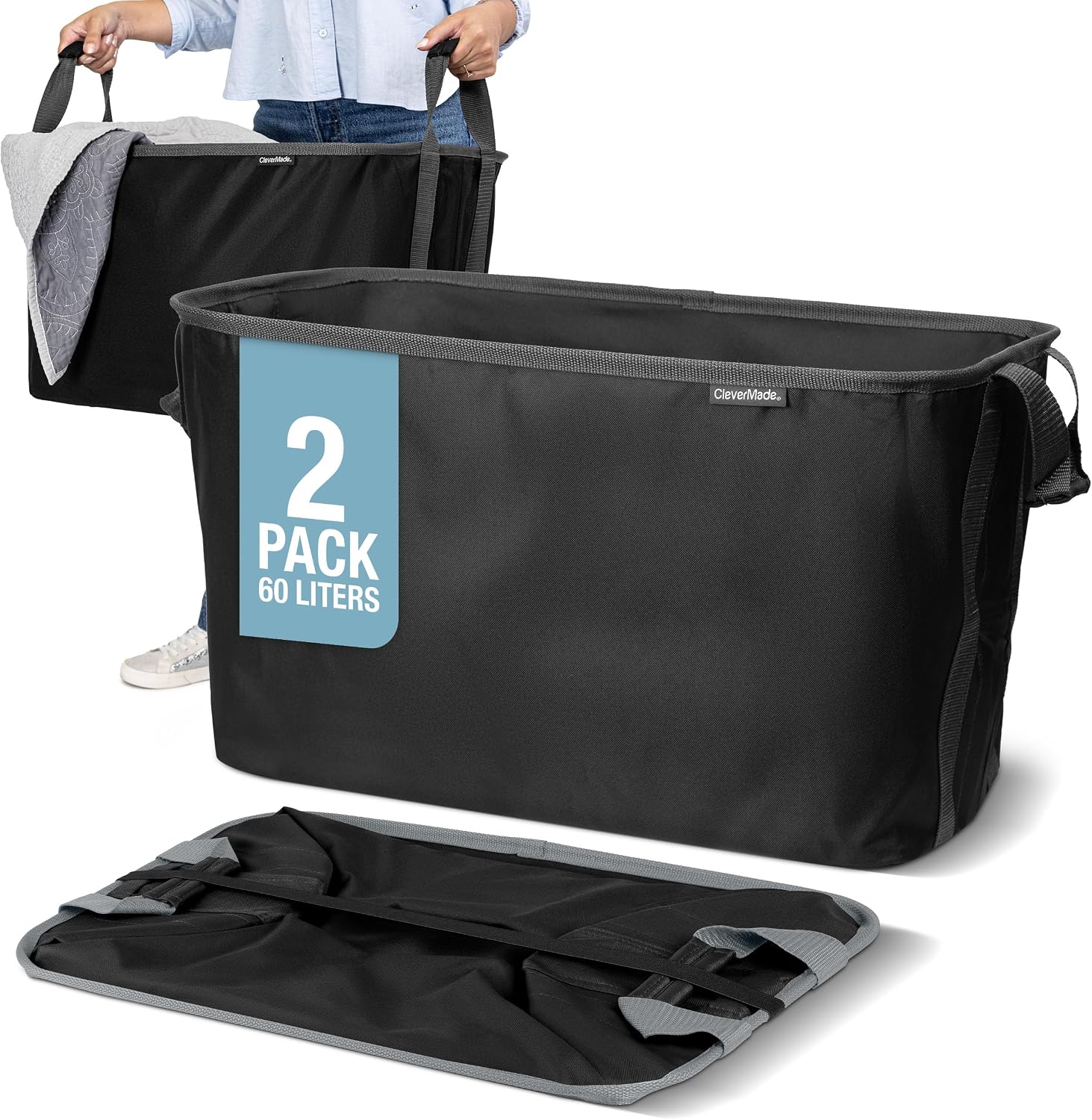
- collapsible baskets,
- folding drying racks,
- wall hooks,
- slim hampers,
- one mobile basket that serves several destinations.
Containers should help laundry leave the room, not settle into it.
What a contained laundry system looks like on an ordinary day
You do not need zero dirty laundry. A functioning home will always have clothes somewhere in the cycle.
A contained system might look like this:
- two partially filled dirty hampers,
- one load washing,
- nothing forgotten in the dryer,
- one small group of air-dry items,
- no clean baskets on the living-room floor,
- no folded piles waiting overnight,
- drawers with enough room for the next completed load.
That is enough. The goal is not laundry perfection. It is to stop laundry from controlling the visual and physical space of the home.
Frequently asked questions
Why does laundry feel worse in a small house?
Because each unfinished stage occupies a larger percentage of the available space. One drying rack, two baskets, and a folding pile may be a minor inconvenience in a large utility room but can consume the main living area in a compact home.
How many laundry baskets should I keep?
Keep enough to collect and transport normal laundry, but not so many that every unfinished load can live indefinitely in its own basket. If clean laundry regularly stays in baskets, reducing the number of baskets can create a useful completion limit.
Should every bedroom have a hamper?
Only if it makes collection easier. A bedroom hamper is useful when people naturally undress there. If several half-full hampers create too much visual clutter, a shared collection point may work better. For the broader setup, How to Organize a Shared Kids’ Bedroom in a Small Home is a useful next read.
What if I cannot put laundry away the same day?
Keep the clean load contained in one designated basket and finish it at the next realistic opportunity. The important part is not allowing several clean loads to accumulate across multiple rooms.
How do I know whether I have too many clothes or just a bad laundry routine?
Finish all laundry once and assess storage. If everything fits easily and the problem returns only when loads are delayed, the routine is probably the bigger issue. If drawers and closets are packed even when all laundry is put away, clothing volume is contributing to the bottleneck.
Is one big laundry day bad for a small home?
Not necessarily. It works if loads move through washing, drying, folding, and put-away without creating multiple unfinished piles. If laundry day fills several rooms with baskets, smaller load days may fit the space better.
Control the bottleneck, and the laundry stops spreading
When laundry takes over a small home, the answer is rarely “work harder.” The answer is to reduce the number of places where clothes can wait indefinitely.
Keep dirty clothes inside limited hampers. Start only the loads you can finish. Give clean baskets deadlines. Simplify folding. Keep storage below maximum capacity. Give special-care items one tiny holding zone. Fold the drying rack away. Protect beds, tables, sofas, and floors from becoming long-term laundry storage.
Most importantly, look for the laundry bottleneck instead of treating every pile as a separate failure.
Once the slowest stage becomes easier, the entire system begins to move. And when laundry keeps moving, even a very small home can feel like a home again instead of a collection of waiting baskets.
Sources
- Laundry Basics — American Cleaning Institute — https://www.cleaninginstitute.org/cleaning-tips/clothes/laundry-basics
- Clothes Washers — ENERGY STAR — https://www.energystar.gov/products/clothes_washers