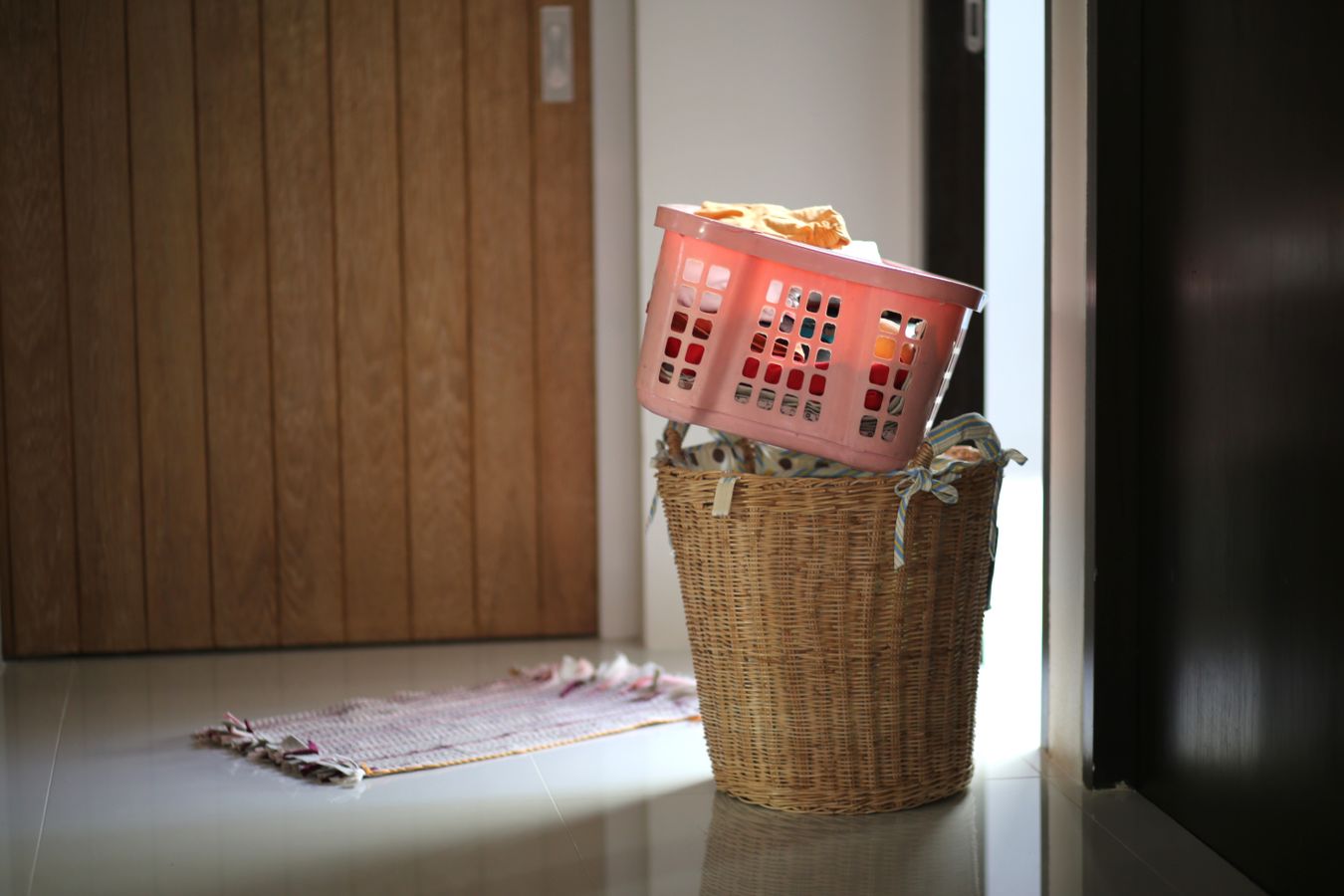
Dirty laundry rarely begins in the laundry area. It begins beside the bed, on the bathroom floor, over a chair, in a child’s room, inside a sports bag, or halfway between “I might wear this again” and “this definitely needs washing.” For a related step-by-step approach, see How to Dry Laundry in a Small Apartment Without Letting Clothes Take Over the Room.
That is why buying one attractive hamper for the laundry room often changes nothing. A useful hamper system begins where clothing changes happen and connects those locations to the rest of the laundry cycle. If you are working on the same space, The After-Dinner Kitchen Reset: A 15-Minute Routine That Makes Tomorrow Easier covers the next decision in more detail.
Map where clothes actually come off
For one week, notice the natural drop points. Adults may change in the bedroom. Children may undress before baths. Sports clothes may enter through the entryway. Towels become dirty in the bathroom. If you are working on the same space, How to Help Towels Dry Faster in a Small Shared Bathroom covers the next decision in more detail.
Put collection where behavior already happens instead of expecting everyone to carry clothing across the home immediately.

Use fewer hampers than rooms
You do not need a hamper in every bedroom if two rooms can realistically share one accessible location. Too many baskets create small piles of partially sorted laundry that are easy to ignore.
Choose enough collection points to prevent floor piles, but few enough that wash-day gathering remains simple.
Bedroom or bathroom?
Use the room where dry clothing usually comes off. Bathrooms are convenient for towels and pre-bath clothing but may be humid or physically tight. Bedrooms often have more storage options.
A hybrid system can work: dry clothing into bedroom hamper, towels into a separate bathroom/laundry path.
Do not put wet towels into a closed hamper immediately
Damp textiles may need to dry before being buried under dry laundry. Hang towels and wet garments appropriately until they can enter the laundry process.
The drying stage and dirty-laundry collection stage do not always happen at the same moment.
Create a re-wear category
Many bedroom “clothes chair” piles are not dirty laundry. They are jeans, sweaters, or pajamas someone intends to wear again.
Give re-wear clothing one hook, shelf, or small basket. Set a size limit. When the zone is full, clothing must return to the closet or enter the hamper.
Do not mix clean laundry with re-wear clothes
Clean laundry should be moving toward put-away. Re-wear items are active clothing. Keeping them separate prevents confusion and reduces the giant “not sure what this is” chair pile.

Sort only as much as your washing routine requires
Three-section hampers are useful if the household actually washes lights, darks, and towels separately. They are clutter if everyone dumps everything into one section and sorts again later.
The sorting system should match real loads, not the hamper manufacturer’s labels.
Family hamper or individual hampers?
Individual hampers can make ownership clear and help older children participate. A family hamper can simplify load gathering and reduce the number of containers.
Choose based on who sorts, who washes, bedroom layout, and how laundry is returned.
Let children own the first step
Even young children can learn that dirty clothes go into a broad, easy-to-reach basket rather than the floor. As they grow, ownership can expand to carrying the hamper, sorting, or putting away clothing as appropriate.
Keep categories simple enough that the child can succeed without an adult correcting every item.

Hamper size should trigger a real load
A huge hamper can hold several loads, which means “full” is not a useful washing signal. A smaller basket closer to one washer load makes the trigger clearer.
This matters even more when indoor drying capacity is limited.
Match washing volume to drying volume
Upstream collection should respect drying capacity. The small-apartment air-drying guide shows how much clothing the available drying zone can realistically handle.
Keep transport easy
If the washer is down a hall, downstairs, or in a shared laundry room, choose hampers or bags that are comfortable to carry. Handles and manageable weight matter more than decorative structure.
A beautiful rigid basket that cannot pass the stair rail may be the wrong tool.

Sports and heavily soiled items may need a direct route
Uniforms, muddy clothing, or sweaty sports gear can require a different temporary path based on fabric care and household routine. Do not leave damp gear sealed inside a school or sports bag.
Link the route to the sports-gear system rather than letting it circulate through bedrooms.
Do not allow hampers to become clean-clothes storage
When a clean load returns in the same basket and sits there for days, the household loses its dirty-clothes collection container. Then dirty clothes return to the floor.
Put away clean clothing before the hamper is needed again, or use a separate clean-laundry basket with a strict turnaround rule.
Create a wash trigger
Examples:
- hamper reaches a marked level,
- Tuesday and Friday evening,
- towel basket reaches one load,
- school uniforms reach the required quantity.
The trigger should happen before overflow.

Keep laundry products out of the hamper system
Detergent, stain products, dryer items, and other supplies belong in a safe laundry storage zone. Do not turn the top of a hamper into a shelf for bottles and miscellaneous cleaning products. You may also find How to Organize Laundry Supplies When the Washer Is in the Kitchen or Bathroom useful for a closely related small-home problem.
Review abandoned clothing around the hamper
If the same garment repeatedly sits beside rather than inside the hamper, ask why. Is it re-wear? Does the hamper lid require two hands? Is the basket hidden behind a door? Is the person unsure how to sort it?
Repeated floor clutter often reveals friction in the system.
Use a five-minute laundry-zone reset
Once or twice a week, check:
- dirty clothes contained,
- wet items drying appropriately,
- re-wear zone under its limit,
- clean basket emptied,
- next load identified.
This prevents the system from fragmenting into multiple piles.
Explore this topic
Browse more practical guidance in the Cleaning hub. Room focus: Bedroom.
Related published guides
- How to Set Up a Laundry Basket System for a Small Bedroom
- How to Keep a Small Bedroom Clean When Clothes Keep Piling Up
Frequently asked questions
Should every bedroom have a hamper?
Only if individual hampers reduce floor clutter and fit your laundry workflow. Some small homes work better with shared collection points.
Where should re-wear clothes go?
Use one small hook, shelf, rail section, or basket separate from both clean closet storage and dirty laundry.
How big should a hamper be?
Ideally, its useful “full” level should correspond closely to a manageable wash load and the household’s drying capacity.

The hamper is the beginning of the laundry system
When dirty clothes land in predictable places, wet items have a separate path, re-wear clothing has a limit, and hamper volume matches washing capacity, laundry stops migrating through the home. The right basket matters less than the path from body to hamper to washer to drying to closet.