A laundry hamper is not just a basket. In a small home, it is the first step of the laundry system. If it is too small, clothes spill onto the floor. If it is too large, it consumes a corner permanently. If it is hard to carry, laundry stalls before it reaches the machine.
The best hamper is the one that fits your laundry flow and available footprint.
Choose a hamper by the route it has to travel
Start with the job, then choose the shape. A hamper that stays in a bedroom and a basket carried to a shared laundry room do not have to be the same item. This guide compares hamper types and includes two manufacturer-listed examples; it does not report hands-on testing.
| Your situation | Start with | Check before choosing | Choose another type if |
|---|---|---|---|
| A narrow bedroom or bathroom corner | A tall, narrow hamper | Outside dimensions, access to the bottom, and lid clearance | Reaching inside or lifting it when full is awkward |
| Stairs or a shared laundry room | A handled bag or a hamper with a removable carry bag | Filled weight, handle placement, and space to pass through doors | The handles are uncomfortable or the bag blocks your view of steps |
| One level with a long clear route | A rolling hamper | Doorways, thresholds, floor suitability, and wheel instructions | You must lift it over stairs or obstacles |
| Sorting before wash day | A divided sorter | Total width and whether each section can be emptied separately | The household does not use the divisions |
| Occasional overflow or carrying clean clothes | A collapsible basket | Open size, folded size, and an accessible storage slot | It will stay full permanently, so folding adds little value |
Measure the parking spot first
- Measure the usable space in inches. Record width, depth, and height at the narrowest point, including baseboards and shelves.
- Check it in use. Allow for the lid opening, handles, and the movement needed to pull out a liner. A listed body size may not include every projection; confirm the manufacturer’s measurement notes.
- Walk the actual laundry route. Check the bedroom door, hallway turn, stairs, and laundry-room entrance. A floor footprint alone cannot tell you whether carrying will be comfortable.
- Check the emptying step. Can you reach the bottom and transfer clothing without lifting a large rigid container? If not, compare a removable bag or a shallower basket.
Use a cardboard outline to test the parking spot before ordering. This checks floor fit, not stability, handle strength, or loaded carrying comfort. Verify those details for the exact model and follow its instructions.
1. Tall narrow hamper — best for tiny floor footprints
Best for: small bedrooms, bathrooms, closet corners.
Tradeoff: deep hampers can be harder to unload for shorter users.
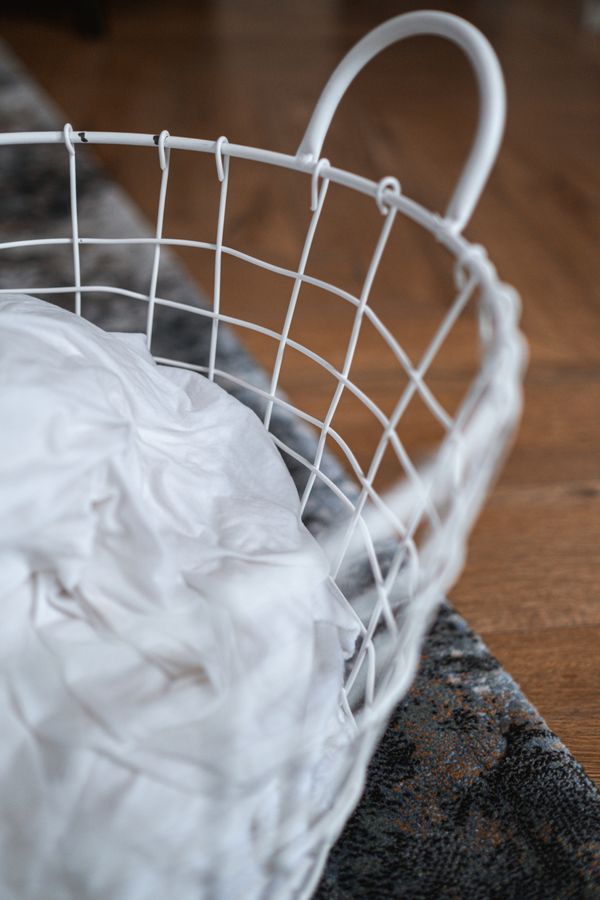
2. Soft-sided handled hamper — best for carrying
Fabric hampers with sturdy handles can be easier to transport through hallways or stairs and may collapse when empty.
Look for handles that remain comfortable when the bag is full.
3. Two- or three-section sorter — best when sorting happens before wash day
Sorters can save time if the household consistently separates lights, darks, towels, or another category before washing.
If everyone ignores the sections, a sorter only consumes extra width.
4. Basket-style hamper — best for visible rooms
Woven or structured baskets can blend into bedrooms or bathrooms, but check weight, snagging, liner washability, and airflow.
5. Rolling hamper — best for long routes
Wheels can help in larger apartments, long hallways, or homes where laundry travels far. They are less useful if the route includes stairs or thresholds the wheels cannot handle.
6. Collapsible hamper — best as overflow or temporary storage
Useful for travel, guest laundry, or occasional extra loads. It only saves space if you actually collapse it between uses.
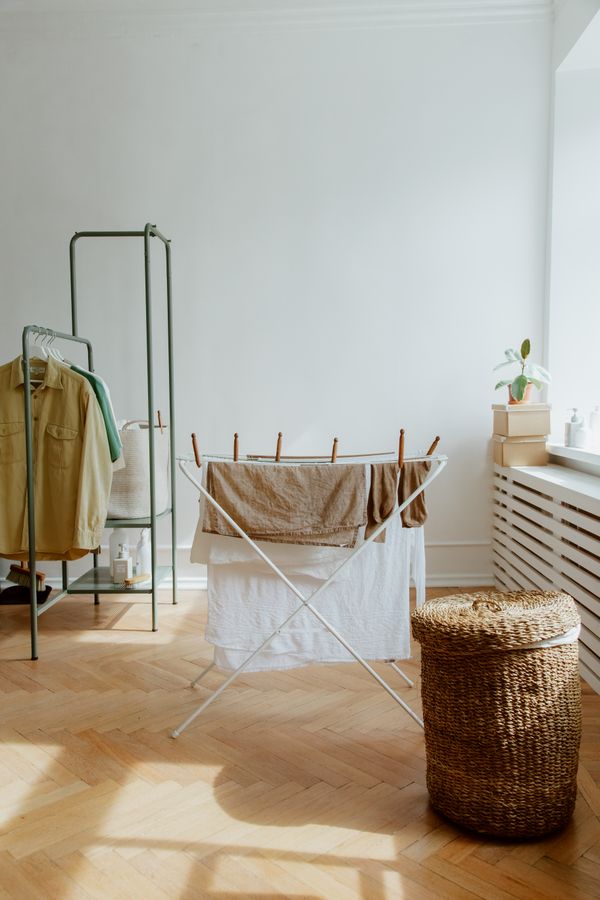
7. Door-hanging or wall-hanging laundry bags — useful with caution
These can free floor space, but they depend on secure hardware, suitable door function, and manageable weight. Follow product instructions and rental rules.
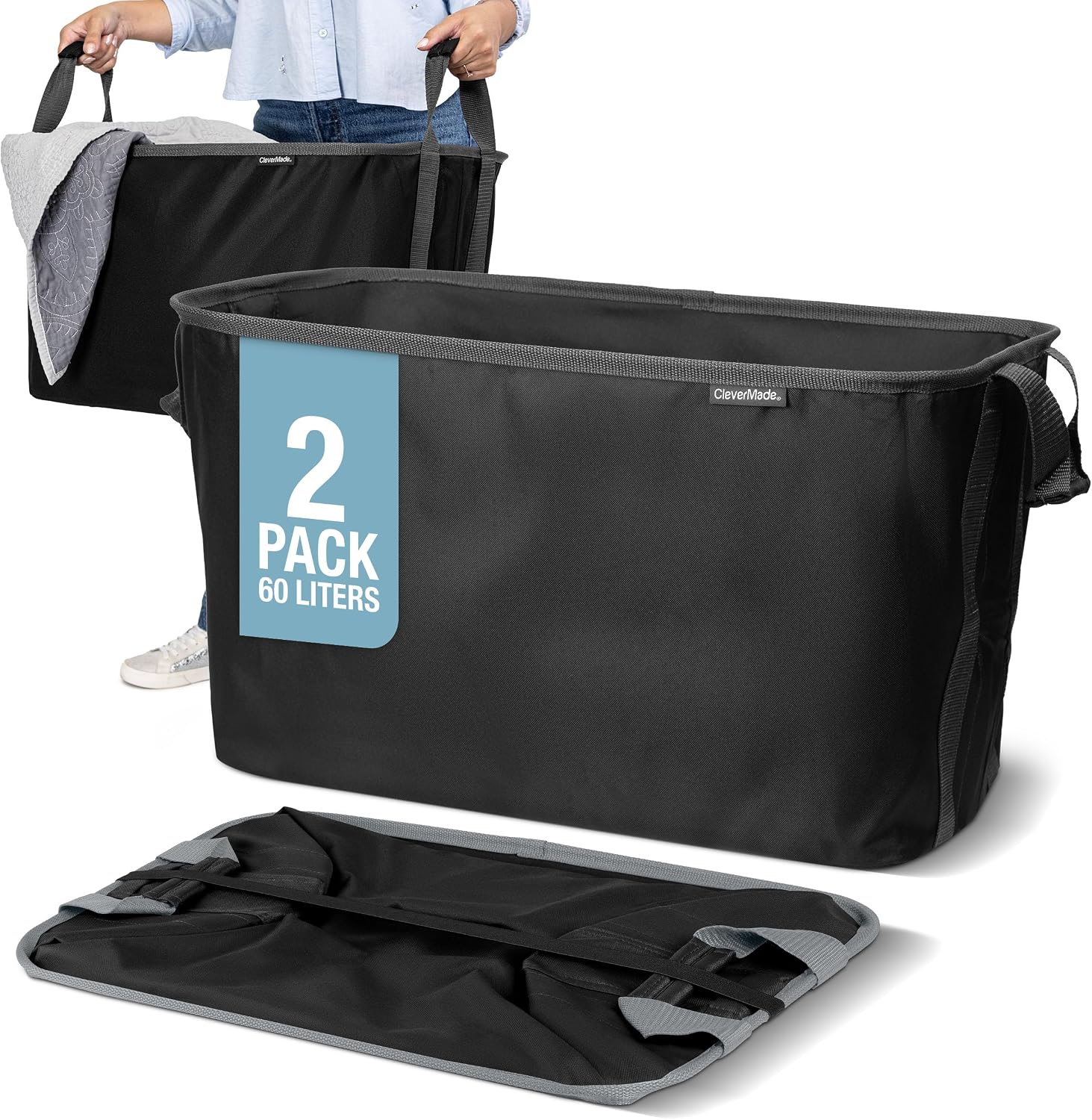
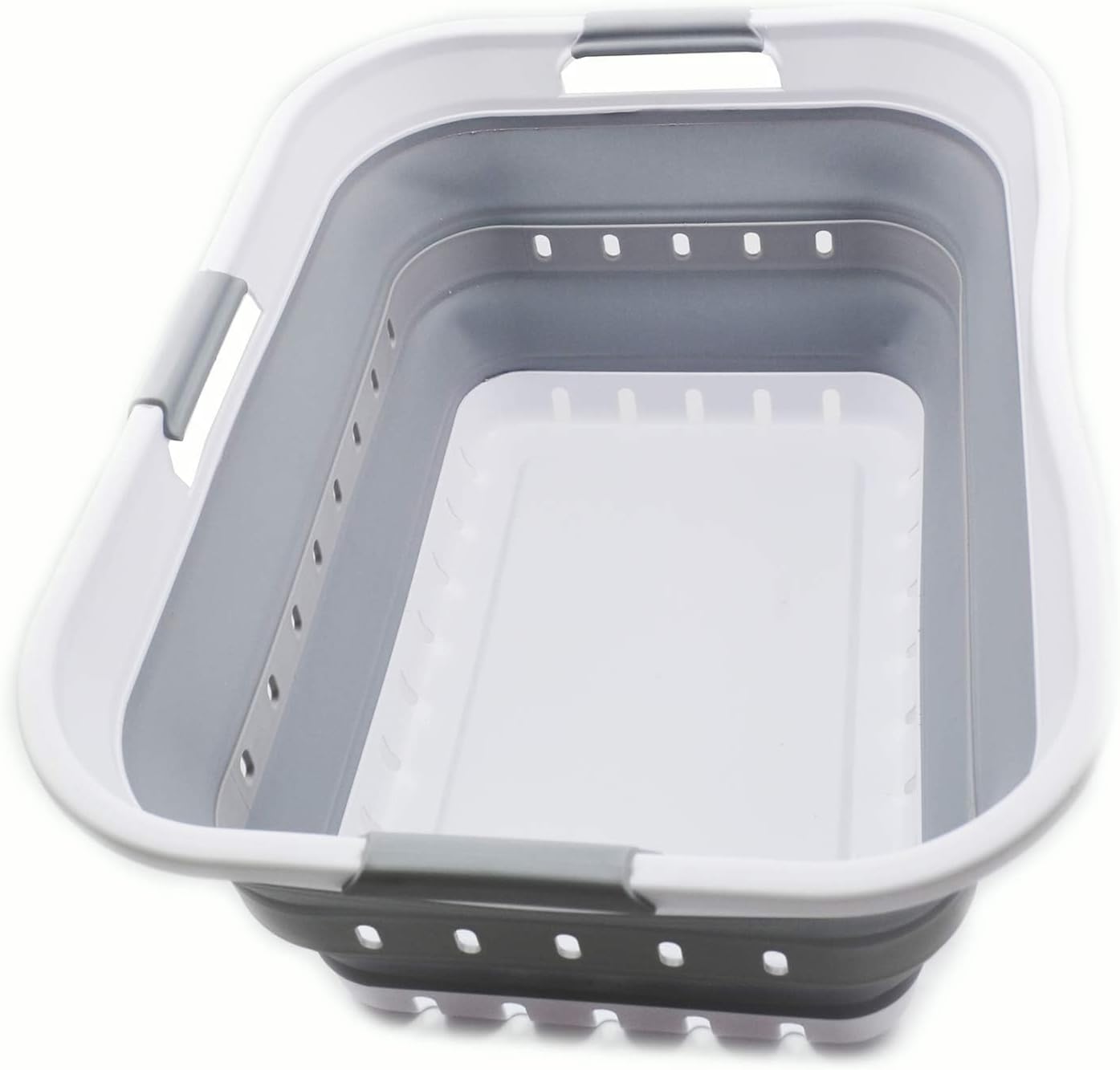
Two collapsible laundry baskets: check the exact version
These are manufacturer-documentation examples, not hands-on winners. They illustrate two different ways to move laundry and store the empty carrier. They are not the same capacity variants as the 60L CleverMade and 42L SAMMART items in our separate comparison.
| Decision point | CleverMade Laundry Caddy 64L | SAMMART 41L basket, SKU 170565 |
|---|---|---|
| Body and capacity | Polyester body; listed 64L | TPE/PP body; listed 41L |
| Open size | 21 x 13 x 18.25 inches at the widest point | 22.8 inches long and 10.5 inches high; the source gives conflicting widths of 17.5 and 17.9 inches |
| Folded height | Listed 1.25 inches | Listed 3 inches |
| Manufacturer price snapshot | $44.99 for the selected two-pack | $35.20 for the selected basket; marked sold out when checked |
Prices above are US manufacturer-site snapshots, not Amazon offers, and exclude any checkout shipping or tax. Verify current price, pack size, stock and exact version before ordering.
Consider the CleverMade 64L when carrying and folded storage lead
Its tall fabric format and folding design make it a candidate for collecting dry clothing and carrying it between rooms. Check the widest dimensions against your route, not only the tapered base. The listed volume does not establish how much you can comfortably carry. Skip this format if you want a rigid, wipeable bin, or if it will remain full so that folding provides no practical benefit.
Consider the SAMMART 41L when you want a structured carrier
The collapsible plastic design is worth comparing for transferring and sorting a manageable load. Its low folded height still leaves a broad footprint to store. Do not order for a tight gap until the seller confirms the dimensions of the selected SKU: the manufacturer page currently disagrees on width. Choose another carrier if you need a narrower shape or the item is unavailable.
Sources: CleverMade 64L Laundry Caddy specifications and selected pack; SAMMART 41L listing and SKU. We have not tested carrying comfort, cleaning performance or hinge durability.
Capacity should match washing frequency
Observe what accumulates between two normal wash days before choosing a larger hamper. Include bulky towels or sports clothing if they share the same collection point. If overflow happens only because washing is delayed, first decide whether the schedule is realistic.
Advertised liters describe container volume; they do not establish weight capacity or the correct load for your washing machine. Do not assume one full hamper equals one safe washer load. Follow the appliance’s loading instructions and the garments’ care labels.
A family that washes daily may need smaller hampers than a household that launders once or twice per week.
The goal is not “largest possible.” It is enough capacity to reach the next realistic wash cycle without overflow.
Airflow matters for damp laundry
Wet towels, sweaty clothes, or damp sports gear should not sit sealed for long periods. Let damp items dry appropriately before closed storage where possible.
One hamper per room or one central hamper?
Room hampers reduce floor piles but require collection. Central hampers simplify washing but depend on family members carrying clothes to the same place.
Choose the system your family will actually follow.
Should kids have their own hampers?
A child-height hamper can make dirty-clothes cleanup easier. Choose an opening large enough that the child can use it without lifting a lid.
What about hampers with lids?
Lids reduce visual clutter but add one step and can trap damp items. They work best when the household already has good laundry habits and the contents are dry.
Hamper features worth paying attention to
- real outside dimensions,
- handle strength,
- empty weight,
- liner washability,
- airflow,
- shape when full,
- whether it fits the washer-load size you prefer.
Features that often matter less
Fancy labels, matching sets, complicated lids, and decorative details are secondary to footprint and carry comfort.
A family laundry-flow check
Before buying, map:
dirty clothes → hamper → washer → dryer/rack → folding → put away.
If your biggest bottleneck is clean clothes not being put away, a new hamper will not solve it. See A Simple Laundry Routine for Families in Small Homes.
Frequently asked questions
What size hamper is best for a small home?
Choose the smallest footprint that can hold laundry until your normal wash cycle.
Are laundry sorters worth it?
Yes if your family actually sorts before wash day and you have the width. Otherwise one simpler hamper may work better.
Should the hamper live in the bathroom?
Only if it fits without blocking movement and damp items are managed appropriately. Bedrooms or a laundry area may work better.
Connect the hamper to the rest of the laundry routine
- Clothes worn once: keep dry items you intend to wear again in a separate, limited worn-but-not-dirty clothes zone, rather than filling the dirty hamper.
- Collection keeps failing: use our small-home hamper system to decide where clothes are collected and who moves them.
- You need a folding carry basket: our CleverMade vs. SAMMART comparison addresses fabric carry and rigid pop-up designs.
- Clean clothes never reach drawers: choose a workable folding and put-away location before buying more collection capacity.
The best hamper disappears into the routine
A good hamper does not demand attention. It fits its parking spot, holds enough until the next wash, carries comfortably, and makes the first step of laundry easier for the people who actually use it.
Sources
- Lifewit Slim Laundry Basket with Lid — https://www.lifewit.com/collections/utility-laundry-room-storage/products/lifewit-slim-laundry-basket-with-lid
- Simple Houseware 2-Bag Heavy-Duty Laundry Sorter Cart — https://www.amazon.com/dp/B07HS4FZDC
- SAMMART Collapsible Plastic Laundry Basket — https://www.amazon.com/dp/B0882ZPRF7