Small laundry items can occupy an unreasonable amount of a full-size drying rack. The Whitmor 26-clip Clip and Drip hanger offers another arrangement: suspend several small pieces from one overhead point. Its usefulness depends less on the number of clips than on available hanging clearance, airflow and whether the garments tolerate being clipped. For a related step-by-step approach, see Whitmor Ironing Caddy Review: Can Your Door Store the Board and Iron?.
This is a research-based review of the linked product, not a hands-on test. Product photographs come from its Amazon listing. Price, seller, stock and selected options can change.
The right job is a small-item bottleneck
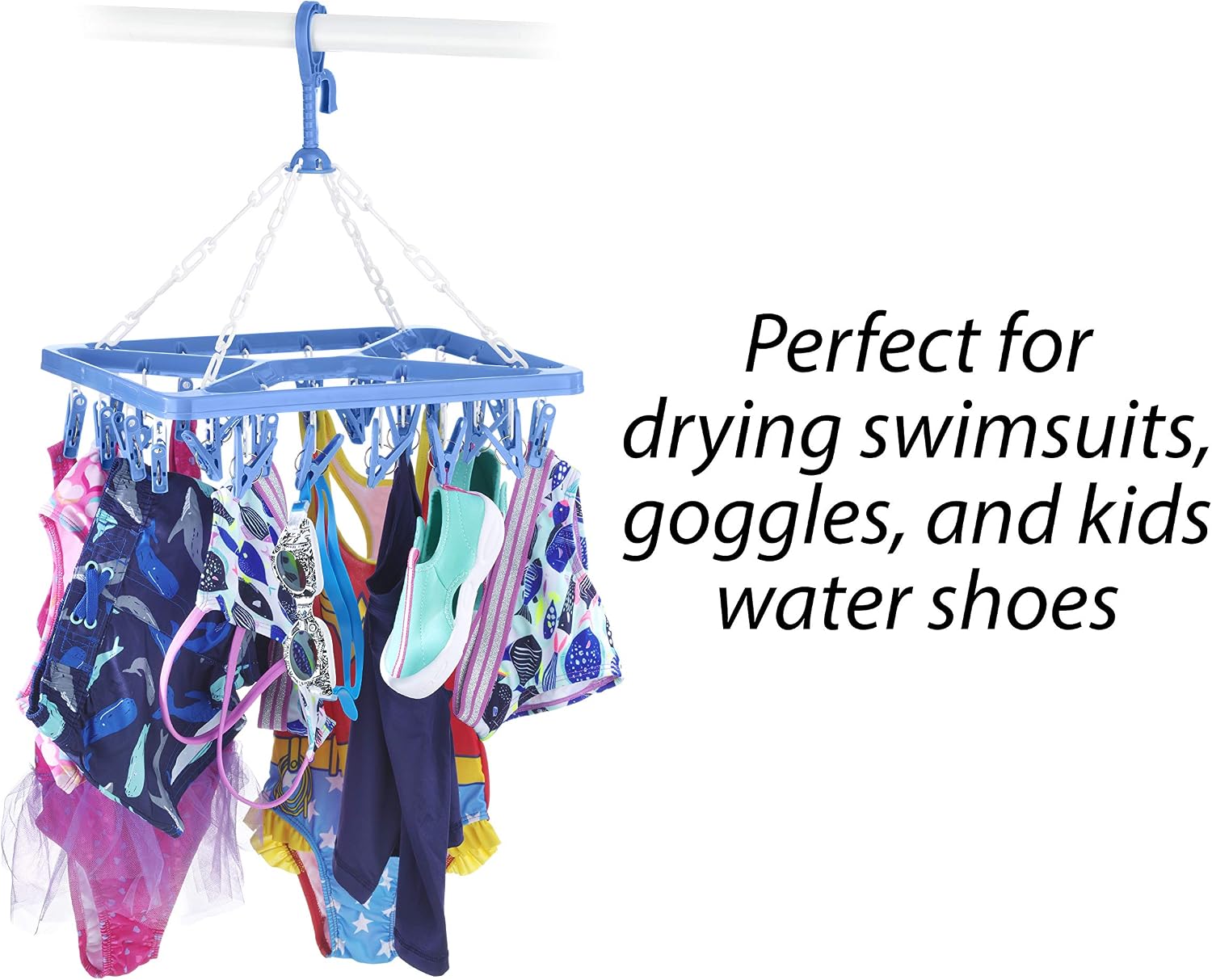
Think about the last load that overflowed your drying space. If socks and small cloths occupied every bar while larger garments waited, a hanging clip rack could redistribute that load. If the problem was a wet blanket or several sweaters, this product is unlikely to address it.
The review is therefore about a particular laundry bottleneck. It is not a recommendation to replace every drying method with clips. A small apartment may need more than one approach precisely because garments have different care requirements. Consolidating small pieces can free another surface, but it does not remove the need to follow each item’s label.
What the linked version offers
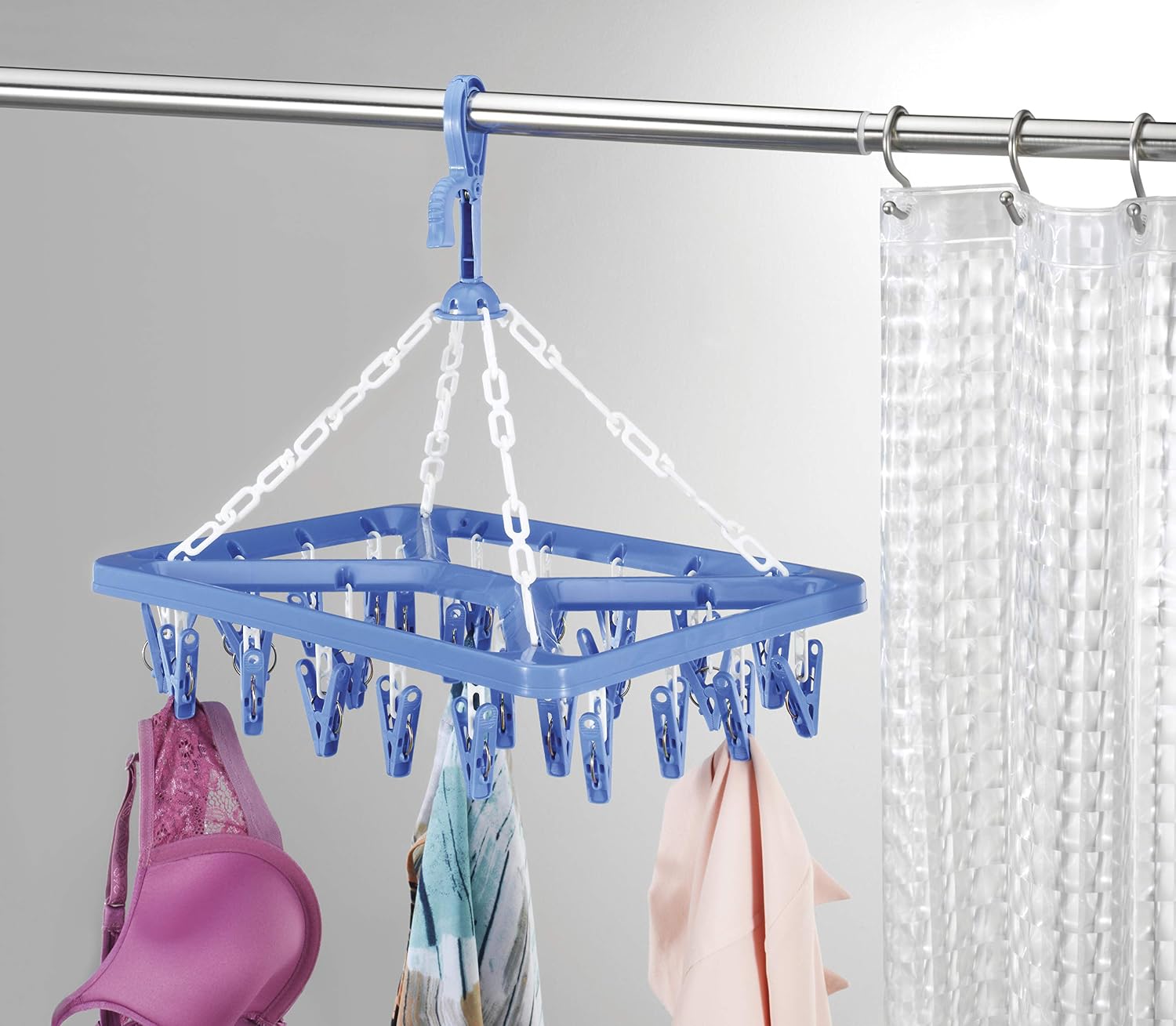
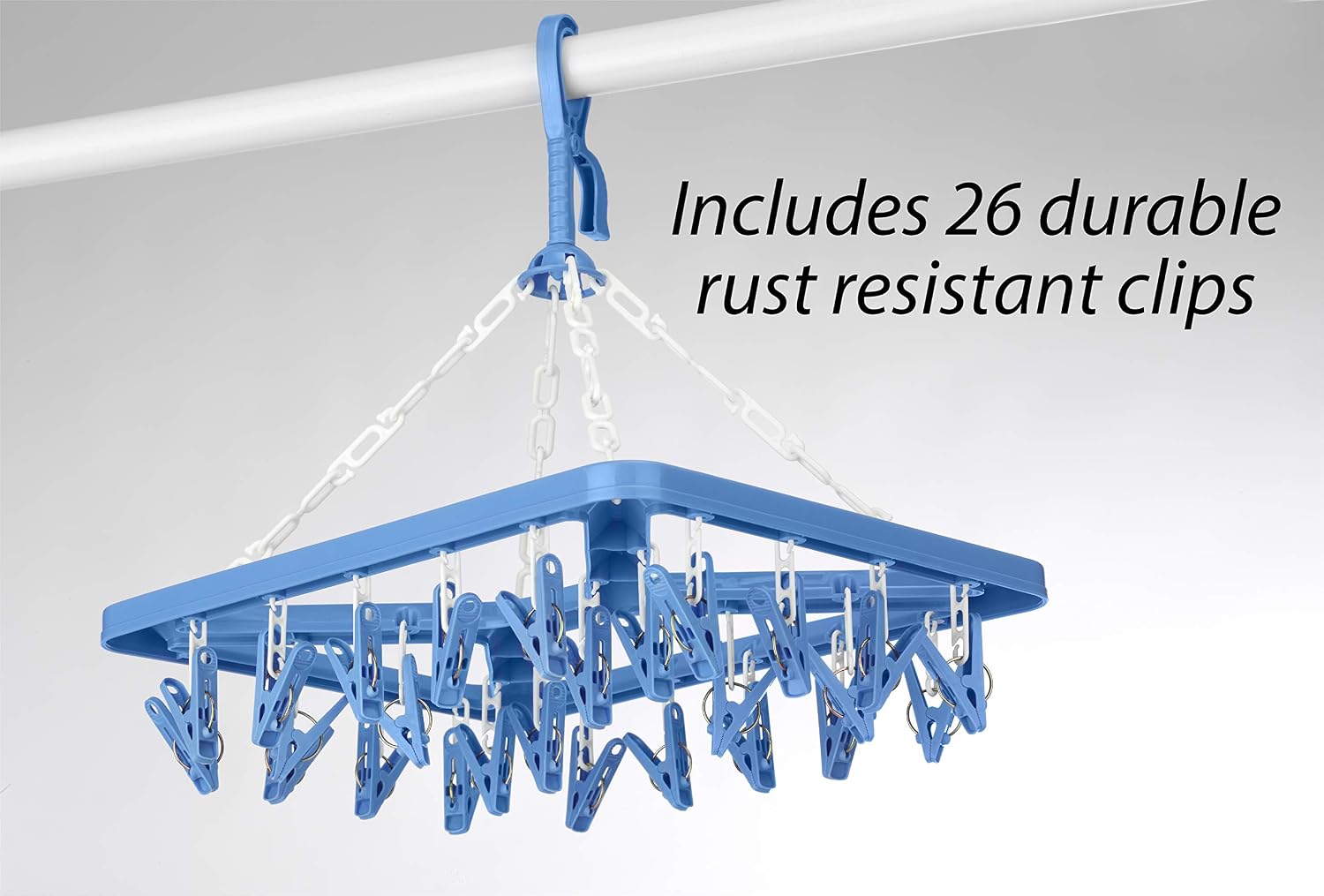
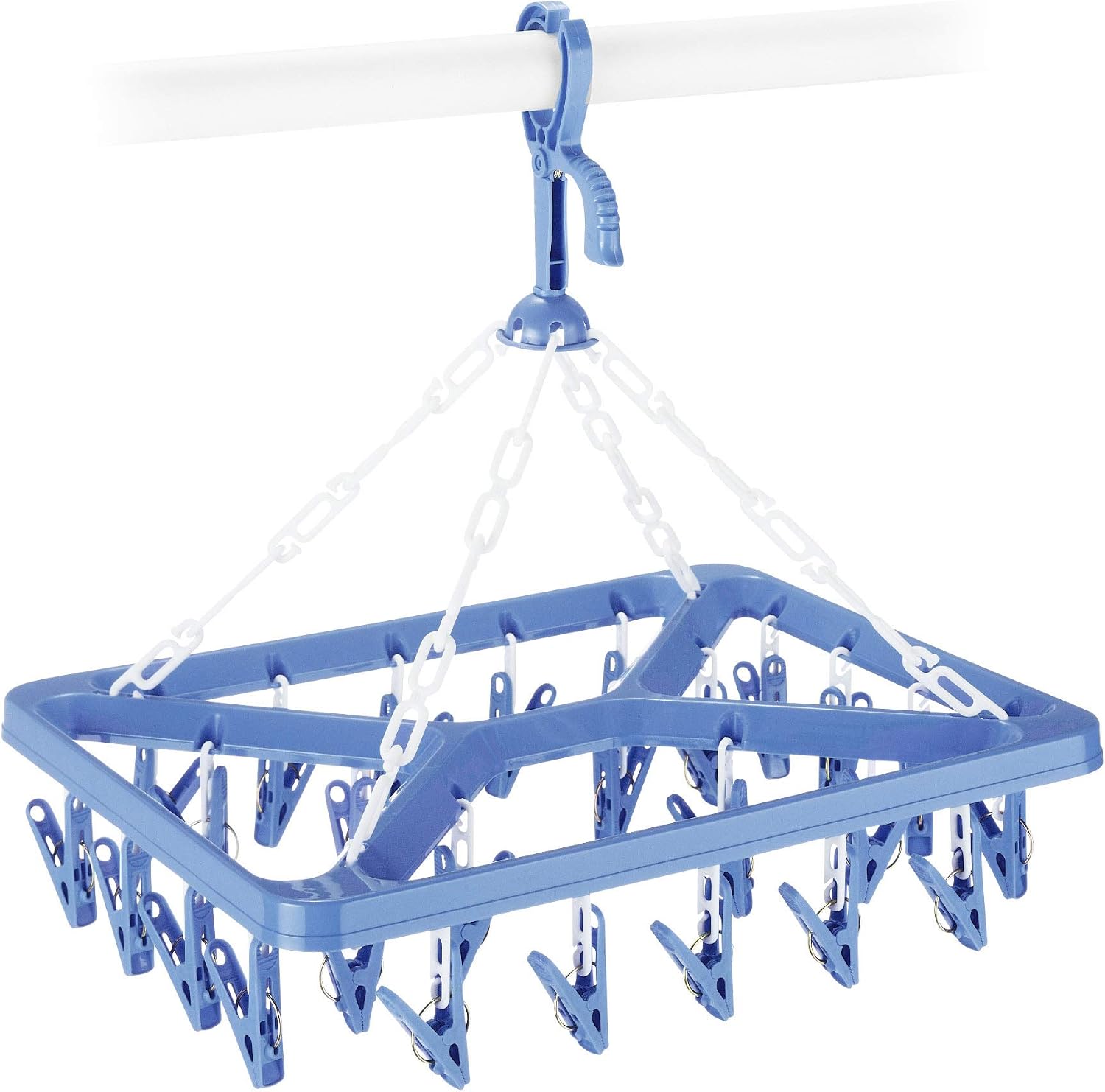
The selected Amazon item is the blue-and-white 26-clip hanger, not the smaller 16-clip option. The listing describes a collapsible frame, a hanging hook and resin clips with wire springs. Its listed overall dimensions are 11.81 by 15.16 by 15.75 inches.
Those dimensions describe the product, not the full occupied space once laundry is attached. A long item adds length beneath the clips, and fabric hanging around the edges can increase the practical footprint. Check the proposed position with the actual pieces you expect to dry.
We have not measured clip force, maximum useful load or repeated-folding durability. The available clip count is a design fact; claims about how much weight it can reliably carry would need more evidence.
Twenty-six clips are not twenty-six free spaces
A small sock may need one attachment point. Another item may need two points to keep it from folding over itself or hanging unevenly. Neighboring garments can also overlap. This means the number of useful positions changes with the load.
For a practical trial, picture your ordinary small-item wash arranged with gaps rather than packed shoulder to shoulder. If the pieces would touch across most of the frame, plan to dry fewer at once or use another rack alongside it. The goal is a workable arrangement, not using every clip because it is available. You may also find Clean Reusable Grocery Bags With a Clear Wash, Dry, and Return Routine useful for a closely related small-home problem.
A generous clip count can still be valuable even when some remain empty. It gives you options for spacing and balancing the load. Unused clips are not wasted capacity if they help keep neighboring garments apart.
Check the support before the hanger
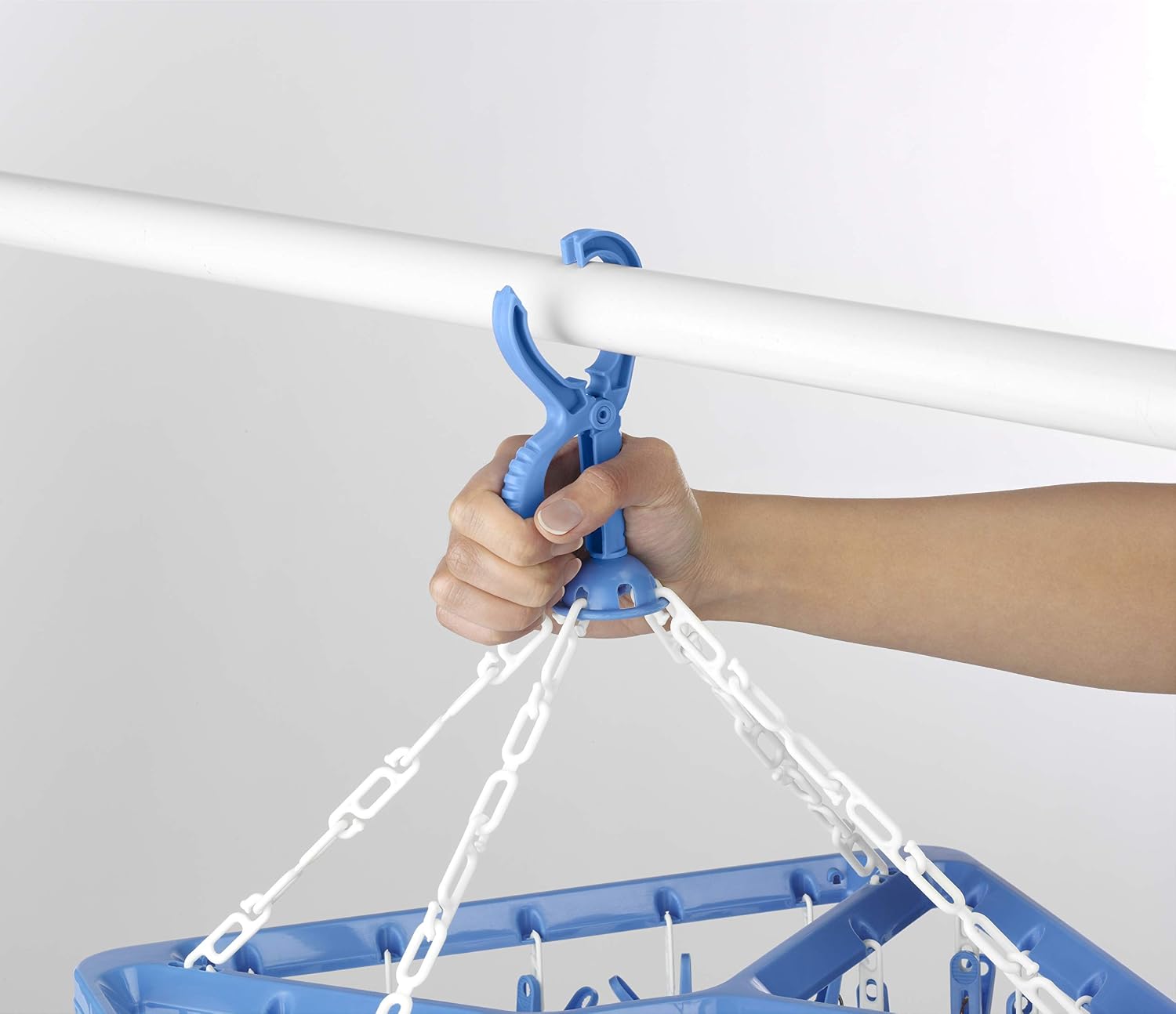
Choose a support that can handle the wet load and is suitable for the hook. Do not assume a lightly installed shower rod or decorative shelf can carry extra hanging weight. If the support shifts when you touch it, address that issue before adding wet laundry.
Check the drip zone as well. A position over a tub or another appropriate wet area creates a different cleanup problem from a position above wood furniture or a walkway. The hanger catches garments, not water.
Finally, consider how the room is used during drying. Hanging a load where it blocks the shower, a door or access to a cupboard can create a repeated conflict. The compact frame is only a space saving if the occupied area is available for the entire drying period.
A sensible loading sequence
Follow the clothing care labels and the hanger instructions. Remove excess water in a way suitable for the garments before hanging them; this review does not recommend wringing delicate items. Load the frame gradually and distribute pieces so it does not hang awkwardly to one side.
Choose attachment points that make sense for each fabric. A clip may leave a temporary impression or concentrate force on a small area. If appearance matters, test the method on an inconspicuous area or use a drying approach that avoids clipping altogether.
Leave room between neighboring pieces, then revisit the load rather than assuming everything will dry at the same rate. A thicker item can remain damp after lighter pieces feel ready. We cannot provide a universal drying time because room conditions and fabric thickness differ.
Airflow is a room issue, not a clip feature
The hanger organizes a load vertically, but it does not actively dry the room or remove moisture from the air. If laundry already remains damp for a long time in the proposed location, buying more hanging positions may simply let you put more wet fabric in the same conditions. You may also find How to Air-Dry Laundry in a Small Apartment Without Letting It Take Over the Room useful for a closely related small-home problem.
Think about the drying period as part of the room schedule. A bathroom that is repeatedly used for hot showers may not provide the same conditions as another ventilated area. Use the ventilation arrangements appropriate to the home and avoid placing garments so tightly that air cannot move around them.
We have not compared drying speeds with a floor rack or tumble dryer. Any claim that the clips save a specific number of hours would be unsupported. Their clear advantage is a different arrangement of small items, not a measured acceleration of evaporation.
Garments that deserve a different method
A care label requiring flat drying is a reason to use a supportive flat surface, not to suspend the item from multiple clips and hope for the same result. Heavy wet knitwear can also create a poor match between garment weight and small attachment points.
Clips may be inconvenient for a piece with delicate trim, an awkward shape or a finish you want to keep unmarked. A bar rack, hanger or flat dryer may suit that particular item better. The right laundry setup follows the garment rather than forcing everything onto one accessory.
Keep this distinction in mind if you are buying the Whitmor for lingerie. The broad category label does not mean every delicate item tolerates identical treatment. Review the actual care instructions for what you own.
Storage and maintenance after the load
Remove the dry items, inspect the clips and let the hanger itself dry before folding it away. The listing’s collapsible format is useful for a home without a permanent laundry zone, but the stored shape still needs an accessible place.
Avoid making storage a tangled pile with other hooks and cords. If opening the frame takes longer than hanging the load, the convenience advantage starts to disappear. A simple assigned shelf or hook can keep the accessory ready without turning it into a permanent visual feature of the room.
Check for damaged clips or rough edges before putting another garment on them. We do not have long-term wear data, and a small broken component can matter when it is the point holding a valued piece of clothing.
Who gets the most value?
The strongest buyer is someone who repeatedly dries small items, already has a suitable overhead support and can leave the area occupied without disrupting another routine. That is a concrete job for the product. A person who only occasionally air-dries one garment may do just as well with existing equipment.
Compare the actual purchase price with how often it will remove a bottleneck. There is no reason to buy it solely because it folds or offers many clips. Those features become valuable when they fit the load and the room.
During early use, assess spacing, convenience and whether the clothes arrive at the condition you want. If you consistently leave most clips unused because the setup is awkward, reconsider the location or choose a different drying format.
Choose by the job, not the product count
| Your situation | Better starting point | Reason |
|---|---|---|
| Many socks and small washable pieces | Whitmor clip hanger | Consolidates small-item attachment points |
| Sweaters labeled dry flat | Flat mesh dryer | Supports the garment over a broader area |
| Fabric that should not be clipped | Appropriate bar rack or hanger | Avoids concentrated clip contact |
Amazon product and current listing
Check Whitmor Clip and Drip 26-Clip Hanger on Amazon. Confirm the exact variant, seller, delivered price and return terms before ordering. This link identifies ASIN B0001E839U; it does not guarantee an offer is currently available.
Our buying decision
The Whitmor is a useful candidate for recurring small-item laundry, provided the support and drip area are suitable. Treat 26 clips as attachment points, not a promise of 26 garments drying quickly. Keep a different drying method for items that need flat support.
Continue with Laundry Area ideas and our Buying Guides. For the surrounding routine, read Amazon Basics vs. Honey-Can-Do Gullwing: Which Drying Rack Fits Your Laundry Area?.
Sources and review scope
We checked the specific Amazon listing for product identity and listed features. The room scenarios and purchase comparisons above are editorial analysis. We have not measured performance, lifespan or long-term durability.
Sources
- Amazon product listing — https://www.amazon.com/dp/B0001E839U