Air-drying clothes saves dryer use and may be necessary for certain garments, but in a small apartment the drying rack can become temporary furniture that never leaves. If you are working on the same space, Best laundry hampers for small spaces covers the next decision in more detail.
The solution is not finding a magical invisible rack. It is creating a drying window: one place, one load size, one start time, and one clear moment when the setup closes again.
Choose the drying location before starting the wash
Decide where the rack or hanging setup will go before the clothes are wet. The spot should support the drying method, household safety, ventilation, and manufacturer/care-label instructions for the garments.
Do not wash more than you can dry
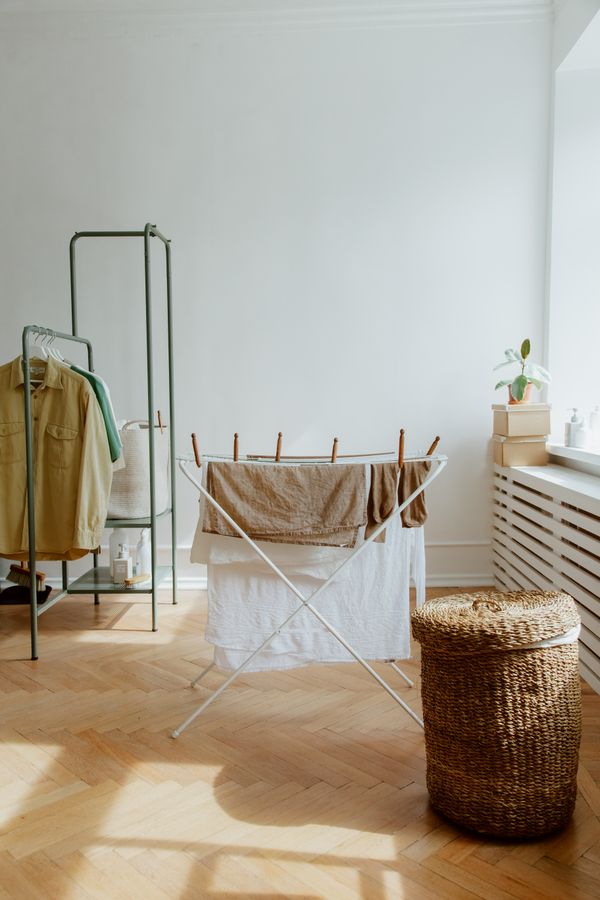
The available drying footprint should determine load size. A huge wash load that requires chairs, doors, and every railing in the apartment creates more disruption than two smaller loads.
Use one fold-away drying setup
A collapsible rack, compact hanging system, or another appropriate setup works best when it has a real storage location after use. You may also find How to Organize Laundry Supplies When the Washer Is in the Kitchen or Bathroom useful for a closely related small-home problem.
Before buying one, decide where it will live folded.
Start earlier than you think
If clothes need many hours to dry, starting late at night can keep the rack open through the next day. Time the load around when the room needs to return to normal.
Space clothes instead of overloading the rack
Give garments enough room for airflow according to the drying setup and fabric needs. A rack crammed tightly with wet clothes can take longer to clear.
Use hangers for items that can finish in the closet
Where appropriate for the garment, drying shirts or lightweight items on hangers can reduce the later folding step.
Keep the walking path protected
The drying setup should not block the route to the bathroom, kitchen, bed, or exit. In a tiny home, circulation has priority. For the broader setup, How to Organize a Tiny Laundry Area With No Cabinets is a useful next read.
Close the rack as soon as the load is dry
This is the step that keeps air-drying from taking over. Dry clothes should move to drawers or closets, and the rack should fold away the same day whenever practical.
Create a “still damp” micro-zone
If one or two items need longer, move only those items to an appropriate small finishing spot instead of keeping the entire rack open.
Pair air-drying with smaller laundry loops
If laundry regularly stalls between dry and put-away, use How to Keep Laundry From Taking Over a Small Home.
For homes with no laundry room
Treat the drying rack as temporary equipment, not permanent decor. Store laundry supplies together and keep the drying zone empty when no load is active. If you are working on the same space, A Simple Laundry Routine for Families in Small Homes covers the next decision in more detail.
A simple air-dry routine
- choose the location,
- wash only what fits,
- hang with space,
- check the load later,
- put dry clothes away,
- move only damp stragglers,
- fold and store the rack.
Frequently asked questions
Where can I put a drying rack in a small apartment?
Use a location that does not block circulation and supports the garment and equipment requirements. The best spot depends on the apartment layout.
How do I stop the rack staying open all week?
Wash smaller loads, start earlier, and make “rack closes when the load is dry” part of the laundry loop.
Should I buy a larger rack?
Only if you have a reliable footprint for it. A larger rack may solve capacity but create a bigger room-use problem.
Air-drying works when it has an ending
The rack is not the problem. The endless open rack is. Match the wash load to the drying footprint, time the load around the room, and close the setup as soon as the clothes are ready to leave it.