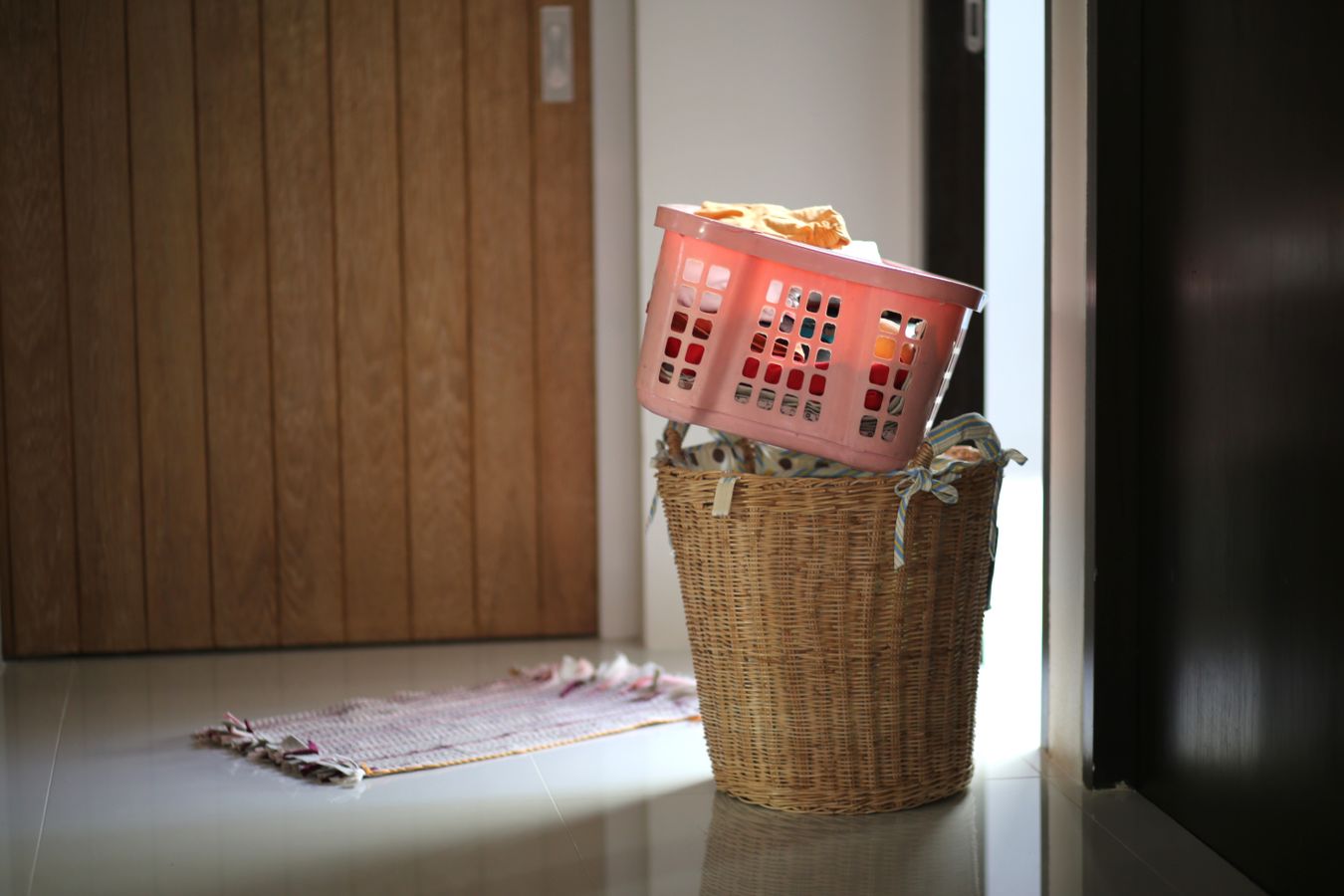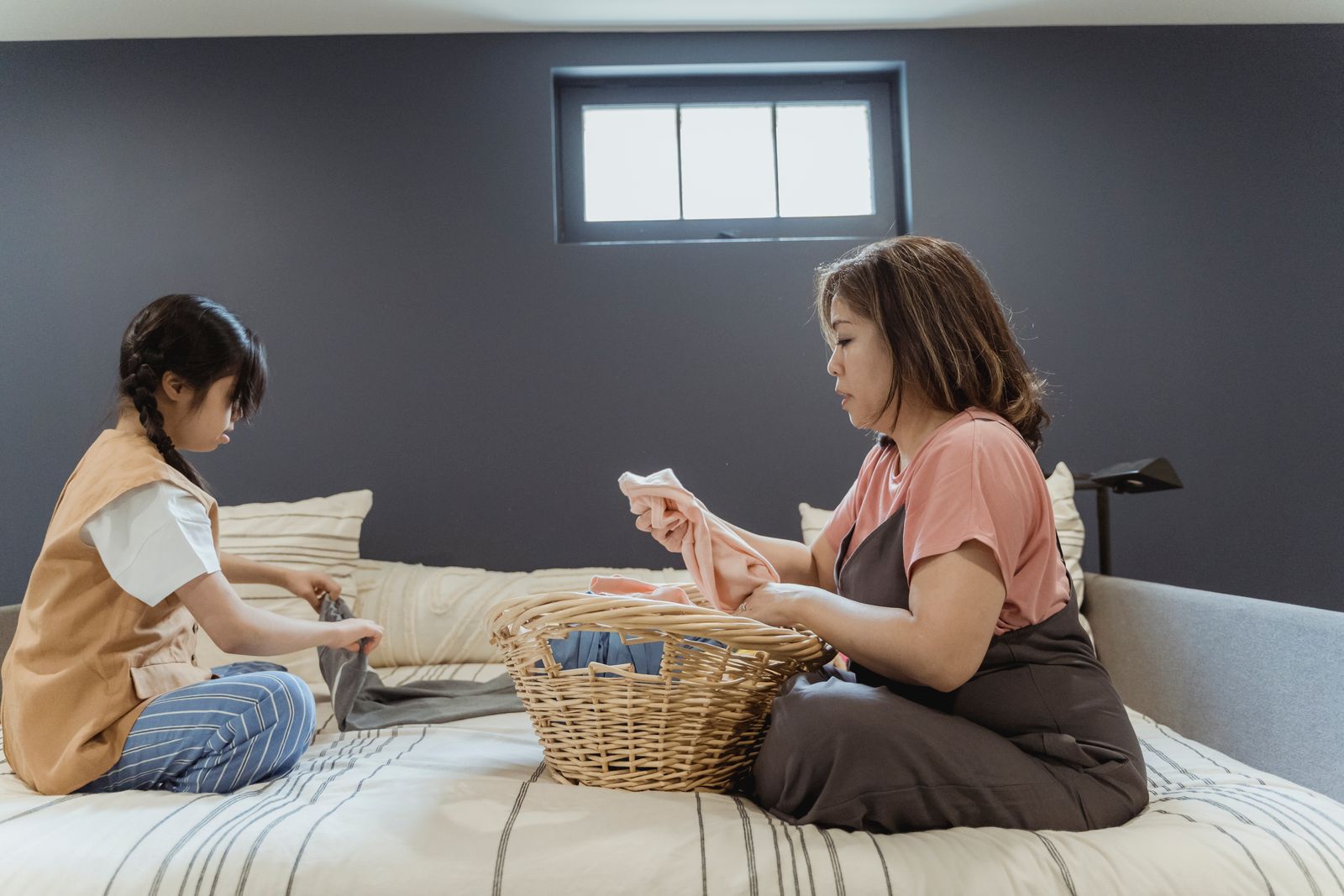
Family laundry often breaks down at the handoff points: dirty clothes never reach the hamper, clean piles wait on a chair, socks lose partners, and folded clothes stall outside bedrooms. For the broader setup, How to Organize Cleaning Cloths, Rags, and Mop Pads Without Mixing Clean and Dirty is a useful next read.
Instead of asking children to “help with laundry,” give each age and ability level one clear handoff job that moves clothes to the next stage.
Map the laundry path
Write the stages: wear → hamper → sort → wash → dry → fold or hang → return. Mark where piles usually stop. That stop is the first handoff to redesign.

Give each person a return container
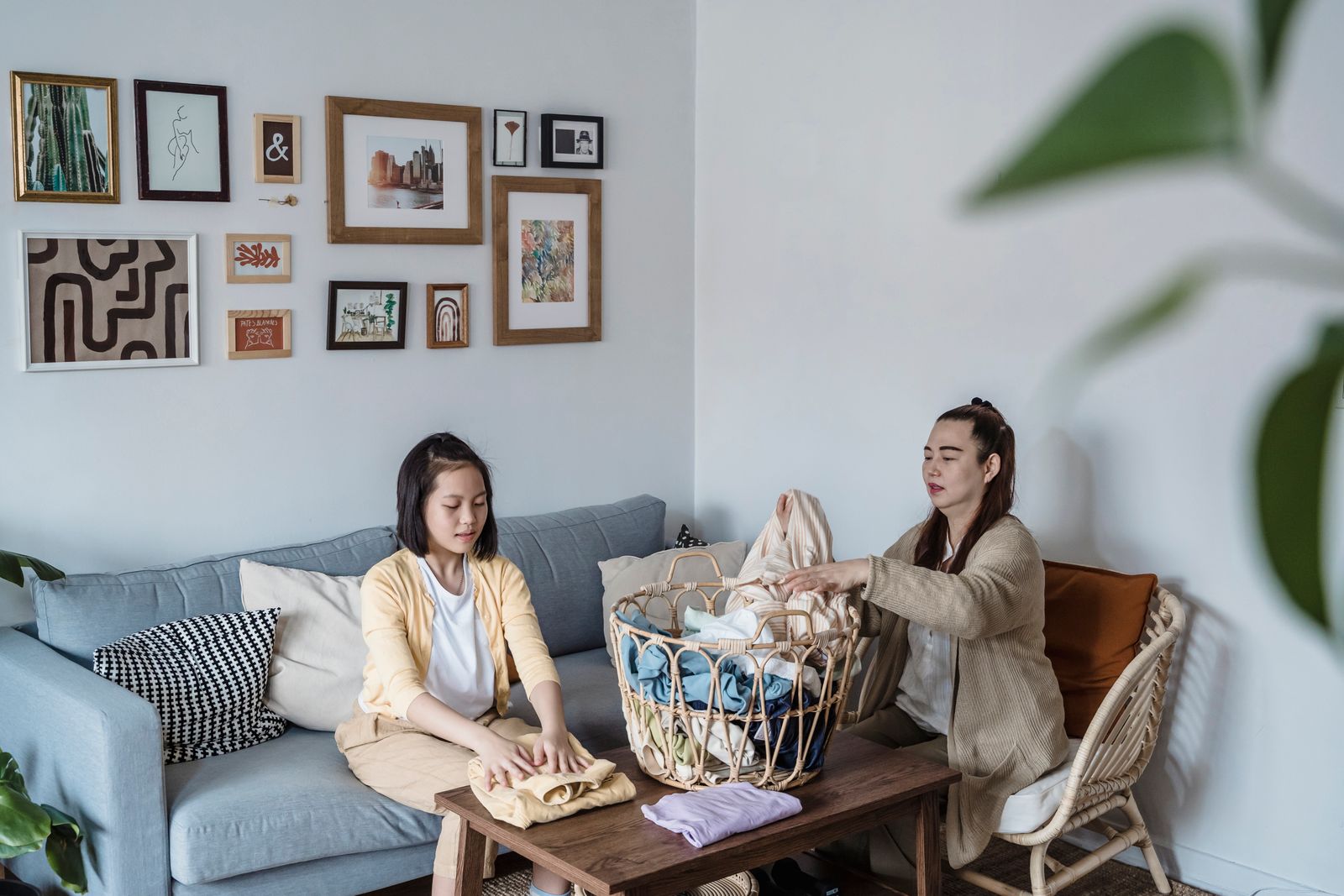
A small basket or bin per person can separate clean clothes after folding. The container should fit the shelf or floor area you have and be easy to carry safely. You may also find How to Store Cleaning Products in a Small Home With Kids useful for a closely related small-home problem.
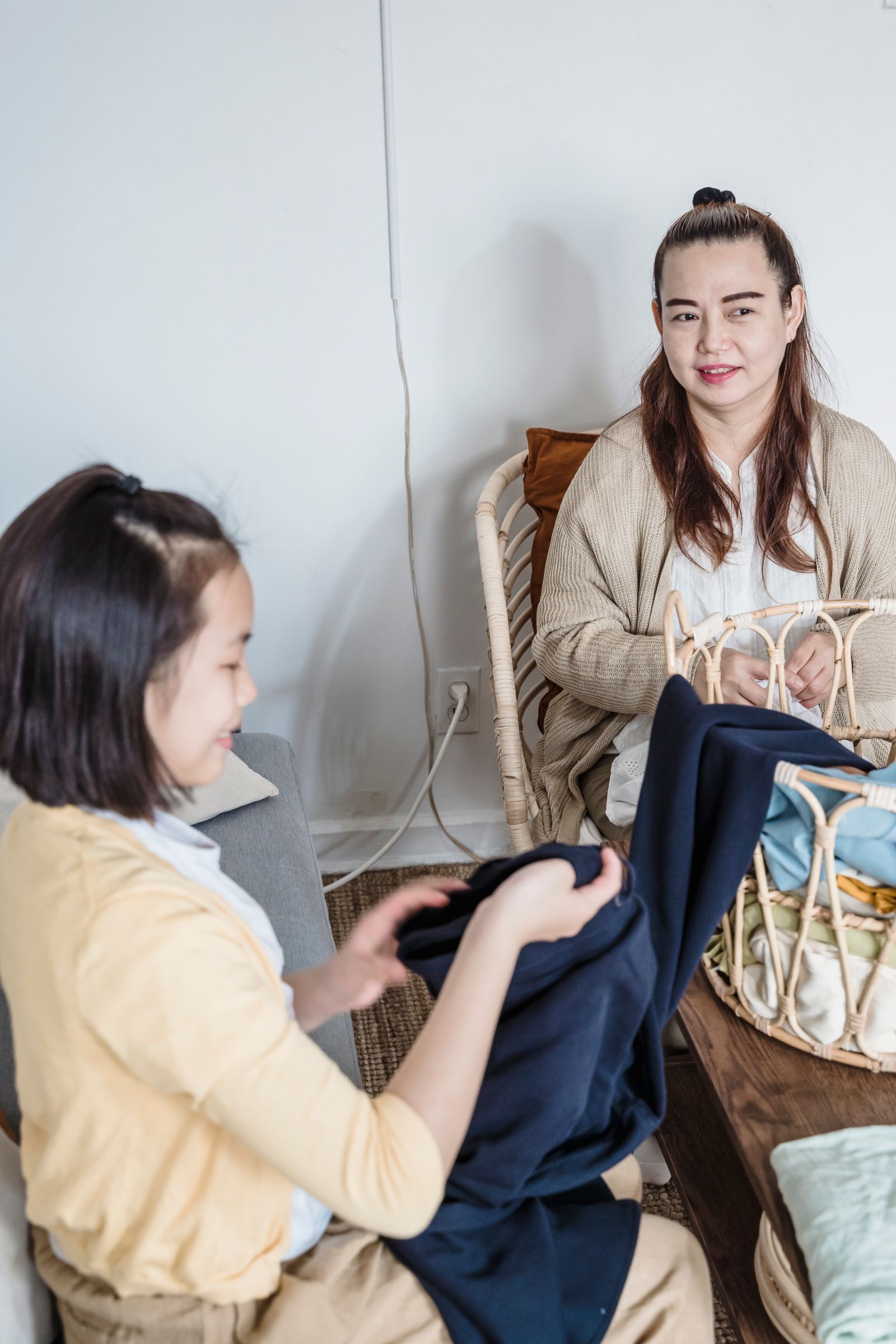
Match jobs to ability, not just age
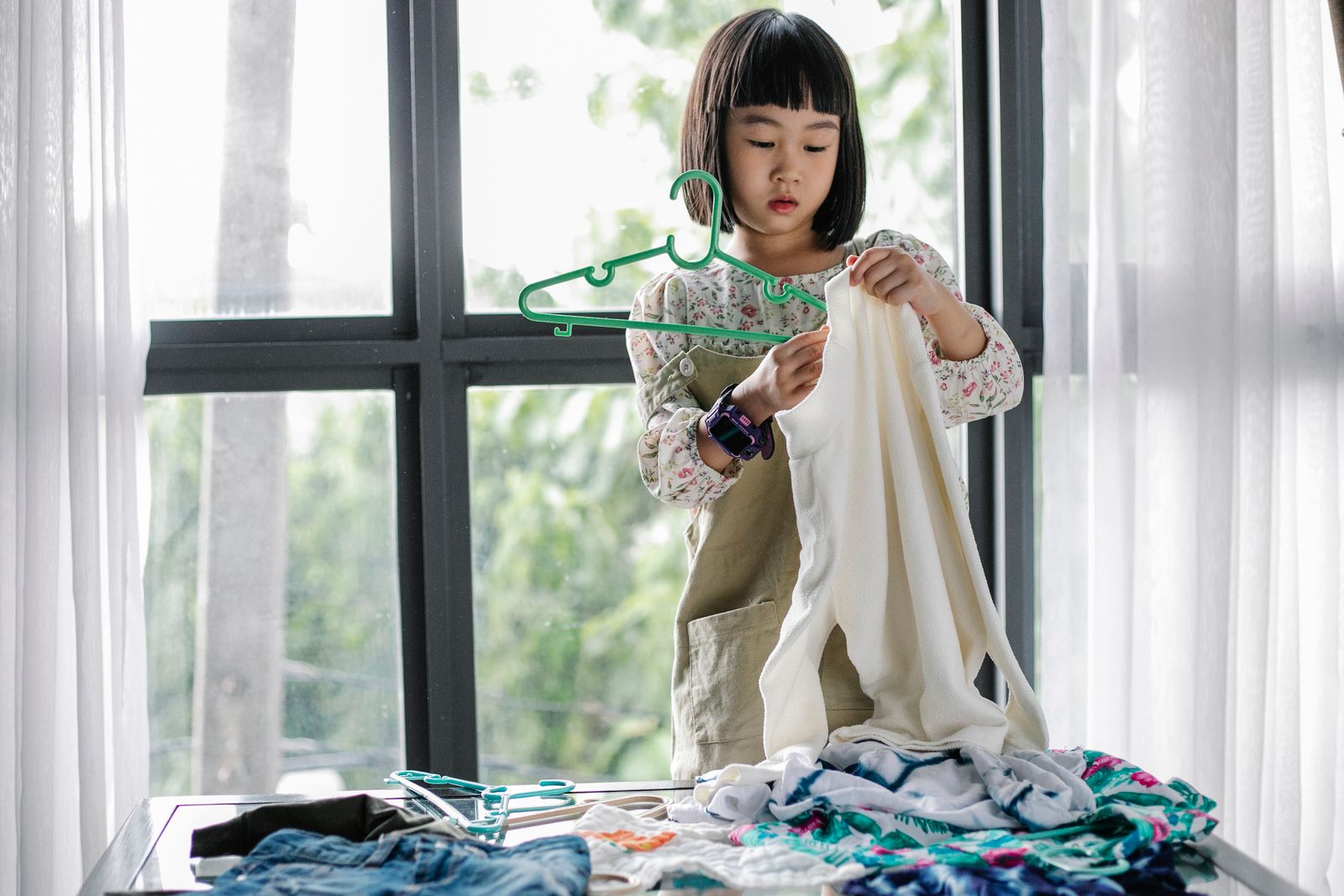
Younger children may carry light items, match socks, or put pajamas in a drawer. Older children may sort by person, fold simple items, hang shirts, or move their own basket. Adults remain responsible for detergent, machines, stain products, and any task that is not safe for the child.
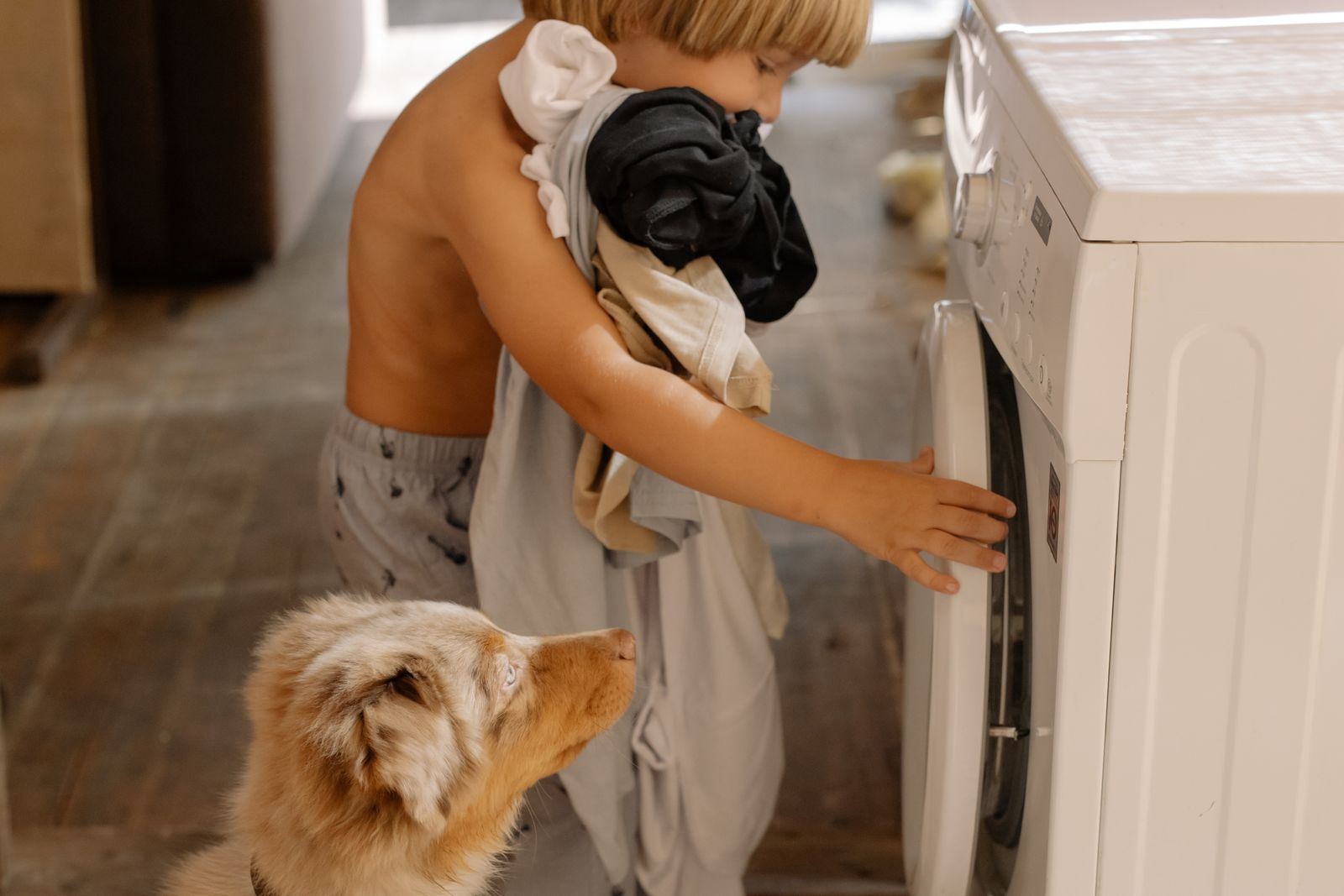
Use one visual rule for dirty clothes
Choose a simple cue: hamper means dirty; hook means worn again; drawer means clean. The fewer ambiguous surfaces you allow, the fewer “is this clean?” piles appear. For the broader setup, How to Clean Entryway Mud, Road Salt, and Wet-Shoe Mess Without Spreading It is a useful next read.
Keep special-care clothes out of the family stream
Delicates, stain-treated items, uniforms with special instructions, and anything that should not enter a normal load need a separate adult-controlled route.
Return clothes before starting another family load
If clean clothes are still sitting in baskets, completing the return loop may be more valuable than creating another load. Throughput matters more than washer activity.
Create a five-minute evening handoff
Before bedtime, everyone can move dirty clothes to the correct place and return one clean basket. Keep the job small enough to repeat on school nights.

Do not use folding perfection as the goal
Children’s drawers often work better with simple folds or broad categories than adult-perfect stacks. If the system looks beautiful but requires re-folding everything a child does, the child never truly owns the task.
Review the system when routines change
Sports seasons, school uniforms, growth spurts, and sibling hand-me-downs can overload a previously workable setup. Adjust basket size, schedule, and responsibilities instead of blaming the family for a system that no longer fits.
Continue with Family Home
Browse Family Home. Laundry Area remains classification metadata until a verified Room hub is live.
My conclusion
A family laundry system gets easier when everyone owns one visible handoff. Build the path, assign safe jobs by ability, keep return containers small, and finish the loop before creating more clean piles. If you are working on the same space, How to Organize Laundry Supplies When the Washer Is in the Kitchen or Bathroom covers the next decision in more detail.