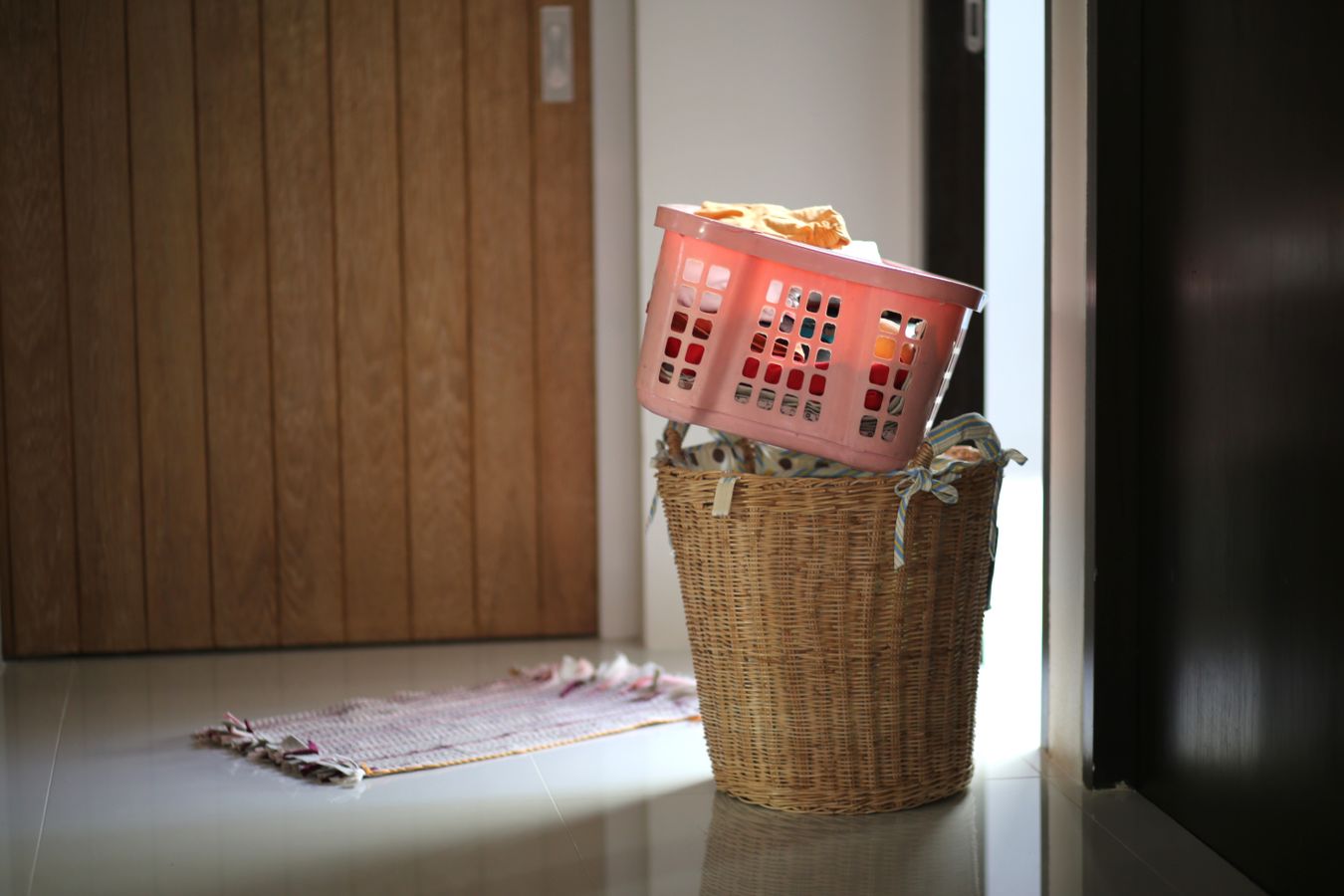
Small-home laundry problems are often blamed on the washer, hamper, or drying rack. But clean laundry has its own bottleneck: the point where it is dry but not yet back in a drawer or closet. For the broader setup, How to Organize Laundry Supplies When the Washer Is in the Kitchen or Bathroom is a useful next read.
That is where baskets sit for three days.
A folding station sounds like the solution, but small homes rarely have a dedicated counter large enough to handle an entire family load. So the real options are usually the bed, dining table, a small laundry counter, or no dedicated folding surface at all. You may also find How to Organize a Tiny Laundry Area With No Cabinets useful for a closely related small-home problem.
I compare these workflows by one measure: how likely is the laundry to complete the trip?
The folding surface is only one step in a longer system
A beautiful folding counter does not help if clean stacks remain there overnight. A bed works perfectly until bedtime. A dining table is excellent until dinner. The right surface creates useful pressure to finish the load without creating chaos elsewhere. If you are working on the same space, How to Organize Cleaning Cloths, Rags, and Mop Pads Without Mixing Clean and Dirty covers the next decision in more detail.
Before choosing a station, look at the complete route: dryer or rack → folding/sorting → drawers/closets → empty basket returned.
If the household already struggles with the earlier stages, the simple laundry routine for families in small homes is the better starting point.

Option 1: fold on the bed
The bed offers one obvious advantage: surface area. You can sort an entire family load, create piles by person, and spread large items without adding furniture.
Why it works
- large temporary surface,
- close to bedroom drawers and closets,
- easy to sort by person,
- forces completion before sleep.
Why it fails
The “forces completion” benefit can turn into stress. If laundry starts too late, clean clothes get moved back into a basket at bedtime. That extra transfer often delays put-away another day.
It also does not work well when one family bed is occupied, shared with a sleeping child, or located far from the laundry source.

Option 2: use the dining table
The dining table is another generous surface already present in the home. It is especially useful for families because the table can hold several owner piles at once.
Where the table is strongest
Weekend loads, school uniforms, towels, and family clothing can be sorted quickly. The table height may also be more comfortable than bending over a bed.
The risk
A multipurpose table already has many jobs. If folded laundry stays through the next meal, the system creates a second reset problem.
If your table already handles homework and crafts, the guide to making a small dining area work for meals, homework, and crafts shows why every temporary use needs a clear exit rule.
Option 3: fold at a laundry countertop
A counter beside or above laundry appliances minimizes carrying. Clothes can come out, fold, and stack immediately.
This is the most “laundry-room-like” workflow, but small counters have a capacity limit. A single adult load may fit. A family load may overflow onto machine tops, baskets, or the floor. You may also find Top-to-Bottom vs. Room-by-Room vs. Task Batching: Which Cleaning Method Fits a Small Home? useful for a closely related small-home problem.
Best use
I like counters for towels, small loads, or immediate sorting—not necessarily as the only folding solution for a household.
Option 4: skip the folding station
This sounds radical only because folding has become a default step. Some categories do not need a dedicated staging surface.
Socks can go directly into a drawer. Underwear can be dropped into a divided drawer. Kids’ pajamas can be loosely folded at the drawer. Towels can move directly to a shelf.
If bedroom storage is close, direct put-away eliminates the most dangerous stage: the clean-laundry holding zone.

Which method is fastest?
Direct put-away is often fastest for simple categories because it removes the staging step. For mixed family loads, the bed or table can be faster because sorting everyone’s clothes at once creates clear piles.
The answer depends on whether sorting or carrying is the bigger cost.
Which method creates the least clutter?
Direct put-away wins if the household actually completes it. A counter is second because the laundry remains inside its functional zone. Beds and tables create the biggest visible disruption when a load stalls.
Which method works best for children?
Children can participate more easily when piles are sorted by owner and storage is accessible. One useful method is to fold only adult clothing centrally, then give each child a basket of clean clothes to put away into broad categories.
This pairs well with a home where kids can put their own things away.

The family-owner method
Instead of sorting by clothing type first, sort by person. Each person receives one pile or basket. Within that owner group, separate hanging, drawers, and special care only if needed.
This reduces the number of decisions at the central surface and lets several people finish the load in parallel.
Air-dried laundry changes the route
If clothes dry on a rack in the living room or bedroom, the best folding point may be near the rack rather than near the washer. Fold and put away as the rack empties so dry clothing does not become another basket category.
The guide to air-drying laundry in a small apartment is important because drying space itself competes with living space.
What should be folded?
Not everything deserves the same finish. Towels, shirts that crease, and certain drawer categories benefit from folding. Socks, underwear, workout clothes, and children’s play clothes may only need a simple drawer boundary.
A small home can save time by reducing “presentation folding” that creates no functional benefit.
What if laundry always stalls after folding?
Then folding is not the problem. Put-away is.
Check whether drawers are overfull, hangers are hard to reach, bedroom storage is too specific, or family ownership is unclear. The storage destination must have enough capacity to receive the clean load.
My recommended workflows
Single adult / couple: fold directly at the bed or drawer and put away immediately.
Family with young children: use table or bed to sort by person, then distribute baskets.
Tiny apartment with drying rack: fold from the rack in small batches and put away directly.
Dedicated laundry counter: use it for sorting and small folds, but do not let clean stacks become permanent storage.
Explore this topic
Browse more practical guidance in the Cleaning hub. Room focus: Laundry Area.
Expert conclusion
The best folding station is the one with the shortest path to final storage. Beds and dining tables give you space, counters reduce carrying, and direct put-away removes a whole stage.
I would not build a new folding station until I knew exactly where clean laundry currently stalls. If the real delay is overfull drawers, family sorting, or clothes that do not need folding at all, a bigger surface will simply make the stalled pile more comfortable.