
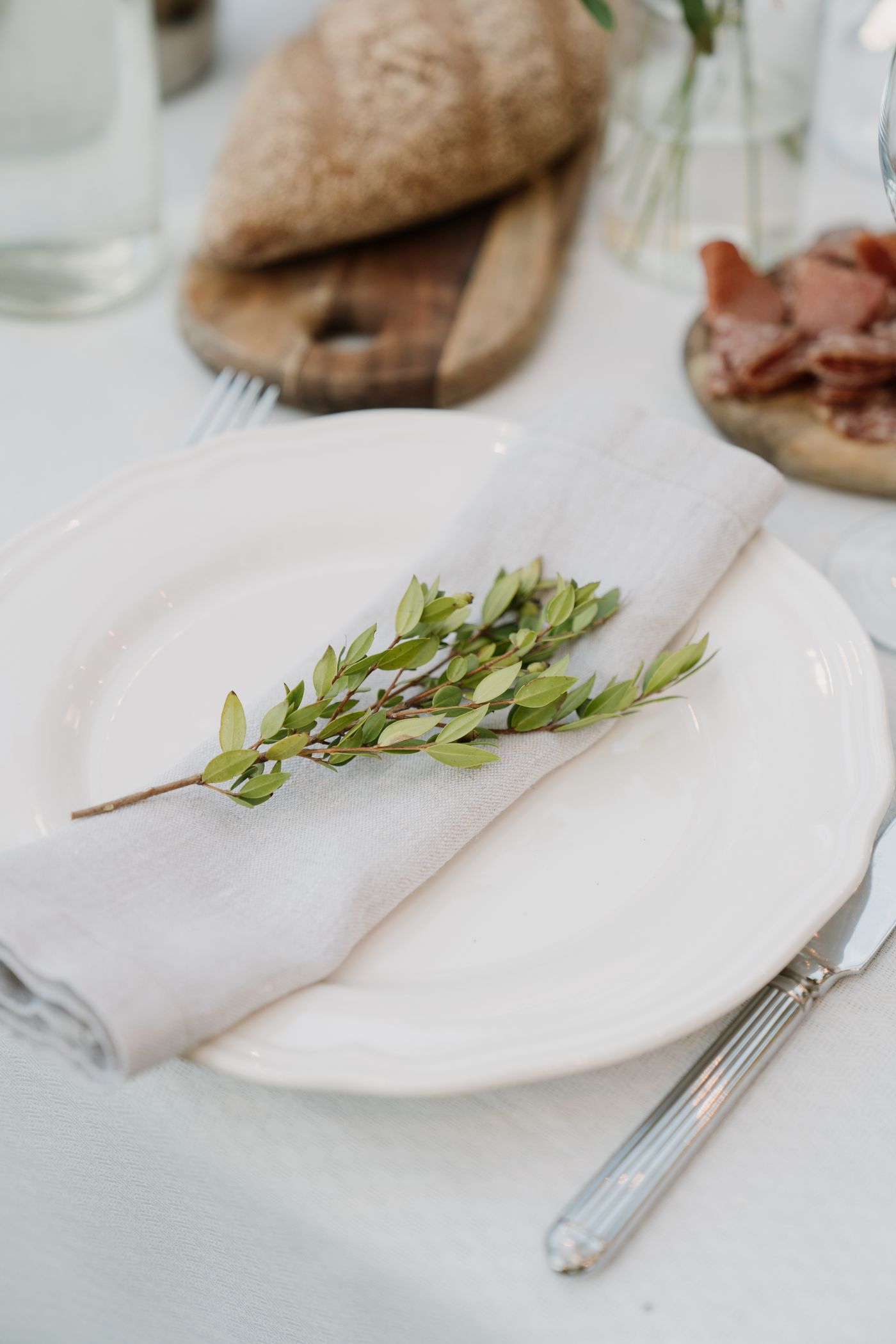
To wash reusable cloth napkins, remove table accessories, check the care for the complete napkin, group only compatible pieces and follow their wash and drying directions. Keep stained, damaged or still-damp pieces separate from the ready table set.
The decision is not simply cotton versus linen. A print, backing, embroidery or attached trim can change the care of the finished item.
Collect the napkins separately from table hardware
Remove rings, clips, place cards, and decorative additions that are intended to come off before care. Check folds for small loose items before collecting the cloths. Keep any napkin with a permanently attached detail within its own care requirements rather than treating the decoration as something you can simply remove.
Separate the napkins from paper products, table runners, and other linens whose identity or care is different. A cloth that looks like a napkin may actually be a decorative square with different intended use. Identify the actual item before assigning it to a food-mark treatment or machine load.
Choose the care route before collecting the set
| What you have | Check first | What follows |
|---|---|---|
| A plain napkin with a readable label | Wash, bleach, drying and pressing instructions | Group only pieces compatible with that complete method |
| Embroidery, fringe or attached decoration | Care for the finished item, including the detail | Keep it separate until the same process is confirmed |
| An unknown stain or changed finish | The maker’s stain guidance and any permitted product test | Resolve the treatment before an automatic wash-and-dry cycle |
| Missing label or mixed replacement pieces | The exact model information for each piece | Do not let a matching appearance stand in for compatible care |
Verified example: IKEA’s SVARTSENAP 005.459.25 is listed as cotton, with a normal machine wash up to 140°F/60°C, no bleach, medium tumble drying and high ironing. These are the named product’s directions, not settings for every napkin. Confirm the current label on your own item.
Identify the actual marks before choosing treatment
Look at each napkin in reasonable light before the wash. Note the location and likely source of visible marks while the meal is still recent enough to remember. A short description such as oil near the lower corner is more useful than assuming that every discoloration is the same stain.
Follow the napkin maker’s guidance and the instructions on a suitable laundry product for any permitted pretreatment. Check material compatibility and any stated testing requirement. Avoid treating a dark decorative print as a stain simply because it differs from the surrounding fabric. Where the source is unknown, choose a cautious product-specific approach instead of repeatedly applying stronger treatments.
Group by compatible care before grouping by set
Sort napkins according to their verified washing and drying requirements, color considerations, and trim. A matching-looking collection can contain replacements from another maker or material. Keep those differences visible. Washing an entire visual set together is convenient only when the actual care instructions support it.
Record the count of a set if that will help it return complete. You might collect six compatible daily napkins together while two special pieces follow a separate care route. They can return to the same table storage after each has completed its own process; they do not need to travel through identical care to remain a useful group.
Give used napkins a clear laundry handoff
Choose a suitable temporary laundry destination consistent with the textiles and household routine. Do not pack damp cloths into closed table storage while waiting to gather a larger load. Keep ready linens separate from used ones so someone setting the table does not have to inspect a mixture at the last minute.
If the dining table is needed immediately, move the collected napkins to the planned care destination before resetting the room. Make ownership of the next step clear in a shared household. A visible note that says awaiting permitted stain treatment can prevent another person from drying an item before the intended check has happened.
Use the actual wash instructions
Follow the compatible load’s directions for the machine, cycle, temperature, detergent, and other settings. Avoid adding bleach, softener, or another laundry additive by default. The word white does not establish bleach compatibility, and natural fiber does not mean every product in the group shares the same wash limit.
For permitted hand care, prepare a suitable area and a drying destination first. Keep the task manageable in the space available. The fabric-placemat washing guide covers a related table textile, but its instructions do not replace those of your napkins. Let each product’s construction determine its care.
Check the result before the next care stage
Where the product’s instructions allow, inspect the cleaned napkin before proceeding to drying or pressing. Identify any remaining mark and consult the appropriate care guidance before repeating treatment. Do not promise a second wash will remove everything, and do not keep escalating a method after the finish begins changing.
Separate a napkin awaiting another decision from the pieces ready for their next stage. This small distinction protects the household from repeatedly folding the same unresolved item into a finished set. A cosmetic mark may be acceptable for daily use, but it should be a conscious decision rather than a surprise when a guest opens the cloth.
Dry and press only as the napkins permit
Use the method and settings stated for the napkins, keeping incompatible pieces out of the same drying process. Give air-drying pieces the appropriate support and available space. A cloth folded over itself can remain damp inside longer than the exposed portion suggests. Check that the whole piece has completed drying before closing it into storage.
If pressing is permitted and useful to you, follow the specified settings and protect any details as directed. The iron-soleplate care guide is relevant when residue on the iron could transfer to a clean textile. Pressing is a finish choice for an appropriate item; it is not necessary merely to prove that the laundry is complete.

Count ready napkins, not just washed napkins
Keep three states distinct: ready and fully dry; awaiting a stain or repair decision; still drying. For example, if six pieces belong to a set but only four are ready, store the four as ready and identify the two exceptions. Do not label the drawer as a complete six-piece set until that is true.
Choose a simple fold that fits the drawer. Leave decorative folds until table-setting if they make storage bulky. Use a temporary folding location that can be cleared before the next meal.
Keep care proportional to the meal
A household that uses cloth napkins daily needs a repeatable routine more than an elaborate after-dinner inspection. Once compatible groups and their instructions are familiar, the process can become brief: collect, check, complete permitted care, and return dry ready pieces. Reassess only when a new material, decoration, or unresolved mark changes the decision.
If the system repeatedly fails because drying or pressing takes more time than you have, let that inform future purchases. Choose the actual care burden you are willing to maintain rather than buying by a table photograph alone. Cleaning the drying rack is a separate supporting task when it is part of the permitted drying method.
The useful result is enough identified, serviceable napkins ready for the next meal, with special cases clearly awaiting their own next action. Keep the table presentation enjoyable by making the care routine realistic. A familiar, well-used daily set can serve that purpose without requiring a larger linen collection.
Explore related decisions in our Cleaning hub.
