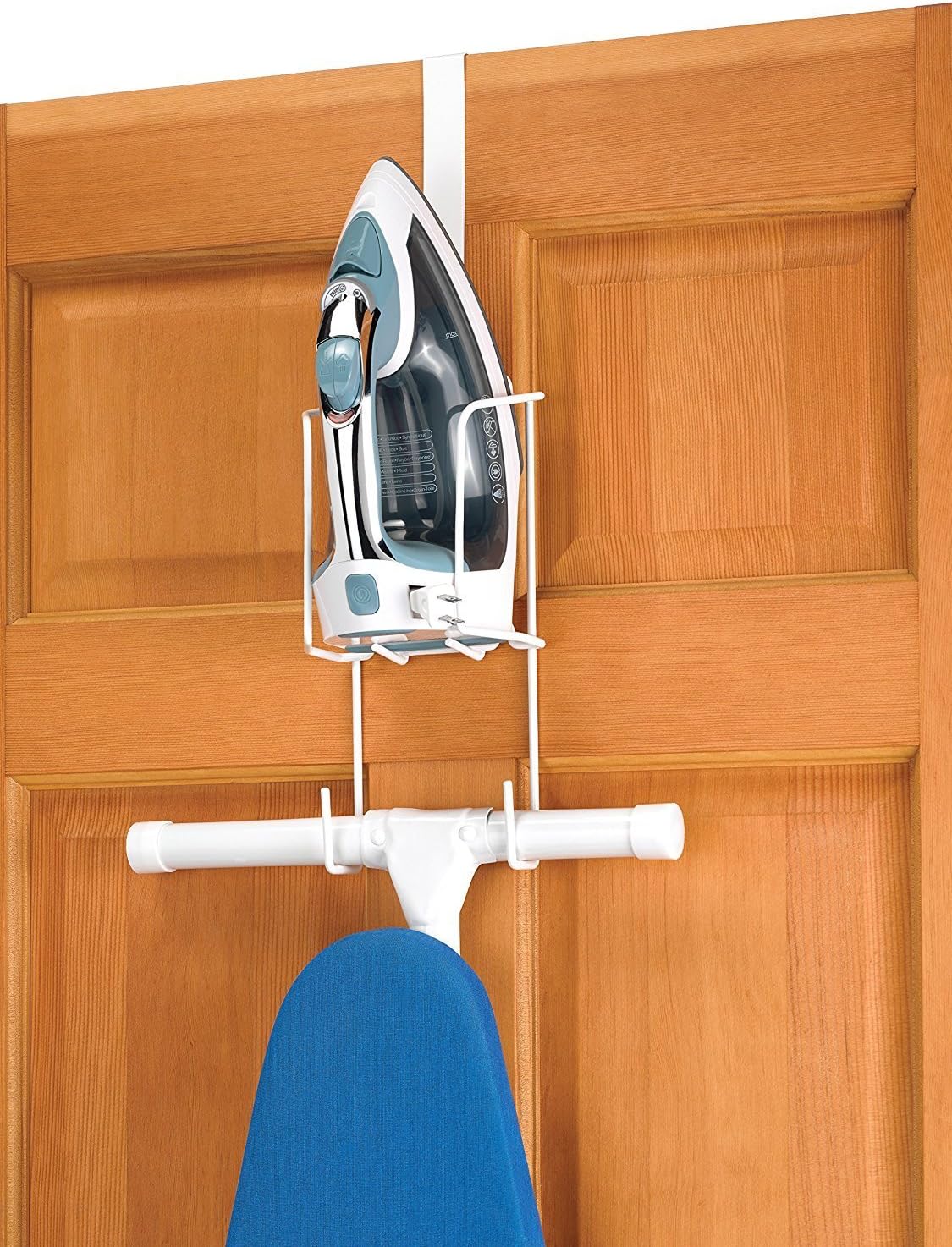
A craft project can reveal a dirty iron at the worst moment: after the carefully cut piece is already on the board. A mark on the soleplate, residue that drags, or particles from the steam system should be resolved before they reach a fabric you cannot replace. Turning up the heat and pressing harder is not a cleaning plan.
Begin by identifying the iron and the kind of problem. Surface cleaning, internal scale maintenance, and a damaged soleplate are different jobs. Use the exact model’s instructions, allow the appliance to cool as directed, and keep valuable project pieces away until you have completed the approved process and a suitable preliminary check.
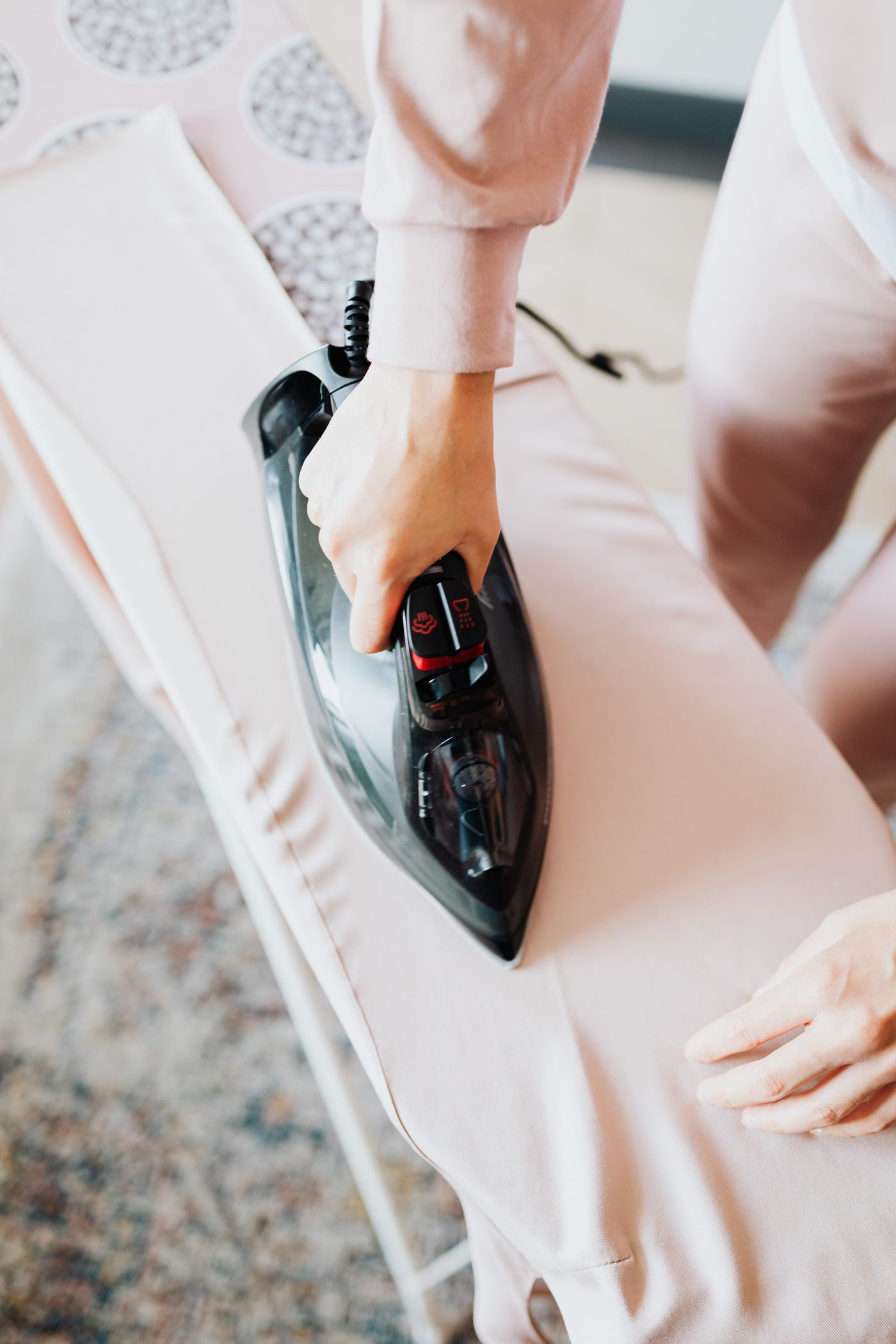
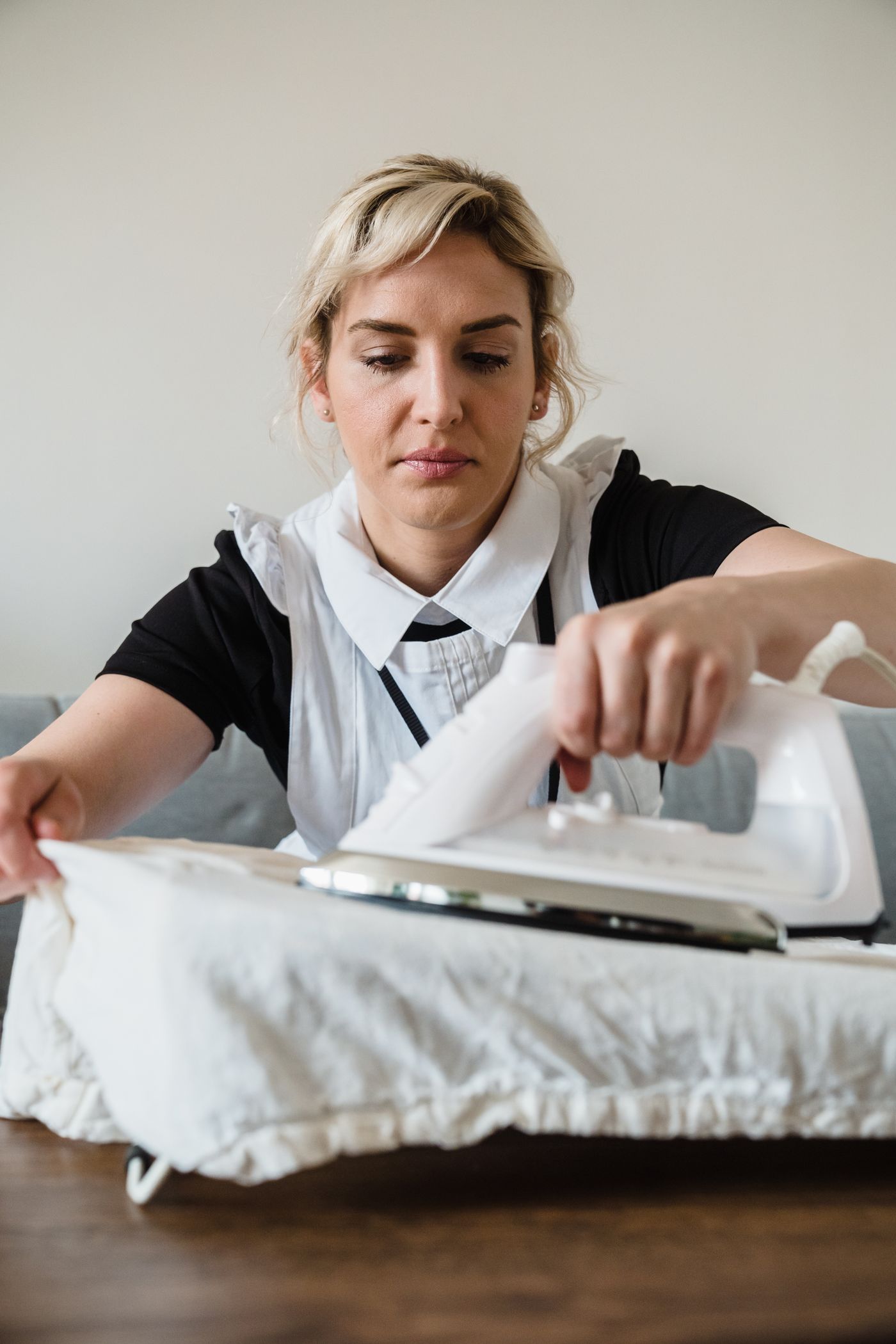
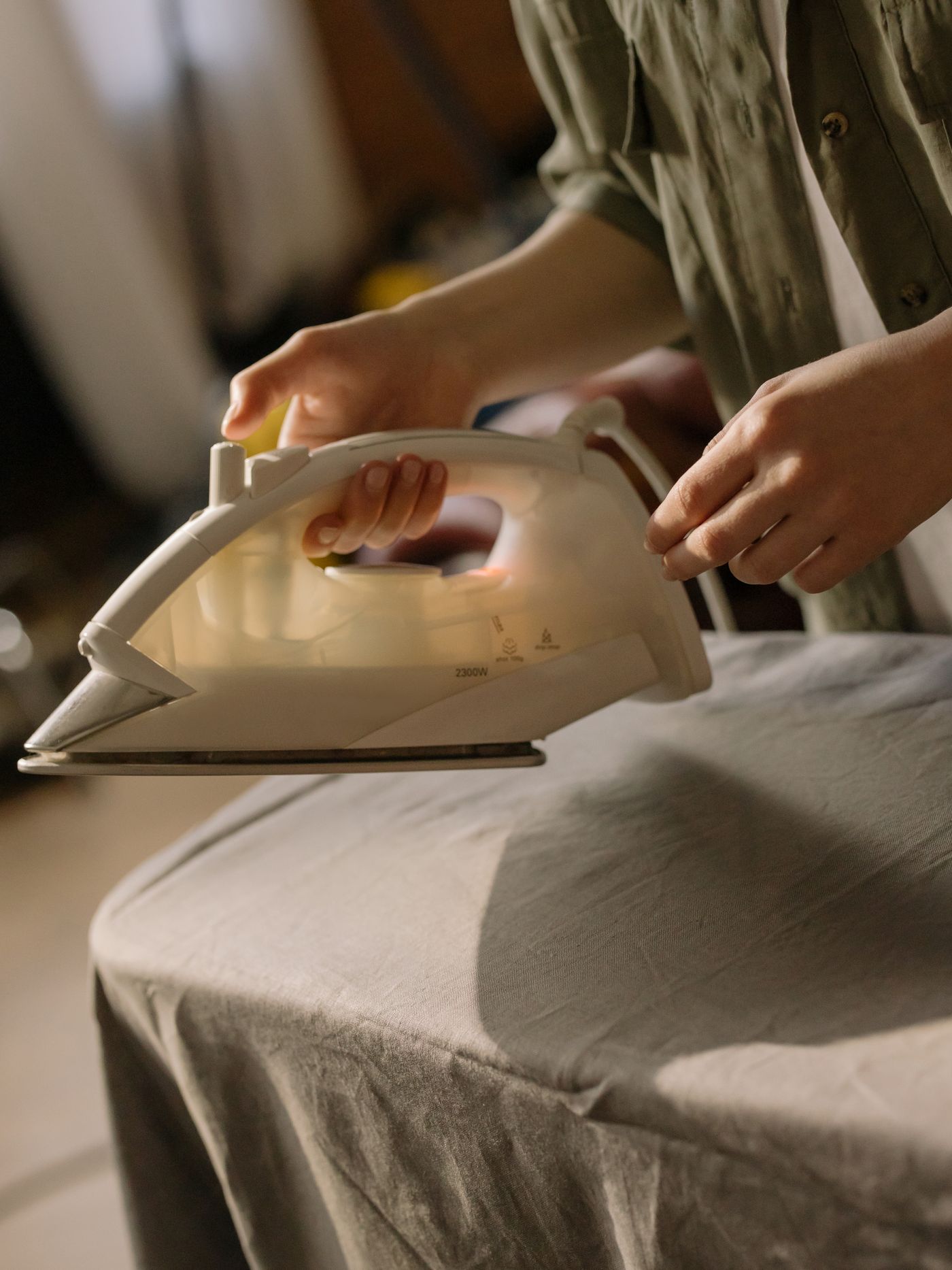
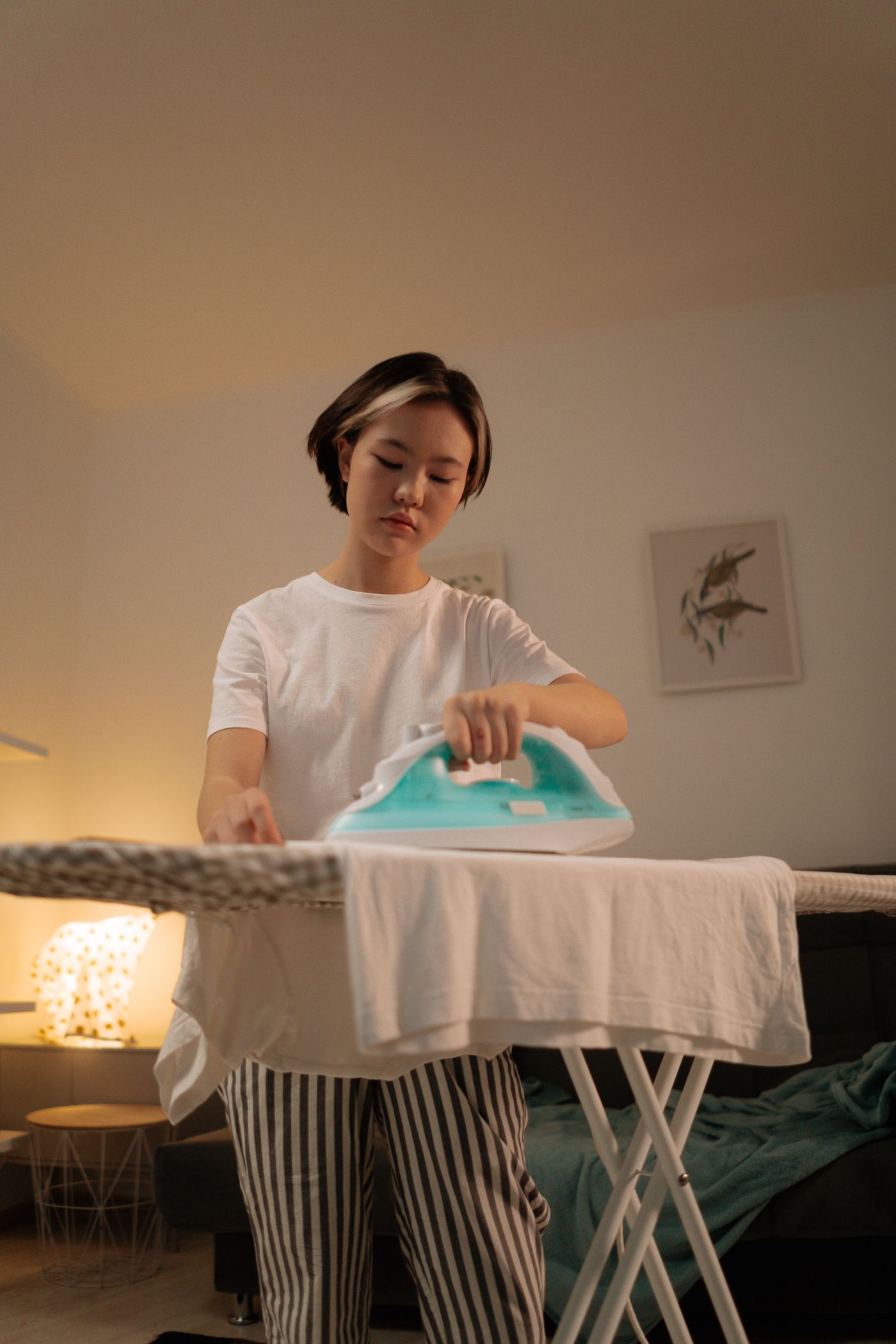
Pinterest’s fall 2026 report features hands-on hobbies. This article addresses one maintenance task that can support textile projects at home; it does not claim that a particular iron or cleaning technique is a current search trend. The photos show ironing contexts rather than demonstrations of the cleaning procedure.
Find the model instructions before treating the soleplate
Locate the manufacturer’s model reference on the appliance or retained paperwork and retrieve its care instructions. Record the source so you can return to it. Similar-looking irons may have different coatings, steam systems, cooling requirements, and approved cleaning methods, even within one brand.
Read the maintenance section rather than relying on a short retailer description. Identify the directions for external surfaces, soleplate cleaning, and internal steam or anti-scale maintenance. If a recommended method refers to a particular accessory or setting, verify it applies to your exact model before using it.
As a specific example, Rowenta’s care-and-use page describes unplugging and allowing the iron to cool before wiping the cooled soleplate with a damp cloth or sponge, without detergent or sharp abrasive accessories. That example is not a universal instruction for every iron. The model manual governs your appliance.
Choose a time when the board can remain unavailable through the necessary cooling and drying periods. Our laundry folding-surface comparison can help you avoid turning the only usable household surface into a maintenance area during a busy changeover.
Separate an outside deposit from an internal steam problem
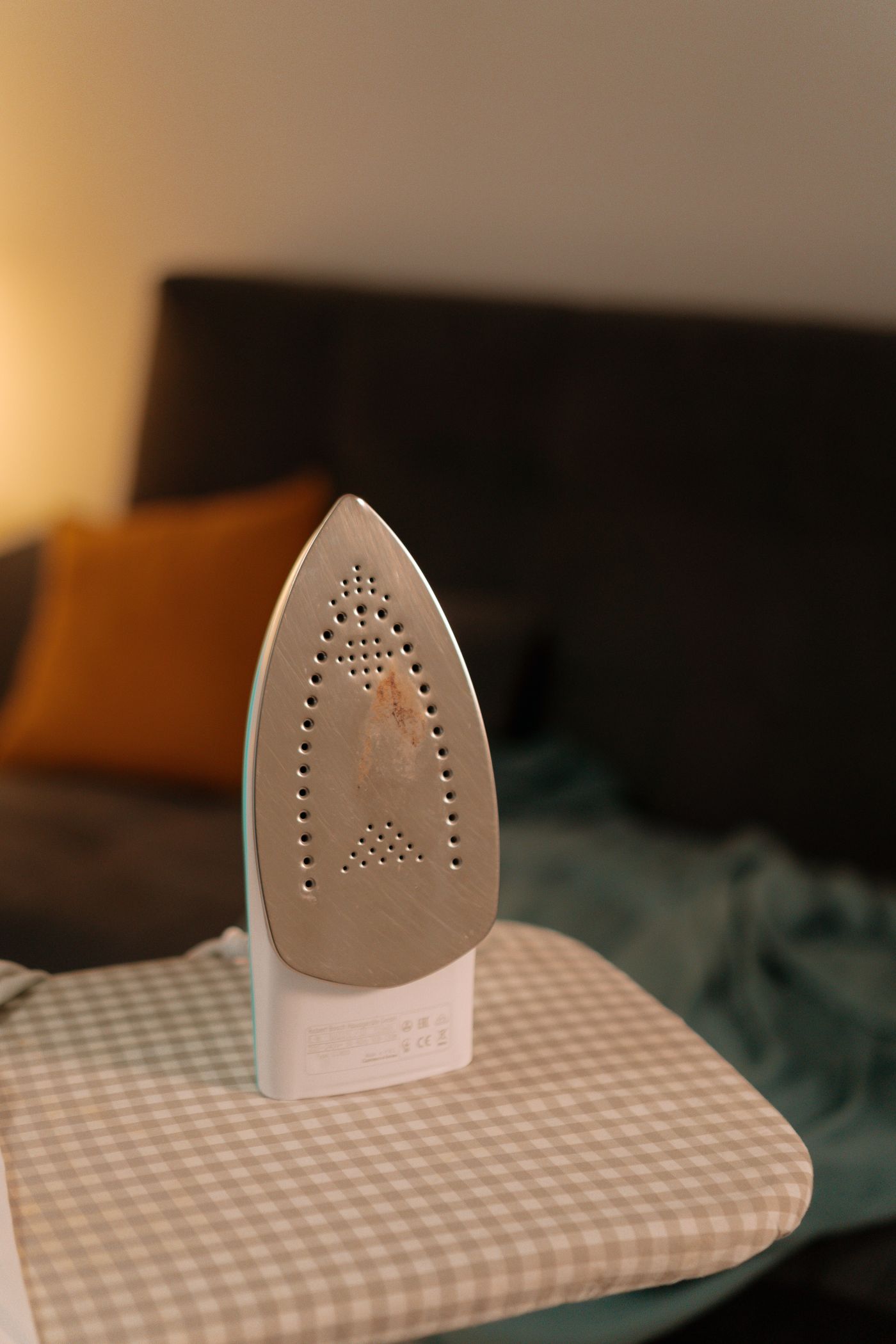
Look at the unplugged, cooled appliance under good light, following its handling instructions. Note visible residue on the soleplate, damage to the coating, and any unusual marks around the steam openings. Do not pick at holes with a sharp object or scrape the surface to discover what lies underneath.
A deposit on the face may be relevant to the soleplate-cleaning procedure. White particles released during steaming may require the separate anti-scale process. A damaged coating, leaking appliance, or damaged cord belongs with the manufacturer’s support or service guidance. Surface cleaning should not be used to explain away a potentially different problem.
Describe the observation plainly if you need help: where the mark sits, when it appeared, and whether a material transferred during a known pressing mistake. Avoid diagnosing the cause only from color. Brown residue is not automatically one substance, and a photograph may not reveal the state of a coating.
If the manual is missing or the procedure remains unclear, pause the pressing task. A different clean, appropriate appliance or a delayed project is preferable to experimenting on both the iron and a finished fabric piece. Keep the uncertain iron identified so another household member does not use it unaware.
Prepare a restrained cleaning setup
Clear away pattern paper, loose textile pieces, adhesives, and household cleaning products that are not part of the approved method. Keep the unplugged iron on a stable surface in the position required by its instructions. Do not assume automatic shutoff makes an appliance ready to touch or clean.
Prepare only the cloth, sponge, or manufacturer-approved accessory required for the model. Check that it is clean and free from earlier cleaning products. A cloth that previously wiped a bathroom surface or received furniture polish should not become an iron-cleaning cloth simply because it feels soft.
Keep water away from electrical parts as instructed. Do not immerse the iron or place it beneath a running tap unless the exact product instructions explicitly require a removable component to be handled that way. A removable anti-scale part and the assembled electrical appliance are different things.
Use a dedicated, suitable cloth routine rather than pulling from an unknown pile. Our separation system for cleaning cloths helps prevent a small maintenance task from mixing incompatible tools and residues.
Complete the approved soleplate method without adding home remedies
Follow the model’s sequence, including its temperature, cooling, moisture, and cleaning-product limits. Work with controlled pressure. If ordinary permitted wiping does not remove the deposit, stop at that limit and consult the manufacturer instead of escalating through stronger household mixtures.
Do not treat viral suggestions involving salt, toothpaste, vinegar, baking soda, metal scrapers, or abrasive pads as equivalent to manufacturer instructions. A method used on one uncoated surface may damage another construction. “Natural” describes neither compatibility nor performance on a soleplate coating.
For Rowenta’s cited cooled-soleplate procedure, the page specifically rules out detergent and sharp, abrasive cleaning accessories. Keep that guidance within its stated scope. Other maintenance passages on the same page concern steam stations and model-dependent anti-scale systems; they should not be merged into a new improvised routine.
Check the cloth and the surface as you work so loosened residue is not simply spread elsewhere. Complete any final wiping or drying directed by the manual. A shiny appearance alone does not prove that every substance has been removed or that the appliance’s internal system has been maintained.
Treat scale maintenance as its own procedure
If the model calls for self-cleaning, an anti-scale collector, or a separate flush, read that procedure in full before beginning. It may involve heat, hot discharge, a particular water type, or a specific cooling interval. Do not combine steps from a different iron merely because both have a button labeled “clean.”
Keep other people away from the working area as required by the instructions and use the specified discharge location. Complete the cooling and reassembly steps before returning the appliance to storage. If a component does not seat normally, ask support rather than forcing it into place.
Maintain the written distinction between outside cleaning and internal service. One has not automatically completed the other. This is especially useful in a shared laundry area where a second person might see the clean-looking soleplate and assume the earlier steam issue has also been resolved.
Test suitability before returning to the project
Once the iron is ready for use under its manual, choose a clean spare fabric appropriate to both the appliance settings and the intended project. Use the textile or pattern’s pressing instructions. Inspect for transferred marks and unexpected behavior before placing the iron on a valuable cut piece.
An unknown offcut is not a reliable substitute for the required fabric information. Nor does one successful pass establish that every material or heat setting is safe. If the project uses fusible components, follow their own instructions about protection, temperature, and pressing time rather than inferring them from the ironing result.
Keep the next steps clear in your laundry-supply arrangement, so the project fabric is not placed beside an unresolved cleaning product or a still-warm appliance. Return unrelated folded clothing through your normal laundry sorting system before reopening the craft work.
Store the iron only after the care sequence is finished
Follow the model’s directions for cooling, water removal, cord handling, and storage orientation. Leave enough space that the appliance can be retrieved without dragging the cord through loose fabric. Keep the care reference accessible for the next maintenance check.
A useful finish is a ready appliance with a known maintenance status, plus a project that has passed an appropriate preliminary pressing check. If the original symptom remains, keep the iron out of service and seek support. Protecting the fabric begins with accepting the limits of the cleaning method rather than forcing a fast result.
Explore related household decisions in our Cleaning hub.
Sources and editorial scope
Editorial research checked October 16, 2026. Trend-report dates and limitations are stated in the article; these are editorial applications of published signals, not verified October keyword rankings. Practical household guidance; illustrations do not document a tested household or authenticate a pictured material.