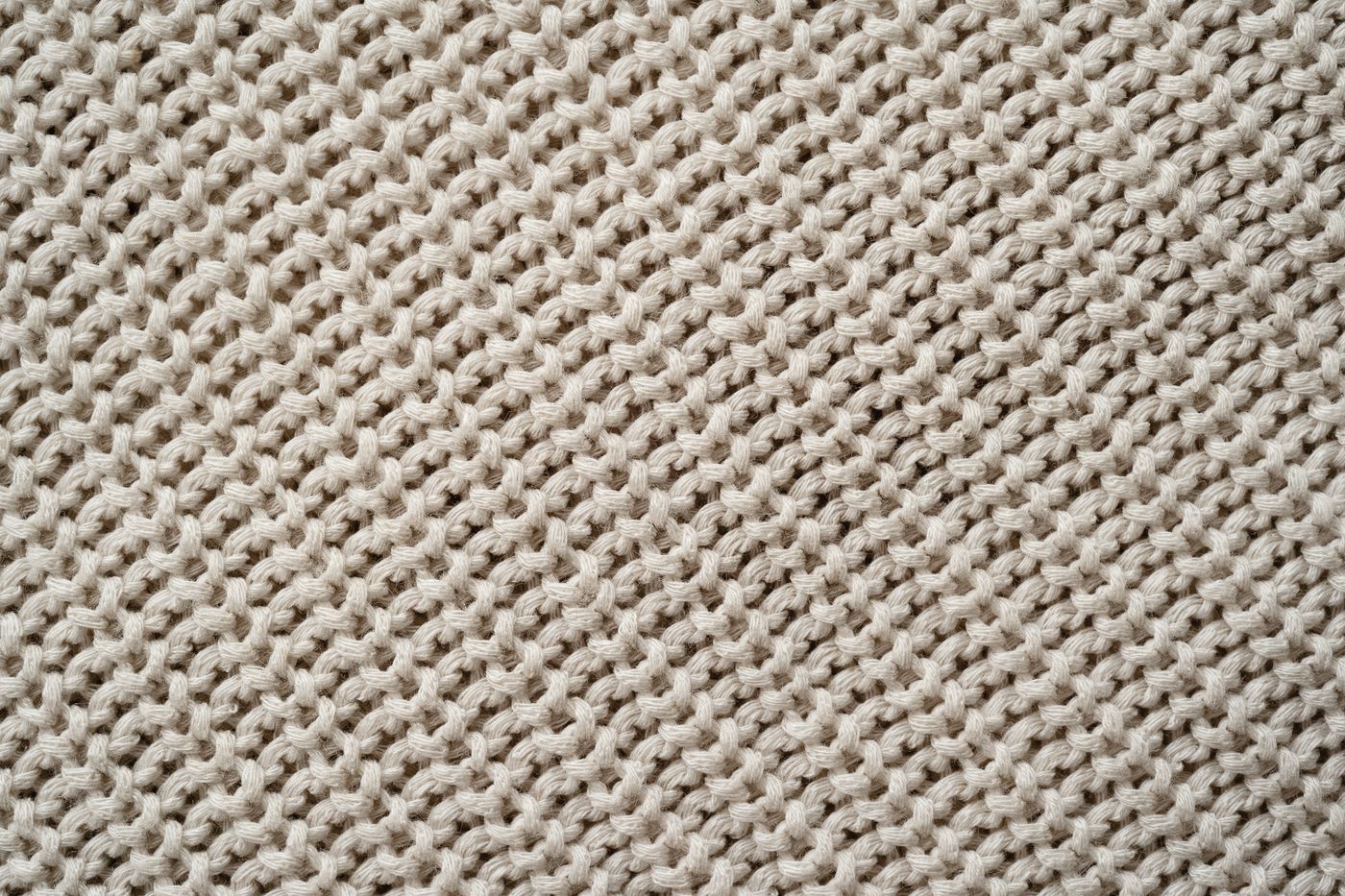
A knitted throw has two identities that matter at wash time: how it is constructed and what it is made from. The visible loops do not tell you whether the fiber is wool, cotton, acrylic, a blend, or something else. They also do not establish that the blanket can tolerate a particular machine cycle.
Houzz’s Fall 2026 report describes a continued interest in warmth and natural texture. Maintaining a throw already in use is one practical response. This guide is about choosing a care route and reserving the space to finish it, especially when a small laundry area cannot hold a large blanket in every possible drying position.
Find the fiber and the care instructions
Read the attached label and locate the exact manufacturer reference if needed. Record the fiber composition and permitted care separately: knowing the fiber is useful, but it does not replace the instructions for the finished item. Trims, mixed materials, and construction details can affect the appropriate process.
If the label is missing, do not treat softness, price, or a chunky appearance as a reliable identification method. Contact the maker where possible or seek suitable textile-care advice. Until the care route is established, avoid a trial wash on the whole blanket simply to find out what happens.
Woolmark’s care guidance is a useful source for understanding wool-care labels and the need to follow the item’s instructions. It is not permission to apply a wool garment routine to every knitted throw. Our lampshade-care guide follows a related decision principle: identify the material and approved method before selecting the cleaner or equipment.
Decide whether this is a home-laundry job
The label may permit machine washing, hand washing, professional care, or another specified route. Choose the actual route before gathering supplies. “Gentle” is not a substitute for an instruction, and a household washer’s named cycle does not automatically meet every textile’s requirements.
Check the washer and dryer guidance as well as the throw’s label. A bulky blanket can exceed what a compact machine can handle appropriately, even when it fits through the door. Consider the equipment’s stated capacity and restrictions for bulky items rather than compressing the throw until the lid closes.
If professional care is required or the home setup is unsuitable, that is a completed decision, not a failure of organization. Keep the throw identified for the chosen service and describe any known stains or damage accurately. Do not pre-treat it with an unknown product just before handing it over to someone who needs to assess the original condition.
Reserve the full drying area
Read the drying instruction before the wash instruction becomes a wet blanket. Flat drying, line drying, and a permitted tumble process require different space and equipment. A rail that holds a dry folded throw may not provide suitable support for the item when wet or for the method on its label.
For flat drying where specified, plan a suitable supported surface large enough for the actual throw without blocking essential household use. Follow the maker’s directions about shape and support. Do not assume that draping a heavy wet knit over a narrow chair back is equivalent to laying it flat.
For permitted tumble drying, verify the allowed conditions and the machine’s suitability. Woolmark advises that tumble drying wool depends on the item’s care claim; a blanket should not inherit permission from another wool product. The laundry-surface comparison helps evaluate shared space, but a bed used for folding is not automatically a safe or practical wet-drying station.
Prepare the throw without making the stain worse
Check the throw for damage, loose decoration, or other features that the care instructions tell you to address. Note the location and likely cause of a mark if known. “Unknown stain” is more useful information than an invented explanation that leads to an inappropriate treatment.
Use only pre-treatment and cleaning products compatible with the actual instructions. Follow their directions, including any required testing, instead of escalating concentration because the textile is bulky. Keep bleach, softener, fragrance products, and improvised mixtures out of the process unless the relevant instructions support their use.
Separate the throw from unrelated clothing until you know the whole load is compatible. The guide to choosing where laundry gets sorted can help move that decision earlier. A decorative blanket should not enter a standard mixed load merely because the laundry basket is finally full.
Follow the permitted wash route completely
For a machine-washable item, use the directions for the throw and the machine together. Check the appropriate settings and loading conditions rather than relying on memory from another blanket. Do not add an extra aggressive cycle or a stronger spin as an unsupported shortcut to reduce drying time.
For a hand-wash instruction, arrange the suitable vessel, products, handling, and water-removal method before beginning. Follow the maker’s directions rather than treating “hand wash” as a generic soak of any length. A large wet throw can be awkward to lift, so plan appropriate support and help without pulling on a single edge.
If the verified process cannot be completed with the equipment and space available, pause before wetting the item. An alternative suitable care service can be simpler than a room occupied by an improperly supported blanket. Home care is worthwhile only when the whole process, including the end, can be carried out appropriately.

Handle the wet knit according to its needs
Support the item as its instructions require when moving it to the drying arrangement. Avoid carrying a heavy wet throw by one corner or treating wringing as a universal water-removal method. Wet handling is part of care, not merely the trip between the sink and the place you hope it will dry.
If the maker calls for reshaping, follow that guidance without stretching the blanket to an invented target size. Keep any original dimensions or product reference available where useful. A decorative photograph is not a measurement standard, and the appearance of another throw cannot tell you how this one should be handled.
Keep the drying setup away from unsupported heat sources and other conditions the label does not permit. Check that ordinary room use will not disturb it or bring children and pets into unsuitable contact with wet textiles or equipment. Plan a clear route through the laundry area rather than balancing the item wherever a gap remains.
Confirm readiness before returning it to use
Finish the stated drying process and check the whole throw, including thicker edges, folds, and any permitted support contact points. Do not fold a still-damp section into the center and store the bundle because the outside feels dry. The item should reach the condition required for its intended return or storage.
Assess any remaining mark or visible change honestly. Washing does not prove disinfection, fiber restoration, or recovery of a damaged knit. If a concern remains, record it and choose appropriate advice rather than automatically repeating the same process with more heat or a stronger cleaning product.
For stored textiles, the ready-condition approach to household linen helps distinguish a clean usable item from one awaiting another decision. Keep the throw’s care reference linked to it, especially if several similar blankets have different labels. Nobody should need to reconstruct the fiber composition from the color of the storage shelf.
Choose the next throw with its care footprint in mind
If a replacement eventually becomes necessary, compare care requirements before choosing a chunky texture or seasonal color. Consider the home’s actual washer, available drying area, and willingness to use professional care. A smaller or differently constructed throw may fit the household better even if a product photograph makes the largest option look inviting.
Keep a working throw when its care and condition still suit you. The useful outcome is a textile that returns comfortably to ordinary use after an appropriate complete process. A label-led plan preserves that option without assuming every knitted blanket behaves alike or asking a small laundry area to provide drying space it does not have.
Explore related decisions in our Cleaning hub.
Sources and editorial scope
Editorial research checked October 20, 2026. Published trend reports are context for these editorial applications, not verified live keyword rankings. Practical household guidance; photographs do not document a tested household or authenticate pictured materials.