If children can take something out but cannot realistically put it back, adults become the permanent reset system.
A child-friendly home does not need to be decorated like a classroom. It needs storage that matches the child’s reach, decision skills, and daily routines.
Start with the put-away test
Choose one category—shoes, books, toys, school bag, pajamas—and ask:
Can the child return this item without opening a difficult lid, reaching above their head, sorting through several categories, or asking an adult where it goes? You may also find How to Declutter a Small Home When You Don’t Know Where to Start useful for a closely related small-home problem.
If not, simplify the system.
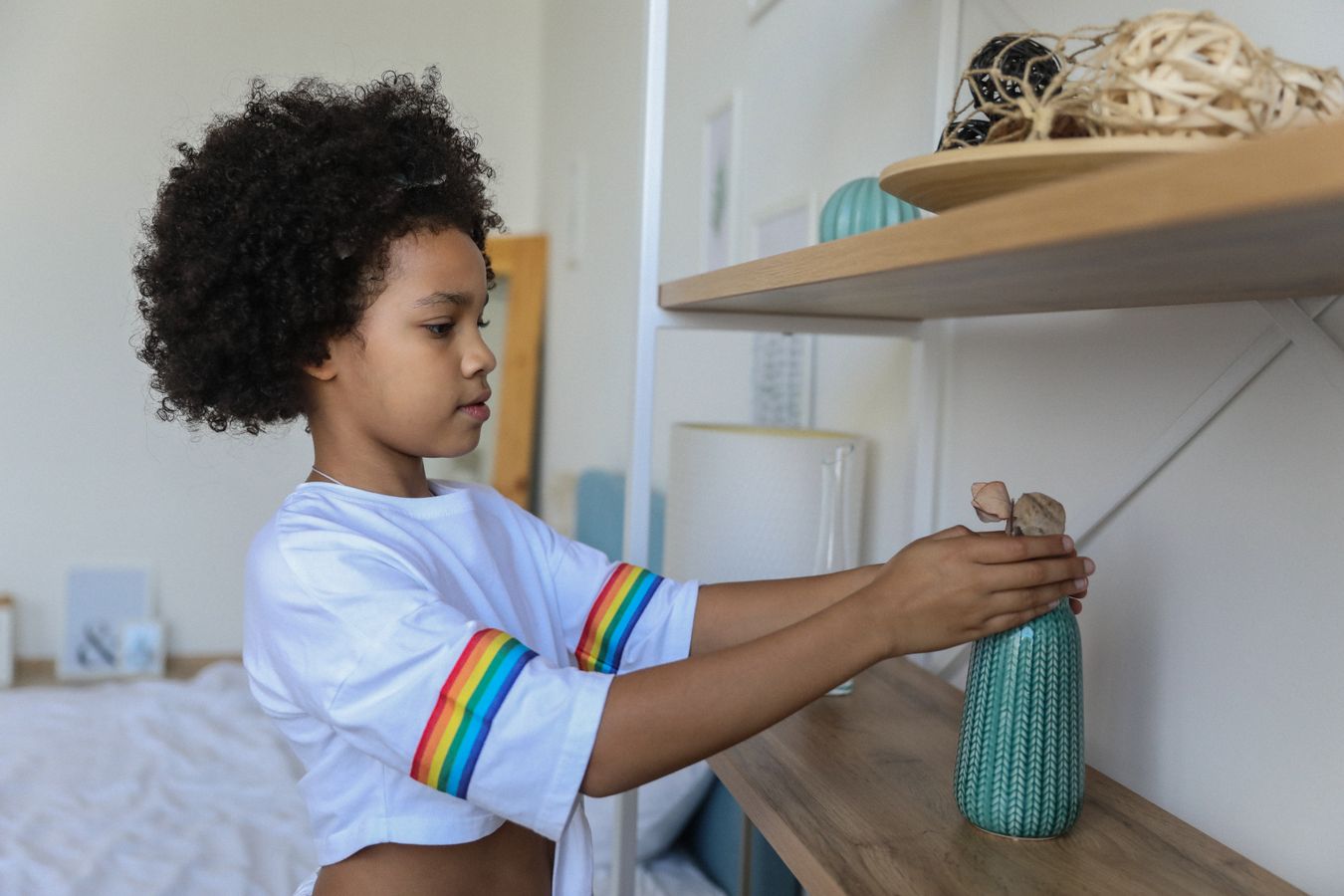
Put daily storage at child height
Current shoes, backpack, jacket, favorite books, everyday clothes, and active toys should live where the child can reach them safely.
Adult-managed or low-frequency items can stay higher.
Use broad categories before detailed labels
“Blocks,” “cars,” “art,” “books,” and “stuffed animals” are easier than tiny subcategories. The same applies to clothes: “tops,” “bottoms,” “pajamas,” and “underwear” may work better than highly specific drawer divisions.
Use pictures for pre-readers
Simple image labels can help younger children identify where categories belong. But the storage should still make sense without the label. For a related step-by-step approach, see A Simple Weekly Home Reset for Busy Families.
Make the container easier than the floor
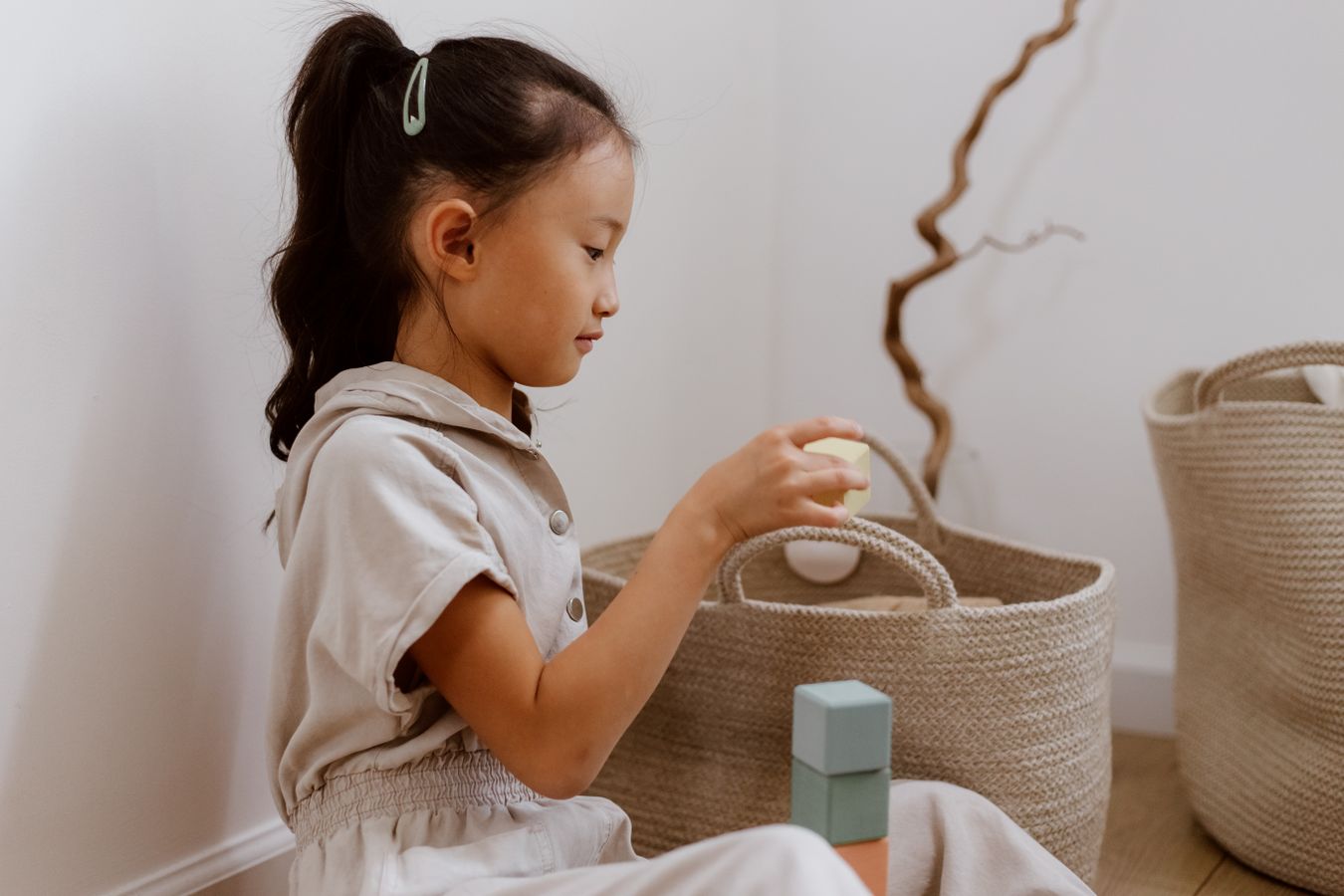
If a toy bin has a heavy lid or a narrow opening, the floor is easier. Use open bins or easy drawers for high-frequency child-managed categories.
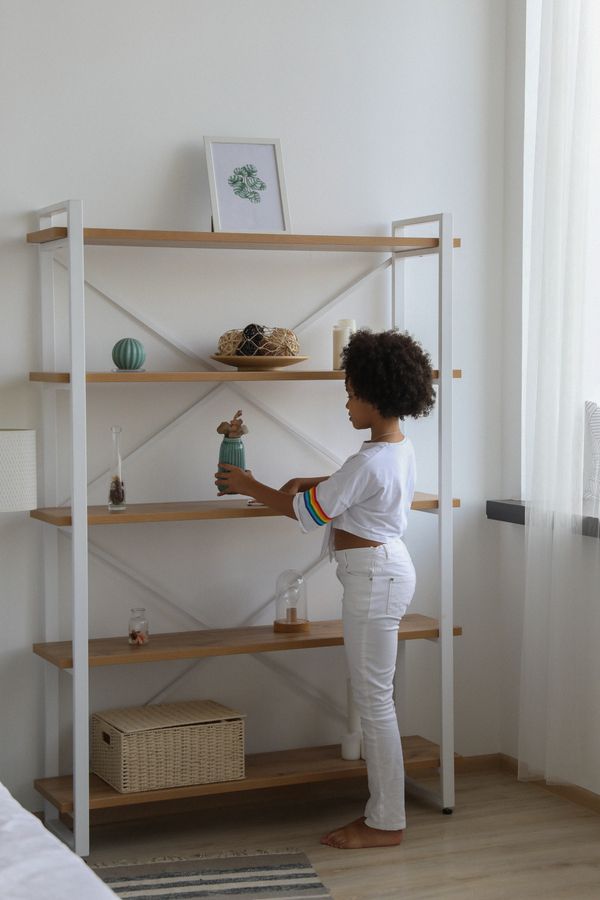
Give backpacks and shoes a one-step home
A low hook, cubby, bench shelf, or defined mat makes arrival easier. The entryway should require one action, not a sequence of opening closets and moving hangers.
Keep active clothing volume realistic
A child cannot put clothes away when drawers are already packed. Leave room for the category to return after laundry day. For the broader setup, A Room-by-Room Organization Plan for a Small Home is a useful next read.
If clean clothes constantly sit in baskets, the issue may be capacity rather than motivation.
Create “yes spaces” for personal collections
Children often want to keep drawings, tiny treasures, stickers, rocks, or small toys. Give the collection one defined box or shelf. When it is full, the child chooses what stays. For a related step-by-step approach, see What to Get Rid of First When Your Small Home Feels Too Full.
This teaches capacity without turning every object into an argument.
Teach one reset at a time
Do not introduce a ten-step bedroom routine in one day. Start with:
- shoes home,
- dirty clothes hamper,
- books shelf.
When those are automatic, add toys or school gear.
Make cleanup visible and short
Try a five-minute reset before dinner or bedtime. A timer can help, but the system matters more than speed.
If one child cannot finish one category in five minutes, there may be too many active items.
Do not make children maintain adult-level visual systems
Matching baskets, hidden labels, and perfectly folded stacks may look good but require adult labor. Child-managed storage should optimize for return, not display.
Use natural consequences of capacity
When the shelf is full, do not add a second shelf immediately. Review the category together.
Ask, “Which books do you want in your easy-reach shelf now?” rather than “Which books should we get rid of?”
Safety matters more than independence
Do not place tempting child belongings high on unsecured furniture. Follow manufacturer instructions and CPSC guidance for anchoring appropriate furniture and TVs.
A child-friendly room checklist
- ☐ daily items in reach,
- ☐ broad categories,
- ☐ easy-open storage,
- ☐ drawers not overfilled,
- ☐ one personal collection boundary,
- ☐ short reset cue,
- ☐ heavy/tall furniture secured appropriately.
Use the same system across the home
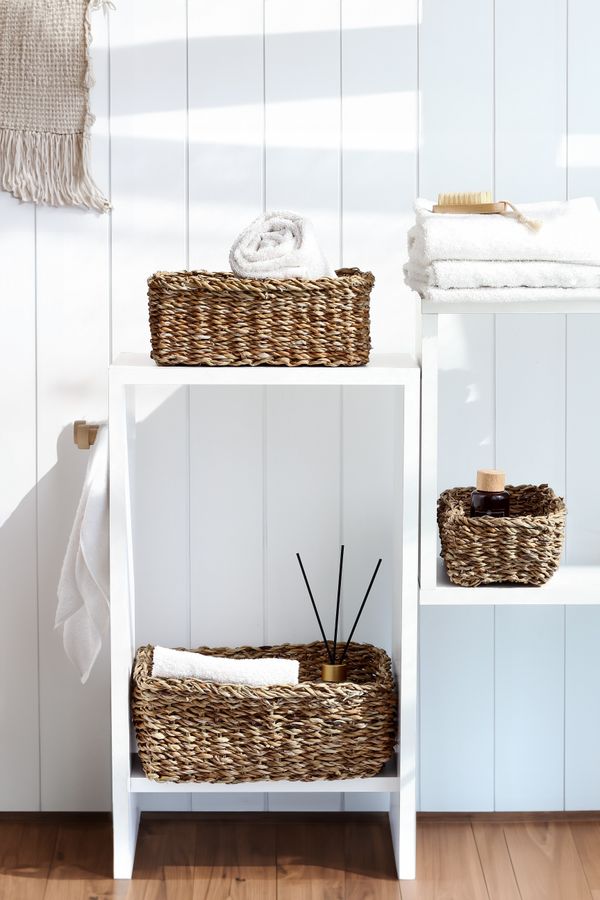
Entryway: low hook and shoe spot. Bedroom: hamper and clothing zones. Living room: broad toy bins. Bathroom: reachable towel hook. Kitchen: child cups or lunch gear in a safe accessible zone if appropriate.
Consistency reduces the number of rules children have to remember.
Frequently asked questions
At what age can kids put things away?
Children can participate at different levels depending on age and development. Start with simple one-step returns and adult guidance rather than expecting independent whole-room cleaning.
Should every bin have a label?
No. Labels help when they clarify a category, but the physical system should be simple enough to understand without constant reading.
What if kids mix categories?
That is often a sign categories are too detailed. Combine bins until cleanup becomes easy enough to repeat.
Independence grows from easier systems
Children are more likely to put things away when the home asks for fewer decisions: one hook, one hamper, one broad toy bin, one book shelf, one shoe spot.
Make returning an item easier than abandoning it, and the organization system starts working with the family instead of depending on one adult to restore everything.
Sources
- Anchor It! — U.S. Consumer Product Safety Commission — https://www.cpsc.gov/Safety-Education/Safety-Education-Centers/AnchorItgov