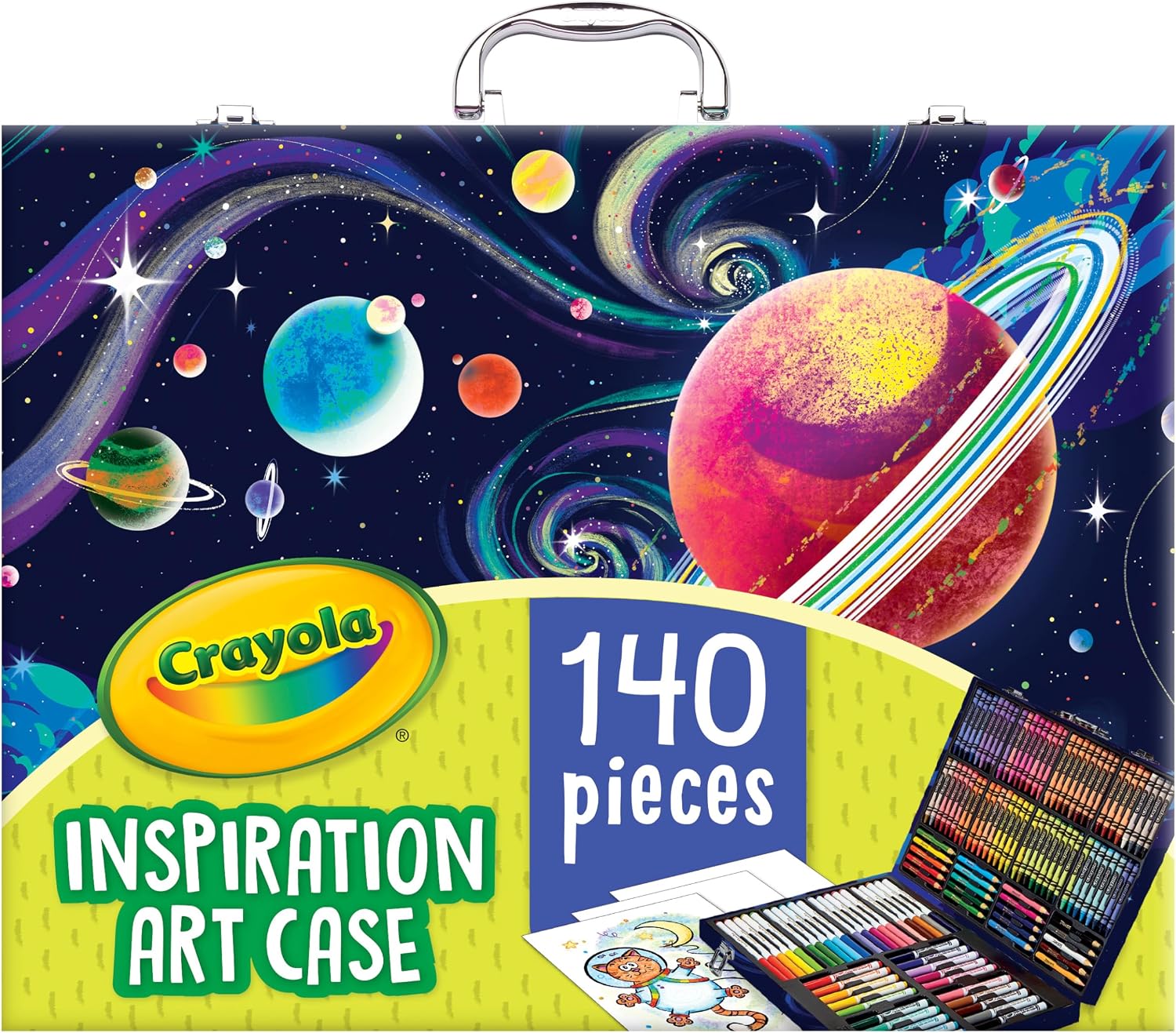
The appealing part of a children’s art case is not its piece count. It is the possibility that a drawing session can leave the table when dinner starts. Crayola’s space-themed Inspiration Art Case combines familiar coloring materials with fitted storage. That can help a beginner, but a full case may also duplicate supplies already scattered through a small home. Start by deciding whether you need materials, a carrying system or both. You may also find Melissa & Doug Tabletop Easel Review: A Small Art Station With a Table-Space Cost useful for a closely related small-home problem.
This is a research-based review of the linked product, not a hands-on test. Product photographs come from its Amazon listing. Price, seller, stock and selected options can change.
A starter kit and a storage box are different purchases
Empty your existing crayon and marker containers onto a protected surface before ordering. If the useful materials already cover ordinary drawing, another complete kit may increase the cleanup burden. If the child has only a few worn supplies, an organized starter set can be more coherent than buying several separate packs. The Crayola case is strongest in that second situation. Be specific about the gap it fills. A storage problem does not automatically require more art materials, and a large number on the package does not tell you how much your child will actually use.
What is included in this listing
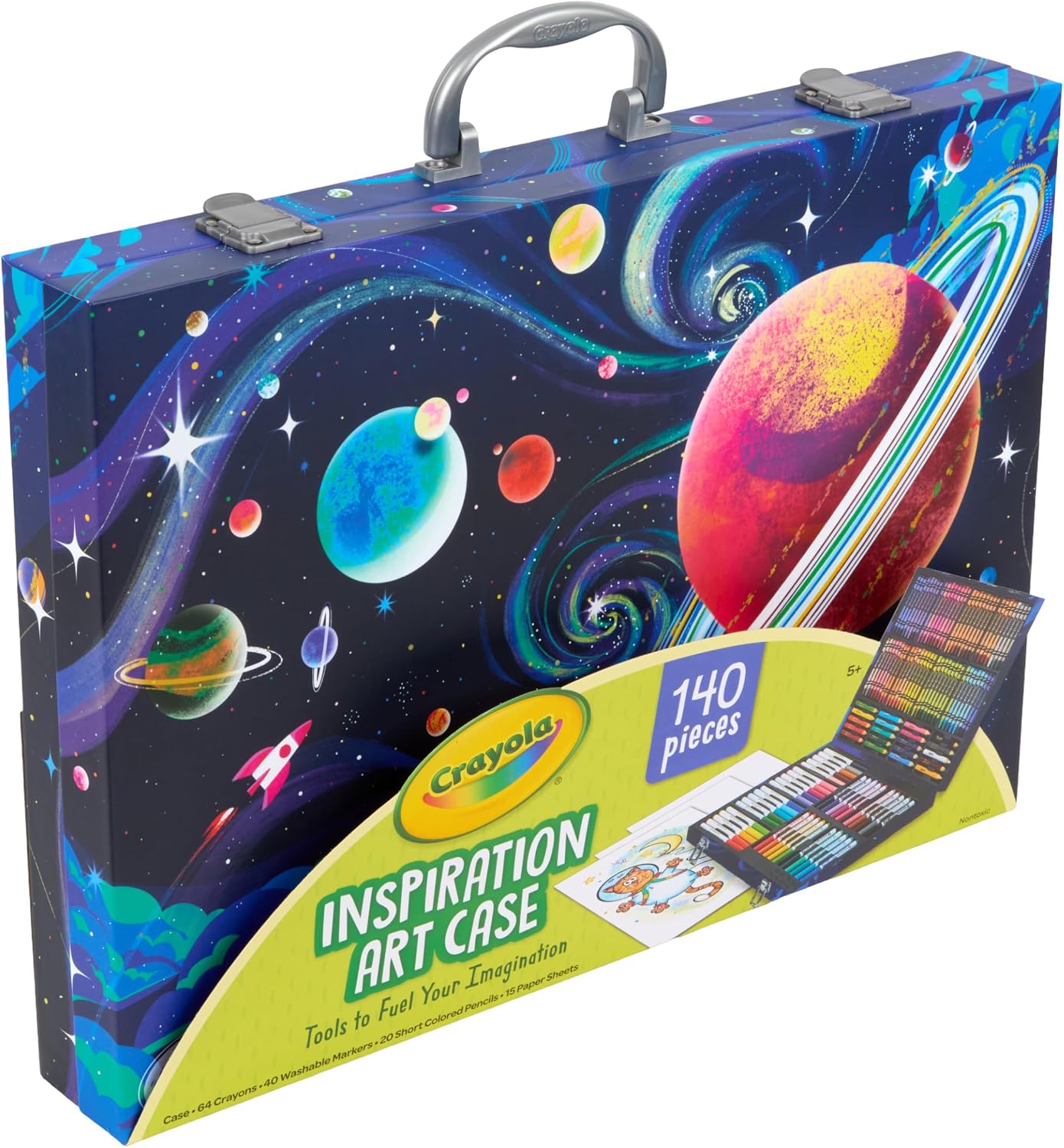
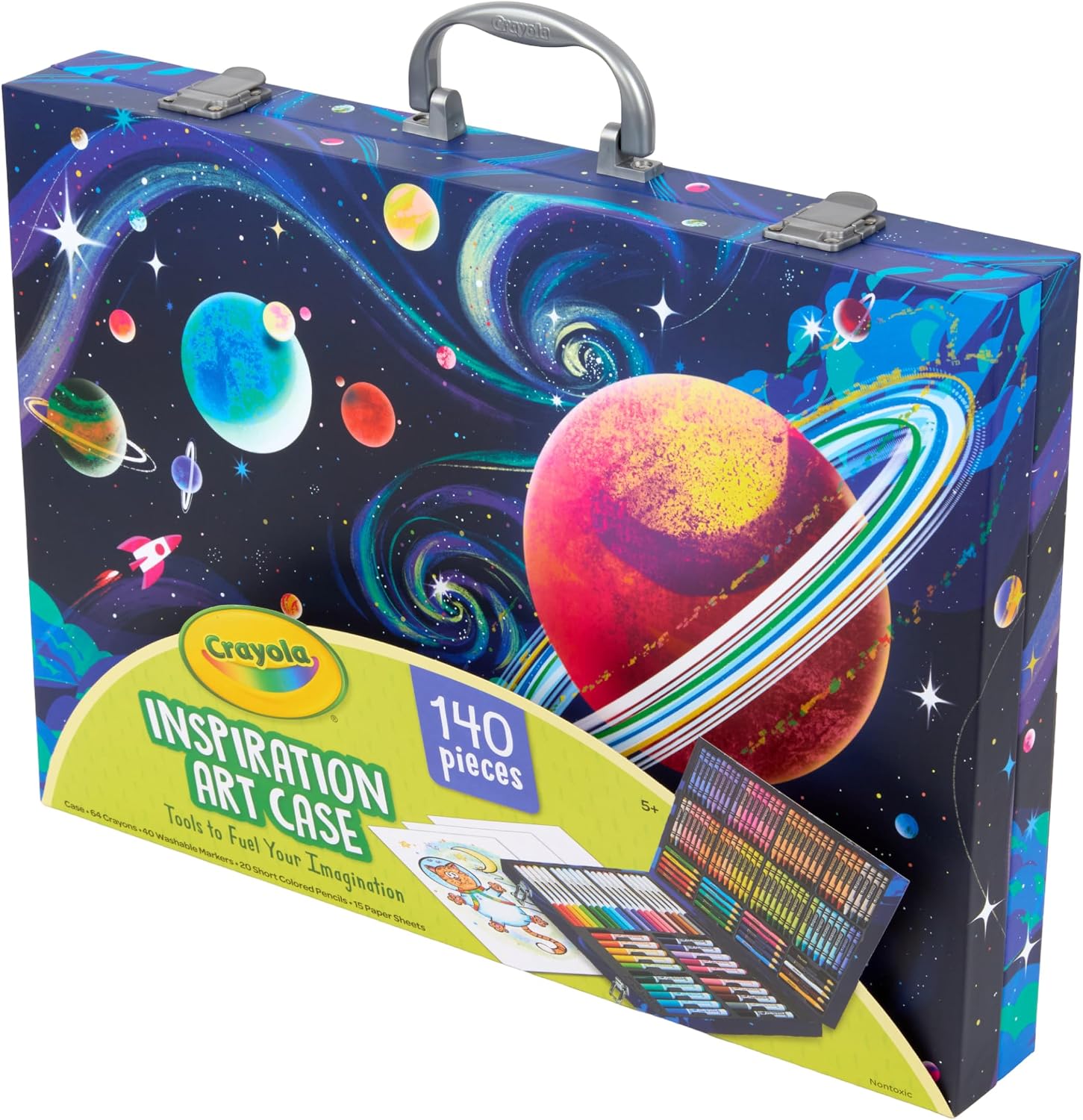
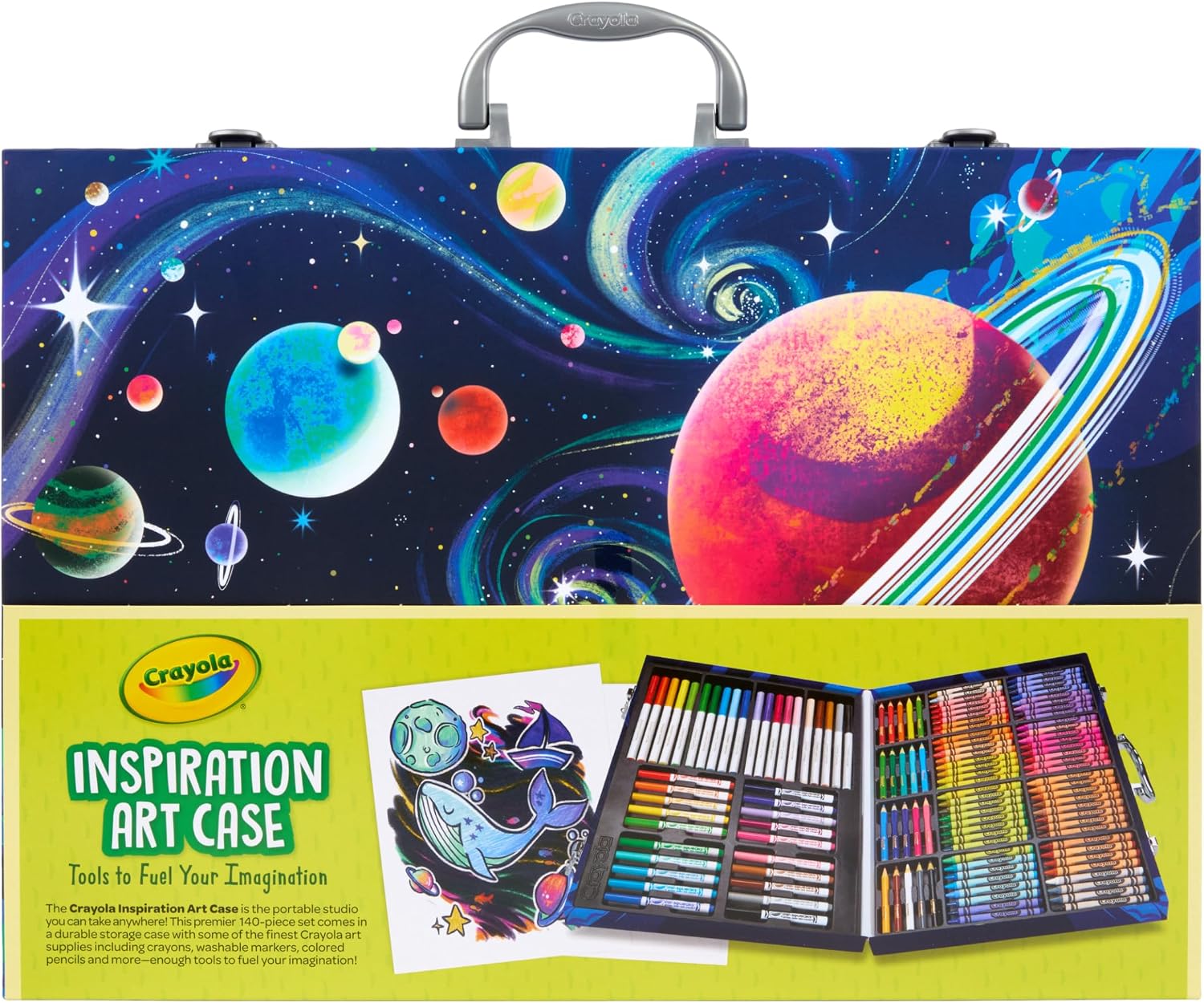
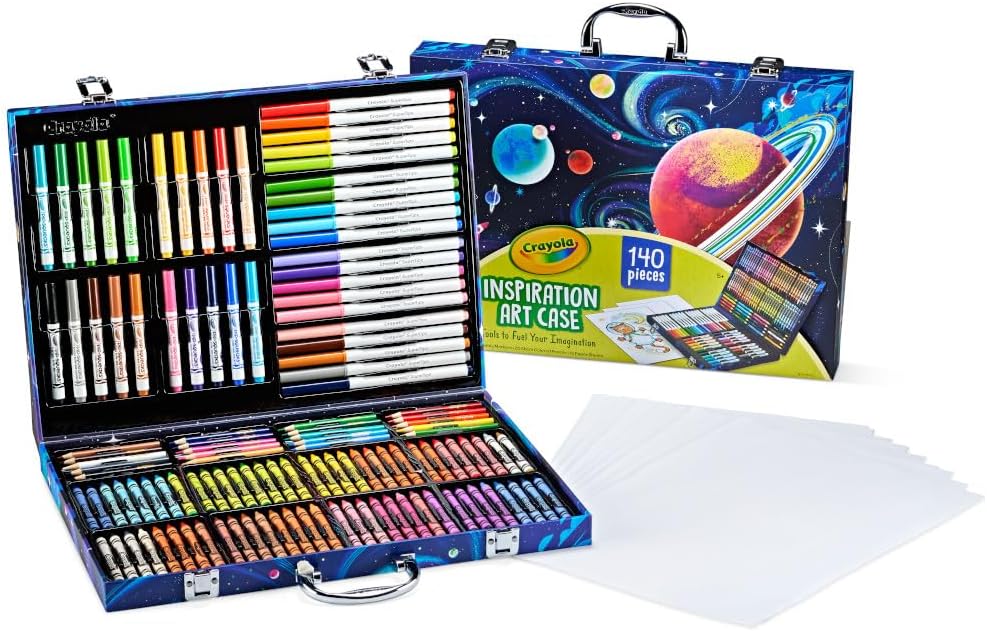
The linked space-themed set lists 64 crayons, 40 washable markers, 20 short colored pencils, 15 drawing sheets and the case. The count includes different kinds of items, so it should not be read as 140 distinct colors or tools. Confirm the current package and age guidance before purchase. Crayola sells multiple case designs and related sets, and photographs can make them look similar. This review concerns the specified space-themed listing. It is a coloring and drawing assortment, not a comprehensive kit for every craft a school project might require.
Measure the open case, not just the shelf
A closed carrying case can slide neatly onto a shelf while its open form occupies a substantial part of a small table. Allow room for paper in front of it and for a child’s elbows. If siblings work together, check whether both can reach without leaning across each other’s drawing. You do not need exact furniture blueprints: use folded cardboard to represent an open case and try an ordinary seating arrangement. The useful question is whether the kit supports drawing where it will actually happen, not whether it fits a cupboard while unused. If you are working on the same space, A Not-Too-Scary Halloween Paper Garland for a Kids’ Room covers the next decision in more detail.
Compartments can make cleanup more obvious
Fitted positions show where supplies belong and can make gaps visible. That is helpful when a child enjoys matching objects to a place. For another child, returning every pencil to a precise slot may be frustrating and slower than dropping crayons into a cup. Observe their existing habits rather than assuming one system teaches organization better. A simple finish routine can be enough: cap markers, return the tools, close the case and clear the paper. Avoid turning each drawing session into a perfect inventory exercise that makes creative time feel like a test. If you are working on the same space, Melissa & Doug Water Wow! Review: Reusable Quiet Time With Clear Limits covers the next decision in more detail.
The marker-cap check matters more than color order
When cleanup time is short, prioritize usable supplies over a perfectly arranged rainbow. Make sure marker caps are properly replaced and obvious debris is removed before the case closes. Follow the manufacturer’s guidance for the materials. Young children may need help with caps and latches even when they enjoy choosing colors independently. Assign that help realistically instead of buying a system that assumes total independence from day one. The case can support a routine, but it cannot perform the final check that keeps the contents ready for the next session.
Washable does not mean every surface is protected
Use the art materials according to their packaging, and protect the drawing surface appropriately. Do not assume a washable claim guarantees removal from every wall finish, textile or piece of furniture. Keep creative activity on a suitable surface and address marks using the relevant product and material care instructions. We have not conducted stain-removal tests. If the family table has a delicate finish, choose protection that you already know is suitable. A contained kit reduces the spread of supplies; it does not remove the need to plan where drawing happens.
Paper needs its own return path
Included sheets are a starting quantity, not a permanent paper supply. Decide where fresh paper and unfinished drawings will live once the first sheets are used. A slim folder can keep work flat without forcing it into a crowded case. Resist adding a large paper sorter unless the actual volume requires one. Finished pictures need a simple decision too: display, keep a small selection or recycle where appropriate. Otherwise the art case will close neatly while a growing stack of projects becomes the new source of clutter on the shared table.
Sharing one case with siblings
One case can be a shared resource, but it may be awkward if both children want the same color or work in different rooms. Try setting out only the materials needed for the current activity while keeping responsibility for returning them clear. Do not buy two complete kits automatically to solve a temporary argument over a marker. A small shared set and a few individual favorite tools may work better. On the other hand, if each child regularly takes supplies elsewhere, separate modest containers may make ownership and cleanup easier than one elaborate central case.
Refills are the long-term storage test
Crayons wear down, pencils shorten and markers eventually need replacement. Replacement items may not match the original slot shape, even when the brand is familiar. Check whether the case remains useful when the first assortment is no longer complete. A flexible divided box can be easier to refill; a fitted case can be clearer when the supplied tools stay together. Neither is inherently superior. Buy for the likely life of the storage system, not only the first unboxing. Keep replacement purchases tied to materials the child actually uses most often.
Travel use is not the same as table use
A handle and latches make carrying possible, but they do not establish that the case will be comfortable on a lap in every seat. Think about the open footprint, loose paper and dropped tools before treating it as a travel solution. For a short outing, a small pouch with a few chosen colors may be more manageable. For a visit where a table is available, the full case may be convenient. Choose the amount of equipment that suits the setting rather than carrying the whole collection simply because it has a handle.
A gift should include a place to live
Before gifting a large art assortment, consider the recipient’s age, interests and available storage. The most useful addition may be a clear shelf position and a supply of suitable paper rather than extra accessories. Avoid assuming every child who likes drawing wants a large variety at once. Some prefer a small familiar selection. If this is for your household, identify its storage place before opening the package. A case placed on the floor because no shelf fits it has not solved the small-room problem, however attractive the contents may be.
Judge success after an ordinary drawing session
Let the child use the kit for the kind of drawing they already enjoy. Notice whether materials are accessible, whether the open case crowds the paper and whether closing it is manageable. Help where necessary, then evaluate the routine after several uses. We have not assessed pigment quality or latch durability through physical testing. Your practical question is simpler: does the kit make starting and finishing art time easier? If it adds complexity while duplicating existing materials, a smaller selection in a simpler container is a better answer for the room.
Choose by the job, not the product count
| Your situation | Better starting point | Reason |
|---|---|---|
| Few supplies and a clear shelf available | Crayola case | Materials and storage arrive together |
| Many usable supplies already owned | Divided box for existing tools | Avoids duplicates |
| Short outings or a very small surface | Small pouch and selected colors | Less equipment to spread out |
Amazon product and current listing
Check Crayola Inspiration Art Case, 140-piece space theme on Amazon. Confirm the exact variant, seller, delivered price and return terms before ordering. This link identifies ASIN B00CI6J5JQ; it does not guarantee an offer is currently available.
Our buying decision
Choose the Inspiration Art Case as a starter assortment when the child enjoys the materials and the open case fits the drawing area. Skip the complete kit if you mainly need to organize supplies you already own. Its real value is a manageable start-and-finish routine, not the largest possible piece count. For the broader setup, How to Organize Kids’ Art Supplies in a Small Home Without Creating a Craft Explosion is a useful next read.
Continue with Kids Room ideas and our Buying Guides. For the surrounding routine, read How to Organize Kids’ Art Supplies in a Small Home Without Creating a Permanent Craft Room.
Sources and review scope
We checked the specific Amazon listing for product identity and listed features. The room scenarios and purchase comparisons above are editorial analysis. We have not measured performance, lifespan or long-term durability. Additional reference: Crayola Inspiration Art Case information.
Sources
- Amazon product listing — https://www.amazon.com/dp/B00CI6J5JQ
- Crayola Inspiration Art Case information — https://www.crayola.com/products/art-kits-and-easels/inspiration-art-case-celestial-040808