A magnetic tile set can support many different builds without requiring a new themed kit for every idea. The PicassoTiles 100-piece collection is a plausible starting point for an age-appropriate child who enjoys constructing things. In a small room, its value depends on the play surface, the mix of pieces and how the set returns to storage. For a related step-by-step approach, see Crayola Inspiration Art Case Review: Can a Kids’ Art Kit Pack Away After Dinner?.
Review scope: This is a research-based assessment of the linked product, not a hands-on test. Listed specifications are distinguished from our practical buying analysis. Offers and selected variants can change.
Does the child enjoy building?
The strongest reason to buy a construction set is that the child already enjoys arranging, stacking or inventing structures. A large set is less compelling when the purchase rests entirely on an adult’s hope that a toy will create that interest.
Consider an ordinary play session. Does the child prefer repeating one small design, making broad layouts, building tall towers or combining toys into a scene? Those preferences affect which pieces are useful and how much floor or table space is needed. If you are working on the same space, Melissa & Doug Tabletop Easel Review: A Small Art Station With a Table-Space Cost covers the next decision in more detail.
A smaller starter collection may be enough to explore the format. The 100-piece set becomes more attractive when a child wants several structures at once or when more than one person builds together. More pieces should solve a play constraint, not merely make the box feel substantial.
What the linked set establishes
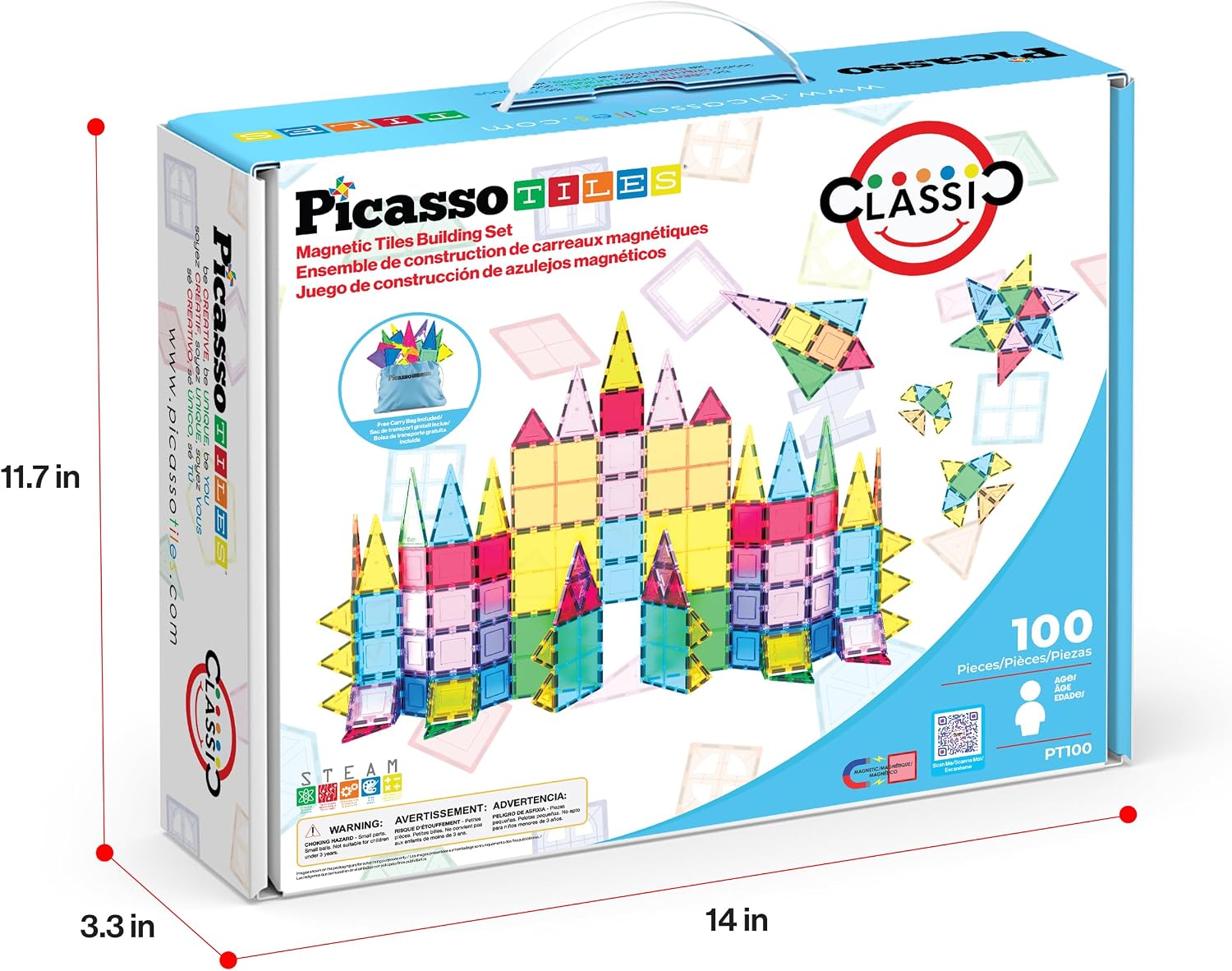
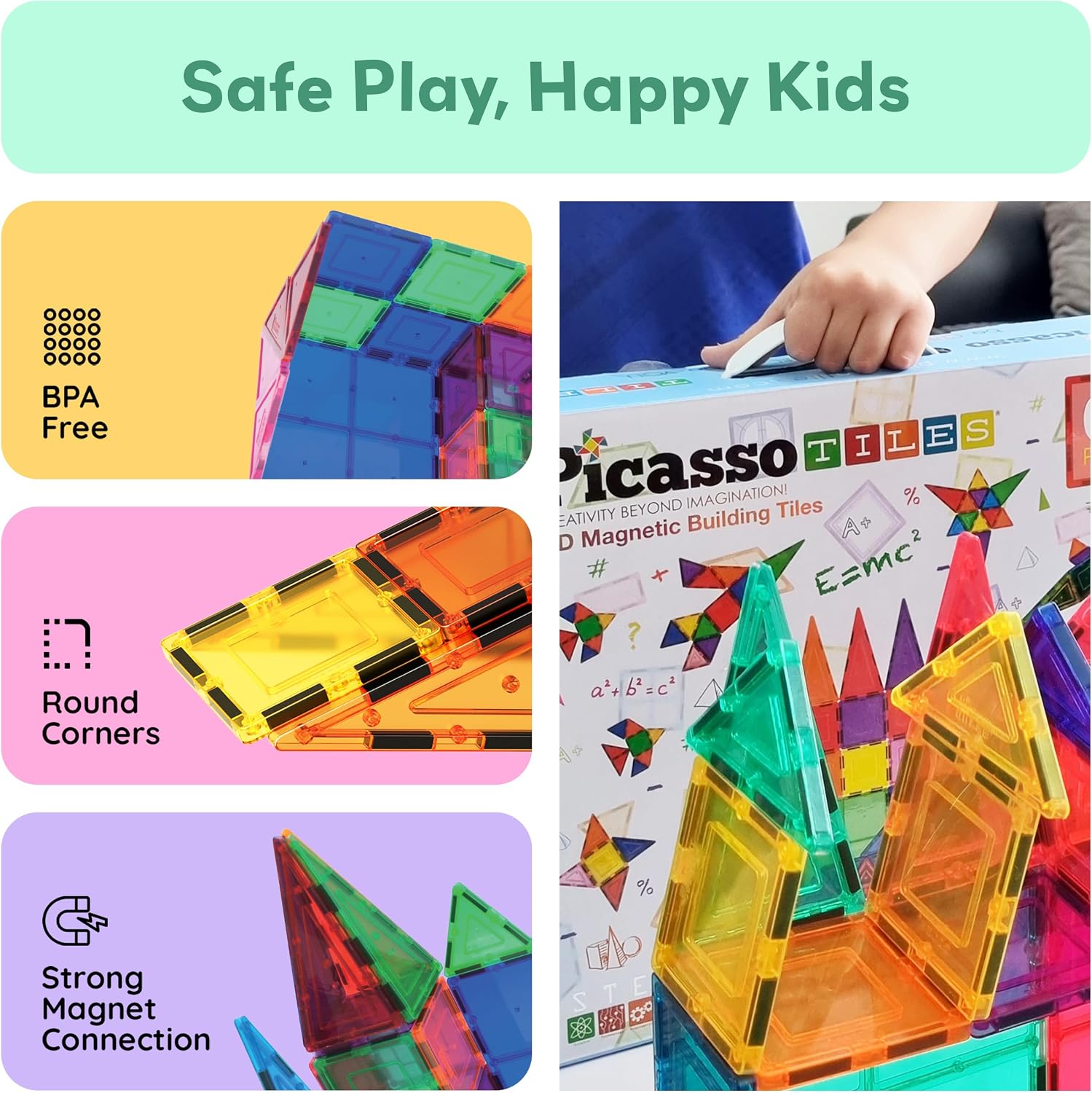
The Amazon listing identifies a 100-piece collection of clear colored magnetic building tiles for ages three and up. It presents the set as reusable construction play with different shapes. The product photographs are useful for understanding the format, but they are not evidence of our own build or durability testing.
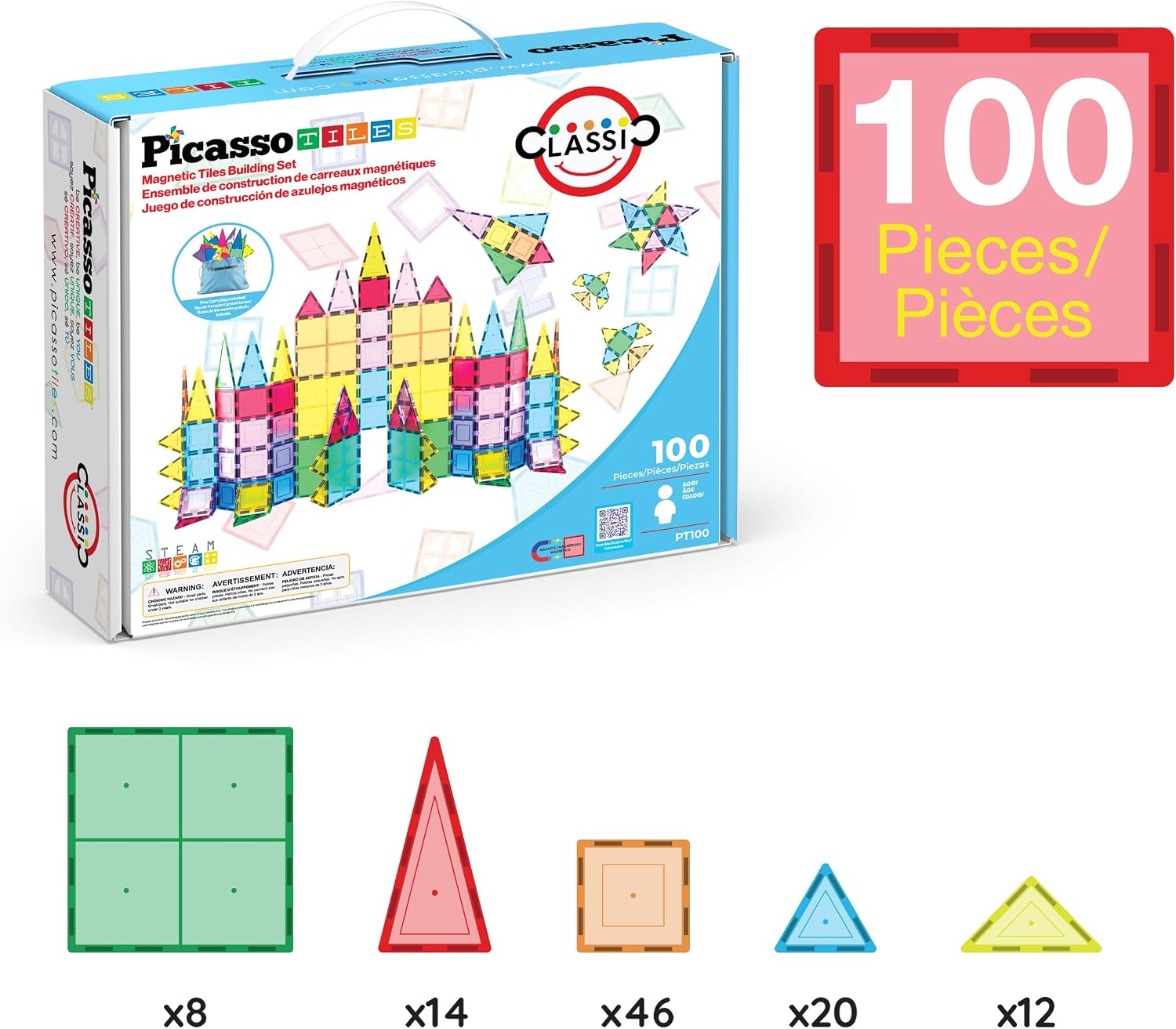
Check the current package illustration and inventory for the exact shape quantities. A total piece count does not tell you how many of the shapes required for a particular project are included. Do not assume that every impressive promotional structure uses only the selected box.
We have not measured magnetic strength, impact resistance or educational outcomes. This review therefore evaluates practical play and storage fit rather than promising developmental gains or a particular maximum tower height.
The play surface changes the experience
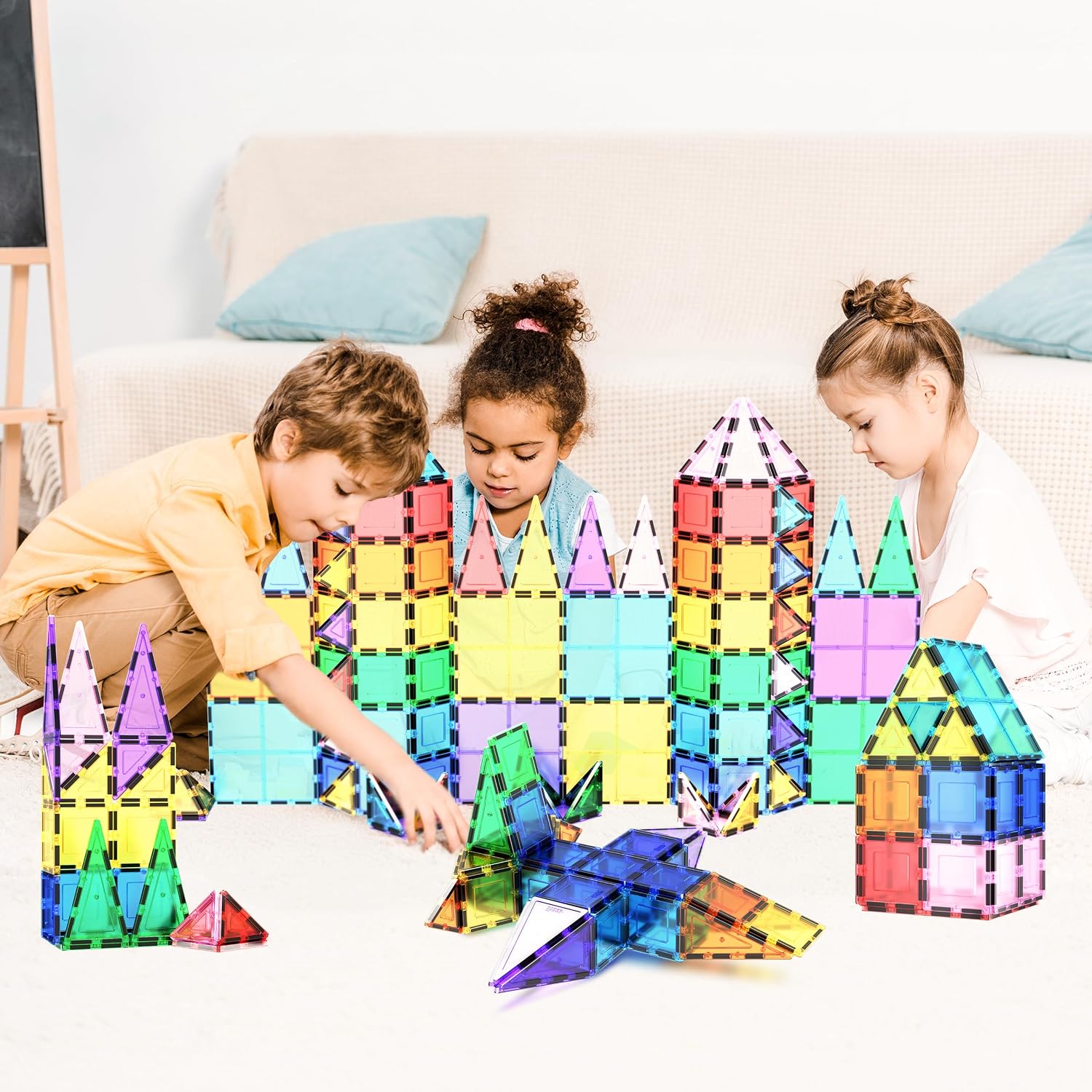
A level table or a defined floor area gives a build somewhere deliberate to happen. Soft, uneven surfaces can make the activity different from the neat examples shown in product photographs. Before buying, decide where construction can stay undisturbed for the length of a normal session.
In a shared bedroom, avoid choosing the main walking route as the default building area. A project that blocks access to the bed or wardrobe creates pressure to dismantle it before the child is ready. The toy may then feel frustrating for reasons unrelated to the pieces themselves.
A tray or board can define a small project boundary, but it should fit the intended activity and be appropriate for the child. Do not assume that a narrow surface will support every large construction pictured on the box.
Why shape mix matters more than the headline count
Imagine the child wants two similar buildings at once. The limiting factor may be one particular shape rather than the total number of pieces left in the box. Counting unused triangles does not help if the design needs more squares.
Review the included mix against the kinds of structures the child likes. If you are adding to an existing collection, check actual size and manufacturer compatibility information rather than assuming all magnetic tiles work together identically. This review does not establish cross-brand compatibility.
After purchase, observe which pieces are repeatedly in demand before buying expansions. That is a more useful basis for the next purchase than collecting another large assortment simply because it offers a higher total count.
Sharing between siblings or friends
A shared set can invite collaborative building, but it can also create competition for the same shapes. Decide whether the session is a joint project or separate builds. A simple division of useful pieces may work better than asking children to negotiate every component while constructing. For a related step-by-step approach, see Humble Crew Front-Facing Bookshelf Review: Can Children Put Books Back Themselves?.
The available play surface is just as important as the number of tiles. Two children need room to reach their own work without repeatedly knocking into the other structure. If the only surface is very small, a larger box may not improve shared play.
An adult can help establish a manageable starting arrangement without directing every result. The product provides materials; it does not guarantee cooperation, concentration or a conflict-free activity. Those outcomes depend on the children and the way the session is organized.
Inspection belongs in the routine
Follow the labeled age guidance and all warnings supplied with the exact set. The presence of magnets makes damaged components an important reason to stop using a piece. Inspect the tiles and remove any item with a cracked, separated or otherwise damaged casing from play.
Keep the set and any damaged components away from younger children who are not within the intended age range. A toy suitable for one child can still be inappropriate for a sibling sharing the room. Storage needs to account for everyone with access, not only the child named on the gift.
We have not independently tested the construction or verified a safety certification for this sample. Do not interpret a popular listing or a high star rating as a substitute for instructions, appropriate supervision and condition checks.
Storage that supports another session
Flat pieces can be grouped together, but a useful storage system also makes them easy to retrieve. A container that is packed too tightly may turn setup into a struggle. One that is much larger than necessary can become a mixed toy bin where the set is hard to find.
Choose a location and container appropriate to the child’s age and the household’s supervision needs. Decide whether you want pieces roughly grouped by shape or simply contained together. The right level of sorting is the one that can be repeated without an adult rebuilding the system every evening.
Do not assume the retail box is the best long-term storage solution. Inspect what arrives, how it opens and whether it fits the intended shelf before buying an additional organizer.
A rule for unfinished creations
Construction toys often create a different cleanup problem from toys that return directly to a box: the child may want to keep the result. Decide in advance whether there is a small display area and how long a project can remain there.
A limited display space can make the decision concrete. When a new build is ready, the previous one may need to return to pieces. Taking a photograph can be one way to preserve the idea without preserving every structure indefinitely, if that suits the family.
The important point is to separate active play, temporary display and stored pieces. Without that distinction, a set that stores compactly can still spread across the room because none of the builds is ever ready to come apart.
When a smaller set or ordinary blocks win
A smaller magnetic set may suit a child trying the format for the first time or a home with a very limited play area. Conventional blocks offer a different building method and may already support the activities the child enjoys. There is no need to replace successful play equipment just because another category is widely promoted.
Keep the 100-piece set when the child uses its variety, the room accommodates the activity and the reset is manageable. If most pieces stay unused while a few simple shapes receive all the attention, a larger expansion is unlikely to be the next useful purchase.
The best evidence of value will be repeated, age-appropriate use in your household. This review cannot promise learning gains, but it can help you avoid buying a large set without a clear place or routine for using it.
Which option fits your routine?
| Situation | Starting point | Tradeoff |
|---|---|---|
| Established interest in varied construction | 100-piece PicassoTiles set | More possibilities, with storage and inspection work |
| Trying magnetic building for the first time | Smaller starter set | Lower commitment, fewer simultaneous builds |
| Existing blocks already sustain play | Keep the current collection | Avoid adding a parallel toy system unnecessarily |
Amazon product and current listing
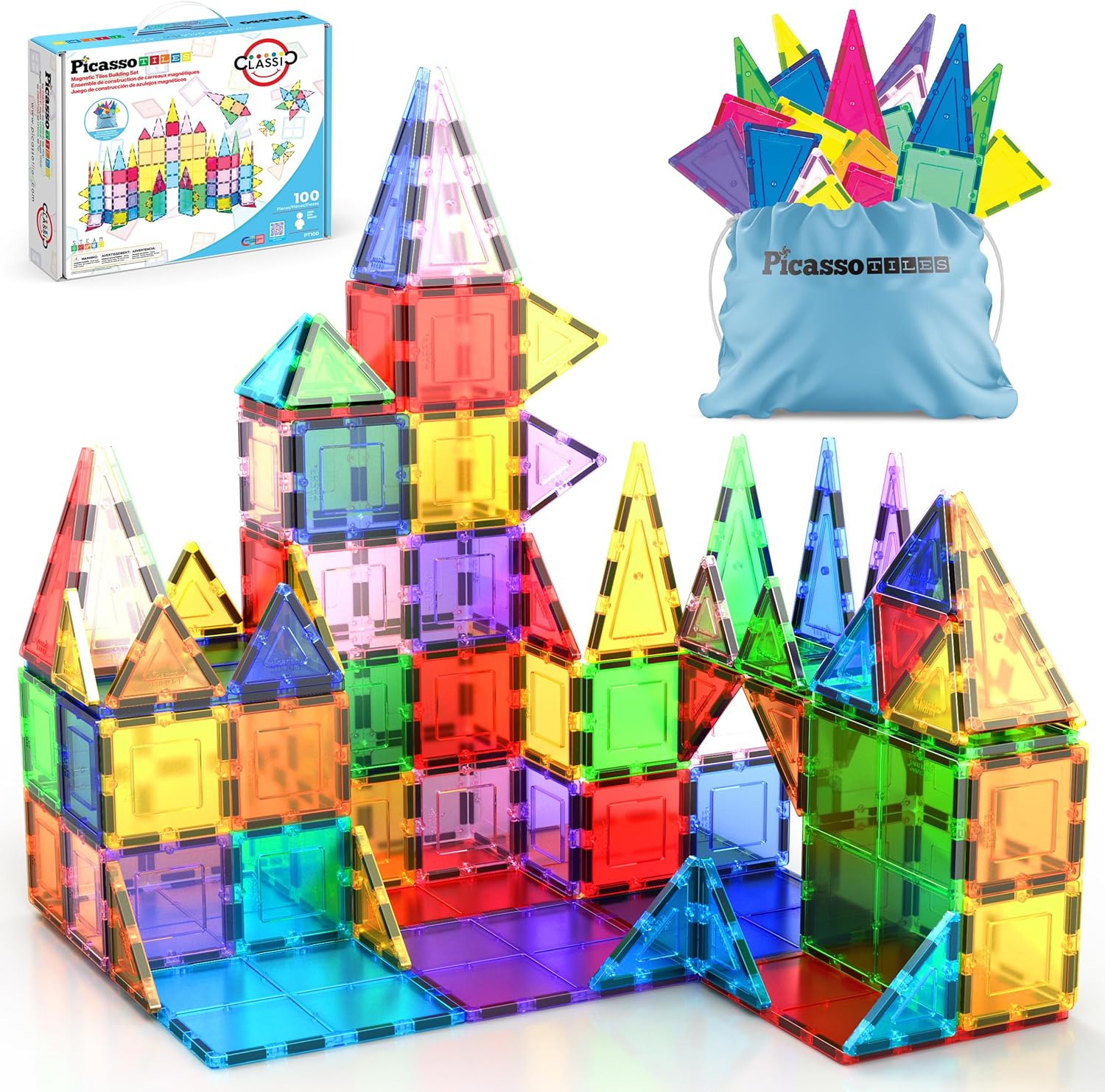
Check PicassoTiles 100-Piece Magnetic Building Set on Amazon. Confirm the selected model, seller, delivered price and return terms. This link identifies ASIN B00AU56C5W; it does not guarantee current stock.
Our buying decision
The 100-piece PicassoTiles set is worth considering when building play already interests the child and the household can manage setup, inspection and cleanup. Judge the shapes and usable play area, not just the piece count. Do not buy on promised learning gains alone.
Explore Kids Room ideas and Buying Guides. Related reading: How to Organize Bath Toys and Kids’ Bathroom Products Without Filling the Tub.
Sources and evidence limits
The linked Amazon listing supplies the product identity, photographs and listed features. Household scenarios and comparisons are editorial analysis. We have not measured durability, performance or user outcomes. We do not use star ratings as proof of quality.
Sources
- Amazon product listing — https://www.amazon.com/dp/B00AU56C5W