Bath toys are one of those categories that look harmless until the tub has nowhere left to be a tub.
A few cups become a bucket of animals, boats, foam letters, squirters, bath crayons, washcloths, shampoo bottles, detangling products, and a stack of “special” toys that only appear at bath time.
The problem is not that children enjoy toys in the bath. The problem is that wet storage has stricter rules than dry toy storage.
Start by separating toys from bath-care products
Toys need to be easy to rinse, drain, dry, and put away. Shampoo, body wash, conditioner, and grooming items need a different home because they are products, not playthings.
When everything shares one caddy, adults dig through toys to find soap and children pull product bottles into the game.
Keep a deliberately small active toy set
A bathtub does not need twenty toys at once. A small rotating set is easier to dry and much easier to clean up.
Try five to eight active pieces, depending on their size, and store the rest dry outside the immediate wet zone.
This is one of those places where fewer toys often improve the experience rather than reducing it: children can actually see and use what is in front of them.
Choose toys based on how easily they can dry
Bath toys live in a demanding environment. Designs with complicated seams, hidden cavities, or areas that are difficult to drain can be harder to maintain.
Follow manufacturer instructions for use and cleaning, and remove toys that are damaged or difficult to keep in appropriate condition.
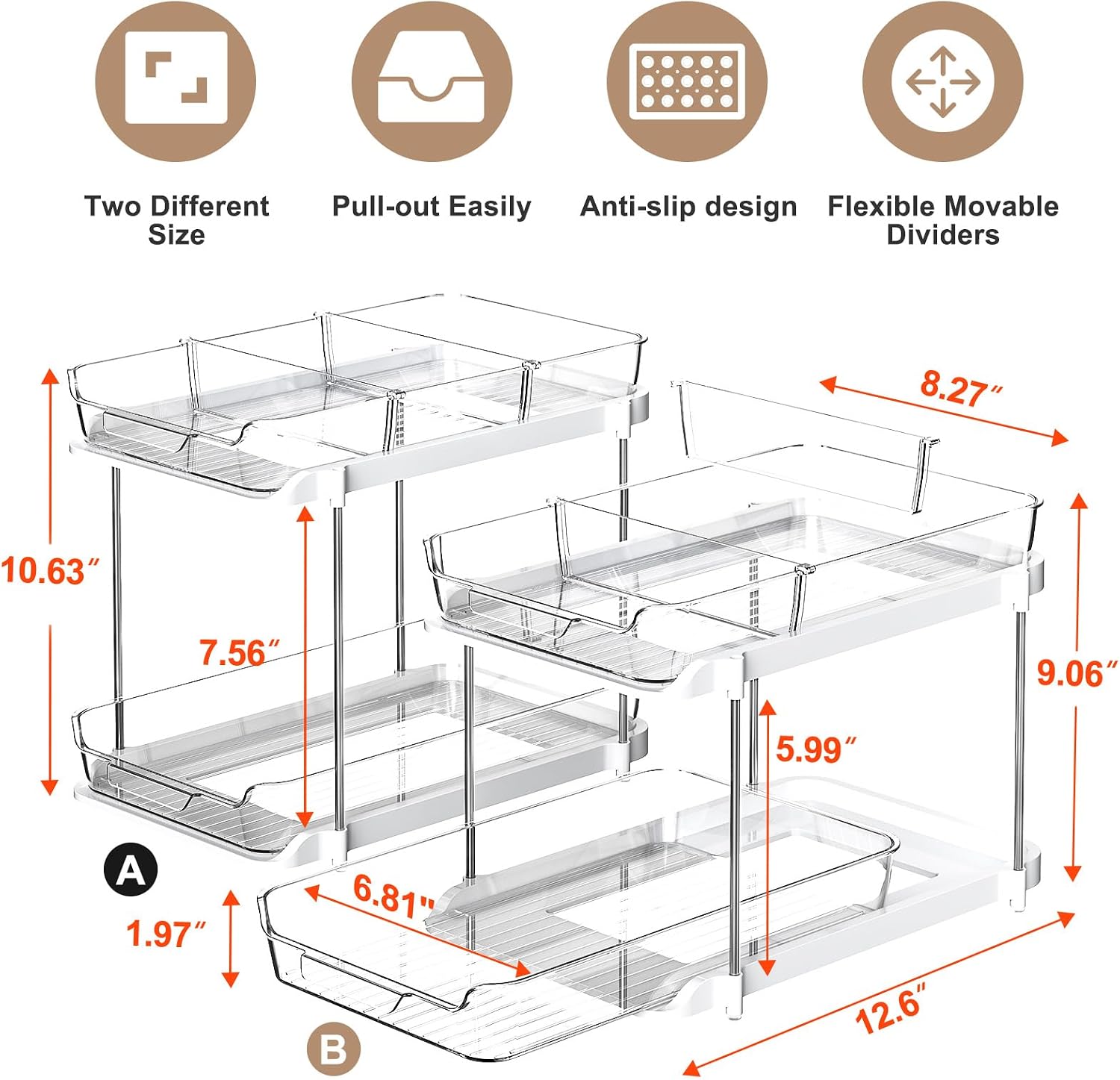
Use a draining container—not a sealed toy box
The active bath-toy container should support drainage and drying. It also needs to be positioned so toys are not sitting in leftover bathwater after the tub drains.
A mesh bag, draining basket, or another bathroom-appropriate setup can work.
Give the container a capacity limit
If the basket is full, do not add a second basket automatically. Rotate or remove toys first.
This rule matters because bath-toy collections grow through gifts and impulse buys faster than most parents notice.
Keep shampoo and bath products to the active set
One shampoo, one wash product, and any genuinely needed grooming products are enough for the wet zone. Unopened backups can live outside the tub or shower.
The tub edge should not become a product backstock shelf.
Use adult-height storage for products children should not manage independently
Storage should reflect product instructions, household routines, and the child’s age. Do not make a product child-accessible simply because the toy basket is.
Toy access and product access are different design decisions.
Bath crayons and foam pieces need their own rule
Creative bath toys behave differently from boats and cups. Crayons may need wiping or specific storage; foam pieces often spread across walls and tub edges.
Keep only one creative bath category active at a time if it is creating too much cleanup.
Washcloths should leave the toy container
Wet cloths need a drying route. Hang or move them according to your bathroom setup instead of dropping them into a basket of plastic toys.
For the larger towel system, see How to Help Towels Dry Faster in a Small Shared Bathroom.
Create a two-minute end-of-bath routine
- Drain the tub.
- Rinse toys as appropriate.
- Return toys to the draining container.
- Move washcloths to their drying location.
- Return bath products to their product zone.
- Handle visible standing water or splashes as appropriate.
This is much easier than a weekly rescue mission involving a tub full of wet objects.
Rotate toys when interest drops, not by a rigid calendar
Put inactive bath toys completely away and bring out a few different ones when the active set gets ignored.
Rotation only works if the inactive set is actually outside the tub. Moving toys from one wet basket to another does not reduce the visual load.
Use the “would I hand this back to my child?” test
During the weekly bathroom reset, pick up each toy and look at it rather than cleaning around the pile. If a toy is damaged, difficult to clean, or no longer appropriate, deal with it then.
Storage systems should make inspection easier, not make items disappear indefinitely.
Do not let bath toys colonize the entire bathroom
One draining basket is enough for the active set. A second dry bin elsewhere can hold rotation toys. The bathroom does not need a floor basket, tub basket, shelf basket, and sink basket all for the same category. You may also find A Small Bathroom Storage System for a Family Sharing One Bathroom useful for a closely related small-home problem.
A practical system for siblings
Shared bath toys can stay category-based rather than child-based. If each child has a special item, keep only a small number of personal favorites.
Bath-care products can remain adult-managed even if toys are shared.
When toys also live in the shower
Keep them out of the adult standing area when not in use and choose storage that does not make normal showering awkward. For a related step-by-step approach, see How to Keep a Small Bathroom Floor Clean When Kids Use It Every Day.
Use How to Keep a Small Shower or Tub Clean Between Deep Cleans for the wider wet-zone routine.
What I would not buy first
I would not begin with an enormous corner hammock, multi-tier toy tower, or another tub-mounted organizer. If the existing toy volume is too high, a larger organizer simply gives the collection permission to grow.
Edit the active set first. Then choose the smallest drying container that comfortably holds it.
Create a dry rotation bin outside the bathroom
The easiest way to keep the active set small is to give inactive bath toys a completely different environment. Once toys are clean and fully dry as appropriate, place the rotation set in one dry bin in a closet, kids’ room, or other low-frequency storage area.
This matters because a second basket sitting beside the tub is not really rotation—it is just overflow. The visual load stays in the bathroom and the wet-zone maintenance problem doubles.
Keep the rotation bin intentionally modest. If it becomes a deep archive of forgotten bath toys, review it the same way you would any other toy category.
Design for the child who is expected to clean up
If a child is supposed to return toys after bath time, the container needs to be reachable and simple enough to use with wet hands under adult supervision. A beautifully mounted organizer that only an adult can reach makes the “kids clean up” goal unrealistic.
At the same time, product bottles and items requiring adult control can remain higher or separate. Independence does not require giving children identical access to every bathroom category.
For siblings at different ages, keep the active set mixed but limited
A toddler may like cups while an older child wants foam letters or bath crayons. You do not need separate baskets for each child unless ownership is causing conflict.
One active basket can hold a few items for each age. If the older child has small parts or products that are not appropriate for a younger sibling, store those separately and bring them out only when the situation is suitable.
Small rental bathroom? Avoid building the system around permanent hardware
Suction baskets, over-tub organizers, freestanding drainable containers, or removable hooks may work better in a rental than drilling several storage points into tile. Follow the organizer manufacturer’s installation guidance and your lease requirements.
The key is not the mounting method. The key is that the toy container can drain, can be removed for cleaning, and does not make normal bathing or showering awkward.
Why visual overload matters in a tiny bathroom
Bright toys, five product bottles, towels, a step stool, toothbrushes, and laundry can make a small bathroom feel cluttered even when every item is technically organized.
Reducing the active bath-toy set is one of the rare changes that improves both function and visual calm at the same time. Fewer wet objects mean faster cleanup, easier inspection, and a bathroom that returns to adult use after the children are finished.
A monthly bath-toy review takes less time than a rescue clean
Once a month, empty the active container completely. Clean and care for toys according to manufacturer instructions, inspect the container itself, review anything damaged or ignored, and bring back only the active set.
This is also a good moment to switch rotation toys. The point is not to sterilize the category into perfection; it is to prevent months of unnoticed buildup in a damp, high-use zone.
\nBuild bath-time cleanup into the child’s idea of “finished”
If cleanup begins only after the child has left the bathroom, it becomes an adult chore by default. Instead, make the final minute of bath time part of bath time: toys go into the draining container, special crayons close, cups empty, and the favorite toy says goodnight.
For younger children this can be playful; for older children it can simply be routine. The important shift is that the activity includes its own closing step.
Keep the edge of the tub visually useful
A tub ledge covered with bottles and toys is hard to wipe and gives wet objects nowhere to drain temporarily. Try to preserve one clear section. That small empty area makes ordinary cleaning easier and gives adults somewhere to place a needed item without rearranging the whole bath system. For a related step-by-step approach, see How to Create a Family Snack Station in a Small Kitchen Without Encouraging More Clutter.
Use the bathroom’s real bottleneck to decide what leaves
If the bottleneck is drying, reduce wet items. If the bottleneck is surface space, move product backups out. If the bottleneck is child cleanup, simplify categories. If the bottleneck is adult shower access, shrink the active toy set.
The right organization depends on what the room struggles to do—not on how many organizers will fit on the wall.
\nFrequently asked questions
How many bath toys should stay in the tub?
Keep a small active set that fits one draining container comfortably. The exact number depends on toy size and the child.
Where should bath-toy backups go?
Store rotation toys fully dry in a separate low-frequency bin outside the immediate wet zone.
Can shampoo share the toy caddy?
It is usually easier to keep products in a separate adult-managed zone so toys and care items do not compete.
How often should bath toys be reviewed?
Look at them during the regular bathroom reset and follow manufacturer instructions for cleaning and care.
The tub should still feel like a tub
Bath toys should add play, not permanently occupy the bathing space. A small active set, one drying route, and a separate product zone keep the bathroom easier to use for everyone. For a related step-by-step approach, see How to Keep a Small Bathroom Counter Clear When Several People Use It.