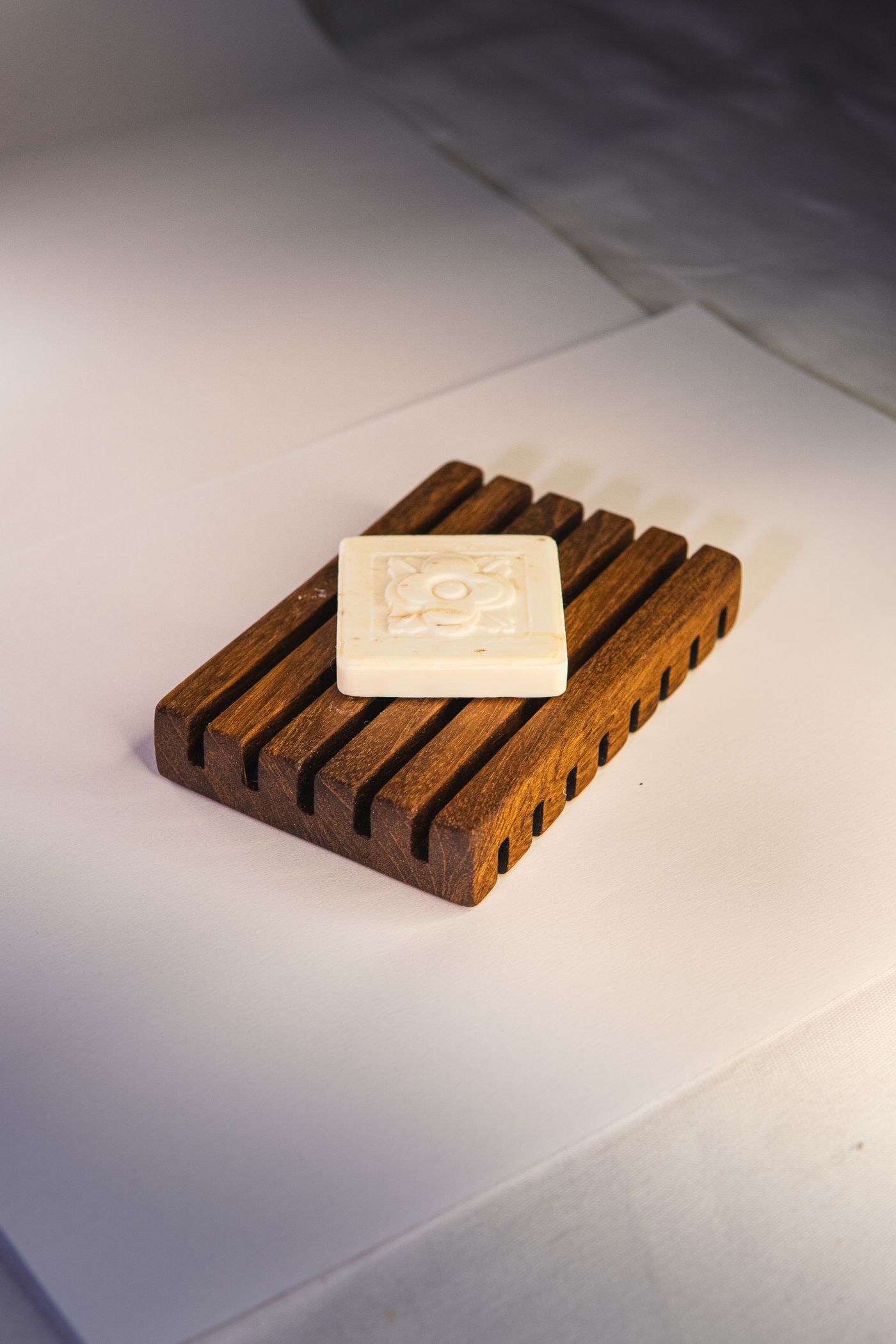
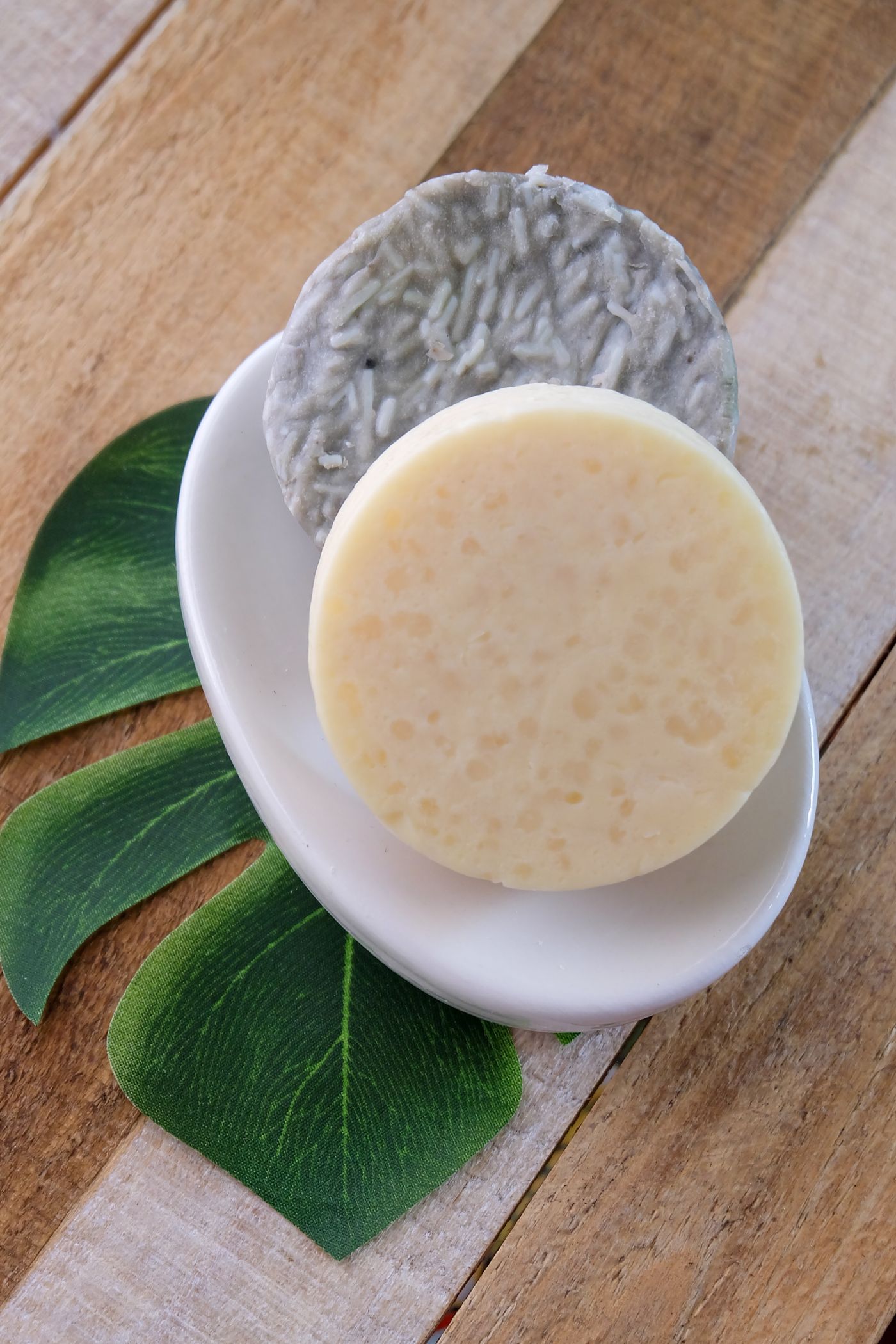
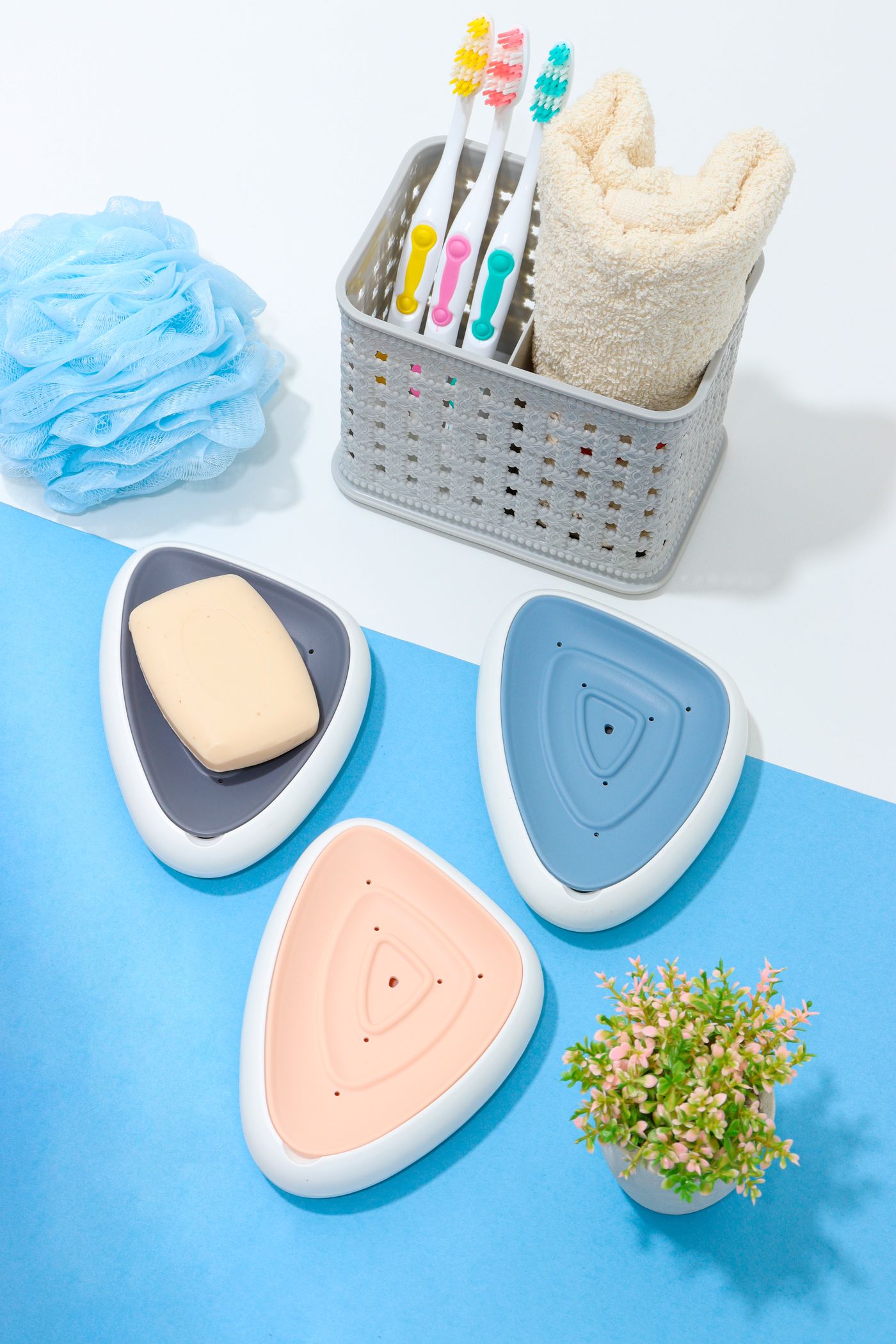
A soap dish can hold a bar above the sink while collecting residue underneath it. The visible top is only one part of the cleaning job. Slats, a removable insert, a concealed lower tray, and the point where the dish rests on the counter may each need attention. Begin by identifying the design and its permitted care.
The Houzz fall 2026 report provides context for interiors with tactile, personal details. Caring for an existing soap dish is our practical application of that interest. The task is ordinary residue removal on a serviceable household object, with the actual manufacturer’s instructions guiding the method.
Move the soap and identify the whole dish
Put the bar on a suitable temporary surface where it will not slide or damage a finish. Keep it separate from the tools used to clean the dish. If there are several similar bars in a shared bathroom, retain their ownership or identity. Cleaning a container should not leave people guessing which personal item belongs to whom.
Look at the dish from the side and underneath. Check whether the body is one piece or contains an insert designed to lift out. Find the product information if the construction is uncertain. A seam can be a decorative join or a permanent attachment; it is not automatically an invitation to pull the object apart.
Choose care by the material and finish
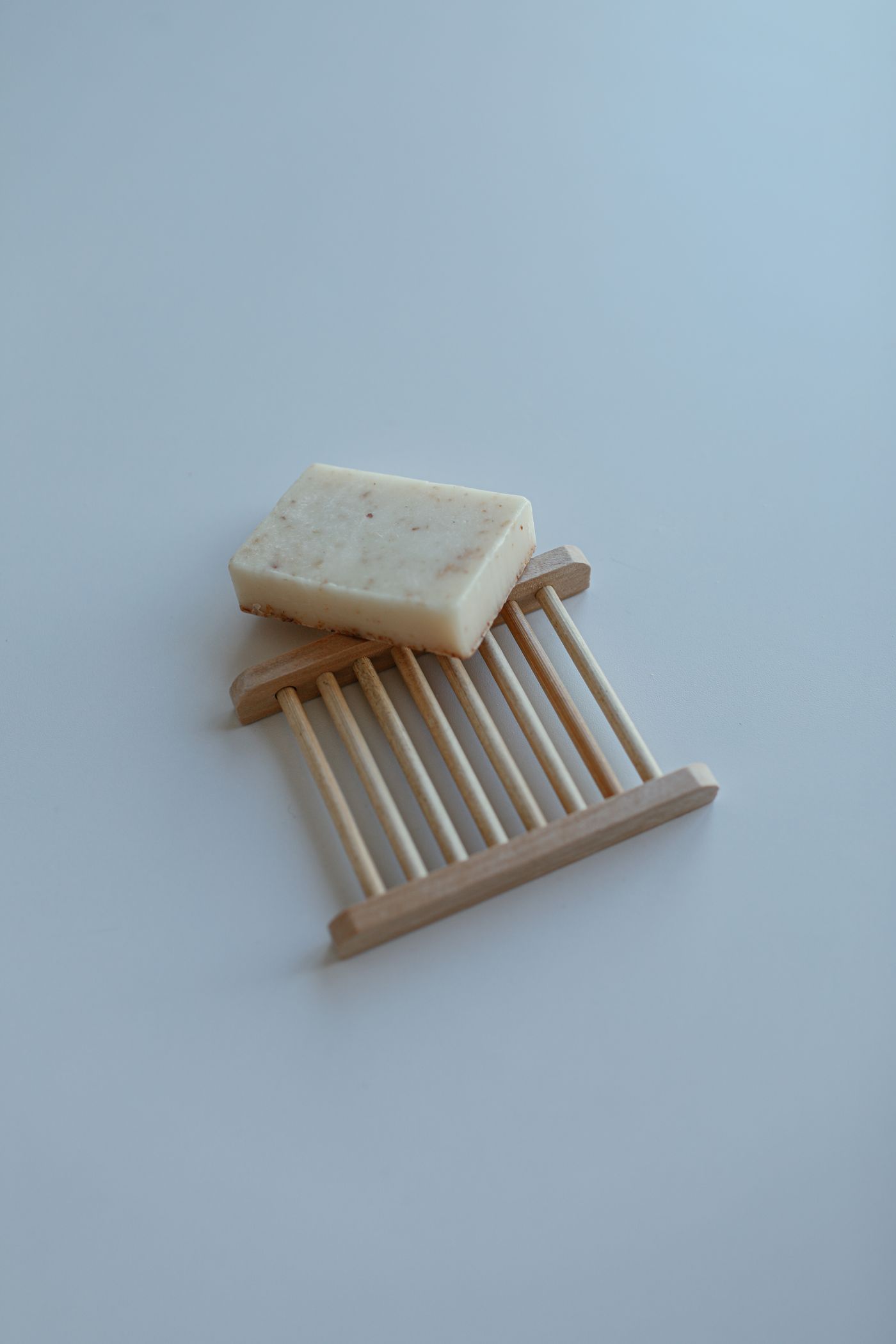
A glazed dish, a wooden slatted rack, a plastic insert, and a coated metal tray can have different care requirements. Appearance alone does not identify every material or coating. Use the original label or maker’s information for the exact version, especially before soaking, using a dishwasher, or applying a cleaner intended for bathroom fixtures.
For a named example, Joseph Joseph directs users to wash and dry its Slim soap dish by hand and describes a design that dismantles for cleaning. That supports a care routine for that product. It does not establish that the wooden or ceramic dishes illustrated in this article should receive the same treatment.
Inspect before adding cleaning pressure
Check the rim, slats, feet, joints, and any drainage outlet. A cracked edge or loose slat may catch a cloth or make the object unsuitable for continued use. Decide whether a repair is appropriate before returning it to a wet bathroom position. Do not rely on a cleaner surface to compensate for a failing support.
If the dish rocks on the counter, determine whether residue beneath it is the cause or whether the base itself is uneven. A small removable pad may also have shifted or deteriorated. Retain any sound original components and follow the maker’s guidance for replacement. Adding an improvised pad can change drainage or trap moisture, so assess the actual design before altering it.
Separate only the parts intended to come apart
For a dish with a removable top, note its orientation before lifting it. Put the parts on a suitable surface and keep any small components together. Compare the openings in the upper section with the collection area below. This often explains why wiping the top alone did not remove the residue that became visible again quickly.
Avoid forcing a jammed insert or probing a narrow opening with a sharp tool. Follow the product’s disassembly instructions or ask the maker if the intended movement is unclear. A one-piece dish may simply need its accessible surfaces cleaned without any disassembly. Understanding the design is more useful than maximizing the number of separated parts.
Remove ordinary residue with the permitted method
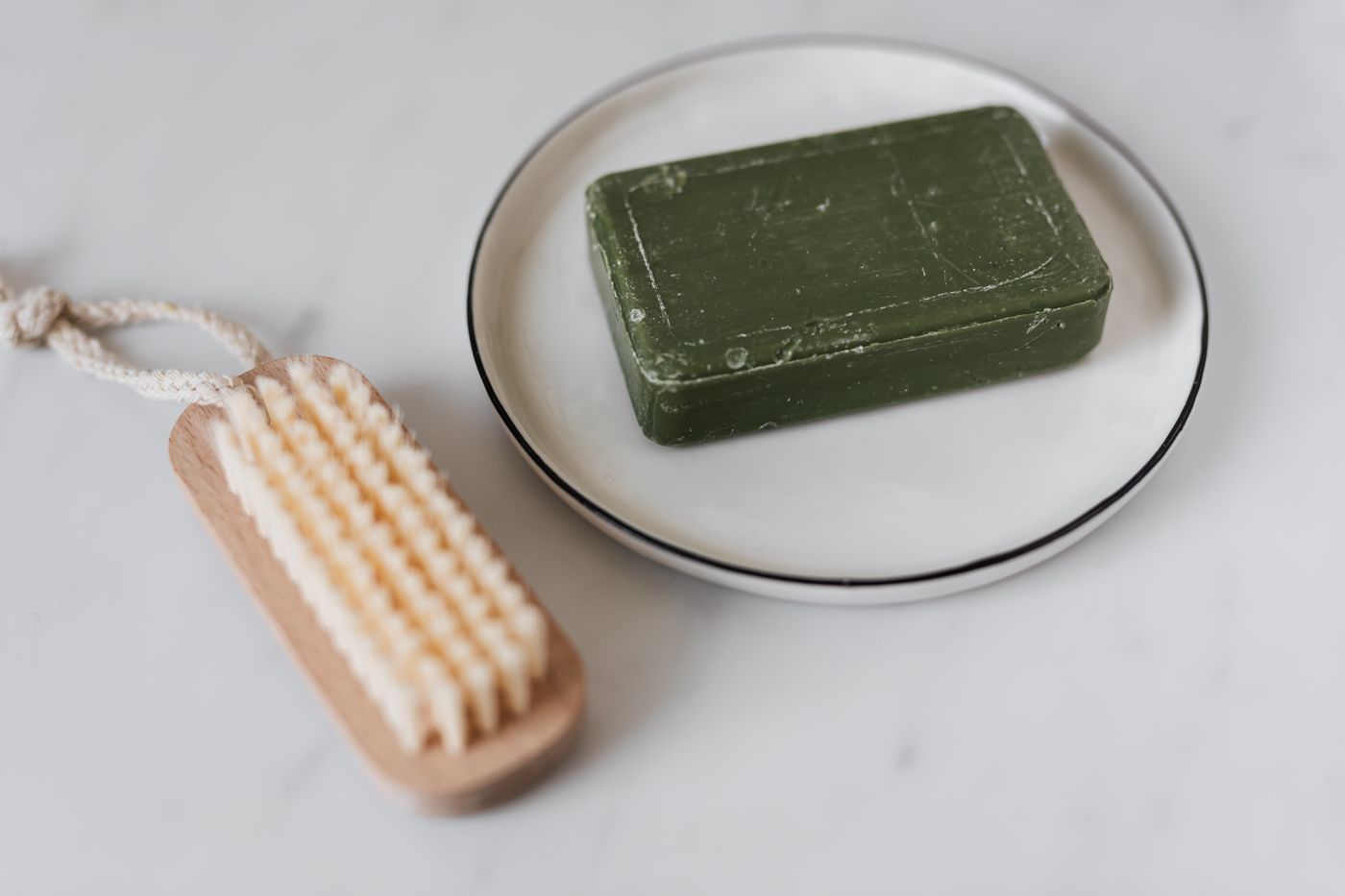
Use the cleaning product, water exposure, tool, and contact time allowed for the dish. A soft cloth or other maker-approved tool can be sufficient for ordinary residue. Work through one part at a time and check the result before repeating the process. Do not combine cleaning products or increase strength merely because a mark has survived the first pass.
Distinguish removable residue from changes in the finish. Repeatedly scrubbing an old scratch or coating loss will not restore the missing surface. When a mark is uncertain, stop and identify it before escalating. The care guide for hand-decorated ceramic accents describes a related need to understand the finish before treating the object as a generic bathroom surface.
Follow the water’s actual route
Look at where water from a wet bar goes. It may fall into a lower reservoir, move through slots to an open counter area, or remain in a shallow bowl that must be emptied. Restore the route the manufacturer designed, and remove ordinary accessible buildup in that route using the permitted care method.
A drainage feature needs a suitable position too. If an outlet points toward a seam, wooden cabinet edge, or another vulnerable surface, cleaning the dish does not fix the placement. Reposition it appropriately or choose another suitable arrangement. Do not assume a photograph of a dish beside a sink proves that its outlet works with every basin and counter.
Clean the resting surface separately
Lift the dish and assess the counter beneath it using that surface’s own care instructions. Keep the care methods separate where the materials differ. A bathroom cleaner permitted on the counter is not automatically suitable for the dish’s coating, feet, or wooden parts. Wipe or rinse each item only as its own guidance allows.
Let the counter finish its care and drying process before replacing the dish. If a wet outline returns repeatedly, check whether the dish retains water underneath or whether the position is constantly splashed. The drink-coaster care guide addresses a similar distinction between the object and the furniture or surface it is meant to protect.
Complete drying before rebuilding the design
Dry each part according to its instructions, including the underside and any recess that will become hidden when reassembled. Avoid adding heat or leaving material in direct sunlight unless permitted. A dish with a removable insert can conceal moisture in a corner even while the top feels dry to the touch.
Return the parts in their intended orientation and check that they sit correctly. Make sure an insert has not been turned in a way that closes an opening. If the design includes ventilation, leave that space available. A decorative cloth under the dish may look pleasant while interfering with the way the object is intended to work.
Return a manageable bar and keep the area usable
Place the appropriate soap bar back on the dish as intended. Check whether an oversized bar bridges an outlet or presses against a wall. Use the dish within its design rather than assuming every full-size bar has the same dimensions. Keep the sink’s normal handwashing area and faucet access clear.
A refillable pump has a different internal cleaning task, covered in the soap-dispenser guide. A reusable comb also needs its own material-based care routine. These items can share a counter without joining the same wash process. Keep each finished item distinguishable from anything still waiting for care.
Set a check that follows actual use
Watch the dish through the next few ordinary uses. If residue gathers in the same concealed area, make that area part of the next appropriate clean. If the bar remains surrounded by collected water, assess the design and position rather than promising that a different cleaner will solve the problem. The household’s use determines what needs attention.
The useful finish is a serviceable dish with its intended parts correctly assembled, its permitted care complete, and its drainage route understood. It may still show ordinary wear. More important is knowing how to clean the whole design and whether its current place beside the sink actually suits the way the household uses it.
Explore related decisions in our Cleaning hub.
Sources and editorial scope
Editorial research checked October 24, 2026. Published trend reports are context for these editorial applications, not verified live keyword rankings. Practical household guidance; photographs do not document a tested household or authenticate pictured materials.