Clean a hand-decorated ceramic bathroom accent according to its finish and attached parts, rather than the word “ceramic” alone. A fired pattern, a later painted surface, a metallic line, and a glued-on detail can require different handling. If you cannot establish what the decoration is, pause washing and find the maker’s instructions before choosing a cleaner.
Etsy’s October 14, 2026 Mark of the Maker direction highlights handwork. Using decorative ceramics near water creates a separate care decision, addressed here through finish identification and the object’s own instructions. Handmade appearance alone does not establish bathroom suitability.
The first useful improvement may be moving the piece. A decorative vase beside a dry mirror needs a different routine from a soap dish receiving water all day. Cleaning an unsuitable object more often will not necessarily make it a better bathroom accessory.
Establish what the object was intended to do
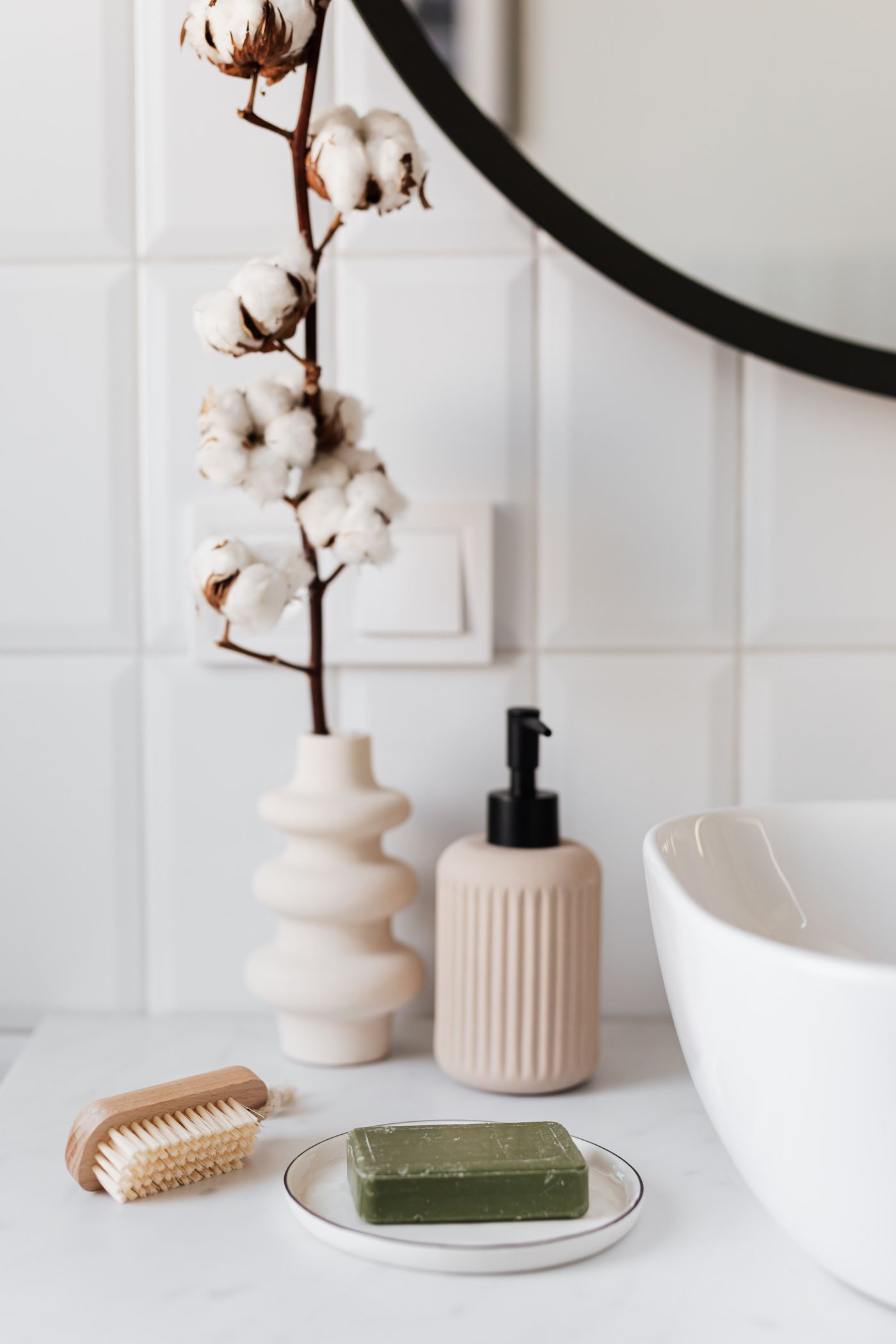
Find the original description, care card, base mark, or maker’s page. Look for a stated use as well as material. An ornament shaped like a dish is not automatically a functioning soap dish. A narrow vase may be intended for dry stems, and a handmade cup may be decorative rather than designed to hold toiletries.
If the object was a gift, ask the giver for the maker’s name rather than guessing from its appearance. You can photograph the base and decoration for your own reference, but do not assume a visual match on a resale site establishes the exact process or finish. Similar patterns can be produced in several ways.
Separate information you know from information you merely suspect. “Ceramic body, unknown painted finish” is a more useful starting point than “probably dishwasher-safe.” Until the maker confirms care, choose a drier position and avoid chemical experiments on a visible section.
Identify decoration before treating residue
Look for information about fired decoration, glaze, cold-applied paint, metallic details, decals, sealers, and attachments. These are questions for the product record; a shiny surface alone does not answer them. Do not scratch, scrape, or apply solvent to identify the finish yourself.
Maker-specific guidance shows why the distinction matters. Emma Bridgewater’s FAQ permits dishwashing for its pottery except pieces decorated with silver or gold, and recommends a lower-temperature setting with liquid detergent. That instruction belongs to its own products. It does not authorize washing an unrelated hand-painted bathroom piece in the same way.
The same brand advises contacting its customer service about crazing. If your object has new lines, cracks, flaking, or an uncertain repair, stop ordinary washing and ask its own maker for advice. Do not treat the absence of a large visible chip as proof that repeated soaking is suitable.
Separate the ceramic body from other components
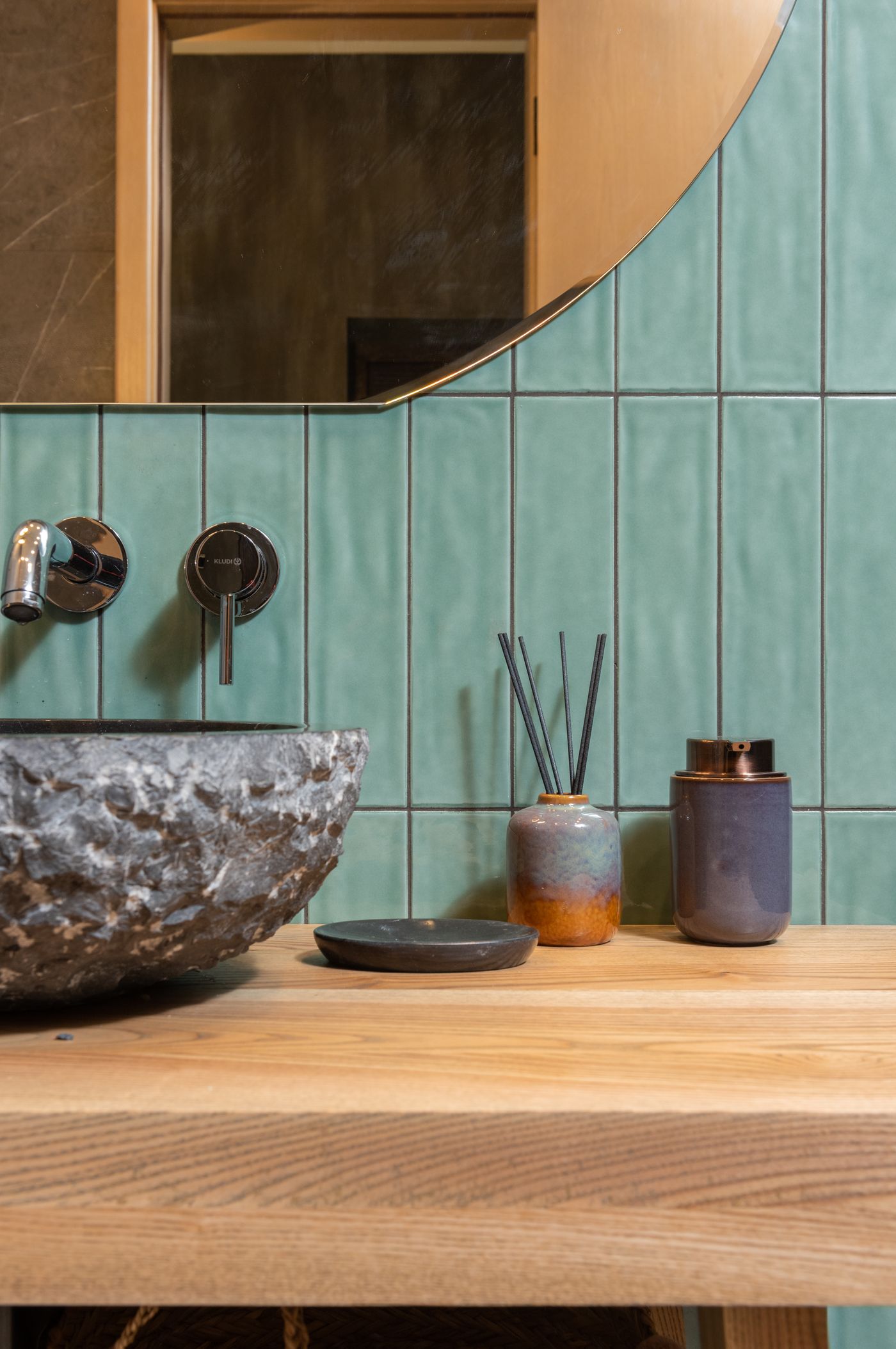
A soap dispenser may combine a ceramic vessel with a pump, collar, gasket, tube, and base pad. Each component can have its own maintenance requirements. Confirm which pieces are intended to detach and how. Twisting harder is not a sensible method for discovering whether a glued fitting is removable.
If the pump detaches as designed, keep its parts together on a clean supported surface and follow the pump maker’s directions. Do not leave small pieces in a shared basin where they can disappear into the drain or be mistaken for household debris. Photograph the assembled arrangement if that will help you return the intended parts correctly.
Check underneath as well as around the decoration. An unglazed foot, cork pad, felt base, or applied label may change how much moisture the object should encounter. A washing instruction for the glazed face may not cover soaking the entire assembly. Keep uncertainty explicit instead of extending one material’s care to everything attached to it.
Decide what actually needs removal
Dry dust, damp splash marks, soap residue, and mineral buildup are different problems. Start with the least involved task permitted by the care directions. Dust on a sound dry ornament may not justify taking it to the sink. If a surface is flaking or unstable, even gentle wiping can disturb it, so obtain specific advice first.
For ordinary basin care around the object, use our between-deep-cleans bathroom routine. Lift movable decor out of the work area before applying the basin’s usual cleaner. A product suitable for the sink may be inappropriate for a decorative painted rim, and overspray can reach farther than the part you intended to clean.
Do not assume a bathroom descaler is safe for every hard object in the room. Avoid testing a homemade acid, abrasive powder, or stronger chemical on unknown decoration. If the maker’s method does not remove the residue, ask about the next step rather than escalating through products until the mark changes.
Prepare a supported washing space when washing is permitted
Clear the area before bringing in a wet, slippery object. Use a stable workspace where the piece cannot knock against a tap, another vessel, or a hard edge. Follow the maker’s specified water temperature, cleaner, contact time, and rinsing instructions. There is no single recipe that can safely replace those details for all decorative finishes.
Keep handles, projections, and attachments out of the load path as you lift. Support the body. Work on one object at a time so you do not have to stack damp pieces while reaching for a towel. If its size makes it difficult to hold comfortably, change the working arrangement instead of balancing it on the edge of the basin.
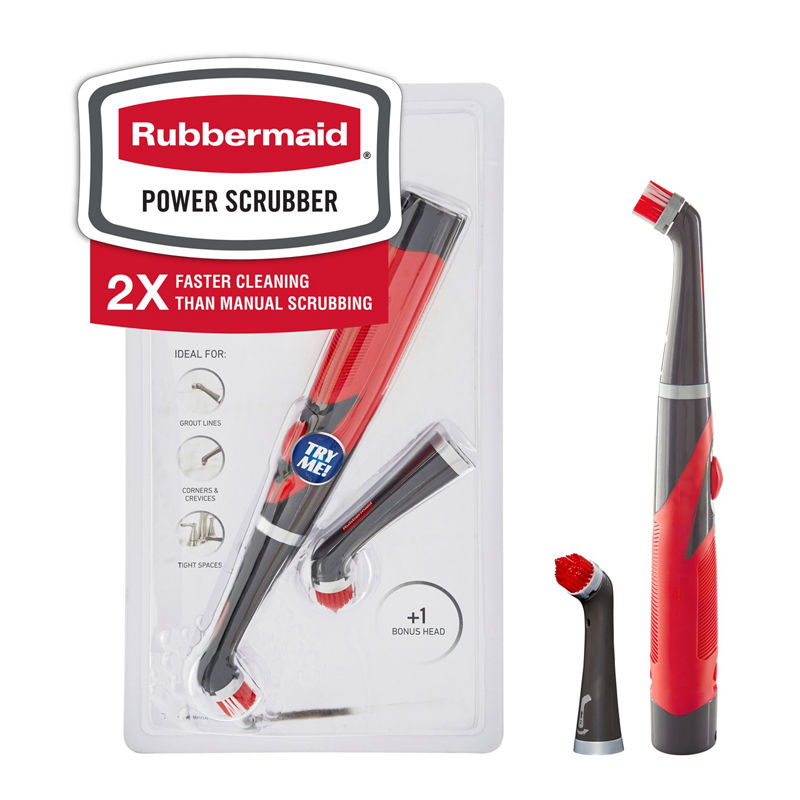
A powered detail scrubber is not the default tool for decoration. Our comparison of powered and manual detail brushes explains why access and control matter, but it does not approve either brush for your ceramic finish. Select only the tool and action the maker permits, and stop if the surface changes unexpectedly.
Dry the places you cannot see from the front
Follow the product’s drying instructions before returning it to service. Check intended openings, feet, recesses, and detachable components for retained moisture. Do not reassemble a dispenser merely because its decorative face looks dry while water remains where the parts meet.
Choose a drying position that the object can maintain securely. A tall vase placed upside down on a narrow rim may be less stable than it appears. Do not force a decorative projection to act as a support. Use the maker’s advice when the intended orientation is unclear.
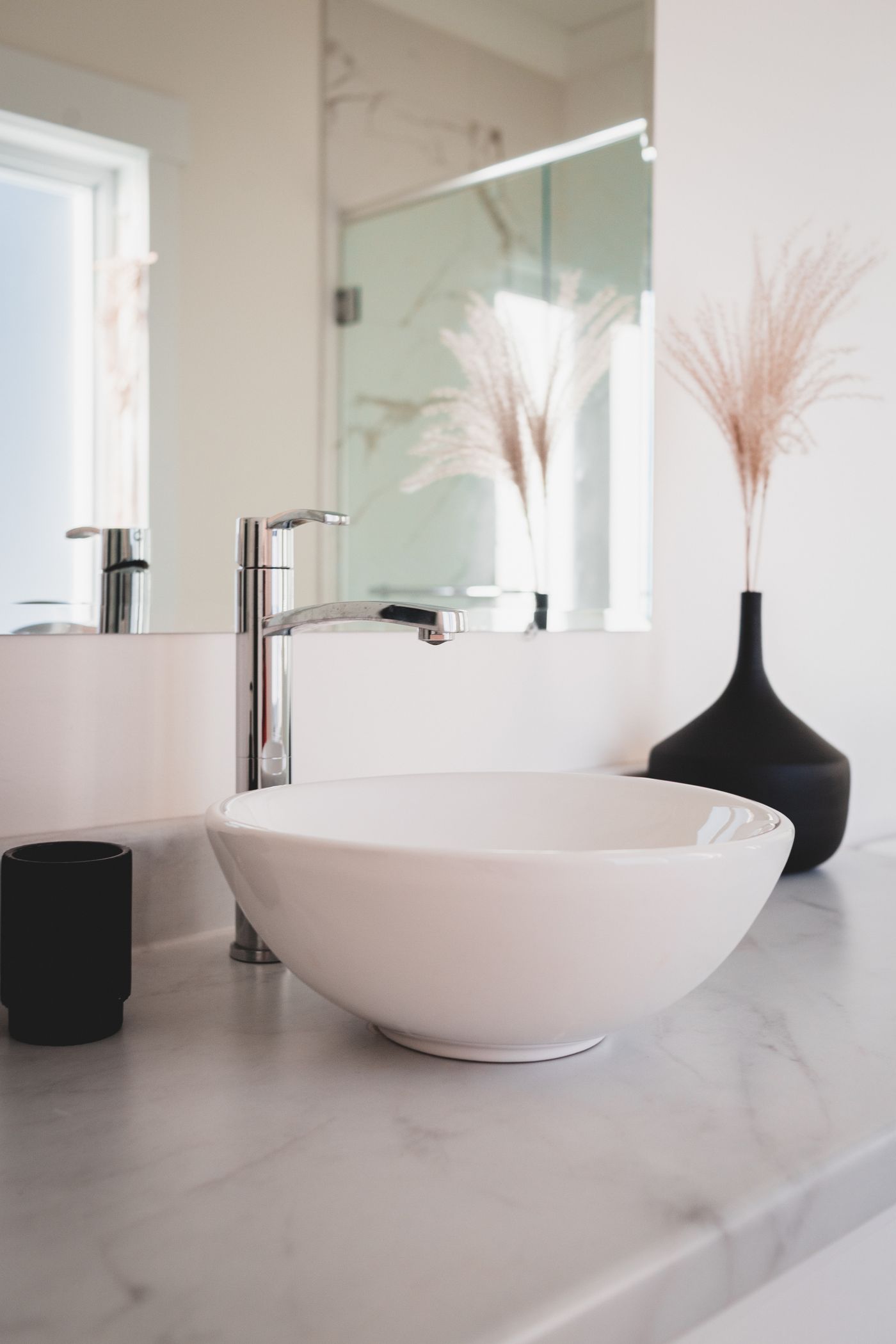
Clean the counter or shelf separately and allow that surface to dry too. A dry object placed back on a wet patch has not gained much from careful drying. Check underneath after ordinary use if splash collection has been a repeated problem, and change the location when the pattern continues.
Redesign the splash exposure instead of repeating the same rescue
Observe where water actually lands during handwashing. The prettiest corner beside the faucet may be the wettest. Move a decorative-only piece beyond that area if there is a suitable stable surface. Keep the basin usable and the tap controls reachable; squeezing decor into the last dry inch can create a new access problem.
If the object is intended to hold soap, follow its drainage and standing-water directions. If no such use is documented, do not repurpose it simply because it resembles a dish. A plain accessory explicitly designed for daily bathroom use may be a better working item, leaving the handmade piece in a dry display role.
Use the same separation when planning routine shower and tub cleaning. Decorative pieces do not need to remain in the treatment area while cleaners are applied to surrounding fixtures. Move them carefully first and return them only after the intended surfaces are ready.
Keep enough information for the next cleaning
Save the care source with a short description of the exact object. If several similar vessels have different finishes, identify them individually. A photograph of the base mark alongside the care note can prevent an instruction for one piece being applied to its neighbor months later.
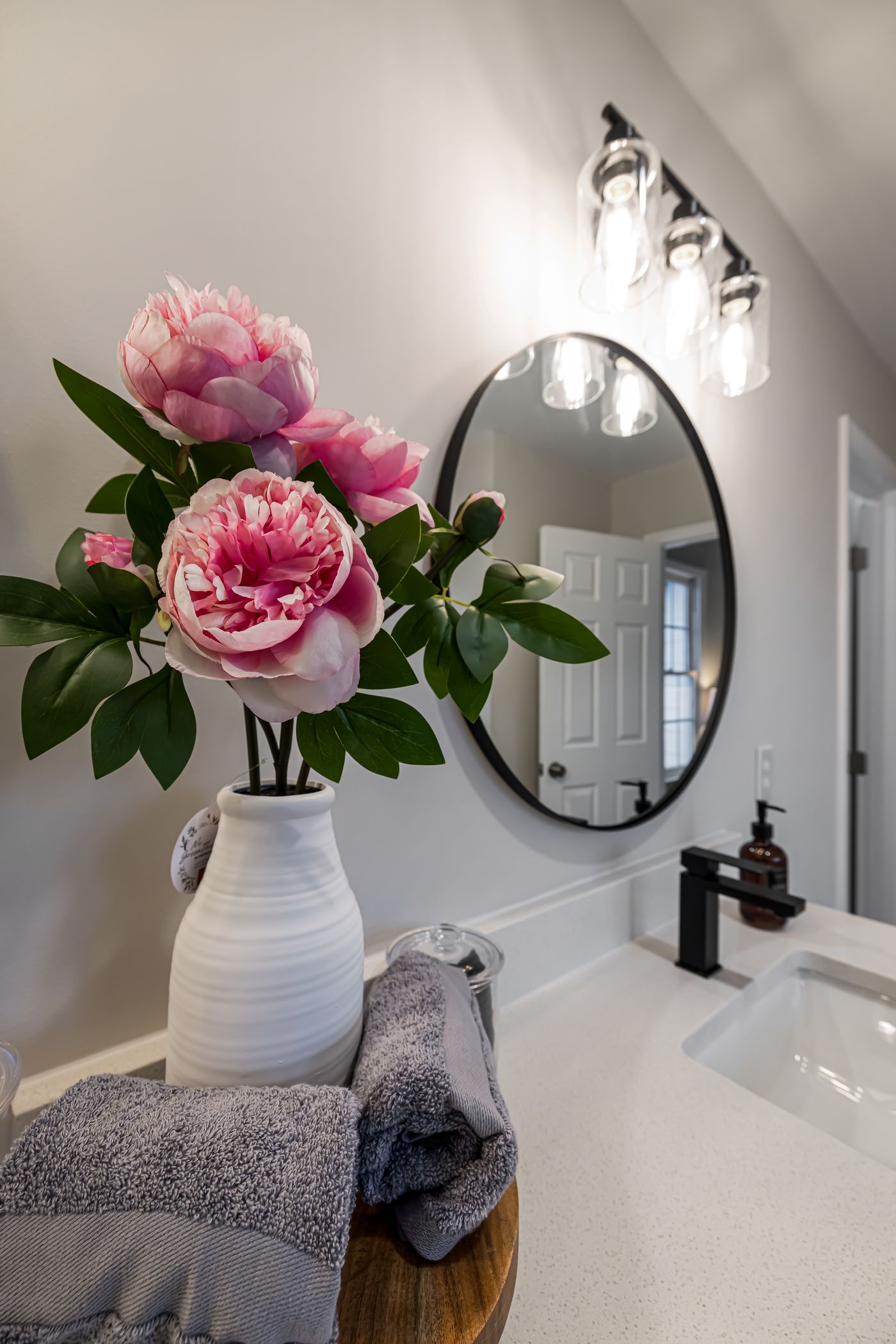
Record the method the maker approves, rather than writing “gentle cleaner” as if that were a complete instruction. Also note any detached component with a separate method. Keep the original link or care card so you can check changes or missing detail instead of relying on memory.
This material-first reasoning also appears in our guide to choosing care for a bedroom lampshade before choosing a cleaner. The bathroom adds splash exposure, but the underlying question remains concrete: what exactly is the surface you are about to treat? Once you have a reliable answer, care can become a short repeatable task instead of a fresh experiment each time.
Explore related household decisions in our Cleaning hub.
Sources and editorial scope
Editorial research checked October 15, 2026. Trend-report dates and limitations are stated in the article; these are editorial applications of published signals, not verified October keyword rankings. Practical household guidance; illustrations do not document a tested household or authenticate a pictured material.