The aged appearance of brass can be part of the reason you chose it. Cleaning becomes confusing when every darker patch looks like something to remove. For an unlacquered bathroom fitting, the practical goal is to remove ordinary residue while deciding deliberately how much of its developing patina to retain.
Houzz’s fall 2026 report includes aged metals among the details associated with personal, lived-in interiors. This is a finish-specific care guide, not a recommendation to age every gold-colored faucet. A brass appearance does not establish that a fixture is solid brass, uncoated, or designed to change color. Identify the finish before selecting a cleaner.
Confirm that the finish is genuinely unlacquered
Find the maker, model, and finish name through the original order record, care sheet, or an identifiable product label. Look for a specific unlacquered or living-finish description rather than relying on the word brass in a retail title. Plating, protective coatings, and brass-colored finishes may require different care and may be intended to remain relatively consistent.
If the record is missing, contact the maker with clear photographs and any model information you can find. Ask what the finish is and which cleaning directions apply. Do not scratch an inconspicuous spot or apply a chemical to see what happens. An identification experiment can permanently alter a surface before you have solved the cleaning question.
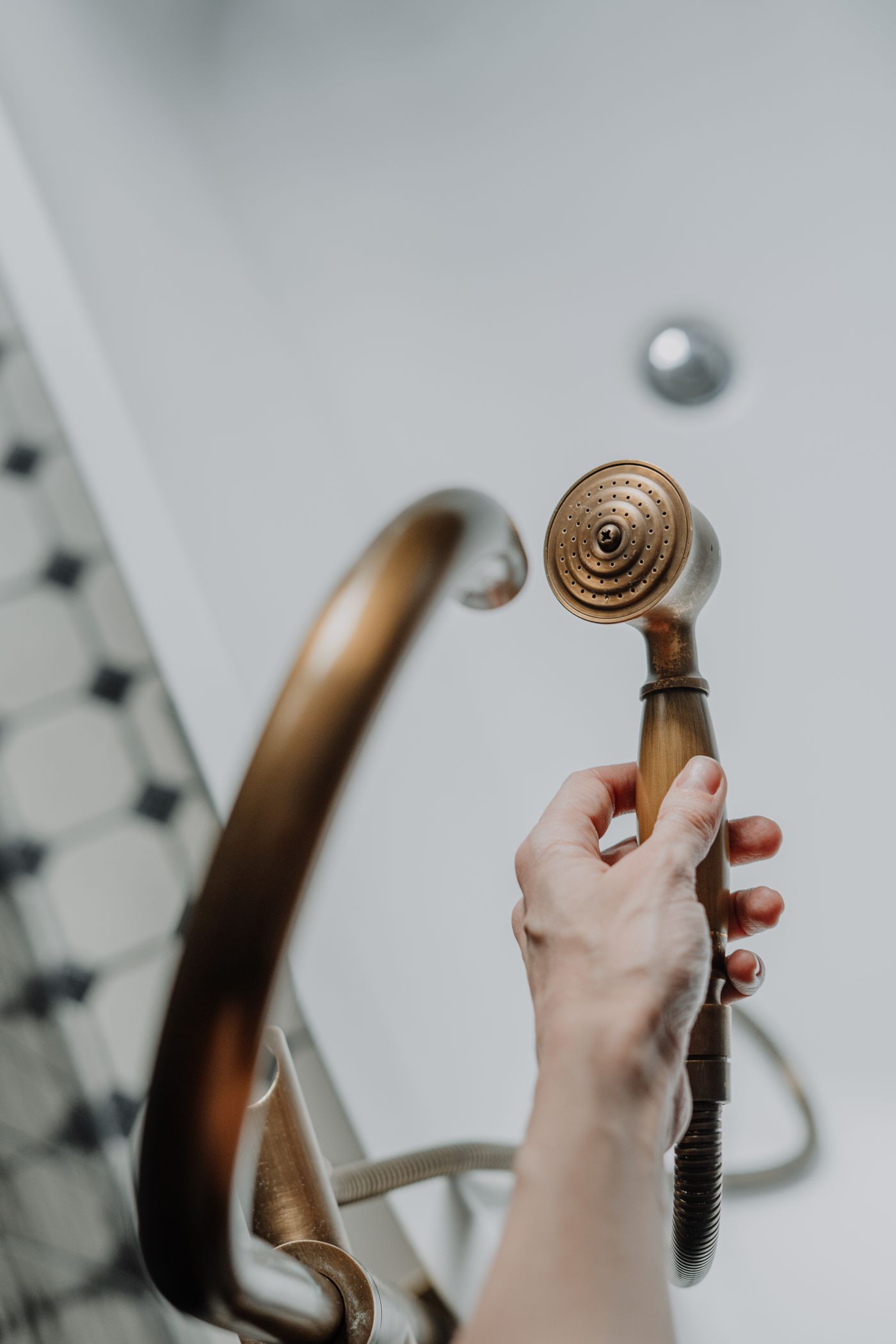
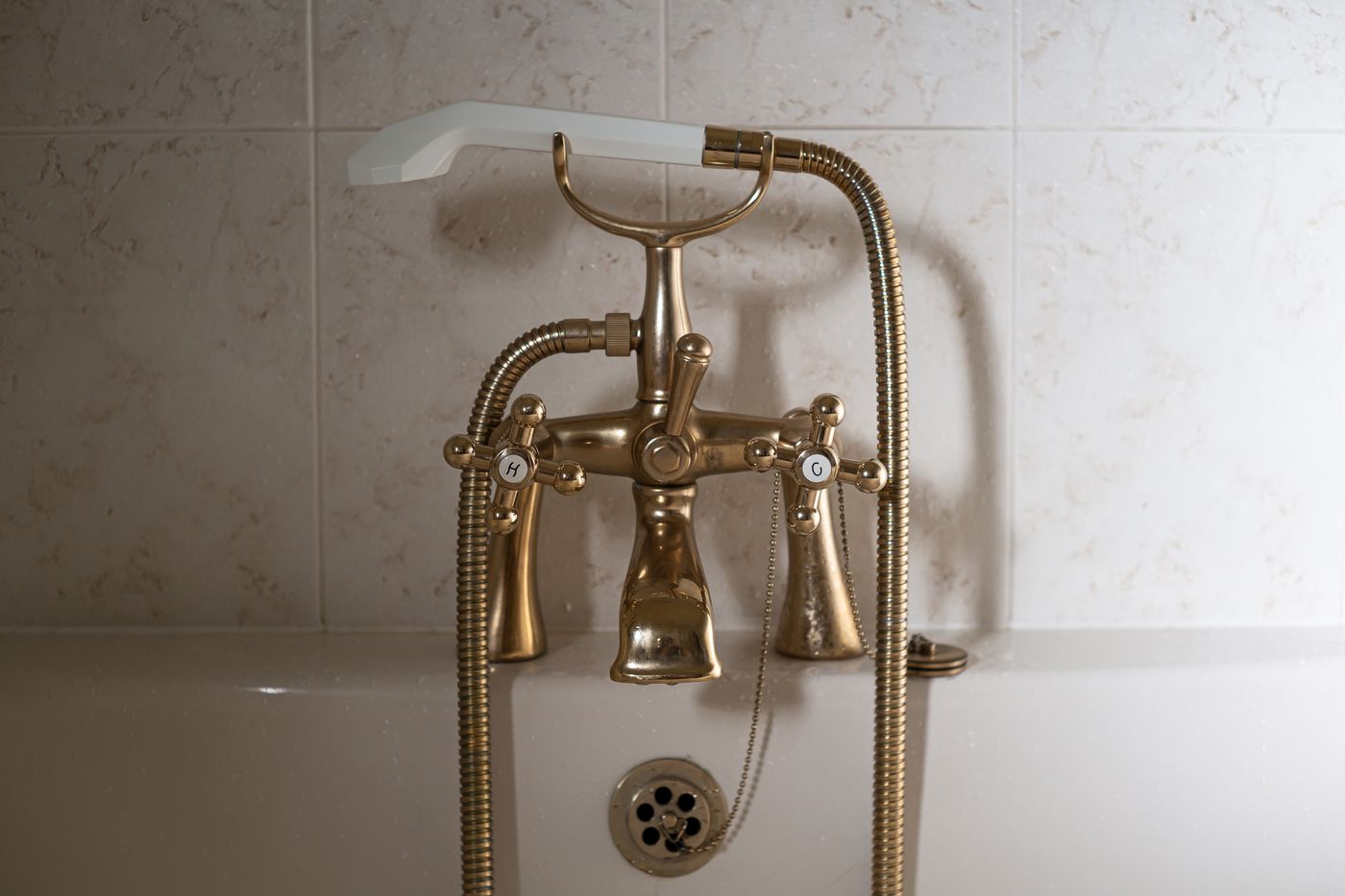
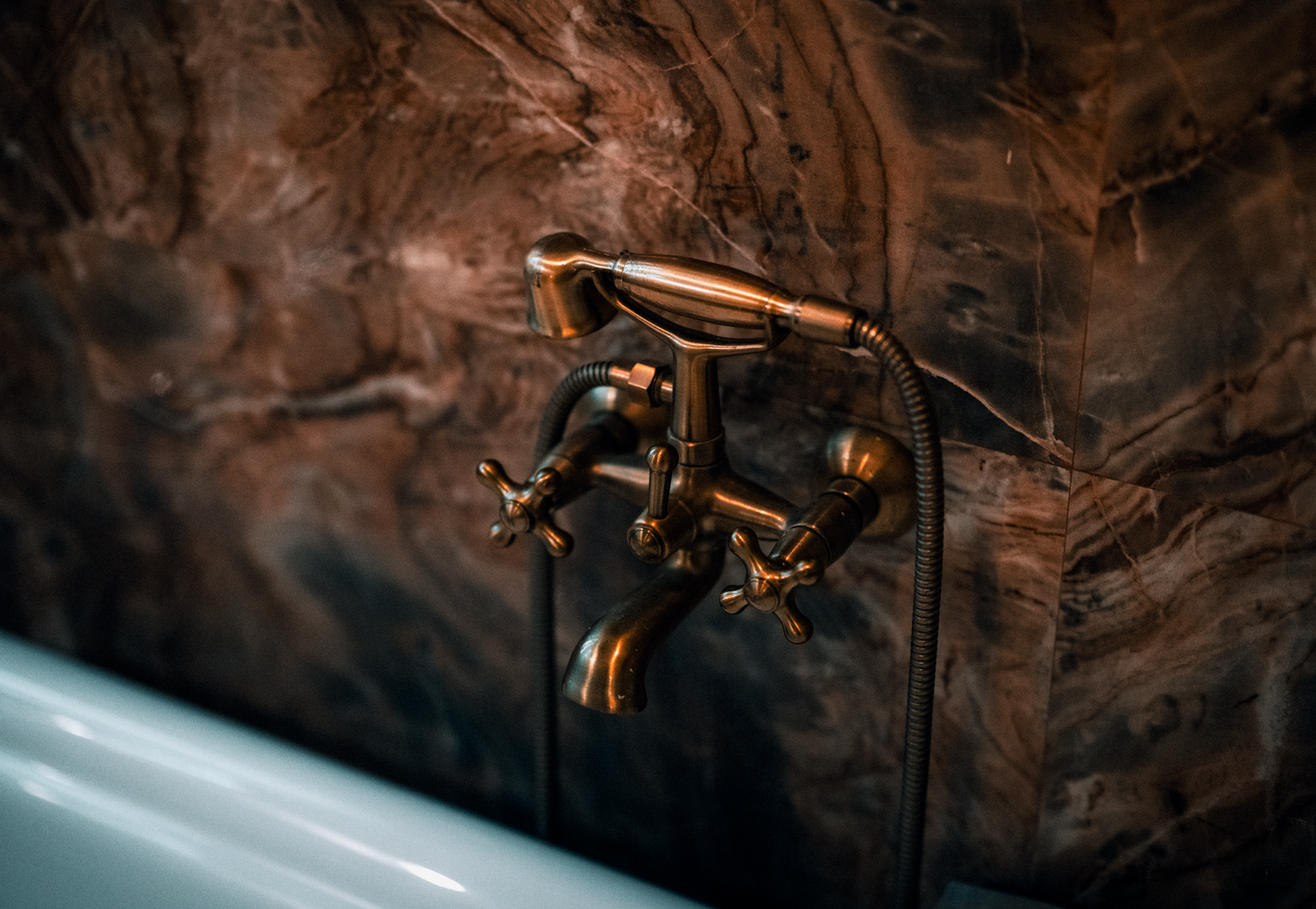
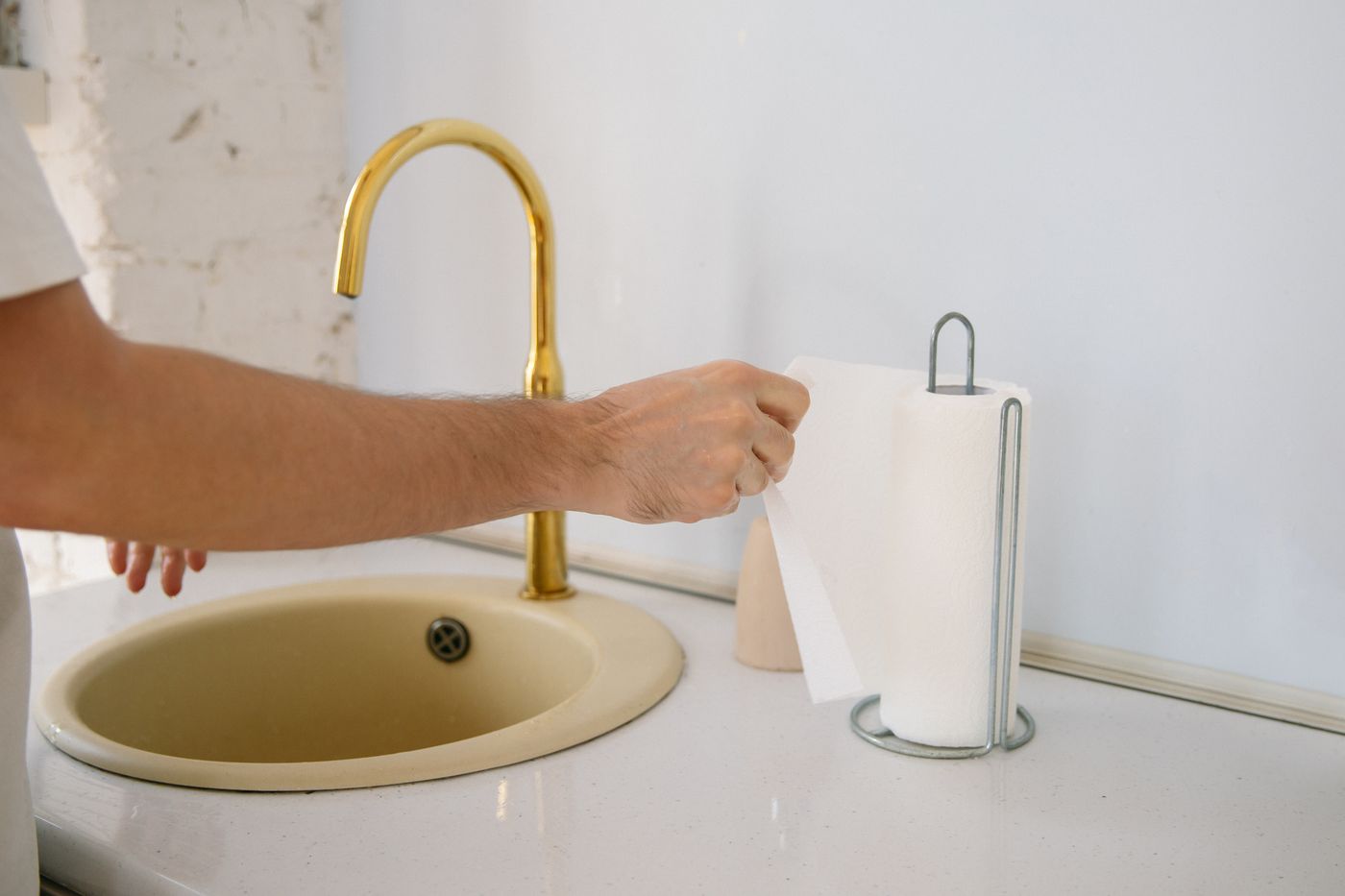
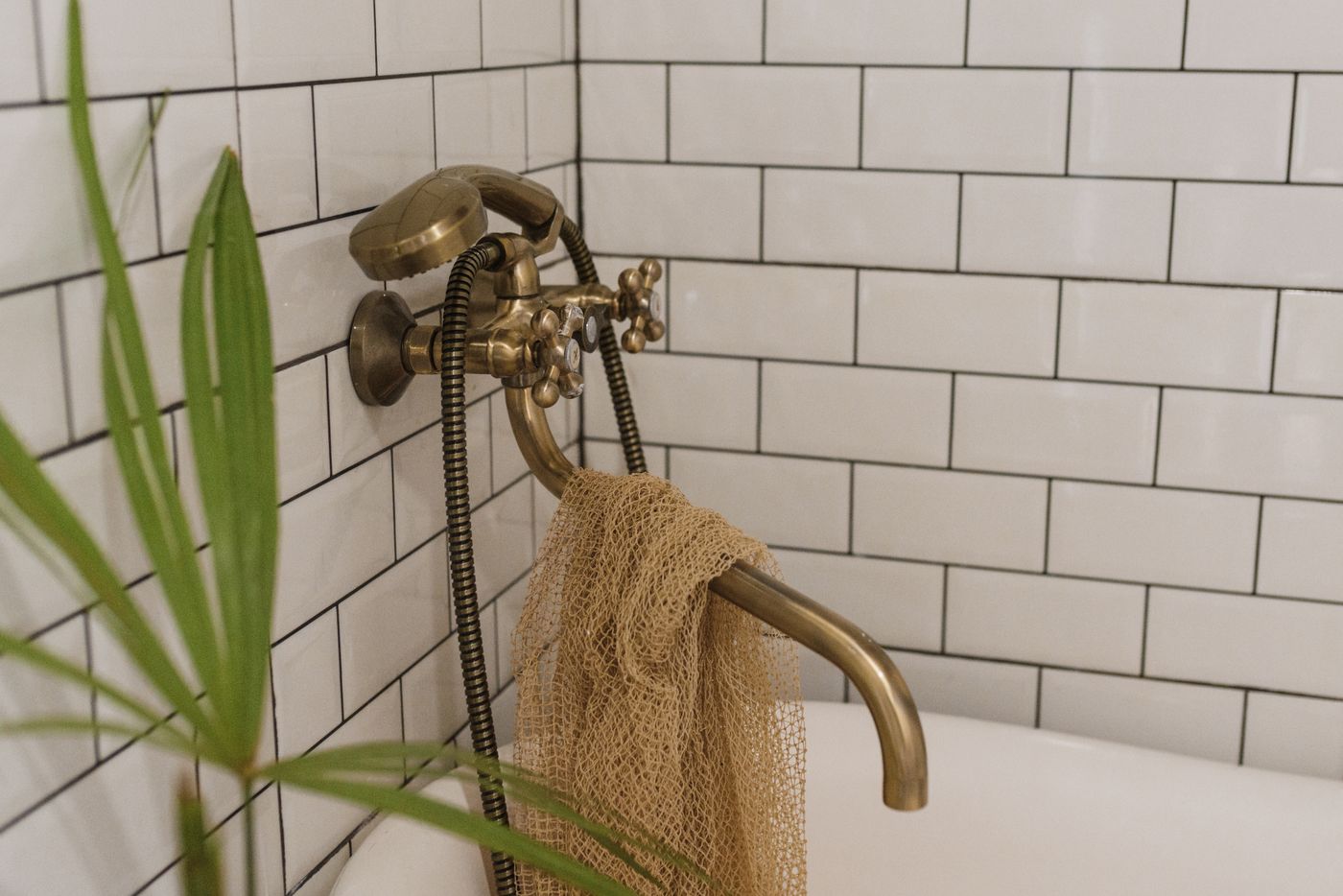
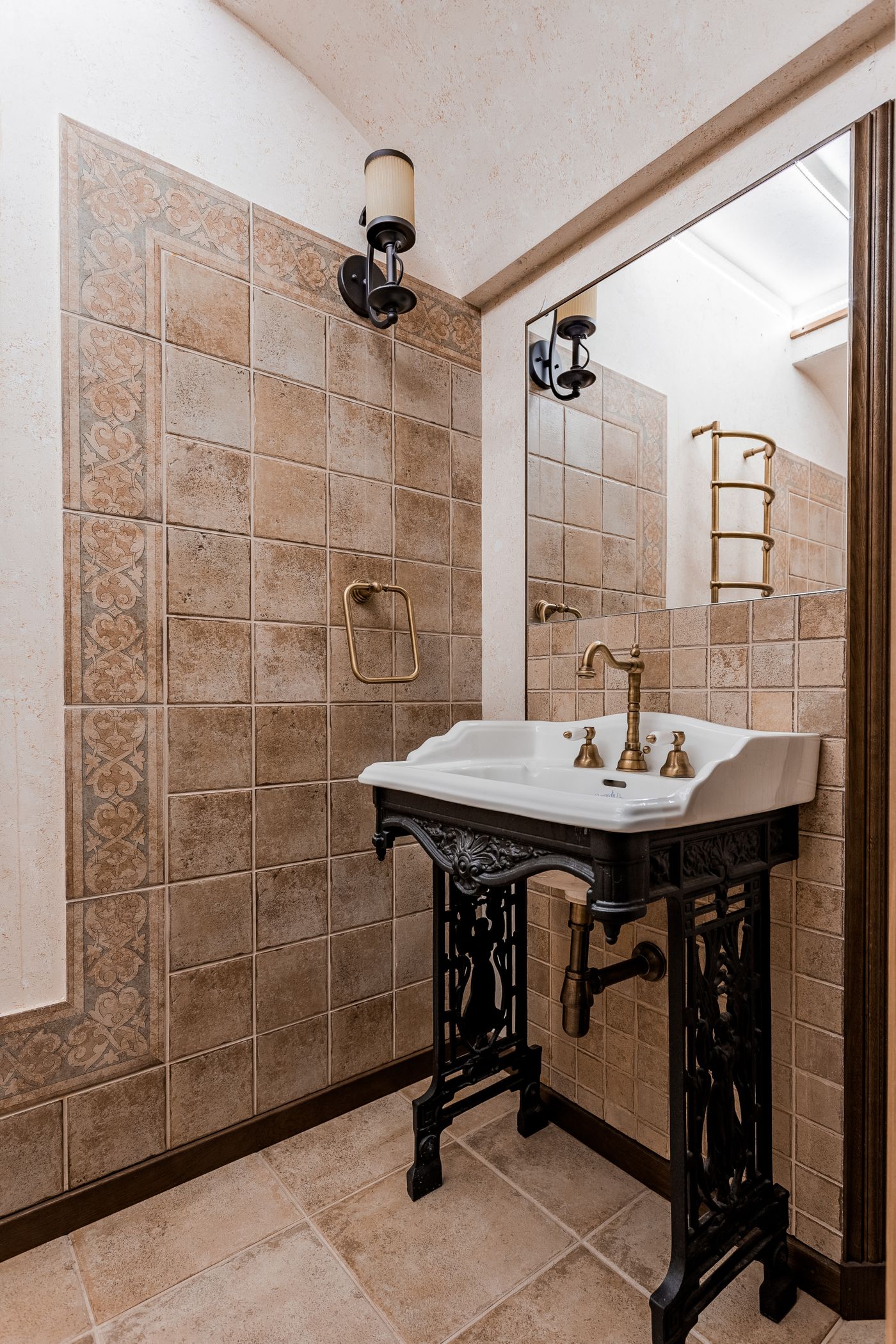
The photographs in this guide illustrate metallic bathroom fixtures and surface variation. Their exact finishes have not been authenticated. They do not demonstrate the result of the routine below or prove that a pictured fitting is unlacquered. Use the photographs for context and the documented instructions for your own fixture to make the care decision.
Separate an appearance preference from a cleaning task
A living finish changes through contact with its environment and use. That can produce variation between areas touched often and areas touched rarely. Before cleaning, decide whether you want to preserve that variation or return the fitting to a brighter appearance, if its maker permits polishing. Those are different goals and should not be combined by accident.
Kallista’s care document, hosted by Kohler, explains that unlacquered brass develops a changing patina and that brass polishing compound removes it. The same document directs users to rinse away soap traces and gently dry with a clean soft cloth after use. Those directions support a limited maintenance routine; they do not justify using a brass polish on every bathroom finish.
Set aside the idea that more shine means more cleanliness. A darker living finish can still be maintained, while a bright surface can still carry residue. Look for the problem you are actually trying to address, such as soap left near a handle or water remaining on a spout, rather than treating the overall color as a stain.
Keep the ordinary routine small
For a confirmed finish, follow its manufacturer’s directions using the specified materials. Prepare a clean soft cloth and make sure it has not previously held an abrasive or a stronger cleaning product. A cloth that looks clean may still carry residue from another task, so use one you can identify confidently.
When the maker calls for rinsing and gentle drying, do that without turning it into a long buffing session. Attend to the areas where water and soap remain after normal use. Avoid soaking handles, flooding joints, or working liquid into gaps simply because the fixture sits beside a sink. Surface care and servicing the mechanism are separate jobs.
Our cleaning-cloth organization guide helps keep the suitable cloth distinct from those used on floors or heavily soiled areas. Put it back only after following its own laundering and drying instructions. A simple designated cloth is more reliable than selecting a different rag from a mixed pile each morning.
Avoid a universal bathroom spray
The bottle that suits the basin or shower glass may not suit the faucet. Protect the fitting from accidental exposure when you clean neighboring surfaces, following the directions for both products. Apply products only as instructed and avoid assuming that something described as natural or homemade is automatically compatible with a living metal finish.
Do not use an abrasive pad to make a patch match the rest of the fitting. Nor should a vinegar, lemon, bleach, or descaling suggestion from a general household tip replace the maker’s finish-specific directions. This guide provides no universal chemical recipe. The acceptable product and contact time depend on the actual finish and instructions.
If a mineral deposit remains after the permitted routine, ask the manufacturer for a suitable next step. Photograph the area and state what you have already used. Escalating through several cleaners can make the original problem harder to diagnose, especially if the finish changes before anyone has identified the residue.
A localized issue is a reason to address that location, not automatically polish the whole fixture. Keep the basin’s condition and the fitting’s condition separate in your notes. The broader between-cleaning bathroom routine can help maintain the surrounding room while you work out the specific surface question.
Discuss appearance with everyone who cleans
Tell household members whether the patina is intentional and which care sheet applies. Keep the instructions where the bathroom cleaning supplies are selected, so a helpful guest or cleaner does not reach for polish to improve the surface. A brief shared note is enough; nobody needs a lesson in metal chemistry to follow the agreed method.
If the fitting has several finishes, identify which component each instruction covers. A handle, hose, spout, and neighboring accessory may not all have the same coating or material. Do not spread a method from one component to another solely because they look coordinated. The manufacturer’s directions should identify the applicable surface.
Avoid presenting a temporary photograph as the required final color. Living finishes evolve, and lighting changes how they appear. A record of actual problems is useful; trying to maintain an identical shade across every part of the bathroom can create unnecessary work and encourage repeated polishing that defeats the finish you chose.
Know when surface care is not enough
Flaking, a loose component, persistent leakage, sharp damage, or an unfamiliar deposit can require a manufacturer or plumbing assessment. A cloth routine does not repair a mechanism or diagnose a coating failure. Stop trying to disguise a functional problem with a cleaner, and provide the relevant model and photographs when asking for help.
For a rented home, report concerns through the agreed maintenance route before altering the fitting. The landlord’s fixture is not an opportunity to test a new finish treatment. A cleaning record showing the permitted method and the problem observed is more useful than a series of experiments whose effects cannot be separated.
Keep the care system proportionate
You do not need a new collection of metal-care products simply because aged finishes are fashionable. Begin with the directions, an appropriate cloth, and ordinary post-use attention. Our cleaning-caddy comparison can help keep specialized supplies limited to the jobs that actually require them.
If the patina no longer suits your preferences, investigate the maker’s approved appearance-maintenance options before buying polish. Restoring brightness can create a new recurring task. Ask yourself whether you are willing to repeat that work or whether accepting normal variation is more compatible with the bathroom routine you want.
Successful care leaves the fixture usable and its finish treated deliberately. You know what it is, which directions apply, and what problem you are addressing. Preserving patina then becomes an informed choice, rather than a reason to leave residue untouched or a fashionable excuse to ignore the fitting’s actual maintenance needs.
Explore related household decisions in our Cleaning hub.
Sources and editorial scope
Editorial research checked October 14, 2026. Trend-report dates and limitations are stated in the article; these are editorial applications of published signals, not verified October keyword rankings. Practical household guidance; illustrations do not document a tested household or authenticate a pictured material.