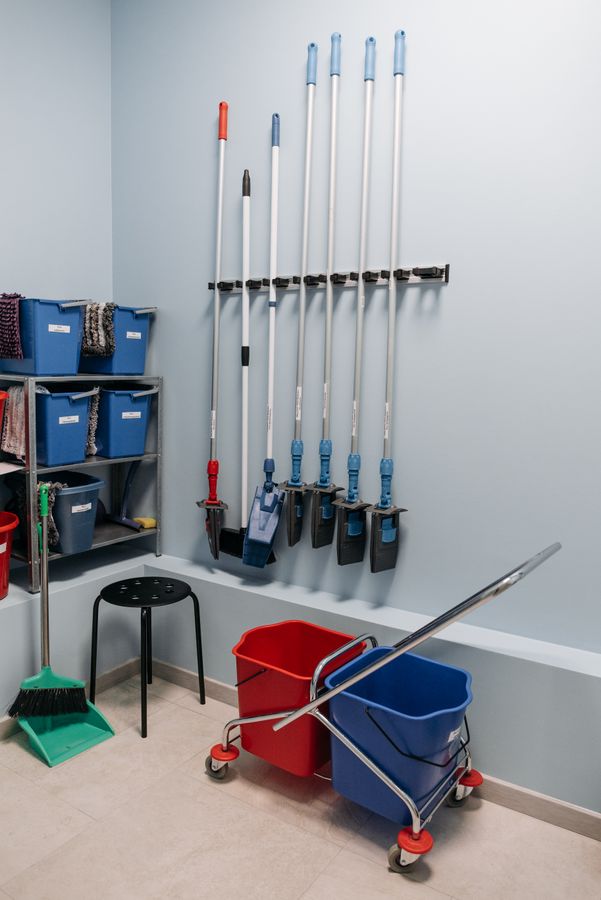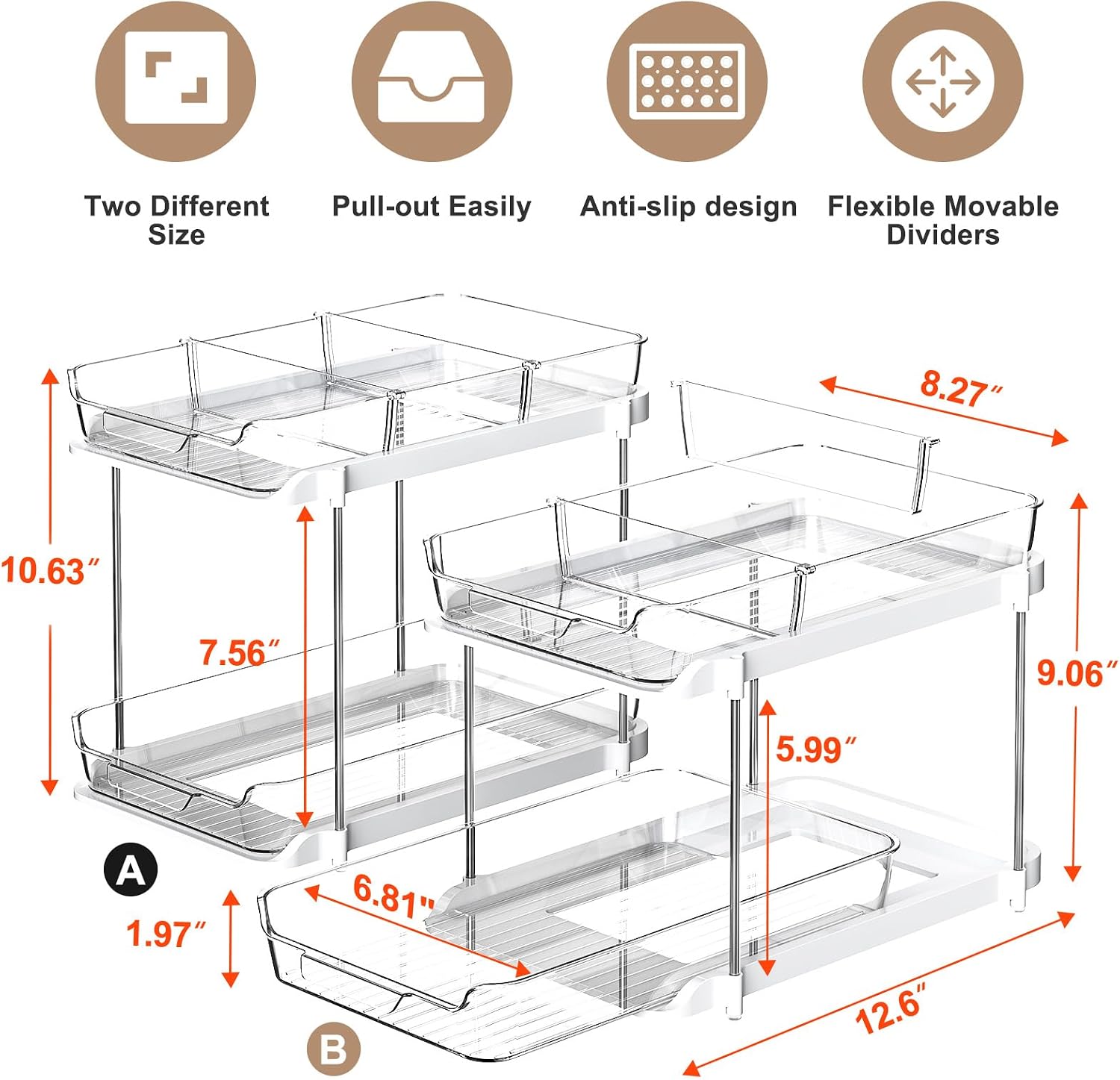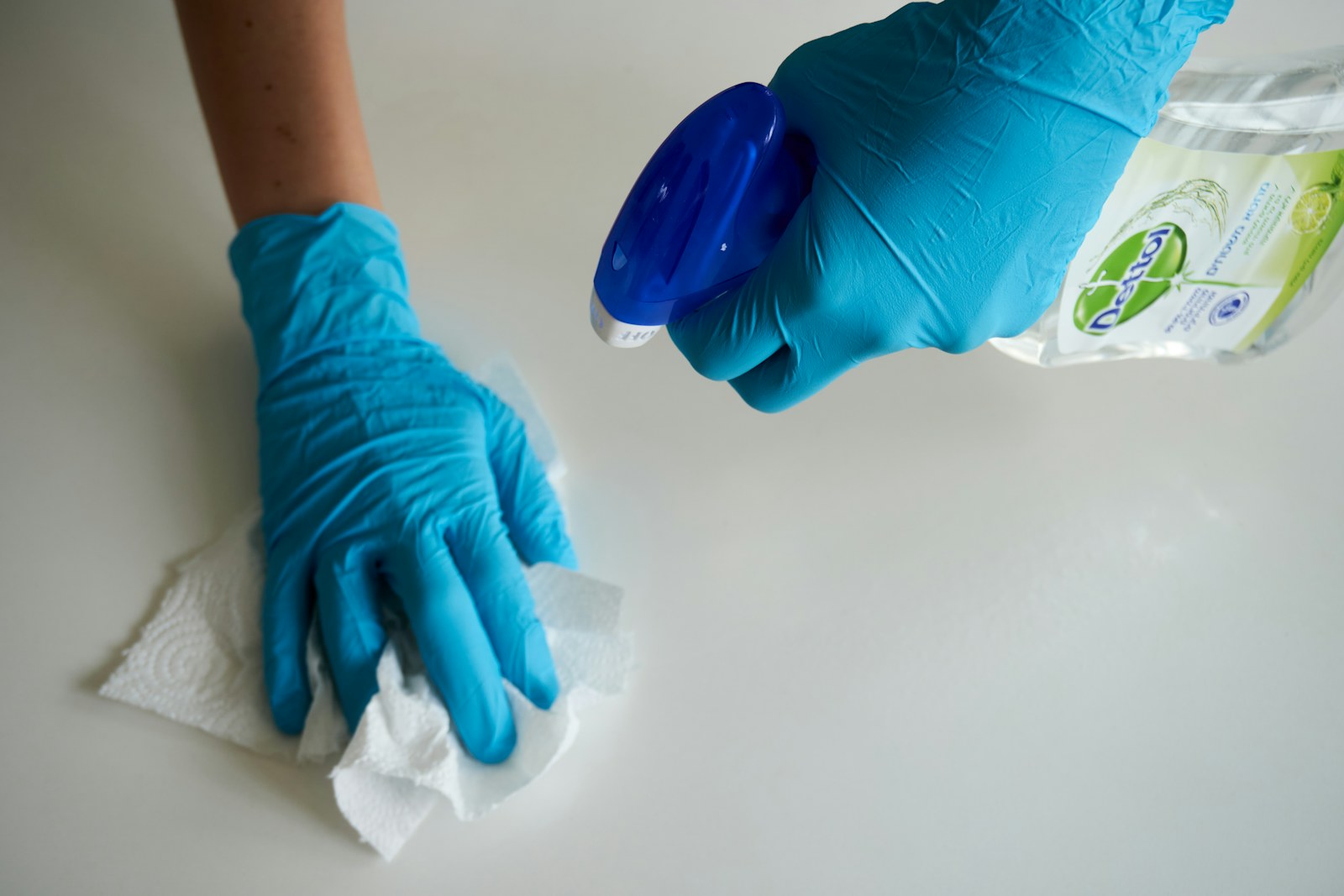
Cleaning-supply storage is often designed around convenience: keep bathroom cleaner in the bathroom, kitchen cleaner in the kitchen, glass cleaner near the mirrors, floor products near the mop. The logic is understandable, but in a small home it can quietly create several mini cleaning closets.
The alternative is one portable caddy containing the active supplies used across rooms.
I do not think one system is always better. The important question is which products are genuinely shared and which routines are different enough to justify local storage.
Start with an inventory, not a container
List every active cleaning product and tool. Group by function rather than brand: general surface cleaning, bathroom-specific, kitchen-specific, glass, floor care, stain treatment, cloths, brushes, gloves.
If the inventory already contains several products doing similar jobs, storage should not be the first fix.
The guide to organizing cleaning supplies safely in a small family home is a useful first step when storage and access are already complicated.
Option 1: one central cleaning caddy
A portable caddy centralizes the high-frequency supplies used in several rooms. It can move with the person cleaning and return to one storage location afterward.
Advantages
- fewer duplicate bottles,
- one inventory to check,
- easy to carry from room to room,
- simpler family rules,
- less permanent storage required in each bathroom or utility zone.
The existing portable cleaning caddy guide covers how to build the caddy itself; here the question is whether centralization fits your routine.

Where the central caddy fails
A caddy becomes heavy when it tries to contain every product in the house. It also becomes inconvenient if you repeatedly carry it upstairs, across a long layout, or to a bathroom cleaned several times a day.
Centralization works best when the caddy contains a core kit, not the household’s entire cleaning inventory.
Option 2: room-by-room cleaning kits
Local kits reduce travel. The bathroom has what the bathroom needs. The kitchen has what the kitchen needs. Quick cleanup is easier because the supply is already there.
Advantages
- fast response to everyday messes,
- no carrying between distant rooms,
- tools can match room-specific surfaces,
- cleaning can happen in short bursts.

Where room kits fail
The biggest risk is duplication. One general-purpose cloth becomes four. One spray becomes three bottles. Gloves, sponges, brushes, and backup products multiply because each room feels incomplete without its own set. For a related step-by-step approach, see How to Clean Curtains in a Small Home Without Taking Over the Whole Room.
Room kits also make inventory harder to monitor. A half-empty product can sit under each sink while a new bottle is purchased.
The kitchen is a special case
Kitchens experience daily food and cooking messes. I usually support a small local cleanup layer: dish soap, a cloth, a suitable everyday surface product if needed, and tools specific to the kitchen routine.
This does not mean the kitchen should hold deep-cleaning products for the whole house.
The small-kitchen cleaning routine for daily cooking helps define what is actually used frequently enough to stay local.

Bathrooms are the other special case
A bathroom may justify a small local kit if quick sink, mirror, shower, or toilet cleaning happens frequently. But the kit should remain narrow.
Do not use “bathroom kit” as permission to store every unopened toiletry and household cleaner under the sink.
Compare walking versus duplication
The core trade-off is simple:
Central caddy: more carrying, fewer duplicates.
Room kits: less carrying, more duplicated storage.
In a small single-level home, the carrying cost is usually low, so centralization often wins. In a multi-level home or household with mobility constraints, local kits may earn their space.

Family safety changes the system
Cleaning products should be stored according to product labels and household safety needs. A portable caddy that remains accessible to young children is not a successful system simply because it is convenient. If you are working on the same space, Labeling Systems for Small Homes: Text, Pictures, Color Codes—or No Labels at All? covers the next decision in more detail.
In homes with children, see how to store cleaning products in a small home with kids before deciding which products can live in local zones.
Family chores favor understandable systems
If several people clean, a central caddy can simplify handoff: the same kit means the same supplies are available regardless of who cleans.
Room kits can also work when responsibilities are permanently divided by room, but labels and restocking become more important.
This connects naturally to a family chore system that does not need a complicated chart: tools should support the assignment rather than create another management task.

Do not confuse refills with active supplies
Backup bottles do not belong in the cleaning caddy. Refill stock should have one controlled secondary location. The active kit should remain light enough to carry and simple enough to understand.
The hybrid system I prefer
For many small homes:
- One central core caddy for shared surface and detail-cleaning tools.
- One small kitchen layer for everyday food cleanup.
- One minimal bathroom layer only if the bathroom is cleaned frequently enough to justify it.
- One backstock zone away from prime cleaning space.
This keeps convenience without creating multiple inventories.

How to know you have too many room kits
Warning signs:
- the same product exists in three rooms,
- you buy a replacement because you cannot remember where the first bottle is,
- local cabinets are full of cleaning rather than room-specific items,
- products expire or sit unused,
- nobody knows which cloth or brush belongs where.
Match the system to the schedule
If you clean room by room on different days, local kits may feel convenient. If you batch similar tasks across the home, a central caddy is stronger. For a related step-by-step approach, see Central Charging Station vs. Room-by-Room Chargers: What Works Better in a Small Family Home?.
The article comparing top-to-bottom, room-by-room, and task-batching cleaning can help determine which storage strategy fits the routine.

What changes in a two-story home?
Stairs increase the carrying cost enough that a second small kit may be justified. I would still avoid duplicating every product. Keep one compact upstairs set for high-frequency bathroom or surface cleaning, while specialty and deep-cleaning products remain centralized.
The goal is to duplicate convenience, not duplicate the whole inventory.
What changes when several family members clean?
A central caddy can standardize the routine, but it also creates competition if two people clean simultaneously. In that case, duplicate only the simple tools most likely to be used at the same time—cloths or a basic brush—rather than creating two complete product collections.
Use refill frequency as a warning signal
If one room-specific bottle is empty while two identical bottles elsewhere are half full, the distributed system is failing inventory control. Consolidate before buying another refill.
Separate tools from chemicals
Not every part of the system has to move together. A bathroom brush can stay in the bathroom while shared cleaning products travel in the caddy. This reduces carrying without creating duplicate chemical storage.
Keep a clean-cloth workflow
Reusable cloths need their own clean/dirty cycle. Do not let the caddy become the place where used cloths sit until the next cleaning session. The article on organizing cleaning cloths and mop pads without mixing clean and dirty can support this part of the system.
My expert conclusion
For most small homes, I would start with one central caddy because it controls duplicates and reduces the amount of permanent cleaning storage. Then I would add only the local tools that solve a repeated high-frequency need.
The goal is not to make every room independently equipped. It is to make cleaning fast enough without multiplying the inventory. If you are working on the same space, Top-to-Bottom vs. Room-by-Room vs. Task Batching: Which Cleaning Method Fits a Small Home? covers the next decision in more detail.
Convenience should reduce work—not create three cabinets of half-used products that somebody eventually has to manage.