Cleaning supplies are awkward in a small home because the easiest storage spots are often the same spots children can reach. You may also find How to Organize Laundry Supplies When the Washer Is in the Kitchen or Bathroom useful for a closely related small-home problem.
The answer is not simply putting everything “up high.” Different homes, children, products, and storage spaces need different controls. The safest foundation is to keep products in their original containers, follow the label, and create adult-controlled storage that is difficult for children to access.
Start by reducing the number of products
Before solving storage, review what you actually use. Duplicate sprays, nearly empty bottles, specialty products you never reach for, and old supplies can consume valuable secure space.
Dispose of unwanted products according to label and local guidance rather than combining leftovers or pouring them into random containers.
Keep products in original labeled containers
Do not transfer household cleaners into drink bottles, food containers, or unlabeled decorative dispensers. Original packaging preserves the product label, warnings, directions, and identification.
Separate cleaning chemicals from cleaning tools
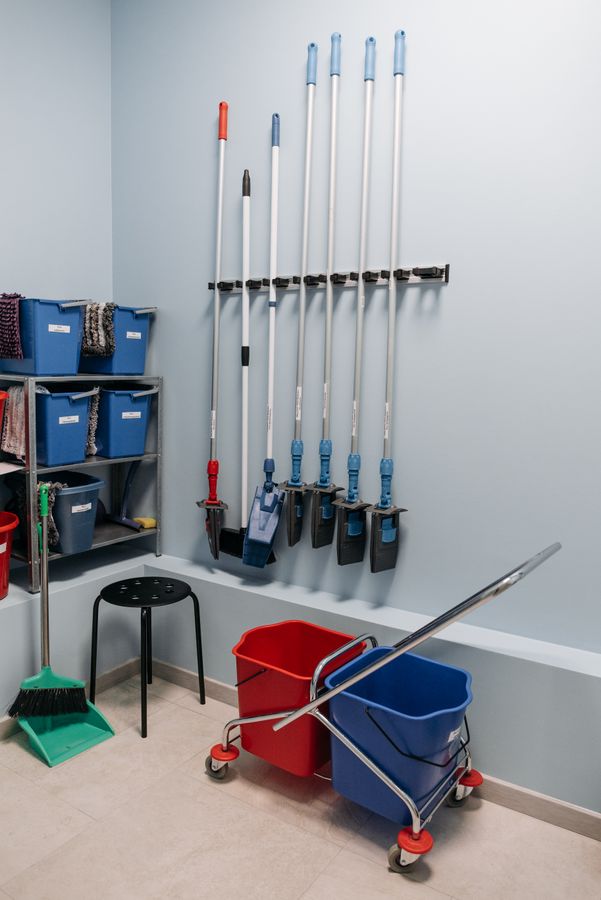
Microfiber cloths, brushes, dry mop pads, dusters, and empty buckets can often live in easier-access storage.
Cleaning chemicals, pods, concentrated products, and other potentially hazardous supplies deserve the more controlled zone.
Choose a storage location children do not control
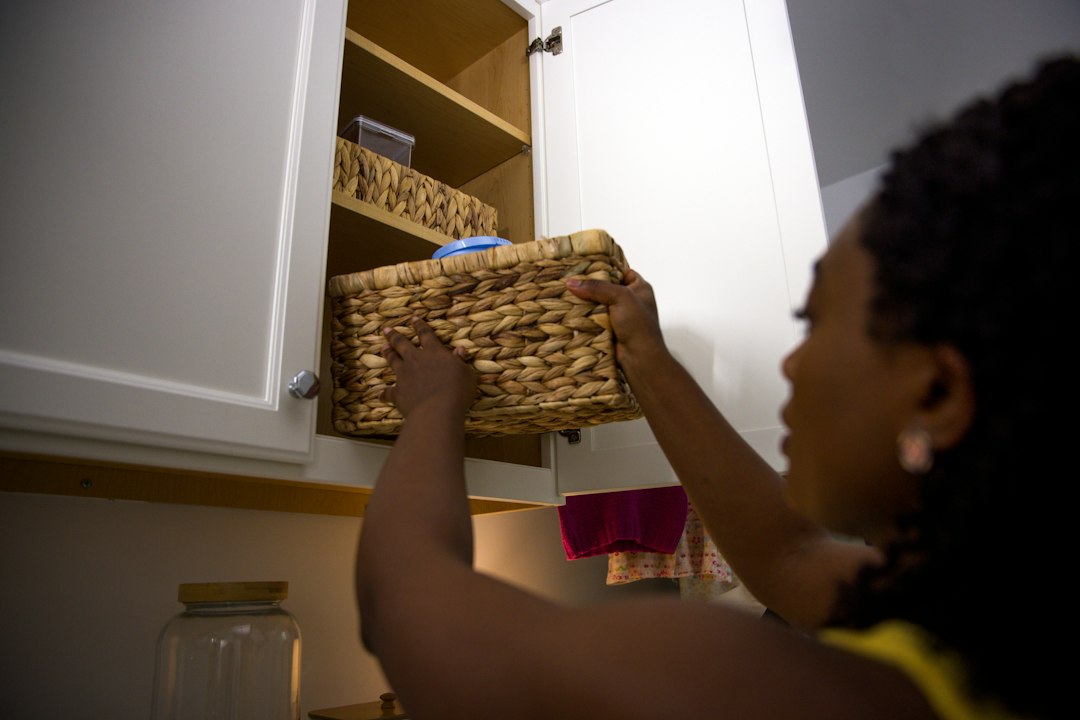
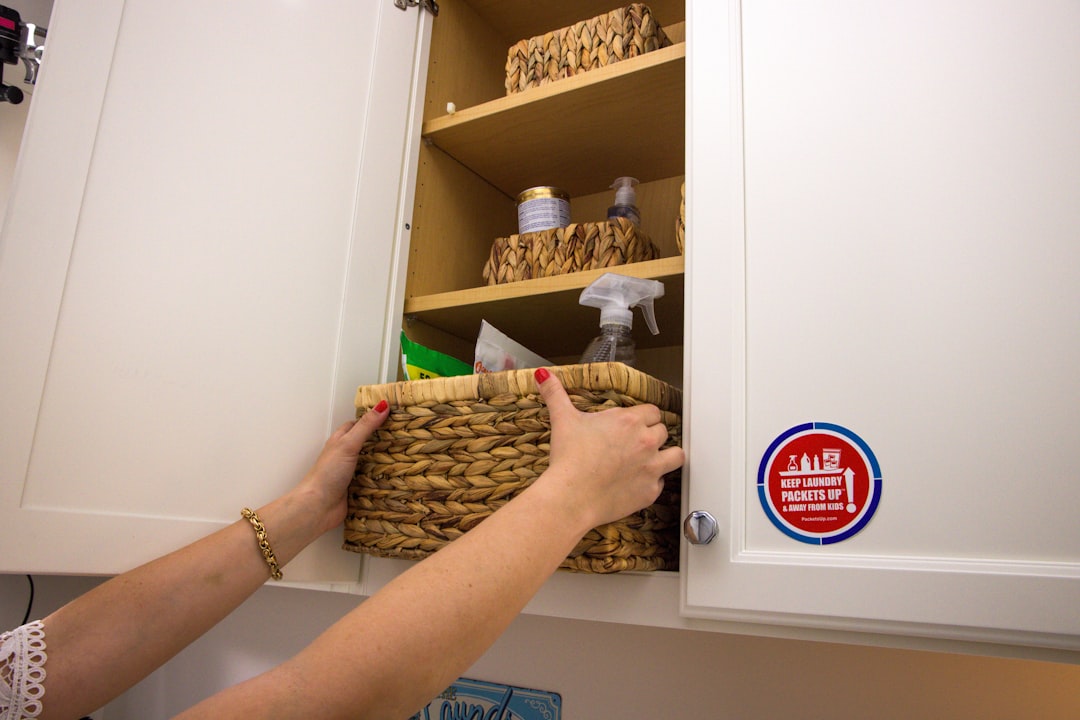
Depending on your home, this may be a locked or latched cabinet, a high adult-only cabinet that is not climb-accessible, or another secured area recommended for the products you use.
Child-resistant packaging is not a substitute for secure storage.
Avoid storing cleaners beside food or medicines
Keep household cleaning products clearly separate from food, drinks, and medication storage to reduce mix-ups and contamination risk. For the broader setup, How to Keep Dust Under Control in a Small Bedroom Without Cleaning Every Day is a useful next read.
Keep laundry products within the same safety logic
Laundry detergents and concentrated packets need deliberate storage too. Follow the product label and keep them secured from children.
Do not create an unlabeled “refill station”
Buying refills can reduce packaging, but the working product should remain in an appropriate labeled container unless the manufacturer specifically provides a safe refill system. For a related step-by-step approach, see The One-Basket Toy Cleanup System for a Small Living Room.
Use a small adult cleaning caddy for active sessions
A caddy can hold the products an adult is using during a cleaning session, but it should return to secure storage immediately afterward.
Do not leave the caddy on the floor, stairs, bathroom counter, or kitchen table between tasks.
Keep emergency information accessible to adults
Know where product labels and poison-control information are available. If a child may have been exposed to a household chemical, follow the product guidance and contact the appropriate poison-control or emergency resource rather than improvising a home remedy. If you are working on the same space, Where to Store a Vacuum, Mop, and Broom in a Small Apartment covers the next decision in more detail.
The weekly supply check
- return all products to secure storage,
- check that caps and closures are intact,
- remove empty containers,
- separate used cloths from clean supplies,
- confirm that no cleaner has migrated to a bathroom counter, floor, or open shelf.
For homes without a utility closet
Use How to Organize Cleaning Supplies in a Small Home Without a Utility Closet for the broader storage layout, then apply the child-safety layer to the product zone.
Frequently asked questions
Is a high shelf enough?
Not always. Children can climb, and homes differ. Use storage controls appropriate to the product, child, and environment, and follow manufacturer and safety guidance.
Can I put cleaners in matching bottles?
Avoid decanting household chemicals into unlabeled or food-like containers. Original labeled packaging is the safer default.
Can cleaning cloths stay with cleaners?
They can if the whole area is appropriate and secure, but tools and textiles often work better in a separate easy-access zone while chemicals stay adult-controlled.
Small-space storage still needs a safety hierarchy
Give secure space to the products that actually require it, keep labels intact, reduce duplicates, and let lower-risk cleaning tools live somewhere easier to reach.