Shared bedrooms are hard enough when space is tight. They get harder when the children using the room have completely different habits.
One child may put everything away without being asked. The other may build a pile beside the bed and genuinely know where everything is. Trying to force both children into the same detailed system often creates more conflict than order. For a related step-by-step approach, see How to Organize Kids’ Clothes in a Small Bedroom Without Overstuffing Drawers.
The better goal is one shared standard with separate personal systems.
Separate what belongs to each child
Give each child clear ownership of drawers, hooks, shelf sections, bedside space, and personal bins. Shared rooms become tense when no one knows who is responsible for what.
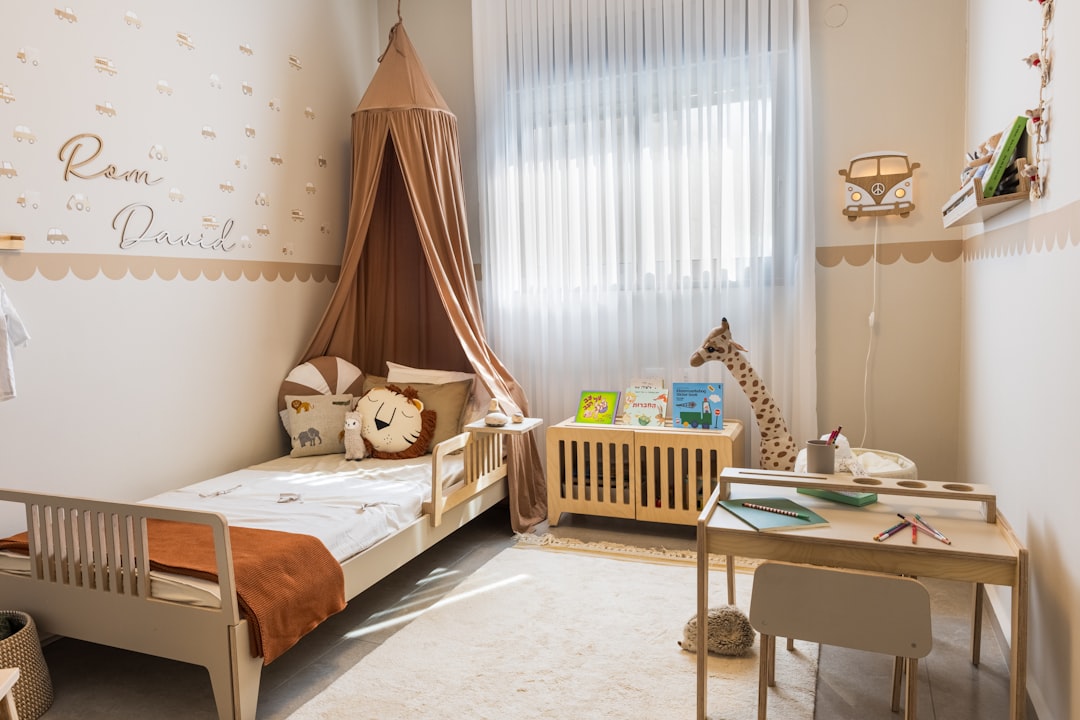
Keep shared zones very simple
Shared toy storage, books, dirty laundry, and floor space should use broad rules that both children can follow.
For example:
- all dirty clothes go to one hamper,
- books return to one shelf,
- shared blocks go in one bin,
- the middle floor stays clear at night.
Do not make the tidier child manage the room
One child should not become responsible for restoring the other child’s side. Adults can set the room standard, but ownership needs to stay fair. For a related step-by-step approach, see A Toy Rotation System for Small Homes That Parents Can Actually Maintain.
Define “tidy enough” in concrete terms
A vague instruction like “clean your room” creates different interpretations. Use visible outcomes:
- floor path clear,
- dirty clothes in hamper,
- bed usable,
- toys inside their broad bins,
- school items ready for tomorrow.

Let personal storage styles differ
One child may prefer folded clothes. Another may do better with open bins. One may want a bedside basket; another may keep almost nothing beside the bed. For a related step-by-step approach, see The One-Basket Toy Cleanup System for a Small Living Room.
The systems do not need to match as long as they respect the shared room.
Use equal boundaries, not identical containers
Fairness can mean equal drawer count, equal shelf width, or equal floor footprint—not necessarily matching baskets or identical layouts.
Protect a neutral shared floor zone
The space between beds or between the door and closet should not belong to either child. Keeping that route clear makes the whole room feel less contested. For a related step-by-step approach, see How to Organize a Small Kids’ Closet That Has to Hold Clothes, Shoes, and Gear.
Use a five-minute shared reset
Set a timer. Each child resets their own zone while both help with one shared category.
A simple sequence:
- dirty clothes,
- floor items,
- shared toys/books,
- personal surfaces,
- tomorrow’s school items.
Handle different bedtimes separately
If one child sleeps earlier, the later child’s storage should not require noisy drawers, bright lights, or access across the sleeping child’s space.
Reduce categories that create repeated arguments
If stuffed animals, craft supplies, or dress-up clothes constantly spread into both sides, limit the volume or move that category to another room.
Use the larger room plan as the foundation
For furniture placement and ownership zones, see How to Organize a Shared Kids’ Bedroom in a Small Home.
Frequently asked questions
Should siblings have matching storage?
No. Matching can look calm, but each child may maintain a different storage style better.
How do I stop arguments over shared space?
Make ownership visible and keep a few neutral zones—such as the main floor path—shared but rule-based.
What if one child refuses to reset?
Keep the standard short and specific, and avoid making the other child responsible for compensating.
A shared room does not need shared personalities
The room works when both children can live differently inside clear boundaries. Keep shared rules simple, personal zones separate, and the definition of “tidy enough” concrete.