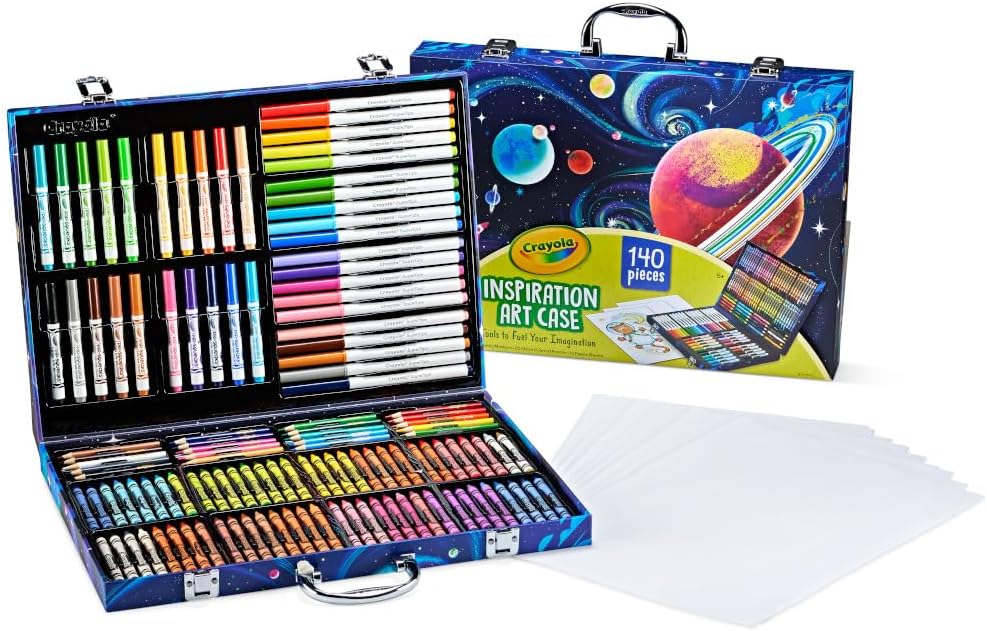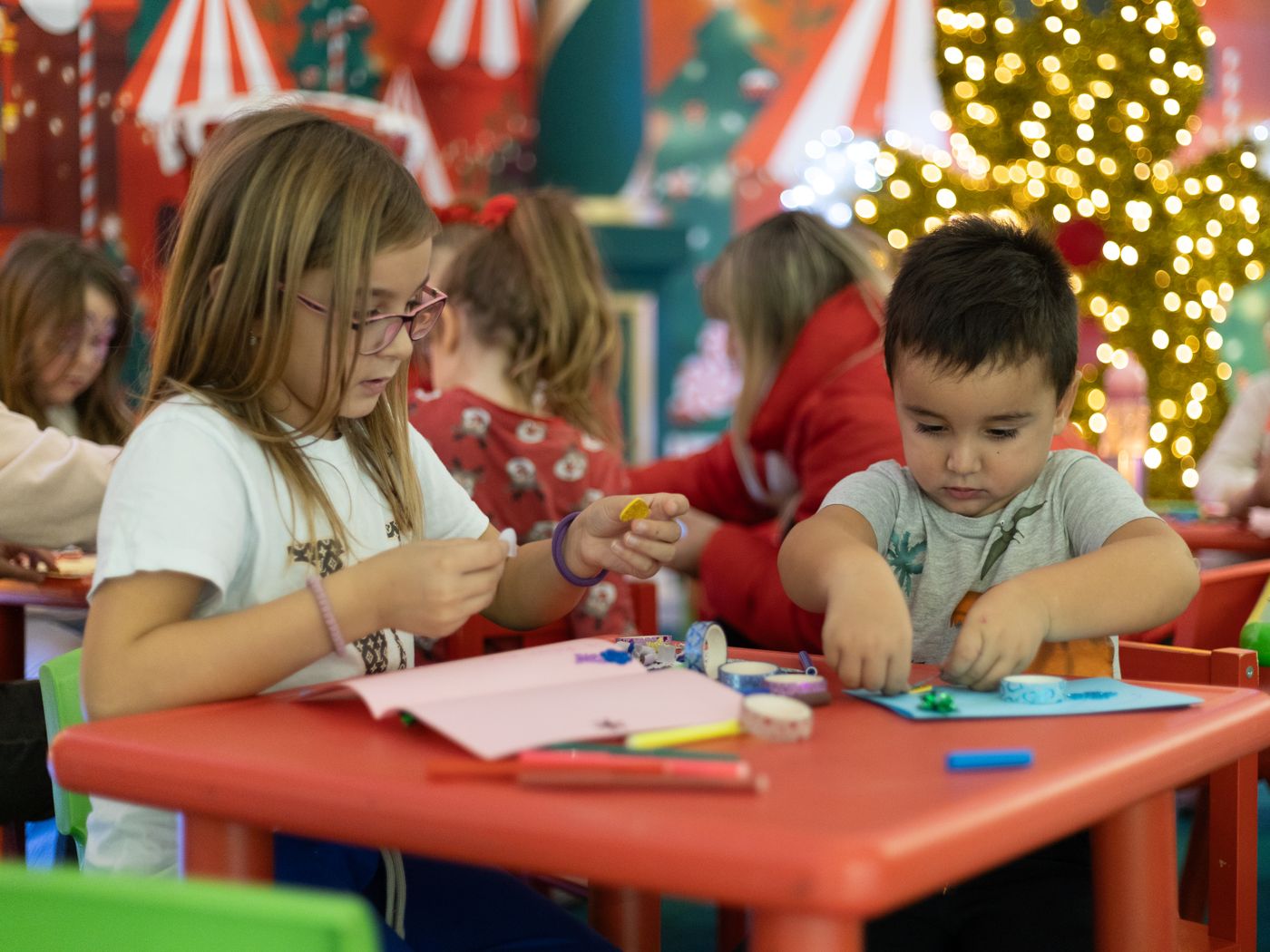
Give each child a choice of design within one shared, manageable ornament-making activity. Choose compatible materials first, provide an individual work area for each participant, and agree where unfinished pieces will dry. Children can make different-looking ornaments without the adult preparing several unrelated craft projects.
Etsy’s October 14, 2026 Craftmas direction includes group making. Here, that inspiration becomes a small family session focused on choice and cooperation. It does not establish which children’s supplies or craft kits are popular now.
This is a plan for an adult-supervised activity using products suitable for the participating children. Select materials according to the manufacturers’ age and use instructions. Glass blanks, small loose parts, sharp tools, hot glue, and specialized finishes are not interchangeable substitutes for age-appropriate materials.
Decide the shared activity before offering designs
Choose one basic process that the adult can supervise comfortably. Decorating suitable ready-made blanks with an approved medium is one possible format. Another is making a paper ornament from a limited set of prepared shapes. The right choice depends on the children involved, the available time, and the supplies’ instructions.
Keep the underlying method consistent while allowing visible differences. One child might choose stripes, another a face, and another a simple field of color. They do not all need to copy a finished adult example. If the example looks like the expected result, some children may treat every variation as a mistake.
Offer two or three understandable choices rather than opening every craft container. Too many media create different drying times, tool requirements, and supervision needs. A narrower choice gives each child meaningful control while keeping the shared session practical for the adult helping them.
Prepare a usable place for each maker
Assign each child a clear working area and a place for their own unfinished piece. Use suitable surface protection and stable seating for the activity. Keep the ordinary route through the room clear, and position the adult where help can reach everyone without leaning across another child’s wet work.
If the session takes place near a bedroom, choose a suitable temporary working surface rather than assuming bedding or carpet can serve as the craft area. Keep wet materials away from sleep items. The finished ornaments can belong to the children’s room without the entire process needing to happen there.
Our guide to organizing children’s art supplies without a permanent craft room covers the everyday storage arrangement. For this event, bring out only the chosen activity supplies. Extra materials left within reach can turn a planned painting session into an accidental experiment with several incompatible products.
Give each child ownership of a small starting set
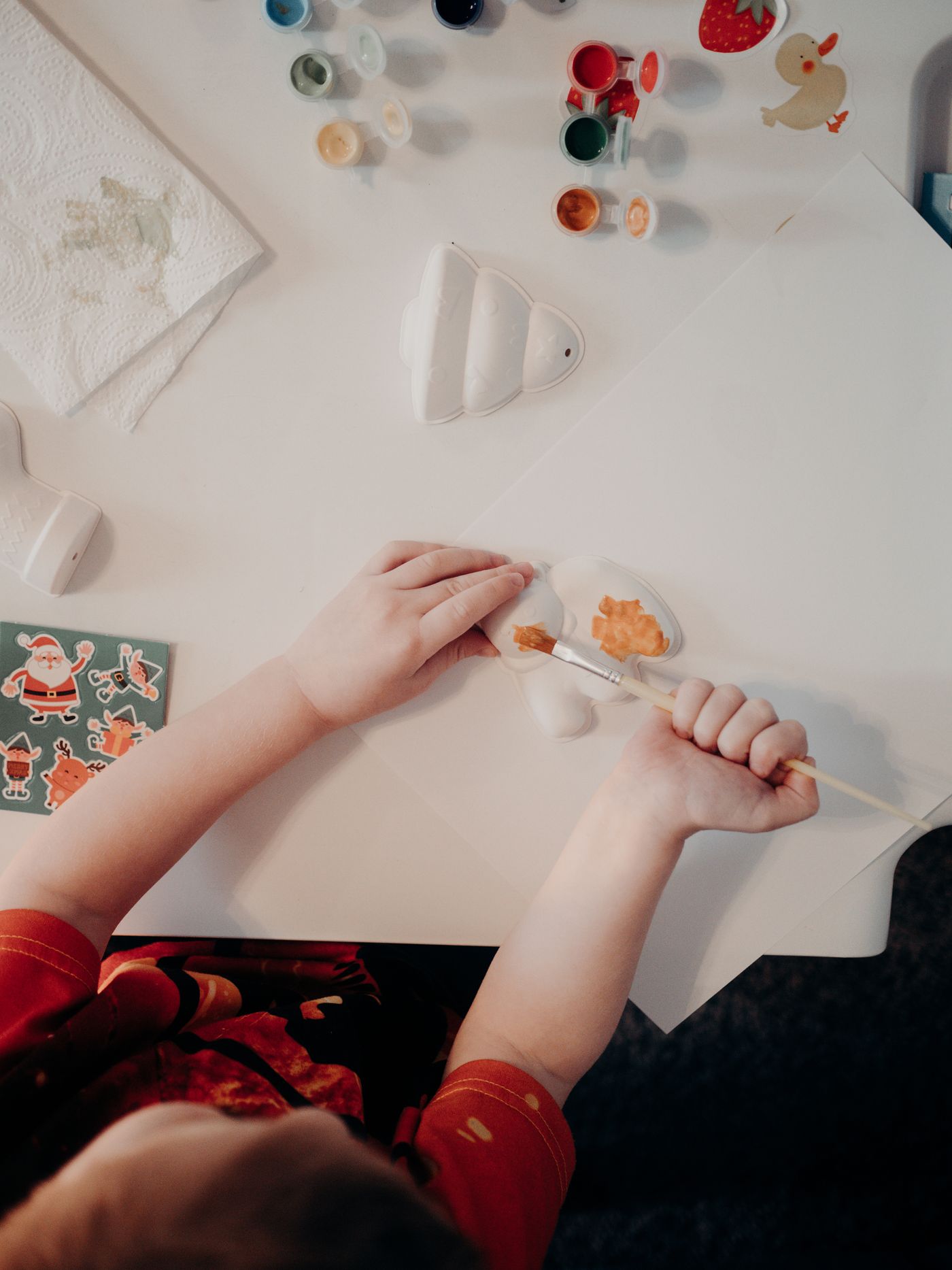
Put a similar quantity of basic supplies at each place where feasible. “Fair” does not always mean identical tools, especially when ages and needs differ, but it should be clear how everyone can participate. Explain any differences simply, without ranking one child as more skilled or trustworthy in front of the others.
Let children identify their own work in a way that will remain readable through drying and moving. A name on the separate support or work mat can be better than forcing a signature into the design. Avoid publishing a child’s full name in a photograph of their work without appropriate permission.
Keep a plain spare blank if your chosen activity allows it. It offers a calm option when a piece becomes unusable, but do not automatically replace work because it differs from an adult’s preferred style. Ask what help the child wants before “fixing” a design.
Make sharing a visible turn, not a repeated negotiation
Identify the supplies that must be shared, such as one special stamp or one color. Decide how turns work before those items become the center of a dispute. A simple spoken order can be enough. The adult should maintain the order instead of asking children to renegotiate every time another person reaches for the tool.
Keep shared items in a neutral accessible position that the adult can manage. Do not make one child’s workspace the permanent supply depot. That child may spend the session defending wet work from reaching hands while everyone else experiences the arrangement as convenient.
If waiting is likely, offer a task using the child’s own tools while the shared item is in use. For example, they can choose the next color or plan a pattern on spare paper. Avoid adding a second unrelated craft solely to fill every short pause; it can increase the cleanup and supervision burden considerably.

Separate help with the process from control of the result
An adult can explain how the permitted materials work, demonstrate a technique on a separate scrap, or help with a step the child requests. Those actions differ from repainting the child’s ornament to make the set match. Keep the child’s design choices intact wherever the material and safety instructions allow.
Use neutral observations instead of comparing results. “You used dots around the edge” leaves room for the child to explain an idea. “Your sister’s is neater” turns a shared event into a contest. The aim is participation and an object the child recognizes as their own.
When a child changes direction midway, check whether the medium permits it. If it does not, explain the practical limit and offer a separate scrap for the new idea. Do not promise that every wet layer can be erased or covered immediately. A straightforward material constraint is easier to understand than an adult’s changing preference.
Plan for one child finishing early
Choose a quiet next step that does not involve handling someone else’s wet ornament. The child might draw a gift tag, choose a future display position with an adult, or move to an ordinary activity elsewhere. Finishing early should not require starting another full set of ornaments.
If the session overlaps with meals or homework, use the closing boundaries in our shared dining-table handoff guide. Clear dry personal items first, move wet work using its prepared supports, and restore the surface according to the materials and surface instructions. Do not transfer open paint containers to the nearest bed merely because dinner is ready.

Give slower makers permission to pause. An unfinished piece can remain clearly identified in the designated place, provided it can be stored appropriately for the medium. State when an adult can help with the next step rather than saying “later” indefinitely. A planned return is more reassuring than seeing the work disappear during cleanup.
Make the drying space part of the activity
Read the product directions for drying and curing before the session. “Dry to touch” and ready for handling or hanging may be different stages. Arrange a stable position where the ornaments can remain for the required time without being stacked, touched by passersby, or moved repeatedly for another household task.
Keep ornaments separate and identified. If the support must be moved, use a method appropriate to the materials and do so carefully with adult help. Do not use a decorative hanging loop as a carrying handle unless the construction is ready and intended to support the object that way.
Check the intended display location before attaching or adjusting hanging parts. Follow the ornament’s and hanging product’s directions, and keep unsuitable small parts or loops away from children who may not safely use them. The display decision can wait until the object is ready; it does not need to be completed during the messiest part of the session.
Choose a fair way to display different designs
Agree a modest display area appropriate for the finished ornaments. If several children share a room, let each choose a position within the agreed boundaries. Avoid assigning the most prominent place to the adult’s favorite design. Different color choices can coexist without being arranged as a ranked competition.

An ornament intended as a gift should be the child’s choice within the family’s practical plan. Do not quietly give away a piece the child expected to keep. Likewise, ask before photographing or sharing their work. Our guide to family photos and printed keepsakes provides broader context for choosing what the household preserves and shares.
If a child does not want their work displayed, keep that option available. Participation does not need to end with a compulsory room exhibition. A private keepsake or a carefully stored item can be an equally valid outcome, provided the materials are ready and the storage is appropriate.
End while the session still feels manageable
Allow time for the adult to collect and care for tools according to their instructions. Invite children to help with suitable closing tasks, such as returning dry paper scraps or putting their names beside their own work. Keep waste handling and product cleaning with the responsible adult where the materials require it.
For a larger group, the scale decisions in our small-home birthday-party guide can help you decide how many participants the space comfortably supports. A smaller session with clear attention may work better than including more people simply because more ornament blanks came in the pack.
Notice what you would change next time: fewer shared colors, a clearer drying place, a shorter session, or more room for independent designs. Keep that note with the remaining activity supplies. The successful outcome is a group of children who had room to make choices, with work that can finish safely and a household that can return to its ordinary rhythm.
Explore related household decisions in our Family Home hub.
Sources and editorial scope
Editorial research checked October 15, 2026. Trend-report dates and limitations are stated in the article; these are editorial applications of published signals, not verified October keyword rankings. Practical household guidance; illustrations do not document a tested household or authenticate a pictured material.