Sentimental paper is one of the hardest categories to organize because the usual decluttering question—“Do I use this?”—does not apply. You may also find How to Manage Hand-Me-Down Kids’ Clothes Between Siblings Without Storing Too Much useful for a closely related small-home problem.
You may never “use” a birthday card from your grandmother, a child’s first drawing, or a photo from a family trip. The value is memory, not function.
That is exactly why sentimental categories need stronger boundaries. When every meaningful item is kept, the truly meaningful pieces become harder to find.
The goal is not ruthless minimalism. It is curation.
Separate photos from general paper clutter first
Printed photographs, greeting cards, school keepsakes, certificates, letters, ticket stubs, and children’s artwork may all feel sentimental, but they do not need the same storage method.
Start with broad categories so one photo box does not become a mixed archive of receipts, school papers, and family history.

Do not begin by scanning everything
Scanning can be useful, but digitizing thousands of unsorted items simply creates digital clutter faster.
Edit first. Decide what deserves preservation, then scan selectively if digital access or backup is valuable to your family.
This is a broader principle I strongly prefer: do not digitize decisions you have not made yet.
Use a “representative memory” approach
You do not need every photo from the same afternoon to remember the afternoon.
When you have many near-duplicates, keep the image that best represents the people, moment, or story. A small curated set is more likely to be revisited than a shoebox of forty similar prints.
Keep people and stories more important than technical perfection
A slightly blurry photo of a meaningful person may matter more than a technically perfect image of a less meaningful scene.
Sentimental editing should not look like professional photo judging. Keep what tells the family story.

Create one physical home for printed photographs
Use archival-quality storage appropriate to the materials if long-term preservation matters. The exact product is less important than keeping photos dry, protected, and out of scattered drawers.
One or two clearly labeled photo boxes are easier to understand than albums in one room, envelopes in another, and loose prints inside desk drawers.
Label by era or household chapter, not every individual event
Overly detailed filing can make the project impossible to finish.
Broad labels such as:
- Before Kids,
- Baby Years,
- Elementary School,
- Grandparents,
- Family Trips,
- 2020–2025
may be enough. You can refine later if you enjoy the process.
Give children’s paper memories a separate container
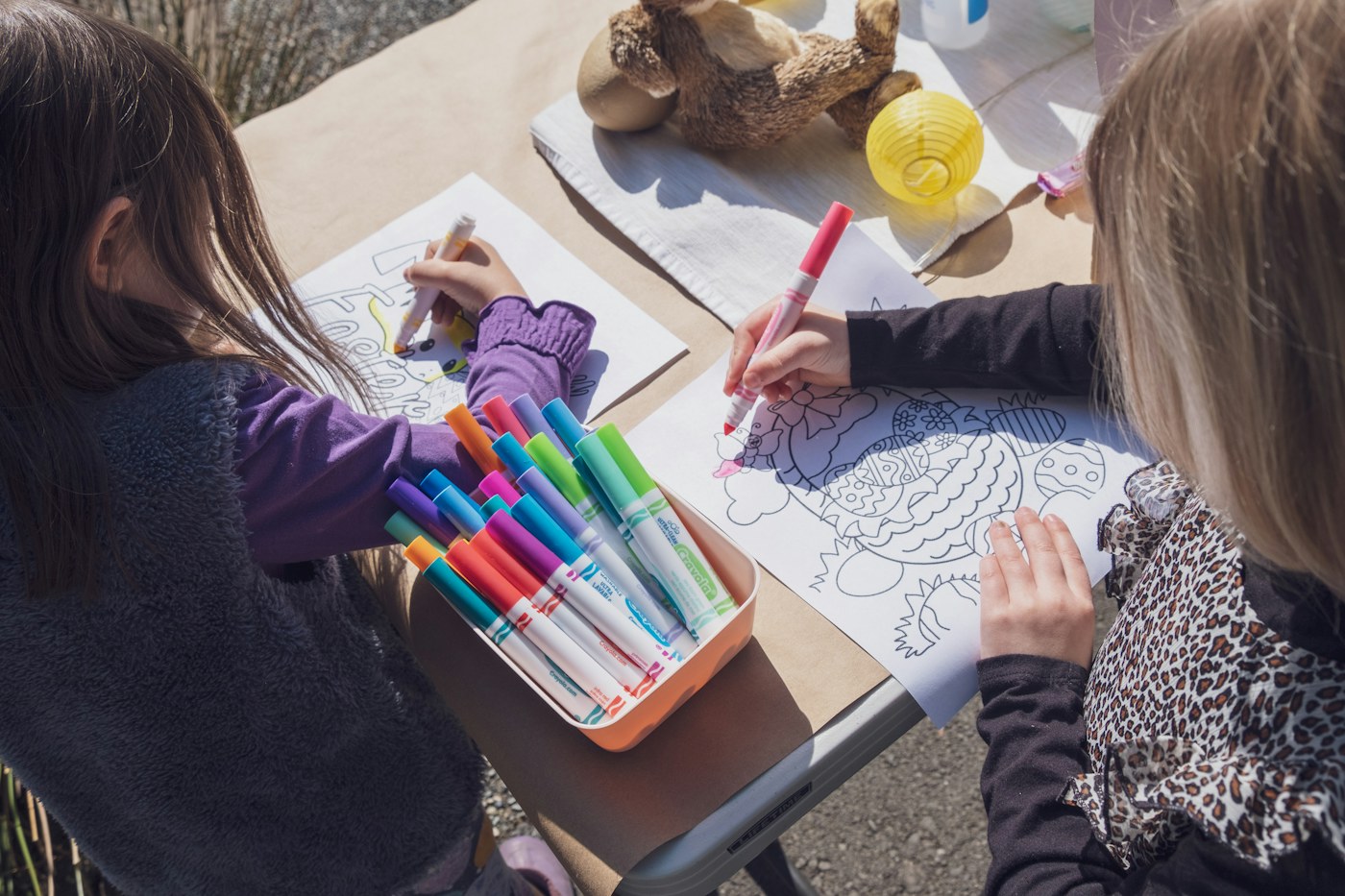
School artwork and projects multiply much faster than family photographs. Give each child a fixed portfolio, file box, or memory bin.
The fixed container is not a punishment; it creates curation. When it fills, the family chooses which pieces best represent that stage.
For school papers, see How to Organize School Papers Without Keeping Everything.
Cards and letters deserve a different standard
A card that contains a meaningful handwritten message is different from a card signed only with a name. Keep the message, relationship, and story in mind—not the fact that the paper is technically a greeting card.
If the front design is beautiful but the message is generic, you may decide the design matters—or you may let it go. There is no universal rule.
Create a “decision later” envelope—but keep it small
Sentimental decisions can be emotionally tiring. If you genuinely cannot decide, allow one small temporary envelope or folder.
The important word is small. A whole closet labeled “decide later” is not a system.
Display should rotate, not expand forever
Choose a few current family photos for frames, a small gallery wall, or a digital frame if that suits your home. When new favorites come in, rotate older ones back to the archive.
Displaying everything at once reduces visual calm and makes individual photos less noticeable.

Write the names and story where future-you will understand them
A photo may be obvious now and mysterious twenty years later.
When appropriate and safe for the material, record names, year, place, or a short note using an archival method suitable for the item. Digital metadata can also help for scanned copies.
The goal is not museum documentation. It is preserving enough context that the memory remains legible to the family.
Use digital copies selectively
Scanning can help with:
- sharing family photos with relatives,
- backing up irreplaceable images,
- reducing duplicate physical copies,
- preserving children’s oversized artwork without keeping every sheet.
But digital files need a naming and backup system too. “IMG_4938_final2” is not meaningful organization.
Do not keep duplicates just because they are old
Age makes items feel automatically valuable. But five identical printed copies from the same photo lab are still duplicates.
Keep the best copy and distribute meaningful extras to relatives if appropriate.
The one-hour sentimental-paper session
Do not schedule an entire weekend. Sentimental editing is slower than ordinary decluttering.
- 10 minutes: gather one small category only.
- 20 minutes: remove obvious duplicates and low-value paper.
- 20 minutes: choose representative memories.
- 10 minutes: label and return the curated set to storage.
Stop while your judgment is still good.
What I would keep—and what I would question
I would strongly consider keeping irreplaceable photos of people, meaningful handwritten letters, a small number of milestone pieces, and items that tell a family story not preserved elsewhere.
I would question exact duplicates, generic cards, mass-produced event programs with no personal meaning, blurry repeats of the same moment, and school papers saved only because nobody wanted to decide.
That distinction is personal, but having a distinction matters.
How to involve children without making them responsible for adult nostalgia
Older children can choose favorite artwork or photos. Younger children can help pick what they are proud of now.
But adults should not expect children to understand the long-term emotional value of every item. Keep some meaningful pieces on their behalf while still using a physical limit.
Where should sentimental storage live?
Use a stable low-frequency area away from obvious moisture, heat, and household hazards, and follow appropriate preservation guidance for valuable materials.
Prime daily-use shelves usually should not be occupied by archives you open twice a year.
Create a small “this year” inbox for new memories
The archive becomes difficult when every new photo, card, certificate, and school keepsake has to be filed perfectly the day it arrives.
Use one small current-year box or folder. During the year, put genuinely possible keepsakes there. Once or twice a year, review that inbox and decide what deserves the permanent archive.
This separates capture from curation. You are allowed to postpone the emotional decision without creating a decade-long “sort someday” box. You may also find How to Store Outgrown Kids’ Clothes and Gear Without Taking Over the House useful for a closely related small-home problem.
Give digital files a naming pattern future-you can understand
If you scan important photos or documents, choose a simple pattern such as year-event-person or year-month-description. The exact format matters less than consistency.
Also keep the digital archive backed up appropriately. Scanning a unique photograph and then keeping the only digital copy on one laptop is not much of a preservation strategy.
Digital organization is invisible, which makes it easy to postpone. A physical box gets visibly full; a folder can hold 18,000 files without warning you that retrieval has become impossible. If you are working on the same space, How to Do a Seasonal Closet Switch in a Small Home Without Making a Bigger Mess covers the next decision in more detail.
Think about who the archive is for
Some sentimental collections are meaningful only to the person keeping them. Others are part of a shared family history.
For especially important photos and letters, ask whether another family member knows the story. A short note—who, where, roughly when, why it mattered—can turn an anonymous image into something future generations understand.
Do not let inherited family photos become a guilt box
Inherited albums and boxes can feel impossible to edit because somebody else kept them for decades. But you are not required to become the permanent storage unit for every duplicate and unidentified print.
Start by preserving clearly important people, labeled history, rare images, and photographs other relatives may value. Invite family members to take meaningful duplicates when practical. It is respectful to curate an inheritance so it can actually be understood.
Protect privacy when digitizing and sharing
Family archives may contain addresses, school information, identification details, medical paperwork, or private correspondence mixed among harmless photos. Review what you scan or upload before sharing a folder broadly.
The goal is to make memories easier to access, not accidentally make private family information public.
Let the archive change as the family changes
A memory box for a five-year-old will not need the same structure when that child is twenty-five. Periodically consolidate early childhood material, school years, and family events into broader chapters.
An archive is allowed to mature. You do not need to preserve the original filing logic forever just because it once worked.
\nUse “story density” when the archive is too large
When you have to make difficult choices, ask how much unique family story an item carries. A handwritten letter from a grandparent may contain names, events, humor, and personality in one page. Ten nearly identical photos of the same cake may contain very little additional information after the best two are saved.
I find this more humane than asking whether an object “sparks joy.” Sentimental storage is not only about present emotion; it is also about preserving context.
Create a family-sharing pass before discarding inherited material
If you are editing older family photos, letters, or memorabilia, give relatives a reasonable chance to claim items that matter to them. A quick shared album of photographs of the items can be enough for others to identify what they want.
This distributes family history instead of forcing one household to store all of it. It also prevents the painful discovery that an apparently unimportant photo was the only copy another relative knew existed.
Do not make the “perfect album” the price of being organized
Albums can be wonderful, but they require time, sequence, and often supplies. A well-labeled archival box is already a successful system.
If you enjoy making albums, do it as a creative project. If you do not, do not keep five boxes of unsorted prints waiting for the day you become an album person. For the broader setup, How to Keep a Small Home Clean With Pets Without Cleaning All Day is a useful next read.
\nFrequently asked questions
How many family photos should I keep?
There is no correct number. Keep enough to tell the family story without retaining every duplicate and every nearly identical frame.
Should I scan old photos?
Scanning can be useful for backup and sharing, but edit and organize first so you are not digitizing unnecessary duplicates.
What should I do with kids’ artwork?
Use a fixed physical container for favorites, rotate displays, and photograph oversized or secondary pieces when digital memory is enough.
Is it okay to throw away old greeting cards?
Yes. Keep cards because the message or memory matters, not because the card is old.
The point of a memory archive is to make memories easier to revisit
If finding one photo requires opening twelve boxes of unsorted paper, the archive is technically storing memories but functionally hiding them. Curate enough that the family story becomes easier to see.