Outgrown kids’ clothes and gear can take over a small home because every item arrives with a future story: “the younger child might use this,” “we could sell it,” “this was special,” or “we may need another one someday.” You may also find How to Move Into a Smaller Home Without Re-Creating Your Old Clutter useful for a closely related small-home problem.
The problem is not keeping some things. It is keeping every possible future use in prime present-day storage.
Sort by next action, not by object type
Create five destinations:
- hand down soon,
- store for later,
- sell,
- donate/pass along,
- sentimental keep.
This prevents one “kids stuff” pile from becoming permanent storage.
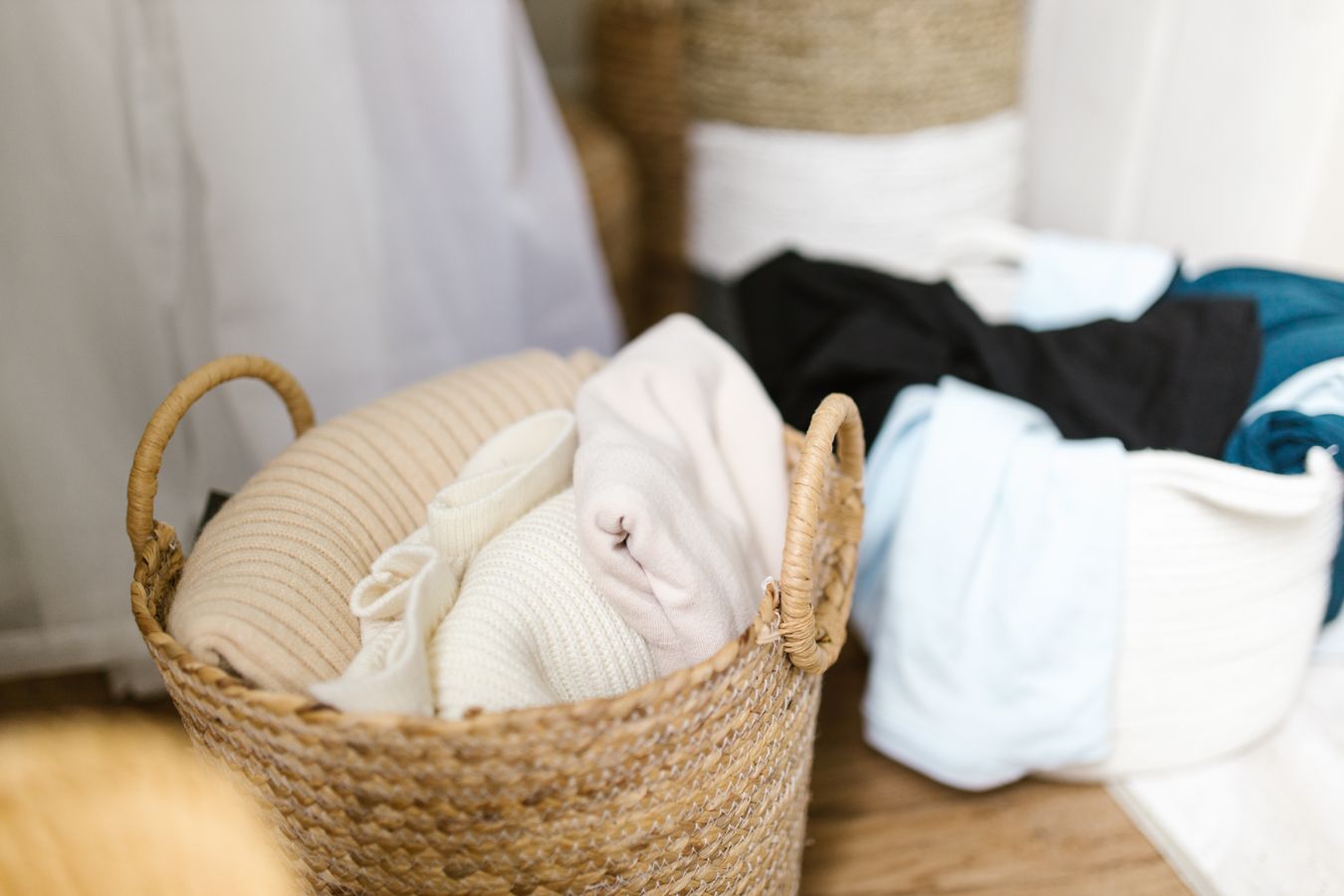
Hand-down-soon gets the easiest storage
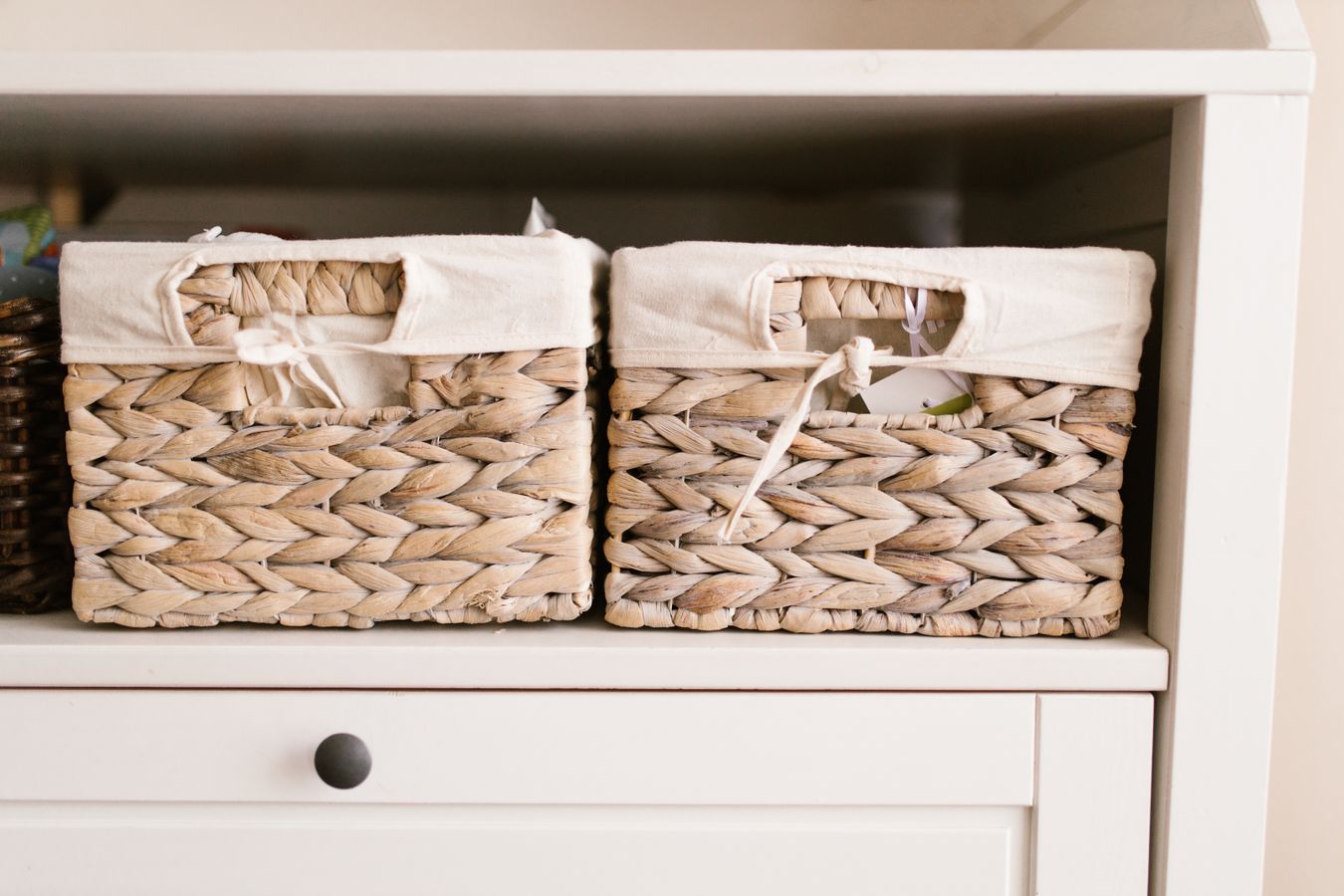
If a younger sibling is close to the next size, keep one clearly labeled container accessible enough to rotate soon.
Label by size and season, not vague age ranges that require reopening the box later.
Store-for-later needs a hard capacity limit
Choose the number of containers the home can support. When they are full, edit before adding another.
The container limit protects closets, under-bed space, and storage rooms from becoming indefinite archives.
Do not store every duplicate
If you have six similar shirts, three winter coats, or several bulky baby items, keep the best examples rather than preserving the entire category automatically. You may also find How to Keep Floors Clean in a Small Home With Kids and Shoes useful for a closely related small-home problem.
Separate sentimental pieces from practical hand-me-downs
A coming-home outfit, handmade sweater, or favorite tiny shoes belong to memory storage, not the next-size clothing bin. You may also find Best storage solutions for small homes useful for a closely related small-home problem.
Give sentimental pieces their own much smaller boundary.
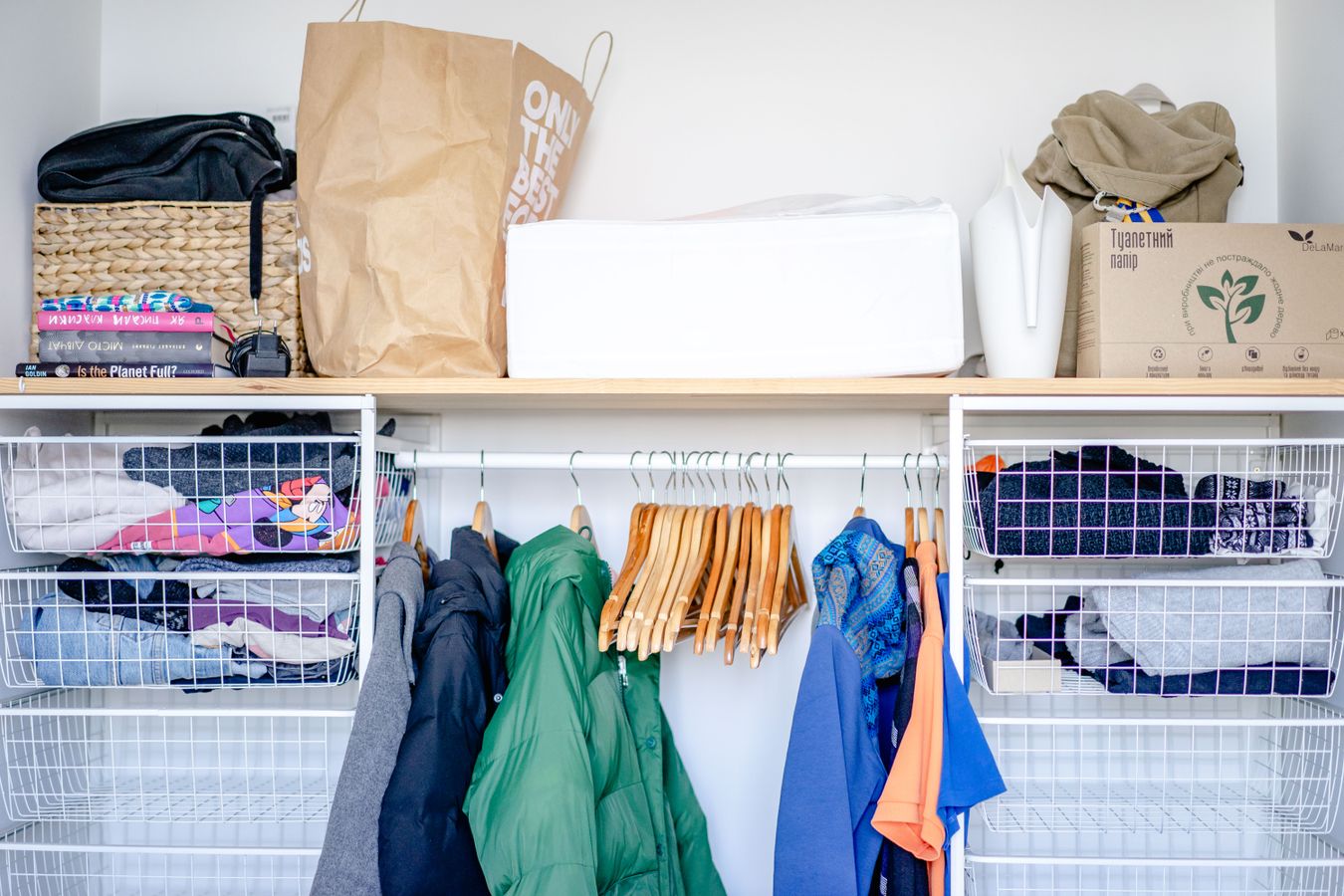
Use a “sell by” deadline
Items intended for resale should not live in the house indefinitely. Pick a listing date and an exit date.
If the item does not sell by the deadline, lower the price, donate it, or choose another exit. Otherwise “sell” becomes a storage category rather than an action.
Bulky gear needs a replacement-value test
For strollers, travel equipment, baby seats, large toys, or seasonal gear, compare:
- how likely you are to use it again,
- how long until that use,
- how much storage volume it consumes,
- whether it will still be appropriate and usable later.
Bulky low-certainty items deserve more scrutiny than one small clothing bin.
Keep manuals and accessories with the item
If you intentionally store gear for later, keep its essential parts and relevant instructions together so the future item is complete rather than a puzzle. If you are working on the same space, How to Store Extra Bedding in a Small Home With No Linen Closet covers the next decision in more detail.
Rotate kids’ closets without mixing future sizes into today
Prime closet space should support the child’s current routine. See How to Organize Kids’ Clothes in a Small Bedroom Without Overstuffing Drawers.
The seasonal hand-me-down review
At the beginning or end of a season:
- remove newly outgrown items,
- inspect the next-size container,
- move usable items into current storage,
- edit what is no longer needed,
- update labels,
- keep the total container count unchanged.
What to store under the bed
Under-bed storage can work for one clearly defined low-frequency category such as next-size clothes. Avoid mixing clothing, toys, keepsakes, and random gear in the same container.
What should not stay in the child’s room?
Bulky future-use equipment, large sentimental archives, resale piles, and long-term hand-me-downs can crowd the room used every day. Store them elsewhere if the home has a more appropriate low-frequency zone.
A one-hour outgrown-gear reset
First 15 minutes
Collect items that no longer fit or are no longer used.
Next 15
Sort into the five next actions.
Next 15
Label hand-down and store-later containers.
Last 15
Create donation exit, list sell items, and return sentimental keeps to their limited box.
Frequently asked questions
How much kids’ clothing should I save for a younger sibling?
Keep the amount that fits your chosen container limit and reflects what the younger child is realistically likely to use.
Should I vacuum-seal kids’ clothes?
Use storage methods appropriate for the fabric and storage environment. The key issue is category control and labeling, not maximum compression.
What if I am not sure whether we will need the gear again?
Give uncertain bulky items a decision deadline. Storage should not become the default simply because the decision is uncomfortable.
Future usefulness should not overwhelm present storage
Keep the strongest hand-me-downs, protect a small sentimental category, and give resale and donation items real exit dates. The goal is not to discard every outgrown item—it is to keep tomorrow’s possibilities from crowding today’s family home.