Kids’ clothes are small, but the category grows fast. Daily outfits, pajamas, school clothes, sportswear, jackets, hand-me-downs, future sizes, and outgrown pieces can overwhelm a small bedroom long before the closet looks “full.” For the broader setup, How to Organize a Small Kids’ Closet That Has to Hold Clothes, Shoes, and Gear is a useful next read.
The answer is not more folding. It is a current-size clothing system that separates what the child wears now from what belongs to another season, another size, or another stage. If you are working on the same space, A Toy Rotation System for Small Homes That Parents Can Actually Maintain covers the next decision in more detail.
Start with one rule: prime storage is for clothes that fit now
The easiest drawer, closet rod, and reachable shelf should hold clothing the child can wear this week. Future sizes and sentimental pieces should not occupy the same high-value space.
Create four groups: wear now, next size, outgrown, and special/seasonal. This immediately reduces the number of decisions inside daily drawers.

Build drawers around the morning routine
Instead of organizing by what looks neat, organize by what helps the child get dressed. A simple sequence might be:
- underwear and socks,
- shirts,
- pants and shorts,
- pajamas,
- school or sports clothing.
If the child can identify the drawer without asking, the system is working.
Do not fill drawers to 100 percent
Leave enough breathing room for laundry day. If a drawer only closes when clothes are compressed, clean clothes will eventually stay in a basket or land on a chair.
A useful test is simple: can the child return a shirt without reorganizing the whole drawer?
Use broad categories before buying dividers
Drawer dividers can help socks or underwear, but they do not solve too much volume. First reduce the category; then add a divider only if it makes put-away easier.
For younger children, picture labels can make categories clearer. For older children, simple text labels are enough.
Create a one-container hand-me-down rule
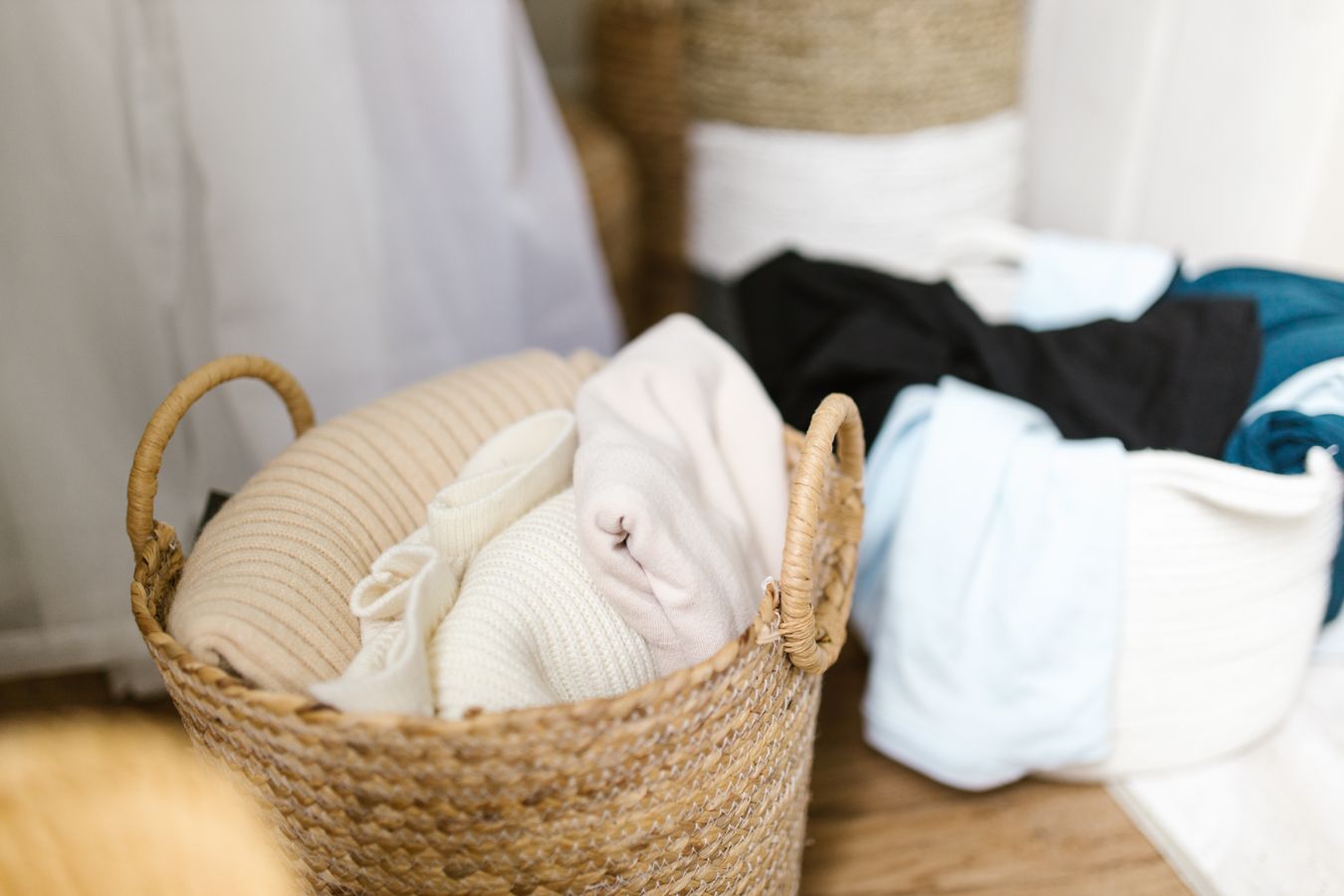
Hand-me-downs can quietly become a second wardrobe. Give each child or size range one labeled container outside prime daily storage.
When the container is full, review it before adding more. Keep the strongest pieces and let duplicates or impractical items move on.
Keep outgrown clothes moving
Place one small “too small” bag or bin in the closet. When an item no longer fits, move it immediately instead of returning it to the drawer.
Once the container fills, choose the next action: younger sibling, donation, resale, textile recycling where appropriate, or sentimental storage.
Use the closet for the clothes that benefit from hanging
Not every child garment needs a hanger. Hang items that wrinkle, uniforms that are easier to see together, dresses, jackets, or special outfits. Fold simple T-shirts, pajamas, leggings, and shorts.
This keeps the rod from becoming crowded and makes the closet easier to scan.
Keep daily clothing within safe reach
If the child is expected to dress independently, daily items should be reachable without climbing. Reserve higher storage for adult-managed categories such as next-size clothes or keepsakes. If you are working on the same space, How to Store Outgrown Kids’ Clothes and Gear Without Taking Over the House covers the next decision in more detail.
The 10-minute weekly kids’ clothing reset
- Remove anything that no longer fits.
- Return stray clean clothes to drawers.
- Match loose socks only if it is worth the time.
- Check school or activity clothing for the week.
- Move wrong-season items out of prime storage.
- Leave drawers below maximum capacity.
What to do with “almost fits” clothes
Do not mix them into the daily drawer. Put them in the next-size container with a date or size label. Recheck at a natural transition such as a season change or growth spurt.
For shared bedrooms, separate ownership first
If two children share one dresser, assign drawers or clear sections by child. Avoid mixing similar-looking clothing unless the children genuinely share the items.
For the wider room setup, see How to Organize a Shared Kids’ Bedroom in a Small Home.
When laundry is the real problem
If clean clothing regularly stays in baskets, check whether the drawers have enough free capacity and whether the laundry loop is closing. A better dresser system cannot compensate for too much clothing plus unfinished laundry.
Use A Simple Laundry Routine for Families in Small Homes if washed clothes are not consistently reaching the final put-away step.
A small-bedroom clothing checklist
- ☐ prime storage holds current-size clothes,
- ☐ drawers close without compression,
- ☐ categories are broad enough for children to understand,
- ☐ hand-me-downs have one container limit,
- ☐ outgrown clothes have an exit bin,
- ☐ daily clothes are reachable,
- ☐ weekly reset takes about ten minutes.
Frequently asked questions
How many outfits should a child have in a small room?
There is no universal number. Keep enough for your laundry rhythm, school needs, climate, and activities while preserving drawer space for easy return.
Should I fold kids’ clothes vertically?
If it helps the child see options and maintain the drawer, yes. The method matters less than whether the child can find and return clothing without collapsing the whole stack.
Where should future sizes go?
Outside prime daily storage, in one labeled next-size container that you review periodically.
Make the wardrobe match the child who lives there now
A small kids’ bedroom becomes easier to maintain when the closet and drawers stop storing every possible size and season at once. Keep current clothing visible, leave room for laundry to return, and move outgrown and future-size items into clearly limited holding zones. For the broader setup, The 15-Minute Bedroom Reset for Days When Everything Lands on the Floor is a useful next read.