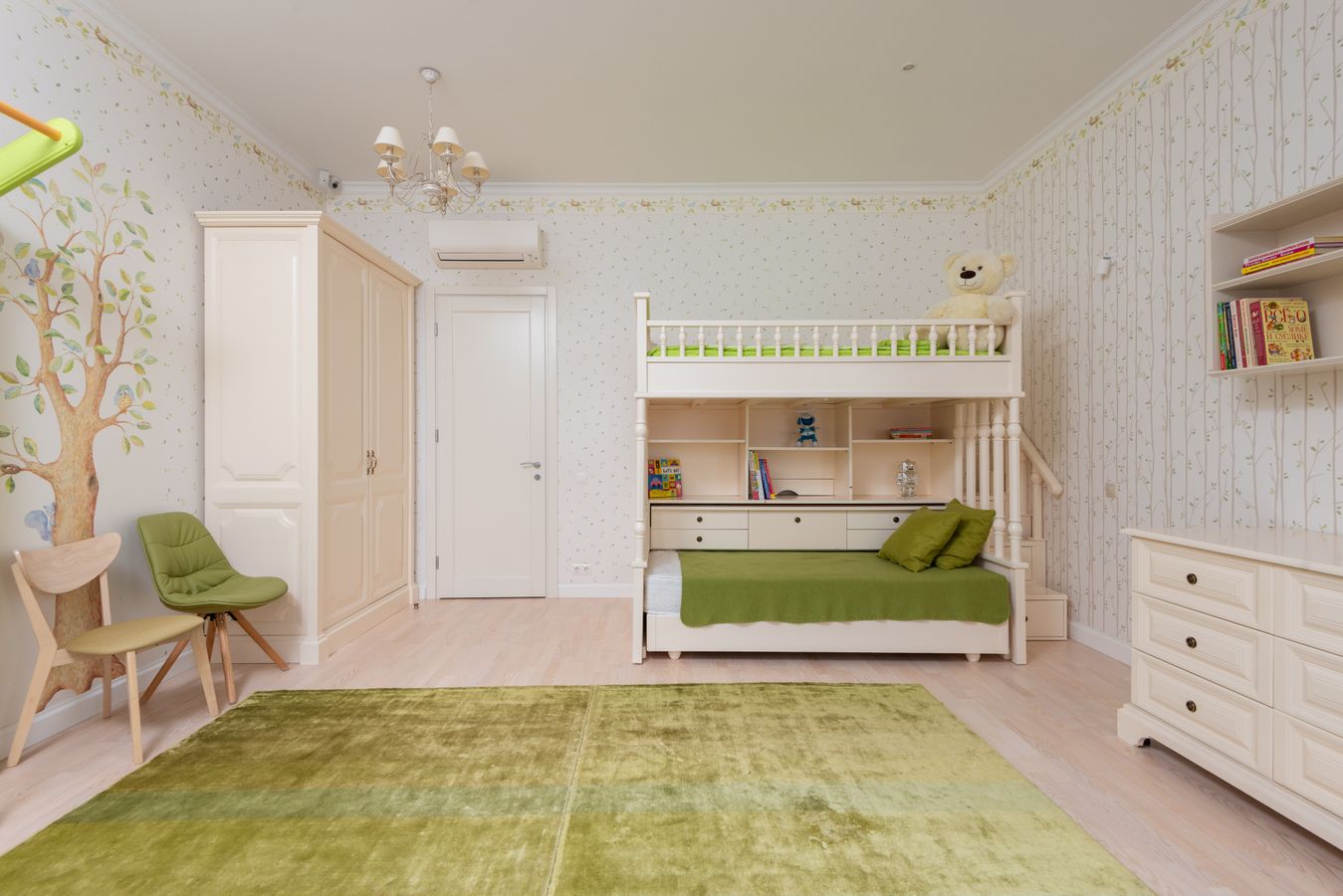
A shared kids’ bedroom has to do several jobs at once: sleep, dress, store clothes, hold favorite belongings, support quiet play, and still leave enough floor space for two children to move around.
The challenge is not making both sides look identical. It is creating clear personal zones inside one shared room so each child knows what belongs to them, what is shared, and where everything returns at the end of the day. If you are working on the same space, Best storage solutions for small homes covers the next decision in more detail.
Start with sleep, movement, and safety
Place beds first. Then check the walking path from the door to each bed, the closet, and any window or dresser. The room should work before you add extra storage.
If you use bunk beds or tall furniture, follow the manufacturer’s age, assembly, guardrail, ladder, and anchoring instructions. Appropriate furniture and TVs should be secured according to manufacturer guidance and CPSC tip-over recommendations.
Give each child one obvious personal zone
A personal zone can be a drawer column, half a closet rod, a bedside basket, one shelf, or a group of hooks. The boundary matters more than the size.
Use the same principle as a shared adult closet: ownership should be visible. When a child’s section is full, the solution is to edit that section—not let it silently spread into the sibling’s space.
Keep shared categories truly shared
Good shared categories include books, blocks, board games, extra blankets, art supplies, and some dress-up items. Personal collections, comfort objects, current clothes, and special keepsakes usually work better with assigned ownership.
This reduces arguments because the room does not ask children to negotiate every single object.
Use low storage for daily belongings
Daily clothes, pajamas, favorite books, and current toys should be reachable without climbing. Put lower-frequency items higher only when adults can manage them safely. If you are working on the same space, How to Organize a Home So Kids Can Put Their Own Things Away covers the next decision in more detail.
Do not use under-bed storage for everything
Under-bed storage is useful for seasonal clothing, spare bedding, or rotated toys. It is less useful for socks, school clothes, or anything the children need every morning.
Daily storage should be easy enough that children can participate in the reset.
Use broad toy categories
In a small shared room, micro-sorting is exhausting. Try categories like:
- building toys,
- pretend play,
- books,
- puzzles and games,
- art supplies,
- soft toys.
If a child has to decide between twelve tiny bins before putting one toy away, the system is too complicated.
Create a “bedside limit”
Each child can keep a small number of bedtime items nearby: one book basket, one comfort object, one water bottle spot, perhaps a small lamp where appropriate. Do not let the bedside zone become general storage.
Make clothing zones independent
If two children share a dresser, divide drawers by person or category clearly. If they share a closet, split hanging and shelf zones visibly. Avoid mixing all shirts or all pajamas together unless the children truly share sizes and clothes.
For more ideas on defined storage boundaries, see How to Organize a Small Closet When Two People Share It.
Protect one shared floor zone
The room does not need a permanent play area, but it should have enough open floor space for dressing, sitting, or playing without moving furniture first.
If every free corner is filled with baskets, reduce the number of active storage containers.
Use vertical space without making the room harder to use
High shelves are best for adult-managed categories such as seasonal gear, keepsakes, or rotated toys. Daily items belong lower.
Vertical storage should remove pressure from the floor, not create a climbing invitation.
Create a privacy signal even when there is no private space
Shared rooms are easier when each child has something that feels like theirs. It can be a bedside shelf, a curtain around a bunk where appropriate, a personal bulletin board, or a small display shelf. If you are working on the same space, A Toy Rotation System for Small Homes That Parents Can Actually Maintain covers the next decision in more detail.
You are not trying to divide the room physically. You are giving each child a recognized personal area.
The five-minute evening reset
- Dirty clothes into the hamper.
- Current toys into broad bins.
- Books back to shelf.
- Shoes to their assigned place.
- Personal items back to each child’s zone.
- Floor path cleared.
If the reset regularly takes much longer, reduce active toy volume or simplify categories.
What to do when one child owns much more
Equal space does not always mean equal item count. Older children may have more books, school gear, or clothing. The room can still feel fair if each child understands why the allocation differs and has a protected personal zone.
What to do with hand-me-downs
Do not store every future-size garment in the children’s daily closet. Use one labeled hand-me-down container outside the prime dressing zone and review it when the younger child approaches the next size.
A shared-bedroom reset checklist
- ☐ both beds usable without moving storage,
- ☐ clear walking path,
- ☐ personal clothing zones,
- ☐ one shared toy system,
- ☐ current books accessible,
- ☐ hamper reachable,
- ☐ high storage reserved for adult-managed categories.
Frequently asked questions
Should siblings have matching storage?
No. Matching can look calm, but each child may need different amounts or types of storage. Consistent boundaries matter more than identical furniture.
Are bunk beds always the best solution?
No. They can save floor area in some rooms, but suitability depends on child age, room dimensions, manufacturer guidance, and your household’s needs.
How do I stop one child’s things taking over?
Give each child fixed personal storage. When one section is full, review that section instead of borrowing space from the other child indefinitely.
Shared does not have to mean mixed together
A calm shared bedroom is built from clear ownership, simple shared categories, reachable daily storage, and a short reset. When children know where their belongings belong, the room becomes easier to share—and easier to restore after normal family life. For the broader setup, How to Create a Calm Living Room When Kids Use It All Day is a useful next read.
Sources
- Anchor It! — U.S. Consumer Product Safety Commission — https://www.cpsc.gov/Safety-Education/Safety-Education-Centers/AnchorItgov