
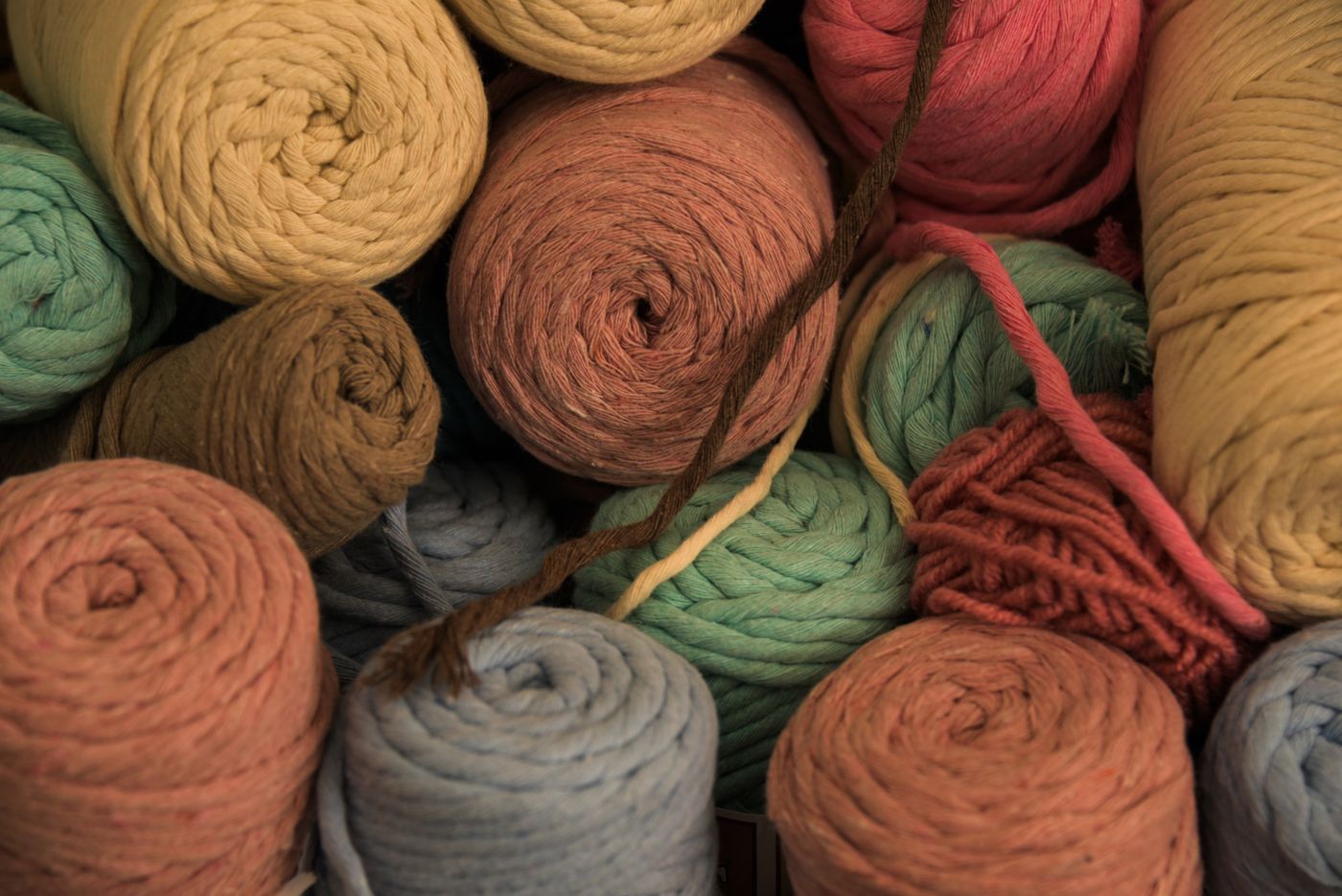
A basket of yarn can look generous while offering surprisingly little certainty for a new project. A few balls may be reserved for an unfinished blanket, several similar shades may come from different dye lots, and an unlabeled leftover may have unknown fiber content. Sorting by color alone makes an attractive display but does not answer what you can confidently use.
Organize stored yarn around its identity and availability. Preserve the original information, distinguish unopened or complete quantities from partial leftovers, and keep yarn already promised to a project out of the available count. You can do this within an existing shelf or container before buying a larger craft-storage system.
Separate available stock from a current project
Begin with the yarn in storage rather than pulling apart work already in progress. Ask which materials are reserved for an actual project, which are free to use, and which need identification. Keep the answers visible while you sort so a large-looking collection does not become a misleading shopping list.
A project allocation can be specific: the remaining balls intended for a particular scarf, for example. “Maybe useful someday” is not the same kind of reservation. Be honest about the difference without requiring every stored ball to have a complete pattern attached.
Etsy’s fall and winter 2026 report includes interest in hand making and craft gatherings. Keeping existing supplies understandable is our application of that context. It is not evidence that any particular yarn fiber or storage method is currently the most popular choice.
If you are already working on crochet, our active crochet-project storage guide addresses keeping that work together. The stored-yarn inventory should show the remaining material as committed when appropriate, so it is not accidentally assigned to another plan.
Keep the original label with the yarn it describes
Read the label before separating it from a ball or skein. The maker, yarn line, fiber content, shade information, dye lot where present, length, package weight, and care information can all matter later. Not every label contains every detail or presents it in the same order.
The Lion Brand guide to reading yarn labels explains those information types and recommends retaining labels with leftovers. Its older article is useful for that principle; follow the actual current label and maker guidance for the yarn in your home.
Do not replace an original label with a decorative color name of your own. “Warm cream” may help describe an appearance but does not preserve the manufacturer’s shade code or yarn line. A photograph can supplement a readable label, although it should remain clearly linked to the correct material.
If several balls share a package band, keep a suitable copy of the relevant information with any portion stored separately. Do not assume that every ball in the same shopping bag is the same product. Check each group before combining it.
Preserve shade and dye-lot distinctions
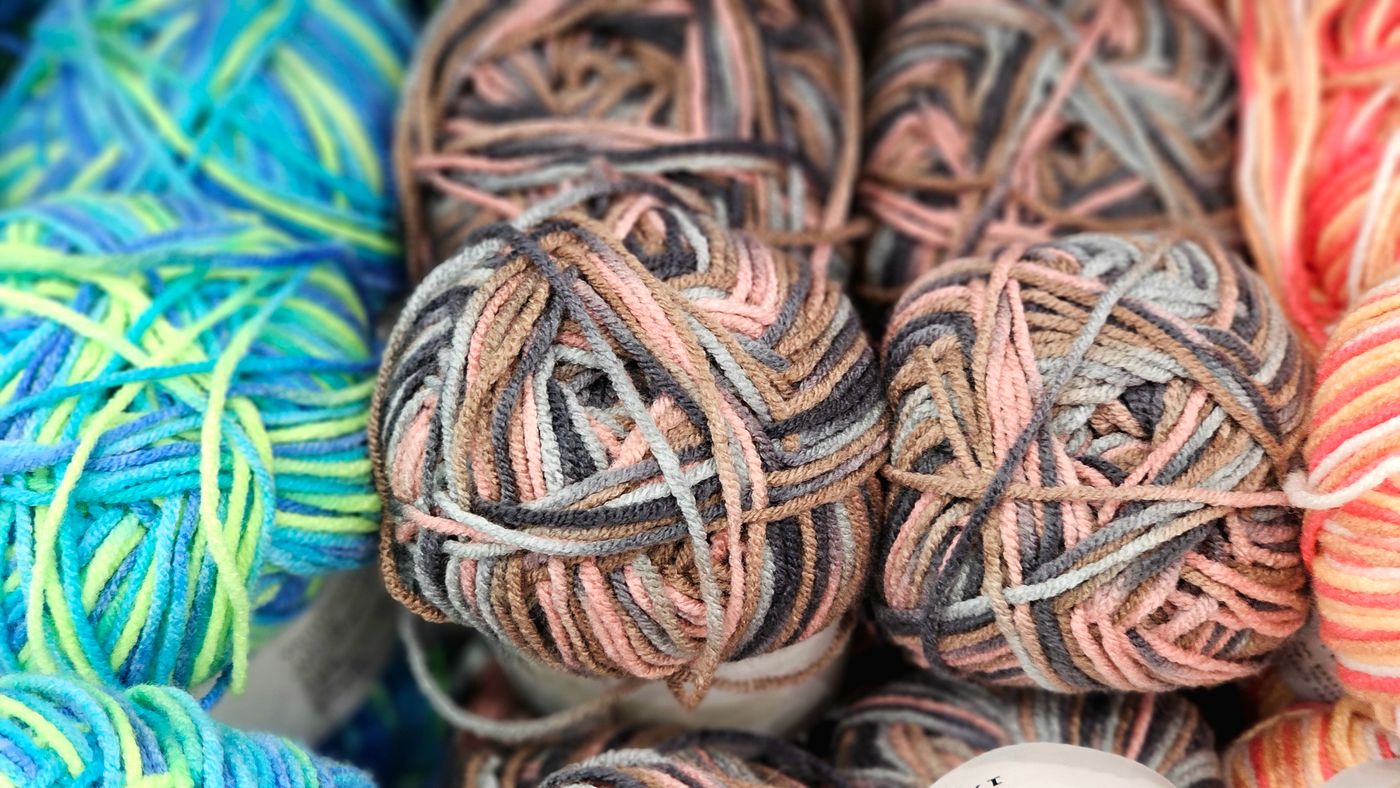
Two yarns can look similar in the basket while carrying different maker, shade, or lot information. Keep those distinctions in the inventory instead of merging everything under a broad color heading. A future project decision can then use the information actually available.
Record a dye lot exactly where one is supplied. If the label uses a no-dye-lot designation, retain that wording rather than inventing a number. Do not promise that matching numbers eliminate every visual variation or that the same color name across brands identifies an interchangeable yarn.
A missing lot is an unknown, not automatically a mismatch. Keep it noted as unknown and decide whether that limitation matters for the intended project. Some uses can accommodate deliberate variation; other projects may need a more exact plan before work begins.
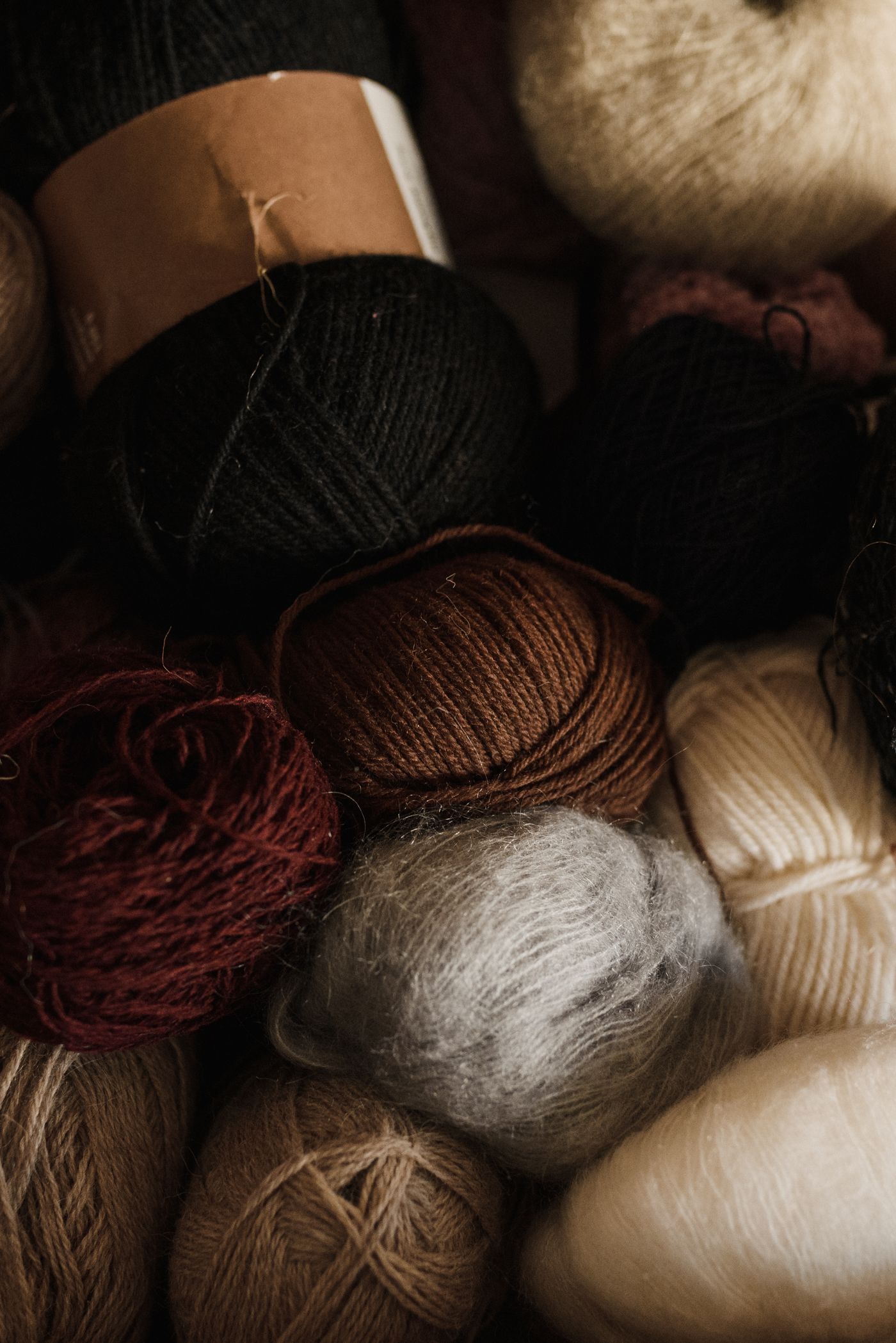
Avoid trying to identify a fiber or product through appearance alone. A soft, fuzzy ball in a photograph does not prove that it is wool, and a smooth yarn is not automatically cotton. Keep uncertain material separate from verified supplies until reliable information is recovered.
Distinguish a full package from a leftover
Count intact packages by their actual labels and state. A group of three complete balls is different from three partly used balls, even if all three still look round. The inventory should make that distinction without demanding an invented precision.
For a leftover, record only the quantity you can support. A remaining weight may be useful when obtained appropriately, but it does not automatically establish a precise usable length. Knots, mixed strands, an unknown starting amount, and the absence of a trustworthy label can limit what you can infer.
Describe an uncertain leftover plainly, such as partial ball with original label retained. Do not list the original package yardage as though the whole amount remains. That mistake can create an avoidable shortage when someone selects supplies for a new pattern.
If you decide to estimate for your own planning, keep the estimate labeled as such and separate it from a stated manufacturer quantity. This article does not supply a universal conversion formula between grams and yards for unidentified yarn.
Group by a question you actually ask
Choose the first grouping around how you select a project. That might be labeled yarn line, a broad weight category shown on the actual labels, or a planned use. Color can remain a useful second view, but it should not erase the product identity underneath.
Avoid creating many empty categories to imitate a shop. A household with a modest supply may need only available labeled yarn, allocated yarn, and unidentified leftovers. Further divisions are worthwhile when they reduce an actual search.
Keep yarn weight category distinct from the physical weight of a ball. One describes a yarn classification; the other describes an amount. Preserve the terminology used on the maker’s label so a future pattern comparison does not confuse the two.
For tools stored nearby, our knitting-needle and interchangeable-parts guide handles compatibility information. Keep those tool decisions connected to the project when useful, without treating a needle-size suggestion as proof that two different yarns will produce the same result.
Store for retrieval without hiding the information
Choose suitable clean storage that supports the yarn without crushing or snagging it. Follow the maker’s guidance for the actual material. This guide does not promise that one bag, basket, or lidded box provides the right protection in every household environment.
Make the label or its linked reference easy to retrieve. You should not have to unwind a ball to discover which product it is. If a separate record is used, give the yarn group a simple identifier that connects the record to the material.
Keep loose ends managed through an appropriate method without pulling tightly on the yarn. Avoid fastening an identifier in a way that damages the fibers or introduces an unnecessary sharp object. The storage arrangement should make the next use easier.
A multipurpose room also needs a boundary for the collection. If yarn occupies a shelf shared with work materials, leave each activity’s supplies recognizable and accessible. A beautiful open display is optional; an inventory you can use is the real purpose.
Check the stored supply before buying more
For a proposed project, check the pattern’s requirements against the actual labeled material and available quantity. Do not assume a replacement is suitable because it has the same general color or thickness. Follow the pattern and yarn makers’ guidance for any substitution and relevant sample work.
Look for existing reservations before taking a ball from a project group. If a project has genuinely been abandoned, make an explicit decision to release its remaining yarn. That is more reliable than quietly borrowing from it until nobody knows what is still available.
The identification discipline in our embroidery-floss organization guide is also useful here, although floss and yarn have different specifications. Preserve the maker’s code before adding your own household description.
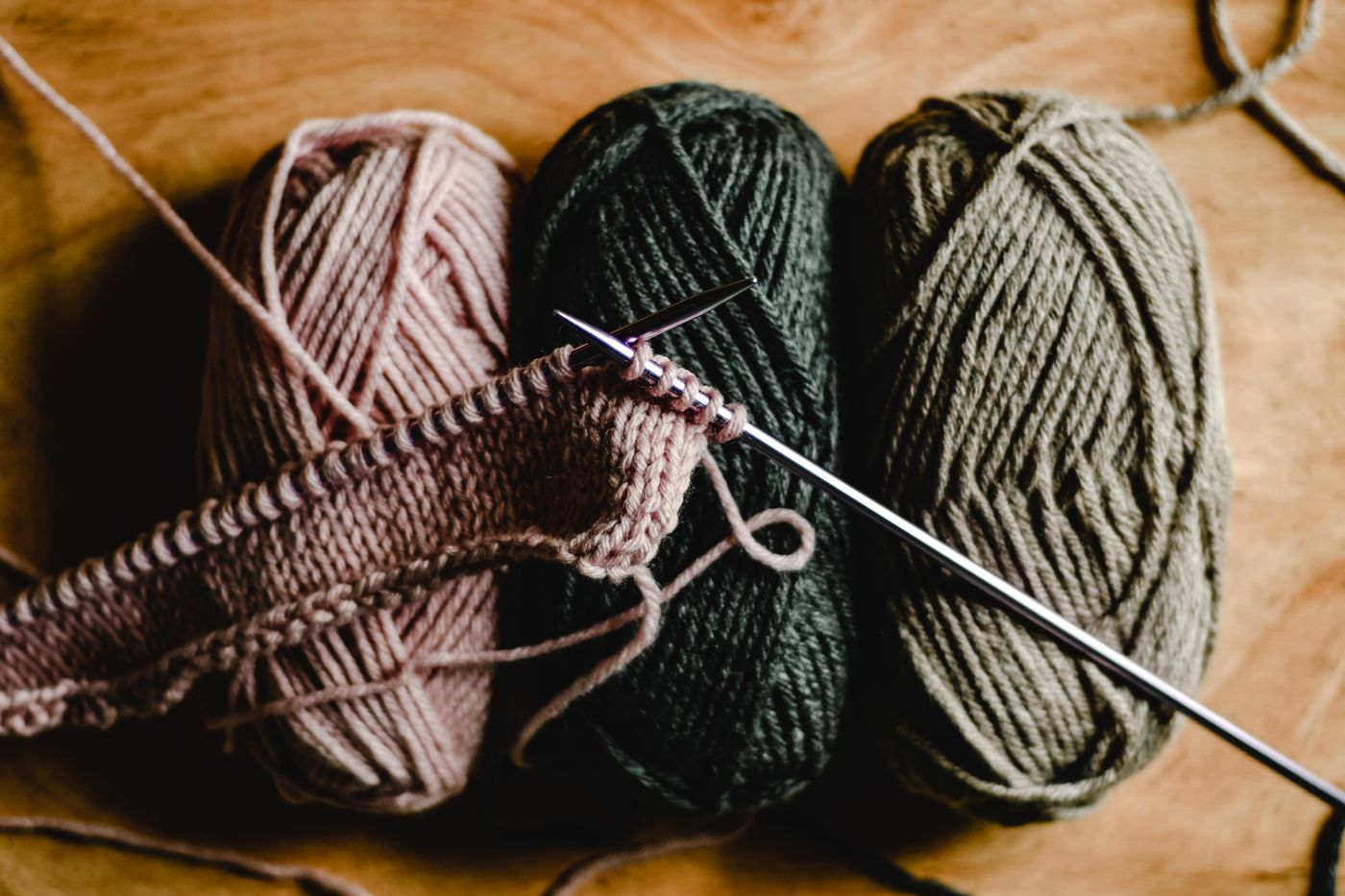
Keep the inventory current through normal use
When material leaves storage for a project, change its status at the same time. When a leftover returns, reunite it with its information and describe its partial state. Those two small updates matter more than repeatedly arranging the balls into a perfect rainbow.
Review unidentified leftovers separately. You may recover a label from a project record or find a suitable limited use that accepts the uncertainty. Do not guess care instructions or pass an uncertain fiber description to a recipient as a verified fact.
If a handmade item is gifted, retain and share the applicable care information from the actual materials as appropriate. A general note about handmade objects is not a replacement for the yarn’s specific directions.
The useful result is stored material that can answer a new project’s questions: what it is, what information is known, how much is genuinely available, and whether it is already committed. Stop adding categories when those answers are easy to find.
Explore related decisions in our Home Organization hub.
Sources and editorial scope
Editorial research checked October 28, 2026. Published trend reports are context for these editorial applications, not verified live keyword rankings. Practical household guidance; photographs do not document a tested household or authenticate pictured materials.
