
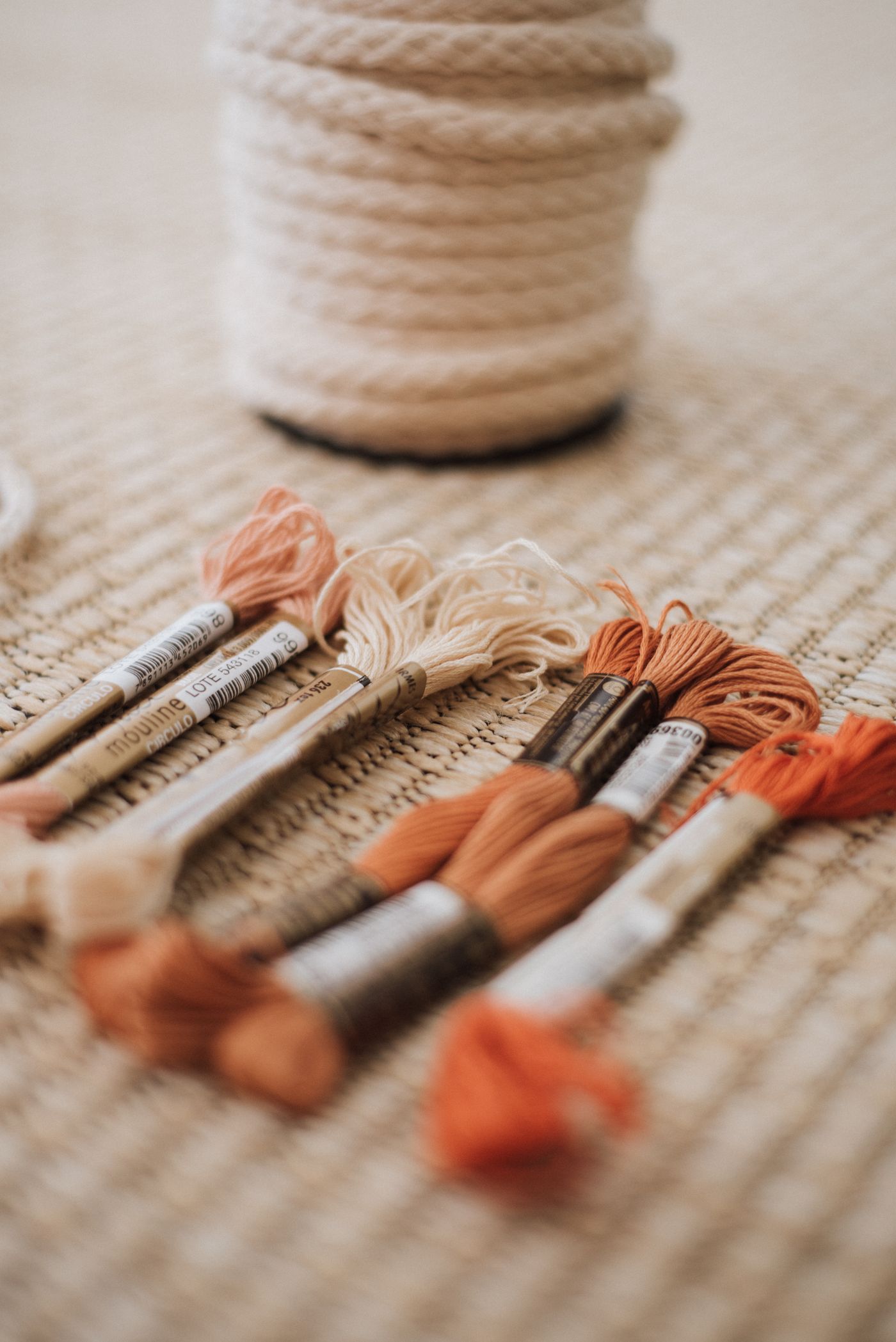
Embroidery floss can be beautifully arranged and still be difficult to use. Two almost identical greens may belong to different makers, an unmarked length may have lost its color code, and a full-looking box may contain thread already reserved for an unfinished project. Choosing the right material then becomes another search rather than the start of stitching.
Organize the collection around three questions: what exactly is this thread, where does it normally live, and is it currently allocated to a project? Keep the original identity through winding and cutting, separate unknown remnants, and return only usable material to the coded collection.
Etsy’s October 14, 2026 seasonal report highlights handwork and visible stitching. A reliable floss collection supports that interest using supplies already owned. It does not require buying a complete color range or reproducing a professionally styled craft-room display in a small closet.
Keep maker, thread line, and color identity together
Before removing a paper band, copy the maker, thread line, and color code onto the chosen storage label. Keep other useful original information when it applies. A number is meaningful within a product system; it should not be treated as a universal shade identity across every maker and material.
Do not identify an unlabeled skein solely by matching it to a screen image. Displays, photographs, and lighting can change the apparent color. Keep a separate “identity unknown” position instead of assigning the nearest-looking code and quietly introducing uncertainty into the verified collection.
If the thread was supplied as part of a kit, preserve the kit’s own numbering and reference. A kit’s symbol or internal number may not correspond to a general retail color code. Keep the original instruction key available rather than relabeling the thread from memory.
Our small mending-kit guide helps distinguish a repair kit from this embroidery collection. Sewing thread, repair supplies, and embroidery floss may share a cupboard, but they should retain their separate identities and intended uses.
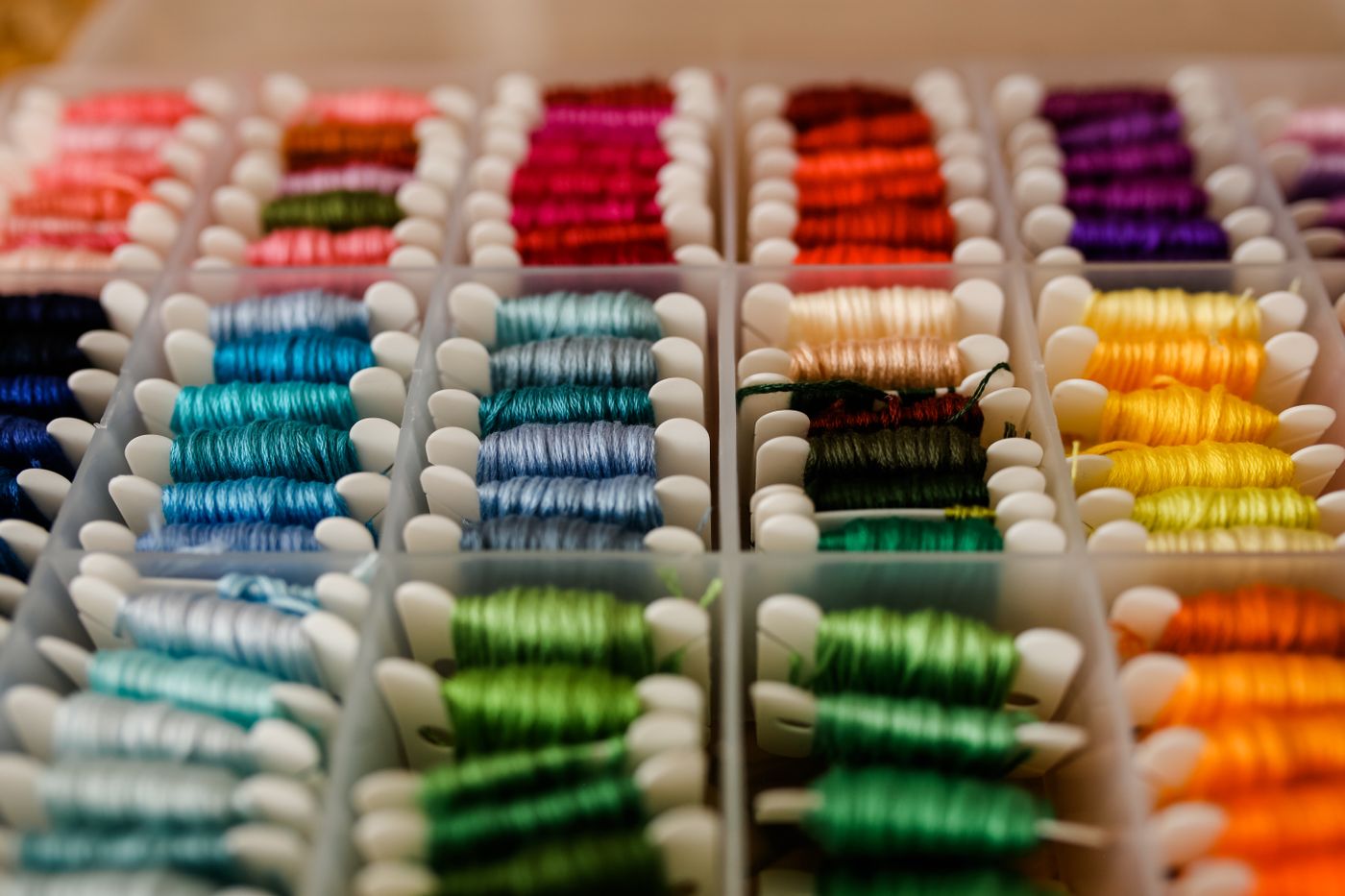
Choose one retrieval order for the main collection
If you normally follow patterns that name color codes, sort by maker and line, then by the code system you use most often. This allows a pattern list to lead directly to a known storage position. Keep a small index if the physical order is not obvious.
If you mainly choose colors freely, color families may suit your process better. Preserve the actual code on each skein, card, or bobbin so an attractive arrangement does not erase the information needed to obtain more. You can prioritize visual selection without replacing identity with a guess.
Avoid maintaining two complete competing orders at once. Moving every item between numerical and rainbow order after each project makes the system expensive to use. Choose one stable home and create temporary project selections when a different grouping is useful.
DMC’s own number stickers are a product-specific example of keeping shade references on storage bobbins. Their existence does not mean the household needs that accessory, or that the numbering applies to other threads. A legible compatible label can carry the same organizational information for your chosen system.
Wind or contain the floss without discarding its identity
Use an existing suitable bobbin, card, sleeve, or skein-storage method that allows controlled retrieval. Keep the code readable after the thread is added. Do not wind over the only identifying label and assume you will remember the color when the project is finished.
Follow any handling instructions for the particular thread. Different materials and decorative constructions may not tolerate the same tight winding or repeated folding. A system that works for one ordinary floss does not automatically suit metallic, textured, or specialist thread.
Contain loose ends in a way that can be released without cutting away a useful length or tying a hard knot through the thread. Keep pins and needles accounted for in their proper secure storage rather than hiding them inside wound floss. The thread container should be safe and understandable to the people permitted to access it.
Before buying new storage, use the small-room organizer test to identify the actual problem. If the difficulty is missing labels, a larger divided box will preserve a larger unidentified collection rather than solve retrieval.
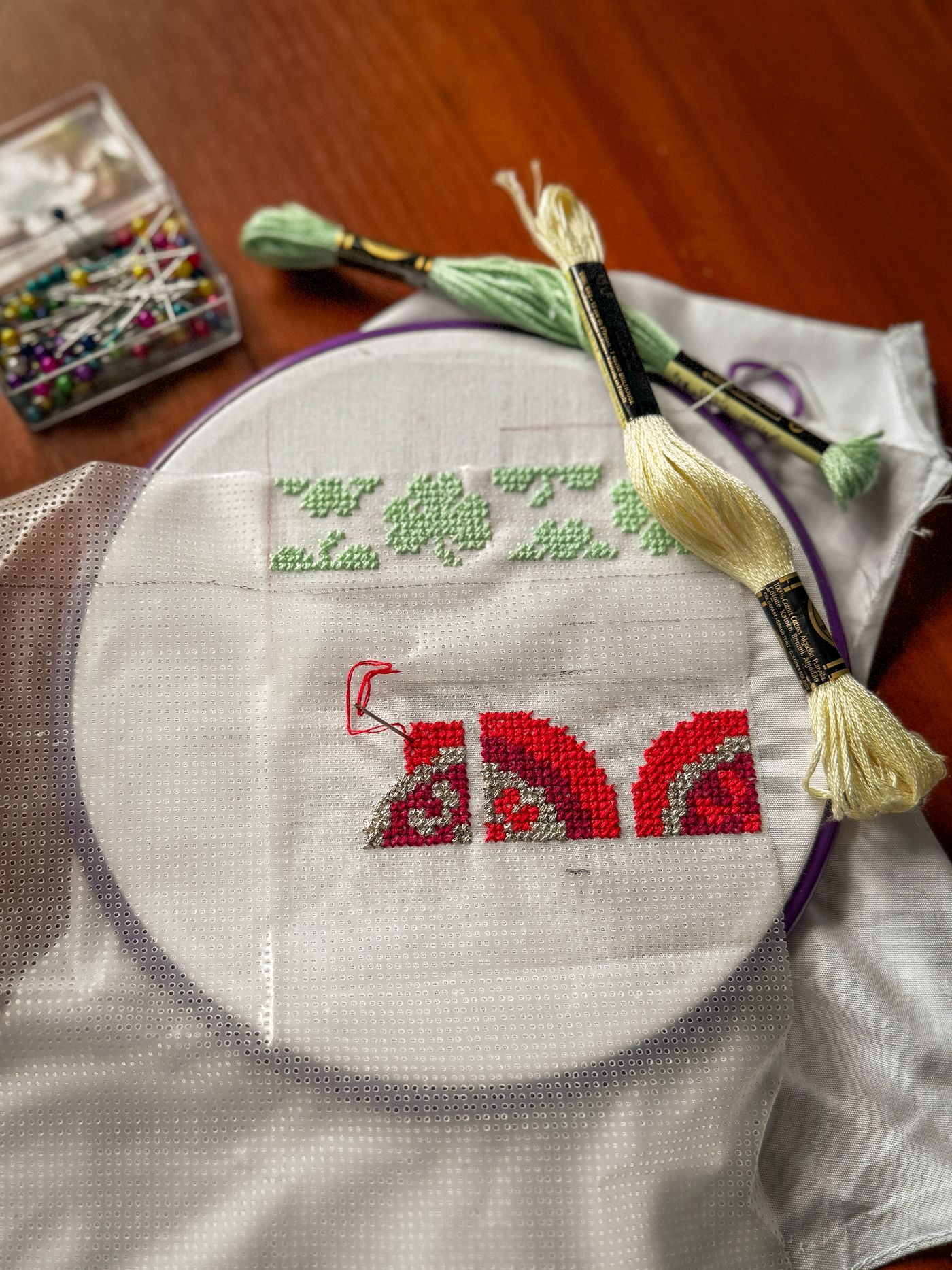
Distinguish available thread from thread reserved for a project
Create a small project selection only after checking the pattern or plan. Keep its thread list with the work and note which colors have been moved from general storage. A card in the empty storage position can point to the project without requiring a detailed inventory database.
Count partial skeins honestly when deciding whether to begin. A nearly empty card is not a full replacement skein, and visual volume alone may be misleading. Follow the pattern’s requirements and obtain appropriate additional material when needed, especially where continuity matters to the finished work.
Do not replace a project’s requested code with an unmarked near match merely to avoid reopening the box. If you choose a substitution deliberately, record that choice with the project. Future repair or continuation should not depend on remembering a decision made months earlier.
When several people share supplies, make the allocation visible. A child or another stitcher should not have to discover that a seemingly available color was promised to an unfinished piece. Agree on access and tools appropriate to each participant rather than leaving the full collection open by default.
Keep working lengths separate from untouched supplies
An active project can generate short cut lengths and separated strands that no longer resemble a retail skein. Keep them with the project and its known identity while they remain useful. Avoid returning several loose partial strands to a position that another person will interpret as a complete, unused supply.
Set a practical rule for lengths worth keeping based on the work you actually do. There is no universal scrap length that every household should preserve. A length useful for one small detail may be too short or unsuitable for another technique.
Put unknown leftovers in a modest separate allowance for projects where exact identity is not required and their use is appropriate. Label the uncertainty clearly. Do not allow that allowance to overflow into the coded collection simply because the colors are appealing.
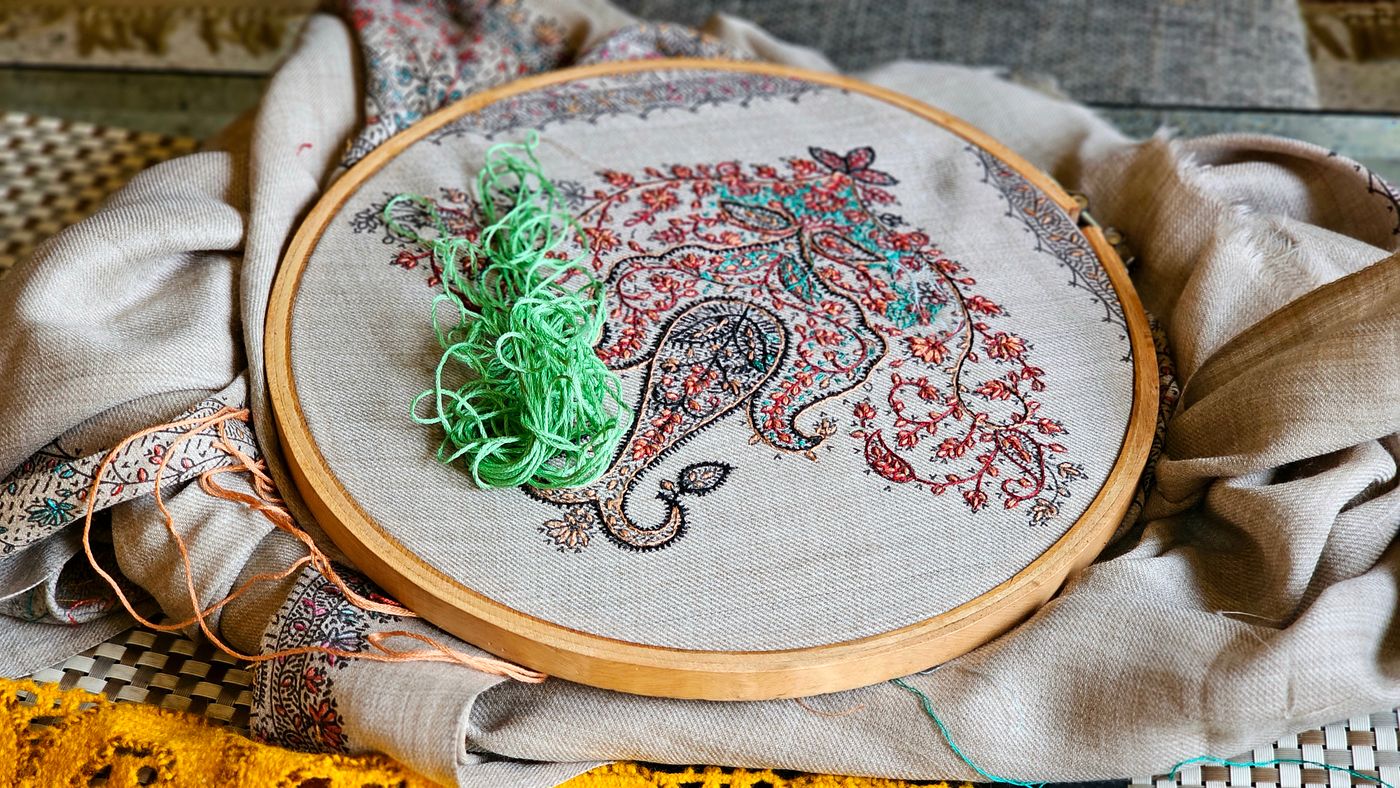
Give the best storage position to the active collection
Choose a clean, suitable, dry storage position that avoids unnecessary exposure and snagging. Follow the thread’s care requirements and keep it away from household liquids or products that could contaminate it. A decorative open basket is only useful if it protects the thread and allows a clear return routine.
The prime-storage method is helpful when an active project competes with rarely used supplies. Put the working selection where it can be retrieved without lifting several larger hobby boxes. Keep the long-term collection in a position that remains accessible enough for its actual frequency of use.
Set a physical limit before filling every empty section with new colors. The container-limit approach keeps storage connected to the household’s available space. Empty compartments can remain empty; they are not a shopping list.
Finish a project with a clear return decision
Return known usable thread to its correct home, preserving labels and any deliberate substitutions. Keep a small reference with the finished work when it is useful for future repair. Return tools separately and account for needles before the project bag closes.
For thread you no longer want, check an intended recipient’s needs before passing it on. Describe unknown materials and missing codes honestly. A bag of tangled unidentified ends can transfer a sorting burden rather than provide useful supplies.
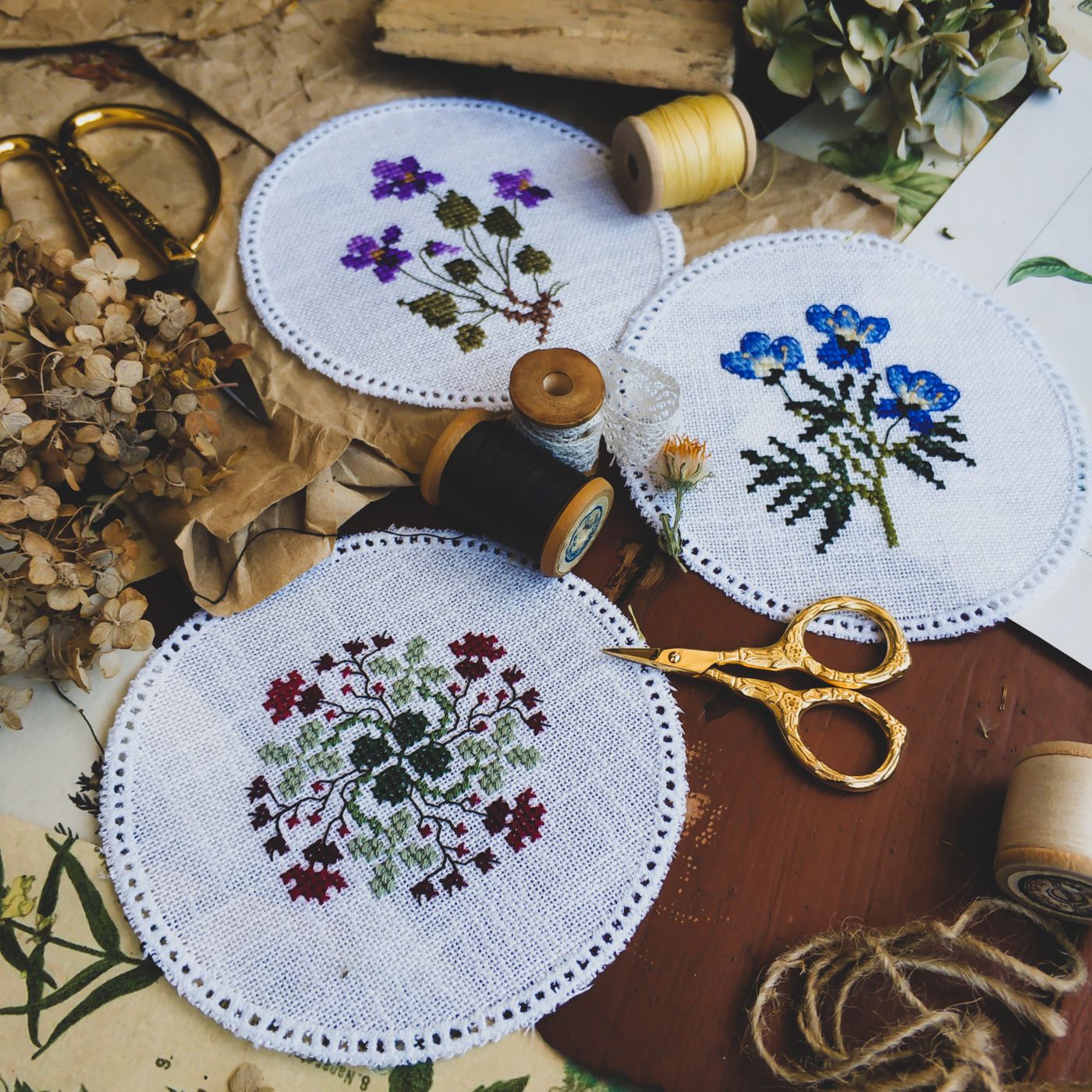
A successful floss system makes it easy to select the requested thread and know whether it is available. It does not need perfect visual uniformity. Clear identity, visible project allocations, and a restrained return rule preserve the pleasure of stitching while keeping the storage small enough to maintain.
Explore related household decisions in our Home Organization hub.
Sources and editorial scope
Editorial research checked October 17, 2026. Trend-report dates and limitations are stated in the article; these are editorial applications of published signals, not verified October keyword rankings. Practical household guidance; illustrations do not document a tested household or authenticate a pictured material.
