Cleaning tools are difficult to store because they are tall, awkward, and used often enough that hiding them too well can make cleaning harder. For the broader setup, How to Store Extra Bedding in a Small Home With No Linen Closet is a useful next read.
A vacuum, mop, broom, dustpan, and duster do not need a full utility closet. They need a single return zone that is easy to access and does not block daily life. If you are working on the same space, The 15-Minute Bedroom Reset for Days When Everything Lands on the Floor covers the next decision in more detail.
Choose the return zone by frequency
Think about which tool you use most. If the vacuum comes out several times a week, it deserves easier access than a specialty mop used twice a month.
Good locations may include:
- a laundry corner,
- a narrow closet edge,
- the side of a refrigerator cabinet where appropriate,
- an entry or hallway utility nook,
- a bedroom or pantry closet edge if household storage allows it.
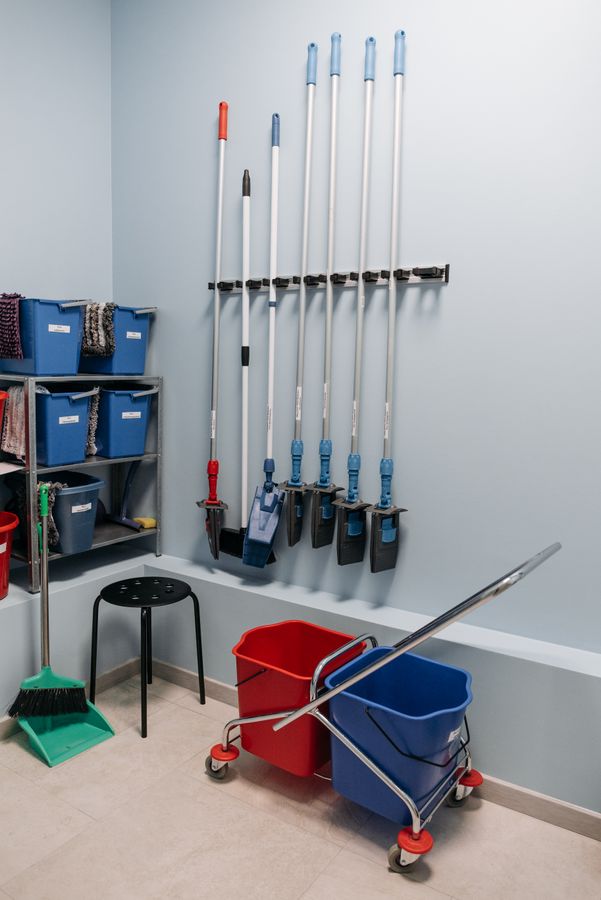
Keep tall tools vertical
Brooms and mops waste less floor space when stored upright. Use a stable floor position or appropriate wall-mounted holder where permitted. For a related step-by-step approach, see How to Store Seasonal Items in a Small Apartment Without Losing Everyday Space.
The main goal is that tools do not fall over every time one is removed.
Protect the vacuum’s charging and retrieval path
For cordless vacuums, follow the manufacturer’s charging and mounting guidance. The charging spot should not create a trip hazard or require moving boxes every time you clean.
For canister or upright vacuums, protect a floor footprint that does not narrow a main walkway.
Do not separate every attachment into a different room
Keep the attachments you actually use with or near the vacuum. Rare accessories can live in a labeled container.
If you cannot remember what an attachment is for, check the manufacturer manual before deciding whether it deserves prime storage.
Mop storage needs a drying plan
Store reusable mop heads or wet-cleaning tools according to their care instructions and let damp components dry appropriately before enclosed storage.
A hidden damp mop is not a storage win.
Broom and dustpan should behave like one tool
Clip or store them together so the dustpan does not migrate to another cabinet.
Use the smallest practical utility footprint
A tall narrow strip—sometimes only the width of a broom head—can hold several long tools if they are arranged vertically. Keep bulk cleaners and random household storage out of the same footprint.
Avoid storing cleaning tools where they block another routine
A mop behind the coat closet door may seem hidden until coats and bags have to move every time you clean. Storage that disrupts another daily system is not truly convenient.
If you have no closet at all

Use a visually quiet corner, narrow freestanding rack, or wall solution appropriate to your rental and tool weight. Keep the number of tools low enough that the zone still looks intentional.
See How to Organize Cleaning Supplies in a Small Home Without a Utility Closet.
Pair awkward tools with a smaller cleaning kit
If the tool zone keeps expanding, reconsider whether every specialty tool is earning its space. Use The Only Cleaning Tools a Small Home Really Needs.
The two-minute tool reset
- empty or maintain the vacuum as needed,
- return attachments,
- hang or park broom and mop,
- put dirty cloths/mop pads into their laundry route,
- clear the floor around the storage zone.
Frequently asked questions
Can I store a vacuum in a bedroom closet?
Yes, if the footprint works for your household and the tool can be retrieved without disrupting clothes or circulation. Follow manufacturer storage guidance. If you are working on the same space, How to Make a Small Rental Kitchen Work When You Can’t Add More Cabinets covers the next decision in more detail.
Where should a mop dry?
Use an appropriate ventilated or open drying setup according to the mop’s care instructions before enclosed storage.
Should I mount cleaning tools on the wall?
Wall mounting can save floor space when the wall, hardware, rental rules, and tool weight all support it.
The best cleaning-tool storage makes cleaning easier
Hide tools enough that they do not dominate the room, but not so thoroughly that cleaning becomes a retrieval project. One compact return zone is usually better than scattering a broom, mop, vacuum, and attachments across the home.