Lazy Susans and turntables are among the few kitchen organizers I recommend regularly—but only in the right geometry. Their strength is not that they “organize.” Their strength is that rotation turns a back row into a front row. For the broader setup, How to Organize Foil, Food Wrap, and Reusable Bags in a Small Kitchen is a useful next read.
That makes them excellent for certain jars and bottles. It also means they are unnecessary in shallow shelves where everything is already reachable. If you are working on the same space, How to Store Lunchboxes, Water Bottles, and Reusable Bags Without Kitchen Clutter covers the next decision in more detail.
The problem a turntable actually solves
A turntable solves depth and corner access. If you routinely move the front bottle to reach the back bottle, rotation can eliminate that step.
If the problem is excess height, loose packets, or heavy cookware, another organizer is likely better.
The hidden cost: circles inside rectangles
Cabinets and shelves are rectangular. Turntables are round. That means some corner area around the platform may become unusable.
This lost space is acceptable when access improves enough to justify it. It is wasteful when the shelf is shallow and every inch matters.
Best use case: oils, vinegars, and sauces
Similar-height bottles are ideal because they rotate as a coherent group. A turntable near the cooking zone can reduce searching and prevent bottles from disappearing behind one another. If you are working on the same space, Does the One-In, One-Out Rule Actually Work in a Small Family Home? covers the next decision in more detail.
Keep weight reasonable and choose a size that rotates without hitting cabinet walls or neighboring objects.
Best use case: pantry jars and condiments
Small jars, spreads, sauces, and baking flavors can work well on a turntable, especially in a deep shelf.
Do not mix radically different heights if tall bottles block visibility to shorter jars.
If the whole pantry is crowded, the larger issue may be category volume. The guide to organizing a small pantry that shares cabinets with dishes addresses that system-level problem.
Corner cabinets: often worth testing
Corner cabinets create difficult reach angles, so rotation can be valuable. Built-in corner turntables are a different category from small freestanding platforms, but the principle is the same: bring stored items toward the opening.
Measure door openings, shelf diameter, and any center hardware before assuming a turntable will fit.
Refrigerators: useful for small condiments, not everything
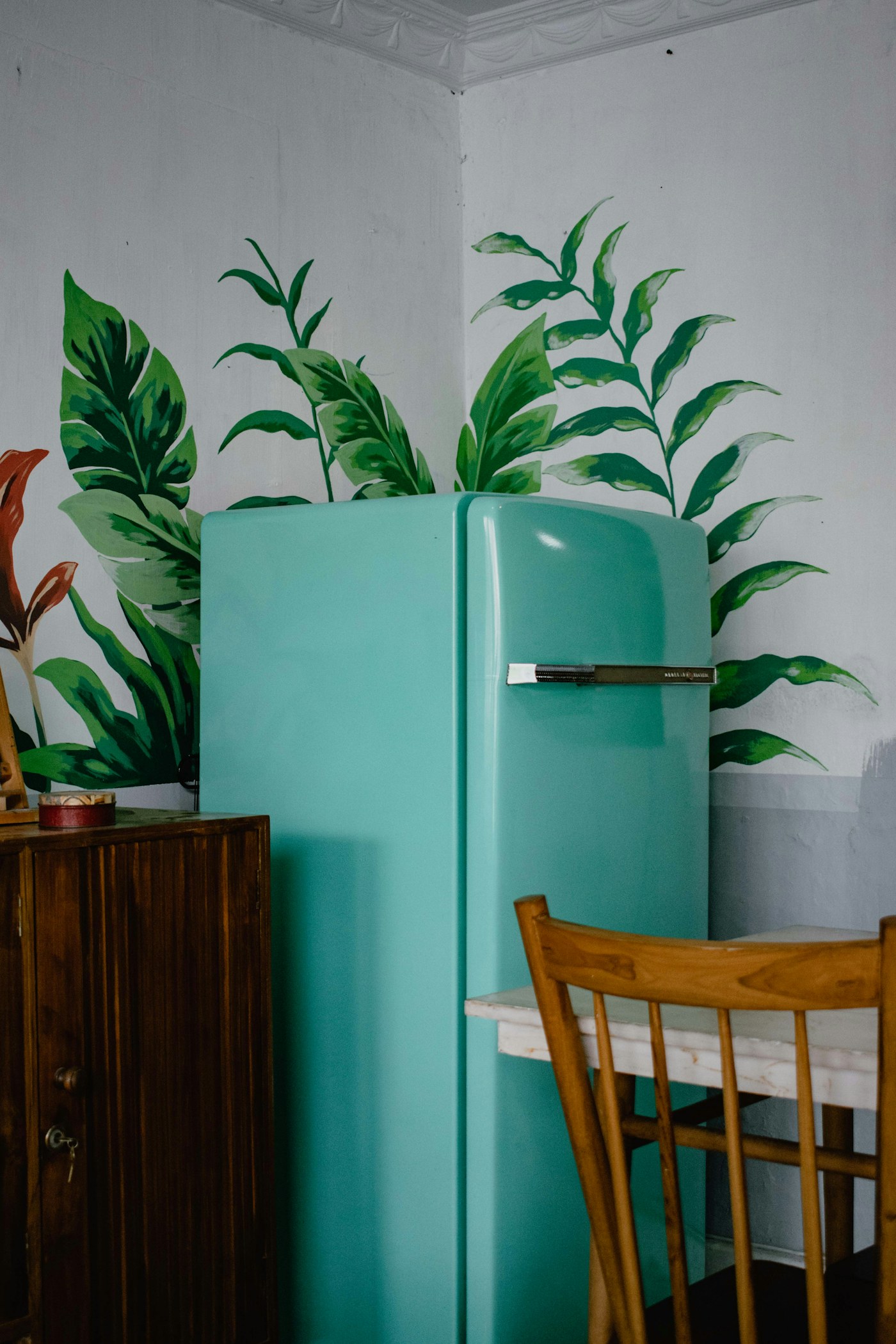
A fridge turntable can help with sauces, jars, or yogurt cups that disappear at the back. However, cold-air circulation, shelf fit, container stability, and manufacturer guidance still matter.
Do not put large milk containers or unstable heavy items on a small turntable merely because they technically fit.
For the broader system, see organizing a small fridge without losing food in the back.
Where turntables waste space: packets and boxes
Rectangular packets and boxes usually use rectangular bins better. A round platform can leave unusable gaps while providing little rotational benefit.
Where turntables waste space: shallow shelves
If you can already see and reach the back row, rotation solves no meaningful friction. A simple shelf boundary may be enough.
Where turntables waste space: very heavy categories
Heavy containers increase load and can make rotation awkward. Use products within stated weight and use guidance.
Single-tier versus two-tier turntables
Two-tier versions create extra vertical capacity but can reduce clearance and make tall bottles impossible. They work best with short, lightweight categories.
Single-tier platforms are more flexible and easier to visually scan.
Turntable versus pull-out bin
Choose a turntable when items are jar- or bottle-shaped and you want to rotate choices forward.
Choose a pull-out bin when the category is rectangular, packet-heavy, or better retrieved as one group.
If cabinet depth is the larger issue, start with the guide to organizing deep kitchen cabinets before choosing a fitting.

Turntable versus shelf riser
Use a riser when unused height is the problem. Use a turntable when depth is the problem. Using both can work, but only if the cabinet remains easy to see and the organizer combination does not consume more space than it creates. For a related step-by-step approach, see How to Make a Small Rental Kitchen Work When You Can’t Add More Cabinets.
How I measure before buying
- Measure shelf width and depth.
- Measure the opening, not only the interior.
- Measure tallest item height.
- Allow space for rotation.
- Check whether nearby hinges or pipes interfere.
Cleaning matters
Oils and sauces can drip. Choose a turntable that can be removed and cleaned easily. An organizer that becomes sticky enough to avoid cleaning is not improving the cabinet.
Explore this topic
Browse more practical guidance in the Home Organization hub. Room focus: Kitchen.
Expert conclusion
I like turntables because their purpose is clear: they make depth accessible. That is enough reason to use them in deep shelves, corners, and bottle-heavy categories.
I do not use them as a default organizer. Rectangular bins use rectangular shelves more efficiently, and risers solve a different dimension entirely.
If rotation eliminates a repeated reach-behind problem, a Lazy Susan is doing real work. If not, the circle is probably just taking up space.