A home can look organized and still waste an extraordinary amount of space. Matching bins line the shelf. Labels face forward. The closet door closes. Nothing is obviously “messy.” Yet everyday items are still difficult to reach, duplicate supplies keep appearing, and the family keeps buying new organizers because the storage somehow feels full. If you are working on the same space, How to Organize Family Photos and Printed Keepsakes in a Small Home covers the next decision in more detail.
That is the point where I stop asking, “Does this look organized?” and start asking, “Is this storage system efficient?” For a related step-by-step approach, see How to Store Gift Wrap, Gift Bags, and Party Supplies in a Small Home.
In a small home, the difference matters. You do not have enough square footage to let a pretty but inefficient system occupy prime space for years. This audit is designed to find the storage that looks finished but still creates friction.
How I score a storage zone
I use four questions:
- Access: Can the right person reach the item without unloading unrelated things?
- Density: Does the zone use space efficiently without becoming overpacked?
- Turnover: Do items move in and out, or does the zone become an archive?
- Clarity: Can the household explain what belongs there in one sentence?
If a zone fails two of the four, I consider it a redesign candidate even if it photographs beautifully.

Audit point 1: bins that are larger than the category
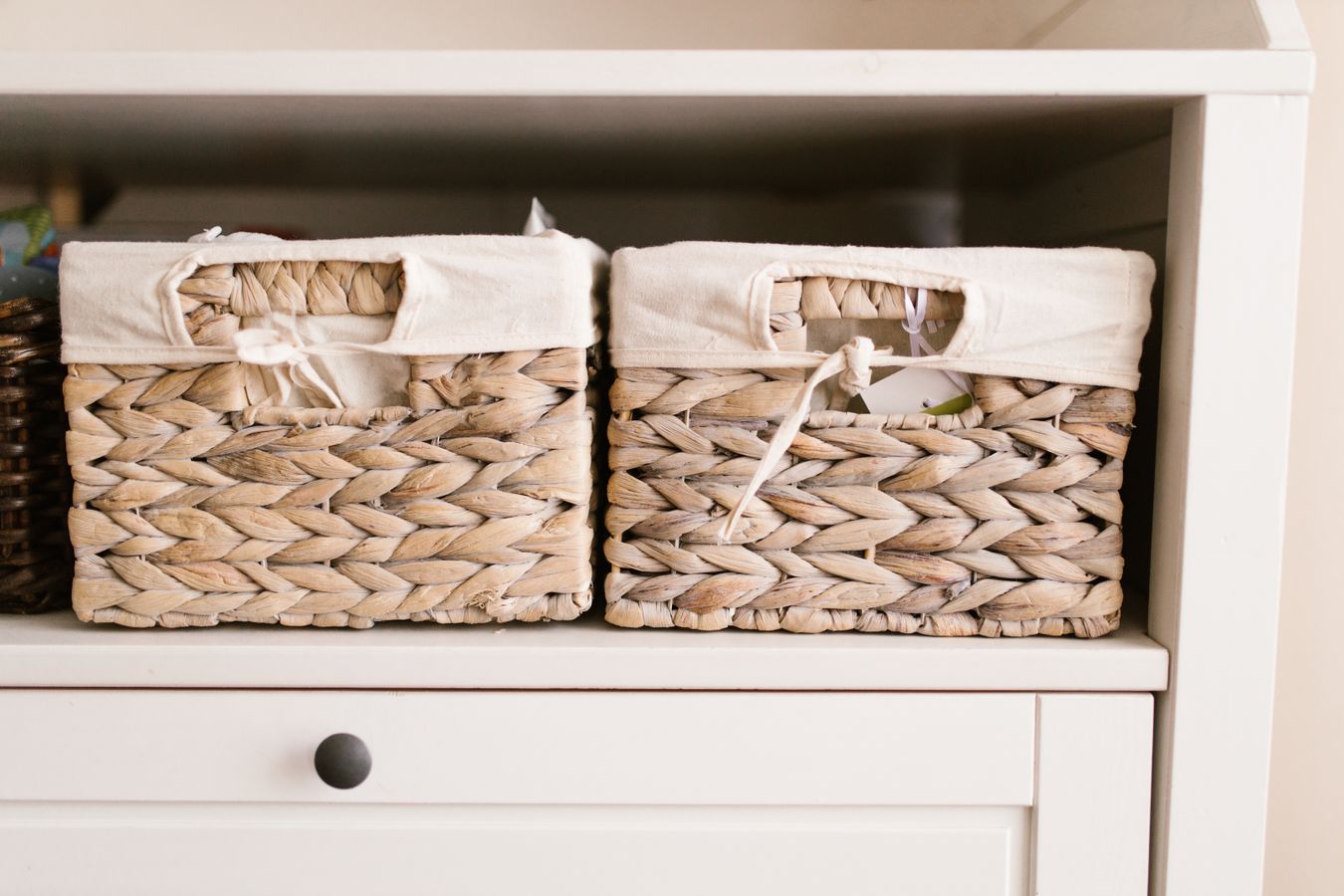
One of the most common storage mistakes is putting a small category into a large container simply because the container fits the shelf. The empty space inside the bin feels harmless, but in a small home it is not free. You have converted usable shelf volume into trapped air.
A bin should either contain a category that genuinely expands and contracts, or be sized close to its stable volume. If six tea towels live in a basket that could hold thirty, the basket—not the towels—is consuming the storage.
Expert fix: remove the bin temporarily and place the category directly on the shelf. If the shelf immediately feels larger and the items remain manageable, the container was adding more footprint than function.
Audit point 2: deep shelves with front-row bias
Deep cabinets and closets create a predictable behavior: the front row gets used; the back row disappears. The back is not true storage if reaching it requires moving three unrelated categories.
This is why deep kitchen cabinets often work better with pull-forward groups or low-frequency categories rather than dense mixed stacks.
Audit point 3: organizers inside organizers
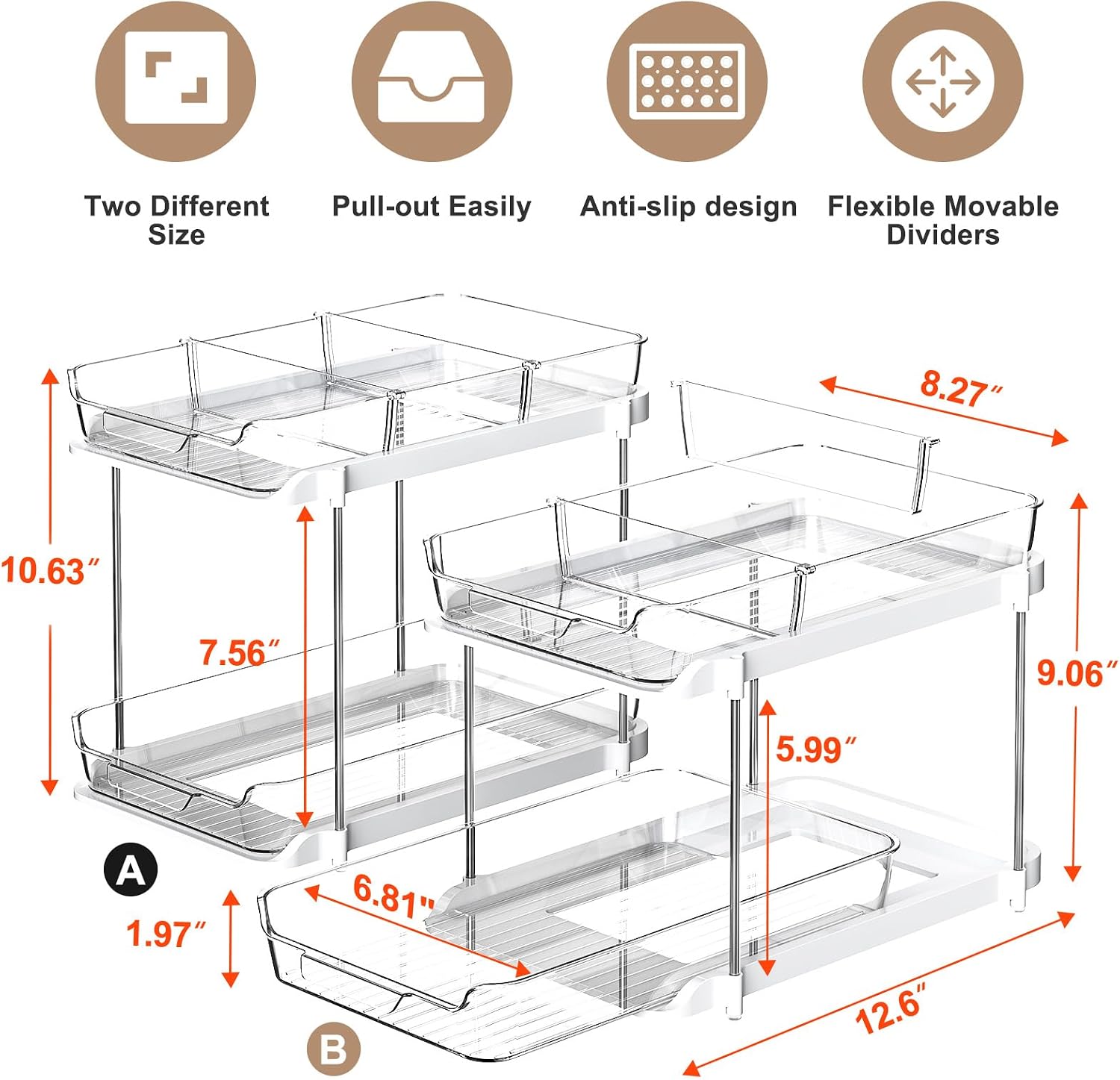
A drawer organizer inside a bin inside a cabinet can look extremely controlled, but each layer consumes dimensions. You lose width to bin walls, height to tray edges, and flexibility to fixed compartments.
Nested organization is justified only when each layer solves a distinct problem. For example, a pull-out bin may solve cabinet depth while a small divider inside prevents tiny packets from scattering. If both layers are only “for neatness,” one is probably unnecessary.
Audit point 4: storage furniture that adds more furniture
A storage bench, ottoman, cabinet, or cart can be excellent. But I evaluate it with a strict question: What does this piece replace? If you are working on the same space, Coffee Table vs. Storage Ottoman vs. No Table: What Works Best in a Small Living Room? covers the next decision in more detail.
If a storage ottoman replaces a coffee table and a blanket basket, the footprint may be efficient. If it sits beside the coffee table and contains objects that previously fit in a closet, you added furniture to solve a volume problem. You may also find How to Do a Seasonal Closet Switch in a Small Home Without Making a Bigger Mess useful for a closely related small-home problem.
This is one reason our storage-solutions guide emphasizes function consolidation rather than organizer quantity.

Audit point 5: under-bed storage that has no review cycle
Under-bed storage is valuable because it is large and hidden. Those same traits make it dangerous. Categories can remain untouched for a year without visually bothering anyone.
Low-frequency storage is fine. Forgotten storage is not.
Ask when the category was last opened. If nobody knows, treat the entire zone as a review project. The detailed guide to using under-bed storage without creating hidden clutter is useful when this is a major problem.
Audit point 6: dead space above short objects
A shelf holding eight-inch objects beneath eighteen inches of vertical clearance may be wasting capacity. Shelf risers, adjustable shelves, or moving the category can help.
But do not automatically stack higher. The goal is usable layers, not maximum layers. If the upper tier blocks visibility or requires unloading, the additional density may be theoretical rather than practical.
Audit point 7: dead space below hanging clothes
Short shirts hanging above an empty closet floor create one of the most obvious opportunities in small bedrooms. Low drawers, shoe storage, a second hanging rail where appropriate, or a defined hamper can use the lower zone.
The key is to preserve enough clearance that clothing does not drag on the storage below.
Audit point 8: duplicated “catch-all” zones
Many homes have several places performing the same undefined job: a bowl by the door, one junk drawer, a basket on the stairs, a pile on the dining table, and a tray on the dresser. Each contains keys, receipts, chargers, coins, or small objects.
That is not five categories. It is one unresolved category duplicated across five locations.
Consolidating the function into a single landing zone or processing point often releases more space than buying smaller containers for every pile.

Audit point 9: prime storage occupied by rare-use items
Eye-level shelves, front drawers, and easy-reach cabinets are the most valuable storage in a home. When holiday serving dishes, spare cables, or once-a-year equipment live there, daily items are forced into worse locations.
This is a priority error, not a capacity error.
I classify storage by frequency: daily, weekly, monthly, seasonal. The more often an item is used, the fewer physical steps should separate the user from it.
Audit point 10: backstock that has no ceiling
Backstock expands quietly because every individual purchase looks reasonable. Two extra paper-towel packs, another shampoo, one more box of snacks. Over time, backup inventory occupies the home’s most flexible space.
A fixed volume limit is more effective than better stacking. If you need a deeper framework, see how to store grocery backstock without turning every closet into a pantry.
Audit point 11: storage systems nobody else understands
If one person is the only person who knows where everything belongs, the system is not robust. Family organization should survive another person putting away groceries, laundry, or school items.
Overly precise subcategories often fail here. “All school supplies in this caddy” is easier to maintain than ten tiny containers with adult-designed rules.
A family system should be easy enough that users can return items correctly without asking for permission.

Audit point 12: visually empty space mistaken for wasted space
This is the most counterintuitive part of the audit. Not every empty shelf area needs filling. A little operational slack can be extremely valuable: room for incoming groceries, a temporary project, guest towels, or a changing child category.
The goal is not to reach 100 percent capacity. Storage that is completely full is often less flexible and more expensive to maintain.
A simple audit score
For each major storage zone, give one point for each statement that is true:
- I can reach the item without unloading unrelated objects.
- The category fits the container without large amounts of trapped air.
- The items are used often enough to justify this location.
- Another household member can explain what belongs here.
- There is a clear limit on how much the category can grow.
5 points: leave it alone. 3–4 points: minor adjustment. 0–2 points: redesign before buying another organizer.
What I would fix first
I prioritize changes that release prime space quickly:
- remove oversized containers,
- move rare-use items out of easy-reach zones,
- consolidate duplicate catch-all locations,
- reduce uncontrolled backstock,
- fix deep storage that hides active categories.
Only after those changes would I buy new storage products.
Why this audit matters more than decluttering alone
Decluttering reduces volume. Storage design controls friction. You can own a reasonable amount and still have a frustrating home if the storage is badly matched to the categories.
Likewise, you can install excellent organizers and still feel crowded if inventory exceeds capacity. The two jobs need to work together.
Run the audit by friction, not by room
You do not need to audit the whole home in one weekend. Start with the three storage zones that create the most repeated friction. Maybe it is the lunch cabinet, the shared bathroom drawer, and the entry bench. Fixing those three can improve daily life more than reorganizing a quiet guest closet that already functions.
I also recommend photographing the “before” state after an ordinary week rather than after cleanup. The normal state reveals overflow patterns that disappear when everything has been staged.
Re-audit after 30 days
A new system can look excellent during the first week because attention is high. The real test comes after the household stops thinking about it. Thirty days later, check whether items are still being returned correctly, whether bins have begun to overflow, and whether another surface has become the new catch-all.
If clutter simply moved to a neighboring area, the redesign solved appearance rather than the underlying flow.
Final assessment
The most expensive storage mistakes in a small home are rarely dramatic. They are quiet inefficiencies repeated across many shelves: a bin too large, a cabinet too deep, a holiday item in a prime drawer, a catch-all duplicated in four rooms.
Fixing those errors can make the home feel larger without adding a single cabinet. That is why I recommend auditing before shopping. A small home usually needs fewer dead zones, fewer unnecessary layers, and clearer priorities long before it needs another set of matching containers.
Explore this topic
Browse more practical guidance in the Home Organization hub. Room focus: Closets & Storage.