Gift wrap is a classic example of a category that feels small until you collect it in one place.
A few rolls of wrapping paper become twelve. Gift bags are folded inside larger gift bags. Ribbon tangles with tape. Tissue paper gets saved because it still looks usable. Birthday candles, banners, cards, bows, and leftover party plates somehow join the same category.
Individually, none of it seems worth decluttering. Together, it can occupy an unreasonable amount of storage for something the household may use a few times a month—or a few times a year.
The trick is to create one gift-and-celebration system with firm physical limits.
Separate wrapping supplies from party supplies first
These categories are related, but they behave differently.
Wrapping supplies include paper, bags, tissue, ribbon, tape, tags, and cards. Party supplies include candles, banners, table decorations, disposable items, favor bags, and themed leftovers.
If everything is mixed together, you have to dig through birthday candles to find tape.

Choose your dominant wrapping format
Some households love wrapping paper. Others use gift bags almost every time. A small home should lean into the format it actually uses.
If you prefer bags, you probably do not need fifteen rolls of paper. If you enjoy wrapping, keep fewer “just in case” bags.
This is the kind of decision that saves more space than any organizer.
Use one portable wrapping kit for tools
Keep scissors, tape, tags, a pen, a few bows, and basic ribbon together in a small caddy or box.
The tool kit should move to the table, help you wrap, and return to storage in one trip. That is much more useful than storing tape in the kitchen junk drawer, scissors in the office, and tags in a holiday bin.
Store paper by actual dimensions, not by internet aesthetics
Long wrapping-paper rolls require a tall narrow zone. That could be a vertical bin in a closet, an under-bed container long enough for the rolls, or another low-frequency location.
Do not buy a hanging organizer until you measure both the rolls and the door/closet where it would hang. Long organizers can interfere with shelves or the door closing.
Flatten gift bags into broad size groups
Small, medium, large. That is usually enough.
Nested bags look efficient, but if ten tiny bags disappear inside one large bag, you forget what you own. Keep them flat or loosely nested within size groups so the handles and designs remain visible.
Give tissue paper a real limit
Tissue paper is where good intentions go to multiply. We save every clean sheet because it feels wasteful to throw it away.
Reuse is great—but only keep what fits one folder, drawer, or envelope-style container. Smooth usable sheets and let badly torn pieces leave.
Keep ribbon simpler than the craft store
If you wrap a few gifts a year, you do not need a ribbon station. Keep one or two versatile ribbons or a small box of reusable bows.
If wrapping is genuinely a hobby, that is different; the category can earn more space because it provides ongoing value.
Stop keeping hyper-specific leftovers by default
A “Happy 3rd Birthday, Dinosaur King!” banner probably has less future utility than plain birthday candles, neutral streamers, or reusable table decor.
After a party, sort leftovers into:
- universal: likely useful again,
- specific but planned: already tied to a future event,
- unlikely to repeat: donate, pass on, recycle, or discard appropriately.
This prevents the family from building an archive of every party theme it has ever hosted.
Keep greeting cards in a tiny “emergency card” file
A few blank birthday, thank-you, sympathy, congratulations, or kid-friendly cards can save a last-minute store trip. But cards should have a cap.
One small file is enough. If you have twenty birthday cards and never use them, the system is serving storage rather than life.
Create a gift-bag reuse rule
Keep clean, sturdy bags you would genuinely be happy to give someone. Let damaged, overly branded, stained, or awkward bags leave.
The standard matters because “technically reusable” is not the same as “realistically reusable.”
Where should the category live?
Because gift wrapping is low-frequency, it should not occupy prime kitchen or entryway storage.
Good candidates include:
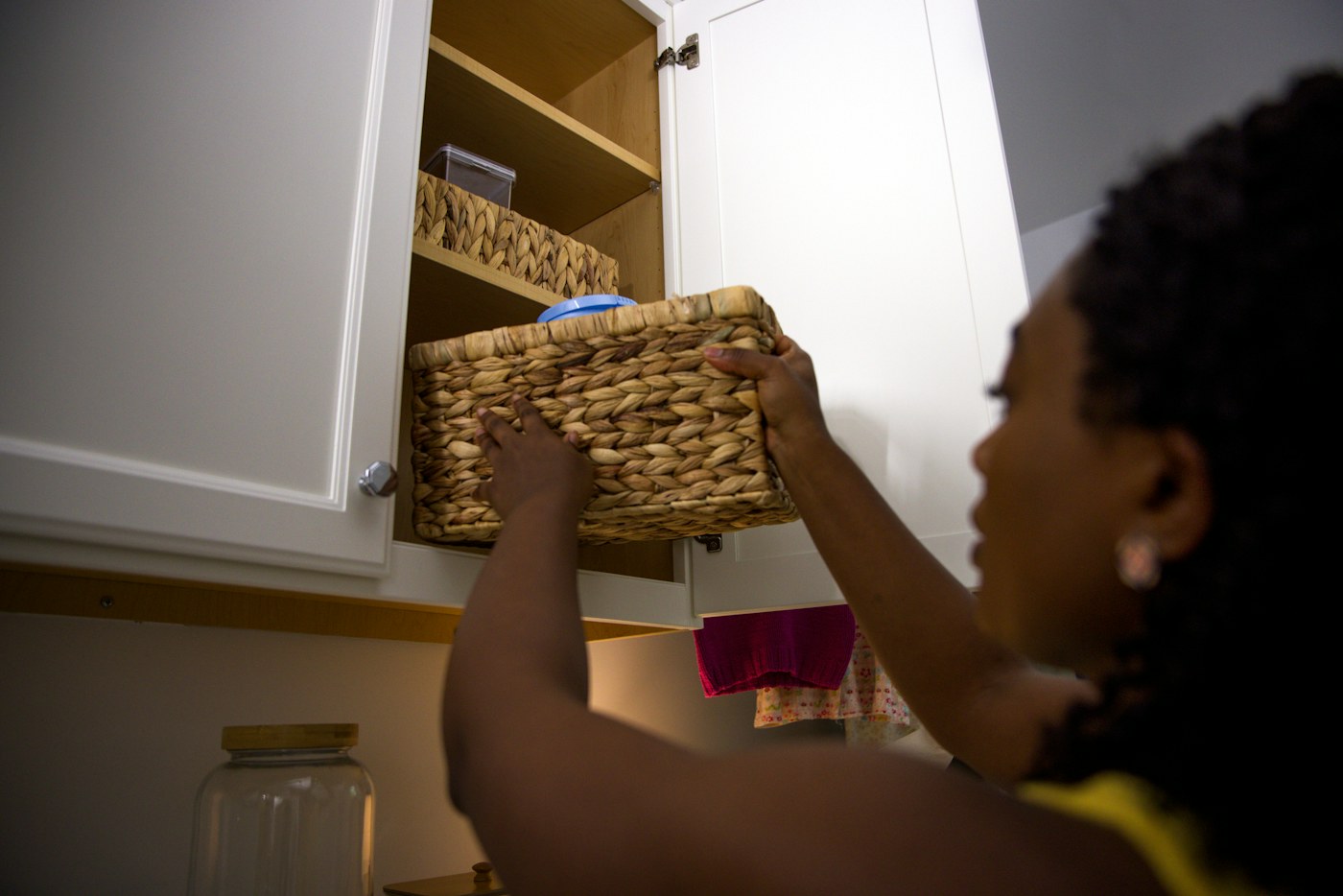
- top closet shelf,
- under-bed storage,
- guest-room cabinet,
- home-office shelf,
- one hall-closet section.
The location should allow the whole kit to come out together.
Use the “one event in, one event out” habit
After a birthday, holiday, or shower, do not simply push leftovers back into the bin.
Take five minutes to remove trash, consolidate reusable items, return tools, and decide what actually deserves storage. That five-minute decision is what prevents the category from doubling every year. You may also find How to Create a Family Donation Station That Actually Leaves the House useful for a closely related small-home problem.
The 15-minute gift-supply reset
- Return scissors, tape, tags, and pens to the portable kit.
- Flatten reusable gift bags by size.
- Trim tissue paper to the amount that fits its container.
- Group paper rolls and remove crushed scraps.
- Review theme-specific party leftovers.
- Return greeting cards to the small card file.
- Put the entire category back into its low-frequency zone.

What I would not keep “because it might be useful”
I would be skeptical of short scraps of wrapping paper, dozens of branded gift bags, dried tape, crushed bows, single-use themed decor with no next event, and packaging that requires its own organizing system.
The point is not to be wasteful. The point is to be honest about whether the household is likely to use an item before it becomes wrinkled, outdated, or forgotten.
How this fits with seasonal storage
Holiday-specific wrap can live with holiday decor if that makes retrieval easier, while universal birthday and everyday supplies stay in the general gift kit.
If seasonal bins are already crowded, use How to Store Seasonal Items in a Small Apartment Without Losing Everyday Space and A Simple Seasonal Declutter Before Bringing Holiday Decor Into a Small Home.
Keep “future gifts” separate from wrapping supplies
Some households buy gifts ahead when they see a good idea or sale. That can work, but the gifts themselves should not disappear into the wrapping-paper bin.
A future-gift shelf needs its own inventory and a clear list of recipients or occasions. Otherwise the family buys another present because the first one was hidden behind tissue paper. For a related step-by-step approach, see How to Organize Family Photos and Printed Keepsakes in a Small Home.
Wrapping supplies support gifts; they should not become the place gifts are forgotten.
Build a small universal birthday kit
For families with children, birthdays can generate a lot of last-minute buying. A tiny universal kit can reduce that without becoming a party closet: For the broader setup, How to Do a Seasonal Closet Switch in a Small Home Without Making a Bigger Mess is a useful next read.
- plain candles,
- one reusable birthday banner,
- neutral tape or string,
- a few blank cards,
- one simple table-decoration option if your family uses one.
Universal supplies earn storage because they can serve several birthdays. Theme-specific pieces should face a higher bar.
Holiday wrap should not dominate eleven months of the year
If holiday paper is bulky, move it into the holiday storage system after the season. Keep everyday birthday and thank-you supplies in the general wrapping kit.
This avoids making every June birthday navigate around Christmas paper. Seasonal storage should disappear when the season does.
For renters: use storage that leaves with you
A tall freestanding wrap bin, under-bed box, portable caddy, or closet shelf is often easier than installing a permanent wall system. Gift supplies are low-frequency; they do not deserve complicated modifications unless wrapping is a serious hobby.
Measure long rolls before buying under-bed storage. Many containers look large but are several inches too short for standard paper rolls.
Use leftover party supplies for the next realistic event—not a theoretical event
There is a subtle difference. If your child’s birthday is three months away and the plain paper plates will be useful, keep them. If you are saving twelve dinosaur napkins because “someone might have a dinosaur party someday,” the future use is too vague.
Small homes benefit from a short planning horizon. Keep supplies tied to a visible next event or universal function.
Run the “would I be happy to use this?” test
This works especially well for gift bags, bows, and tissue paper. If you would hesitate to give the item to somebody because it is wrinkled, branded, faded, or damaged, it is not good reusable inventory.
We often keep packaging because throwing it away feels wasteful, then buy new packaging for the actual gift. That is storage without utility.
\nHow to prevent “useful packaging” from becoming its own collection
Ribbon from a beautiful package, sturdy boxes, tissue from online orders, and decorative shopping bags all feel worth saving. The problem is that packaging enters the home continuously while gifting happens only occasionally.
Use a strict container rule for reusable packaging. When the container is full, compare new material with what is already there and keep the better option. This lets reuse remain a practical habit instead of becoming a reason to store every attractive box.
Keep one wrapping surface in mind
You do not need a craft room, but it helps to know where wrapping actually happens. If you always wrap on the dining table, the supply kit should be portable enough to reach that table in one trip and disappear before the next meal.
If you usually wrap on a bed or floor, long rolls and scissors need a different setup. Organize around the real working surface so setup and cleanup remain short. If you are working on the same space, How to Organize Kids’ Sports Gear in a Small Home Without Living Around Equipment covers the next decision in more detail.
For families with frequent children’s parties
Invitations can arrive in clusters. Rather than maintaining a huge generic gift inventory, keep the wrapping tools ready and a small supply of blank cards. Buy the actual gift for the actual child.
This keeps storage focused on reusable support materials instead of turning one closet into a speculative gift shop.
\nFrequently asked questions
Should wrapping paper be stored vertically?
Vertical storage can work well for long rolls if the container is stable and fits your closet height. Under-bed horizontal storage is also practical.
How many gift bags should I keep?
Keep the amount that fits your defined bag section and includes sizes you actually reuse.
Where should I keep tape and scissors?
Keep one set inside the wrapping kit so the category can be used and put away as a unit.
What about party decorations?
Keep universal reusable pieces and only a limited amount of event-specific decor that has a realistic future use.
A good gift-wrap system should make generosity easier—not create a storage hobby
When the occasion arrives, you should be able to pull out one kit, choose paper or a bag, wrap the gift, and put everything away without searching three rooms. That is enough organization. The celebration is the point; the supplies are just support.